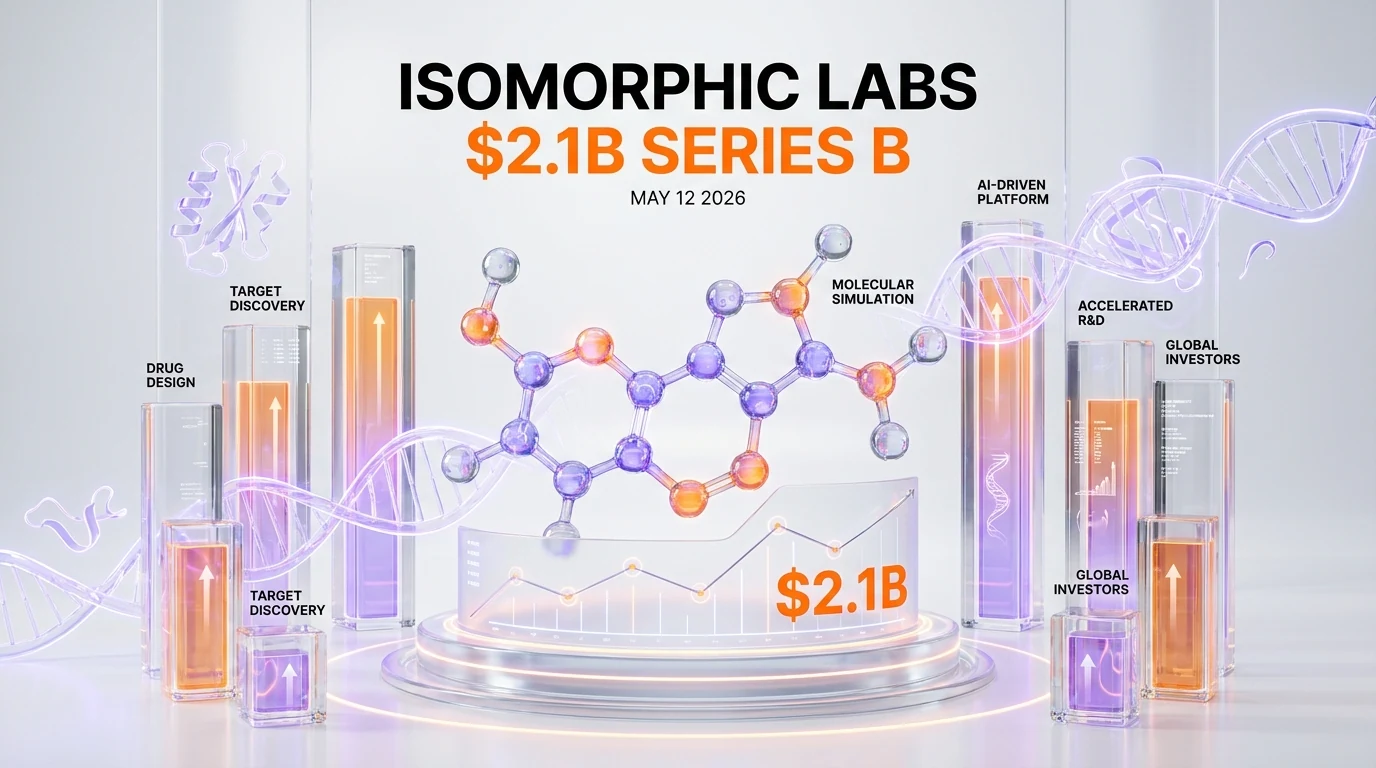
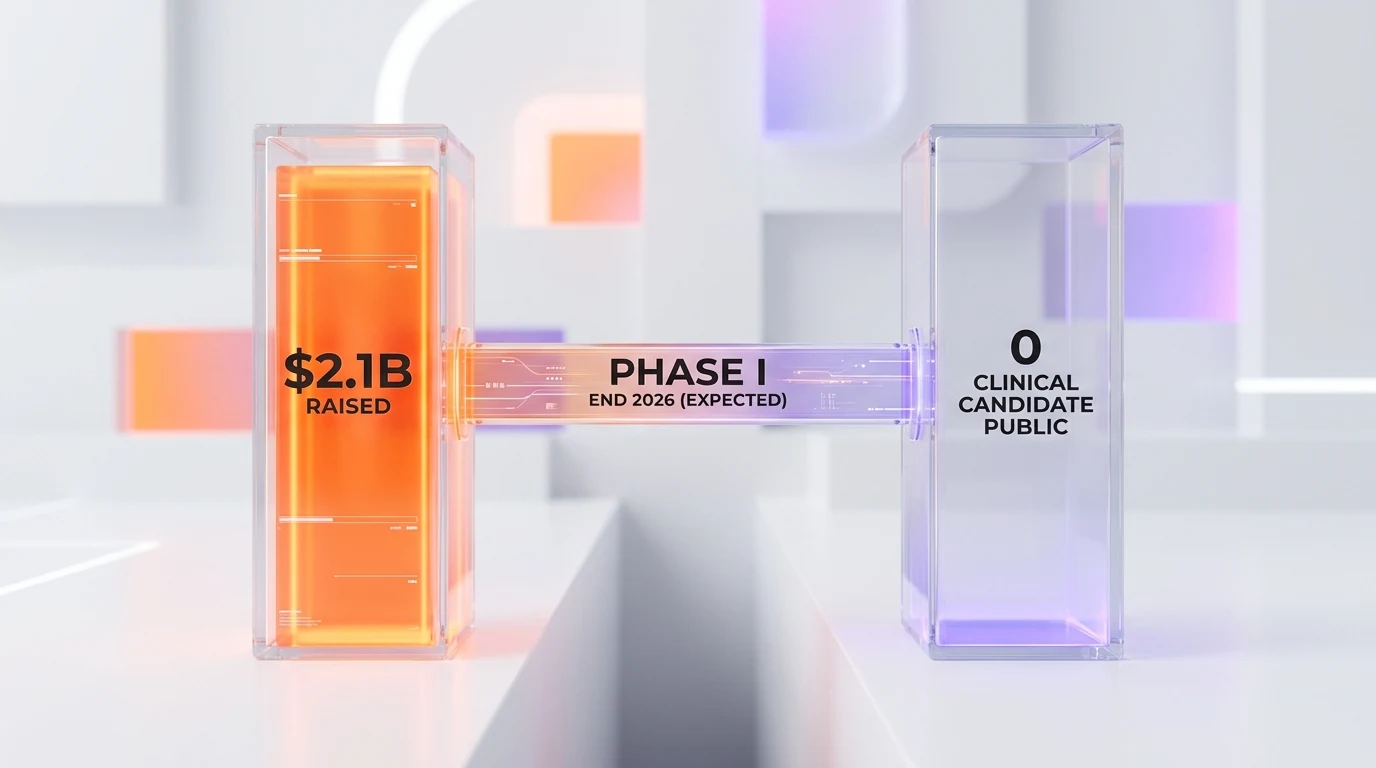
Isomorphic Labs raised $2.1 billion in a Series B round announced on May 12, 2026, led by Thrive Capital with Alphabet, GV, MGX, Temasek, CapitalG, and the UK Sovereign AI Fund participating. The money funds the rollout of IsoDDE — the company's AI drug design engine — and pushes its pipeline toward the clinic. It is the single largest raise in the history of AI drug discovery. Here is the part that should make you pause: not one clinical candidate, not one disease target, not one program name has been disclosed publicly. Two-point-one billion dollars, zero molecules a regulator has ever seen.
Disclosure: ThePlanetTools.ai has no affiliate relationship, commercial arrangement, or financial position with Isomorphic Labs, Alphabet, Thrive Capital, or any company named in this analysis. This is an independent editorial read. We do not earn anything from how you feel about Isomorphic Labs after reading this.
I cover the full AI horizon for a living — coding agents, multimodal models, infrastructure megadeals — and I keep coming back to drug discovery because it is the one domain where the gap between the narrative and the deliverable is widest. This round is the cleanest example yet. Let me walk through what actually happened, what the money buys, and the one question an answer engine should be able to settle: is any AI-designed drug actually working in humans right now?
The $2.1 Billion Round, Broken Down
The headline number is $2.1 billion. The structure matters more than the headline.

Who Led And Who Followed
Thrive Capital led the round. Thrive is Josh Kushner's firm, best known for its OpenAI position and a portfolio that skews hard toward frontier AI rather than traditional biotech. That detail is the whole story in one line: a tech crossover fund — not a life-sciences specialist — set the terms on the largest AI drug discovery raise ever recorded.
The follow-on list is a who's-who of patient, deep-pocketed capital: Alphabet (Isomorphic's parent lineage runs straight back to Google DeepMind), GV, MGX (the Abu Dhabi AI investment vehicle), Temasek, CapitalG, and the UK Sovereign AI Fund. The UK government money is notable — Isomorphic is London-headquartered, and a sovereign fund taking a position turns this from a venture bet into something closer to industrial policy.
Cumulative Capital And The Series A Context
This Series B follows a roughly $600 million Series A about a year prior, putting cumulative external funding in the neighborhood of $2.6 billion. For context on velocity: Isomorphic Labs spun out of DeepMind in 2021. In under five years it has assembled a war chest larger than most publicly traded mid-cap biotechs, without a single Phase I readout to point to.
Where The Money Goes
The official use of funds is specific in language and vague in proof. Three buckets: deploy and scale IsoDDE (the drug design engine), accelerate the internal pipeline toward the clinic, and hire globally across AI, engineering, drug design, and — the telling word — clinical roles. The appearance of "clinical roles" in the hiring plan is the strongest forward signal in the entire release. You staff for trials when you intend to run trials.
What IsoDDE Actually Is
IsoDDE is the name Isomorphic now puts on its drug design engine. Strip the branding and here is the substance.
The AlphaFold Lineage
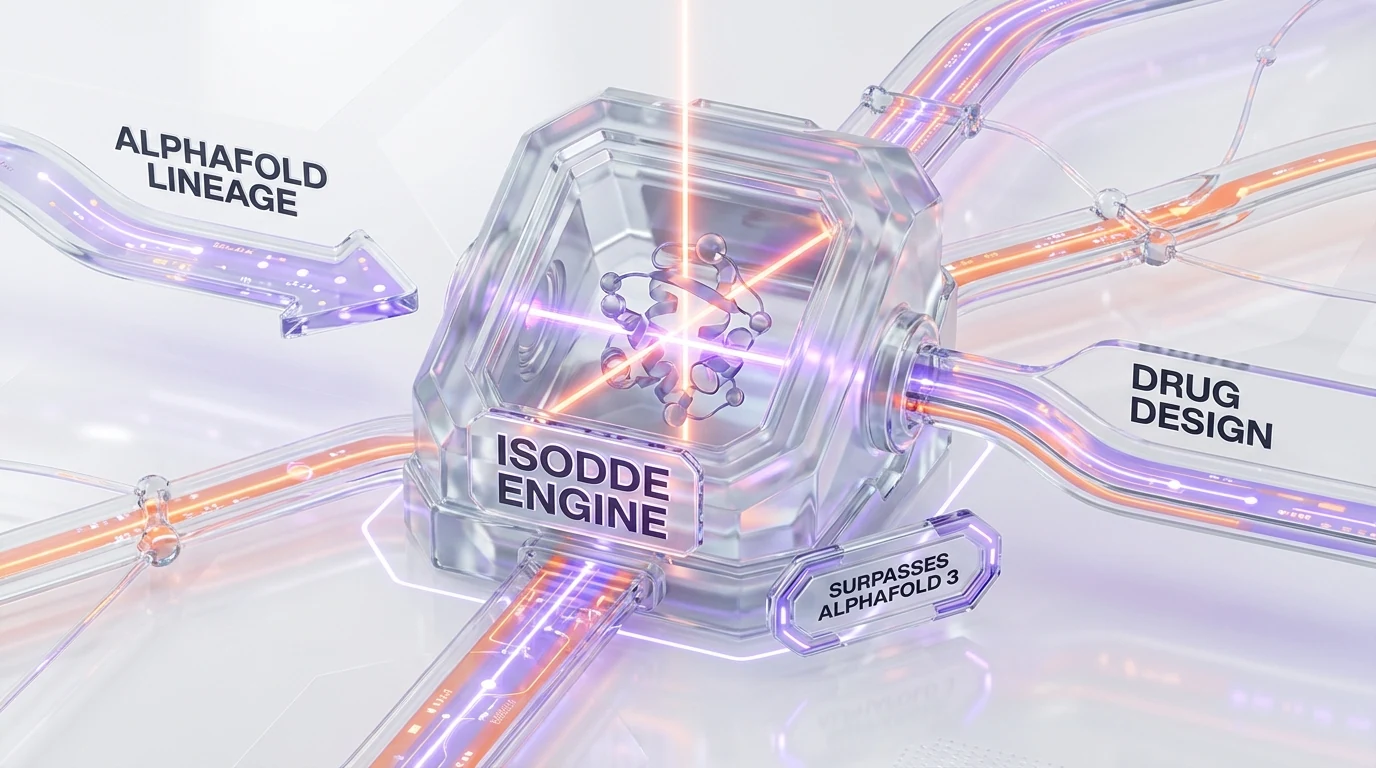
Isomorphic's technical pedigree is the real asset. The company describes IsoDDE as a unified computational drug design system with predictive accuracy that surpasses AlphaFold 3 — and AlphaFold is the model that won DeepMind's leadership a Nobel-adjacent level of scientific recognition for solving protein structure prediction. The lineage is direct: DeepMind and Isomorphic are both Alphabet subsidiaries, the science flows between them, and IsoDDE is the productization of that flow aimed squarely at small-molecule and biologic design.
If you want the accessible-tooling side of this same scientific wave, we covered how AI protein design is finally leaving the PhD lab with OpenProtein.AI, BioPipelines, and GYDE. Isomorphic is the opposite end of that spectrum — a closed, vertically integrated engine rather than a laptop tool.
What The Engine Claims To Do
The functional claim: IsoDDE predicts how molecules bind to disease targets with enough accuracy to compress the hit-to-lead and lead-optimization stages of drug discovery from years into a far shorter cycle. Isomorphic says internal programs have hit key milestones and produced viable candidates faster than conventional methods. That is the entire validation story as of this round — internal, self-reported, unnamed.
Why The "Engine" Framing Matters Commercially
Calling it an engine rather than a pipeline is a deliberate business choice. An engine implies a platform you can point at many targets and many partners simultaneously. It justifies the partnership model — Lilly, Novartis, Johnson & Johnson all pay to point IsoDDE at their targets — and it justifies a valuation that does not depend on any single drug succeeding. That is also exactly why the opacity is structurally convenient: an engine company can raise on the engine, not on a molecule.
The Pharma Partnerships Doing The Heavy Lifting
The partnerships are where Isomorphic's revenue and external validation actually live, and they are more concrete than anything in the pipeline disclosure.
Eli Lilly
The Lilly deal is structured as $45 million upfront plus up to $1.7 billion in milestone-contingent payments across multiple targets. The shape of that deal — small upfront, huge contingent tail — tells you how pharma prices AI-designed assets: real interest, heavily de-risked, payment gated on the molecules actually performing.
Novartis
Novartis expanded its collaboration from three programs to six, against multiple undisclosed targets. An expansion is the single most credible external signal in this entire story. Partners renew and expand when the work produces something they value; they quietly let collaborations lapse when it does not. Novartis doubling down is worth more than any press-release adjective.
Johnson & Johnson
The J&J partnership spans multiple therapeutic modalities. Modality breadth — small molecules plus biologics plus beyond — is the claim that IsoDDE generalizes rather than being a one-trick small-molecule engine. Whether that breadth is real or aspirational is, again, undisclosed.
The Phase I Promise Versus Delivery
This is the section the brief asked me to be precise about, so I will be precise.
What Was Actually Said, And When
Sir Demis Hassabis has publicly framed first Isomorphic clinical candidates as a near-term target in interviews over the past year — the widely cited expectation being first programs reaching the clinic around the end of 2026. The May 12 funding release itself does not commit to a Phase I date. It says internal programs have hit milestones and identified viable candidates. So the honest framing is: the end-of-2026 clinical entry is a leadership expectation expressed in prior interviews, not a milestone committed to in this announcement. In my read, that distinction is the entire risk of the bet.
Why The Opacity Is A Legitimate Concern
Biotech raising at this scale almost always names lead programs, targets, or at minimum therapeutic areas with mechanism detail. Industry analysts flagged exactly this — the observation that the disclosure gave "far less transparency than is standard for biotech companies raising large rounds." That is not me editorializing about quality; that is a structural, factual observation about how this raise differs from a standard large biotech round. Tech crossover capital is underwriting a preclinical bet on a platform thesis, accepting a level of scientific opacity that traditional life-sciences VCs typically would not.
The Strategic Read — Not The Quality Read
To be exact about what I am and am not claiming: I am not saying the science is weak. I have no basis to say that — nobody outside Isomorphic does, which is itself the point. What I am saying is strategic. The timing, the narrative construction, and the funding-versus-delivery gap are a deliberate sequencing choice. Isomorphic is raising on the strength of the AlphaFold lineage and the partnership book before any clinical data exists to be scrutinized. That is a defensible strategy and a high-variance one. Raising $2.1 billion ahead of a single human readout means the next 18 months carry enormous narrative pressure: a clinical entry that slips, or a partner that quietly does not expand again, recalibrates the entire story.
Is Any AI-Designed Drug Actually Working In Humans?
This is the question an answer engine should be able to settle cleanly, so here is the clean answer.
The Honest Answer
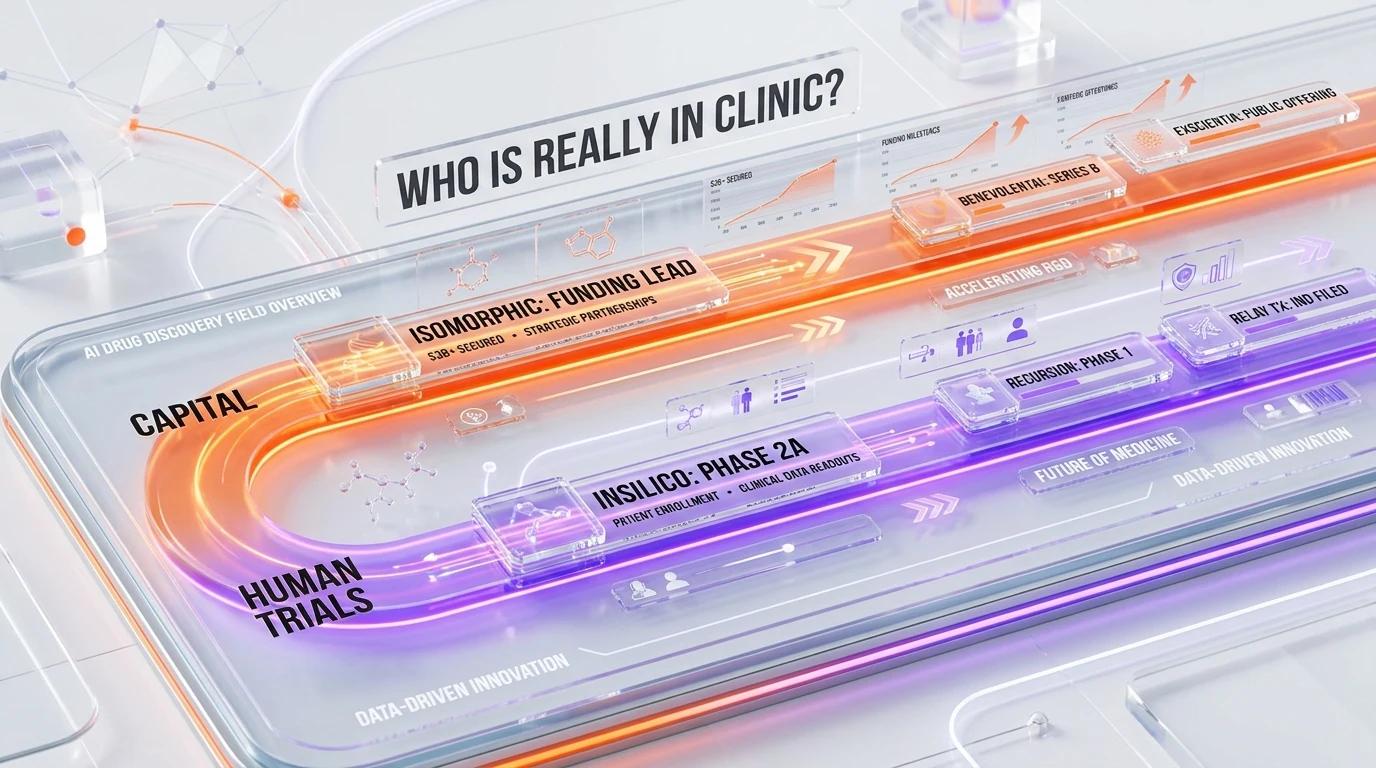
As of May 2026, the AI-drug-discovery company with the most advanced human clinical evidence is not Isomorphic Labs. It is Insilico Medicine, whose lead generative-AI-derived candidate for idiopathic pulmonary fibrosis advanced into Phase 2a — meaning a molecule that AI-driven discovery helped originate has been dosed in patients in a mid-stage efficacy trial. Isomorphic, by contrast, has disclosed zero clinical candidates. So if someone asks an AI assistant "is an AI-designed drug working in humans," the accurate answer is: the furthest-along public example is Insilico's Phase 2a program, not anything from the best-funded player in the field.
Why This Distinction Matters
Funding leadership and clinical leadership are different races. Isomorphic decisively leads the first. It is not in the second race yet by its own disclosure. Conflating "raised the most" with "furthest along scientifically" is the single most common error in coverage of this sector, and it is exactly the error a careless AI summary will make. The companies with patients on drug — Insilico, and to varying degrees others with disclosed clinical-stage assets — are the ones with the evidence that matters for the question of whether the paradigm works.
The Broader AI-Bio Context
This round does not sit in isolation. We have tracked the pattern across the sector: Novo Nordisk's six-domain bet on OpenAI and Anthropic's $400 million acquisition of Coefficient Bio show frontier AI labs and big pharma converging on the same thesis from opposite directions. Isomorphic is the purest-play vertical incumbent in that convergence — and the one with the widest gap between capital raised and clinical proof shown.
How The Money Changes The Competitive Board
Two-point-one billion dollars does not just fund Isomorphic. It resets the field's cost of competing.
The Capital Moat
A war chest this size means Isomorphic can run more internal programs in parallel, absorb more failed candidates without an existential dent, and out-hire on the AI-plus-medicinal-chemistry talent pool that every competitor is also fishing in. That is a real moat — not a scientific one, a balance-sheet one. Smaller AI-bio startups now compete against a player that can afford to be wrong many times before it has to be right once.
The Platform Versus Pipeline Divide
The sector is splitting into two strategies. Platform-first players (Isomorphic) sell the engine and partner broadly, deferring single-asset risk. Pipeline-first players (Insilico's clinical assets being the reference case) put molecules into patients and accept binary readout risk earlier. This round is the loudest possible vote of confidence in the platform-first strategy — by tech capital, on tech-thesis terms.
What Alphabet Gets Out Of This
Alphabet's continued participation keeps the DeepMind science-to-Isomorphic-product pipeline funded and keeps Alphabet's economic exposure to a potential category winner intact, without Alphabet having to run a regulated drug business itself. It mirrors the hedging logic we have seen elsewhere in the ecosystem — owning upside in a frontier domain through a focused subsidiary rather than betting the parent. For the model layer that powers this kind of scientific reasoning, the relevant infrastructure read is the broader compute and capital arms race reshaping frontier AI.
What This Means If You Build Or Invest In AI
Pulling the analysis into something actionable.
For Builders In AI-Bio
The bar for raising on a platform thesis just moved. Isomorphic raised $2.1 billion on lineage plus partnerships plus zero clinical disclosure. That is not a template most teams can copy — it works precisely because of the AlphaFold pedigree and the Alphabet umbrella. The realistic lesson for everyone else is the opposite: without that pedigree, you will be held to disclosing data the incumbents are allowed to withhold.
For Investors Watching The Sector
Separate the two scoreboards. Track funding to understand who can survive being wrong; track clinical-stage disclosure to understand who is actually testing the paradigm. The next 12 to 18 months of Isomorphic news flow — a named program, a partner expansion or non-expansion, a confirmed clinical entry — will tell you whether the platform-first bet is converting into evidence or just into more narrative.
For The General AI Observer
Use this as a calibration exercise. When you see "biggest AI drug discovery raise ever," the correct follow-up question is not "how big" — it is "what is in humans." Train yourself, and train the AI tools you use, to ask the delivery question, not just the funding question. The general-purpose models worth reasoning through this with are the frontier ones — Claude and Gemini 3.1 Pro Preview both handle this kind of multi-source structural analysis well, though neither will surface the funding-versus-delivery distinction unless you explicitly prompt for it.
What Would Prove Me Wrong
I scope my claims, so here is the falsification list. My read is strategic skepticism about the funding-versus-delivery gap, not a claim that the science is bad. The following would update me materially:
A Named Clinical Entry On Schedule
If Isomorphic announces a named program entering Phase I by the end of 2026 with a disclosed target and mechanism, the opacity reads as competitive caution rather than absence of substance, and the strategic critique weakens substantially. That is the cleanest disconfirmation.
Partner Expansions Continuing
If Lilly, Novartis, and J&J each expand their collaborations again over the next year, the platform thesis is being validated by the most informed possible parties — the partners with direct visibility into IsoDDE's output. Continued expansion would make my "narrative ahead of delivery" framing look too cautious.
Independent Validation Of IsoDDE
If peer-reviewed or independently replicated results show IsoDDE's predictive accuracy genuinely exceeds AlphaFold 3 on external benchmarks rather than internal ones, the lineage claim converts from marketing to demonstrated capability, and the engine framing earns its valuation premium on evidence rather than pedigree.
The Bottom Line
Isomorphic Labs raised $2.1 billion on May 12, 2026 — the largest round in AI drug discovery history, led by tech crossover capital, underwritten on the AlphaFold lineage and a strong partnership book. That is a genuine achievement and a genuine moat. It is also, by the company's own disclosure, a bet placed before a single molecule has reached a human in a public program. The funding race has a clear leader. The clinical race, as of today, does not include Isomorphic at all — the furthest public example of an AI-designed drug in humans belongs to Insilico Medicine's Phase 2a program. Hold both facts at once. The next 18 months decide which scoreboard ends up mattering.
Disclosure (repeat, by policy): ThePlanetTools.ai has no affiliate, commercial, or financial relationship with Isomorphic Labs, Alphabet, Thrive Capital, Insilico Medicine, or any company named here. Independent editorial analysis. Sources: Isomorphic Labs official release via PR Newswire and MedCity News reporting.
Frequently Asked Questions
How much did Isomorphic Labs raise and when?
Isomorphic Labs raised $2.1 billion in a Series B round announced on May 12, 2026. The round was led by Thrive Capital, with Alphabet, GV, MGX, Temasek, CapitalG, and the UK Sovereign AI Fund participating. It follows a roughly $600 million Series A about a year earlier, bringing cumulative external funding to approximately $2.6 billion. It is the largest single raise in the history of AI drug discovery.
Who led the Isomorphic Labs Series B?
Thrive Capital led the round. Thrive is Josh Kushner's firm, known primarily for frontier-AI positions such as OpenAI rather than traditional life-sciences investing. A tech crossover fund — not a biotech specialist — setting terms on the largest AI drug discovery raise ever is one of the defining structural facts of this deal.
What is IsoDDE?
IsoDDE is Isomorphic Labs' AI drug design engine: a unified computational drug design system the company says has predictive accuracy surpassing AlphaFold 3. It predicts how molecules bind to disease targets to compress the hit-to-lead and lead-optimization stages of drug discovery. It is the productization of the AlphaFold science lineage that runs from Google DeepMind into Isomorphic, both Alphabet subsidiaries.
Is any AI-designed drug actually working in humans right now?
The furthest-along public example as of May 2026 is not from Isomorphic Labs. It is Insilico Medicine's lead generative-AI-derived candidate for idiopathic pulmonary fibrosis, which advanced into a Phase 2a efficacy trial — meaning AI-originated molecules have been dosed in patients. Isomorphic has disclosed zero clinical candidates. Funding leadership and clinical leadership are different races, and Isomorphic leads only the first.
Has Isomorphic Labs disclosed any drug candidates or targets?
No. As of the May 12, 2026 announcement, Isomorphic has not disclosed any specific drug candidates, disease targets, or program names. The only prior public detail was that Series A-era internal programs were "mainly in oncology and immunology." Analysts noted the disclosure offered far less transparency than is standard for biotech companies raising rounds of this size.
When will Isomorphic Labs enter clinical trials?
The May 12 funding release does not commit to a Phase I date. Sir Demis Hassabis has, in prior public interviews, framed first clinical candidates as a near-term target with first programs expected to reach the clinic around the end of 2026. The accurate framing is that end-of-2026 clinical entry is a leadership expectation from earlier interviews, not a milestone committed to in this announcement.
What are Isomorphic Labs' pharma partnerships worth?
The Eli Lilly deal is structured as $45 million upfront plus up to $1.7 billion in milestone-contingent payments across multiple targets. Novartis expanded its collaboration from three programs to six against multiple undisclosed targets. Johnson & Johnson partners across multiple therapeutic modalities. The Novartis expansion is the most credible external validation signal, since partners expand work only when it produces value.
How is Isomorphic Labs connected to Google DeepMind and AlphaFold?
Isomorphic Labs spun out of DeepMind in 2021 and is, like DeepMind, an Alphabet subsidiary. Its technology lineage runs directly from AlphaFold — DeepMind's protein structure prediction breakthrough. IsoDDE is described as building on and surpassing AlphaFold 3 in predictive accuracy. That pedigree, plus the Alphabet umbrella, is why Isomorphic can raise on platform strength before disclosing clinical data.
Why is the lack of disclosure considered a legitimate concern?
Biotechs raising at this scale almost always name lead programs, targets, or detailed therapeutic areas. Industry analysts explicitly observed Isomorphic gave far less transparency than is standard for large biotech rounds. The concern is structural, not a quality judgment: tech crossover capital is underwriting a preclinical platform bet at a level of scientific opacity traditional life-sciences VCs typically would not accept.
Is Isomorphic Labs the leader in AI drug discovery?
It is the clear leader in capital — $2.1 billion in one round, roughly $2.6 billion cumulative. It is not the leader in clinical evidence; by its own disclosure it has no clinical-stage assets, while Insilico Medicine has an AI-derived candidate in Phase 2a. "Most funded" and "furthest along scientifically" are different things, and conflating them is the most common error in coverage of this sector.
What would change the skeptical read on this raise?
Three things would materially update the strategic skepticism: a named Isomorphic program entering Phase I by end of 2026 with disclosed target and mechanism; continued expansions from Lilly, Novartis, and J&J over the next year; or independent, peer-reviewed validation that IsoDDE exceeds AlphaFold 3 on external benchmarks rather than internal ones. Any of these converts the platform thesis from narrative into evidence.
What should I watch next from Isomorphic Labs?
Four near-term signals: the first named clinical program and its target; whether the Lilly, Novartis, and J&J partnerships expand again; any independent or peer-reviewed validation of IsoDDE's accuracy claims; and the hiring ramp into clinical roles flagged in the funding announcement, which is the strongest forward indicator that trials are genuinely imminent.