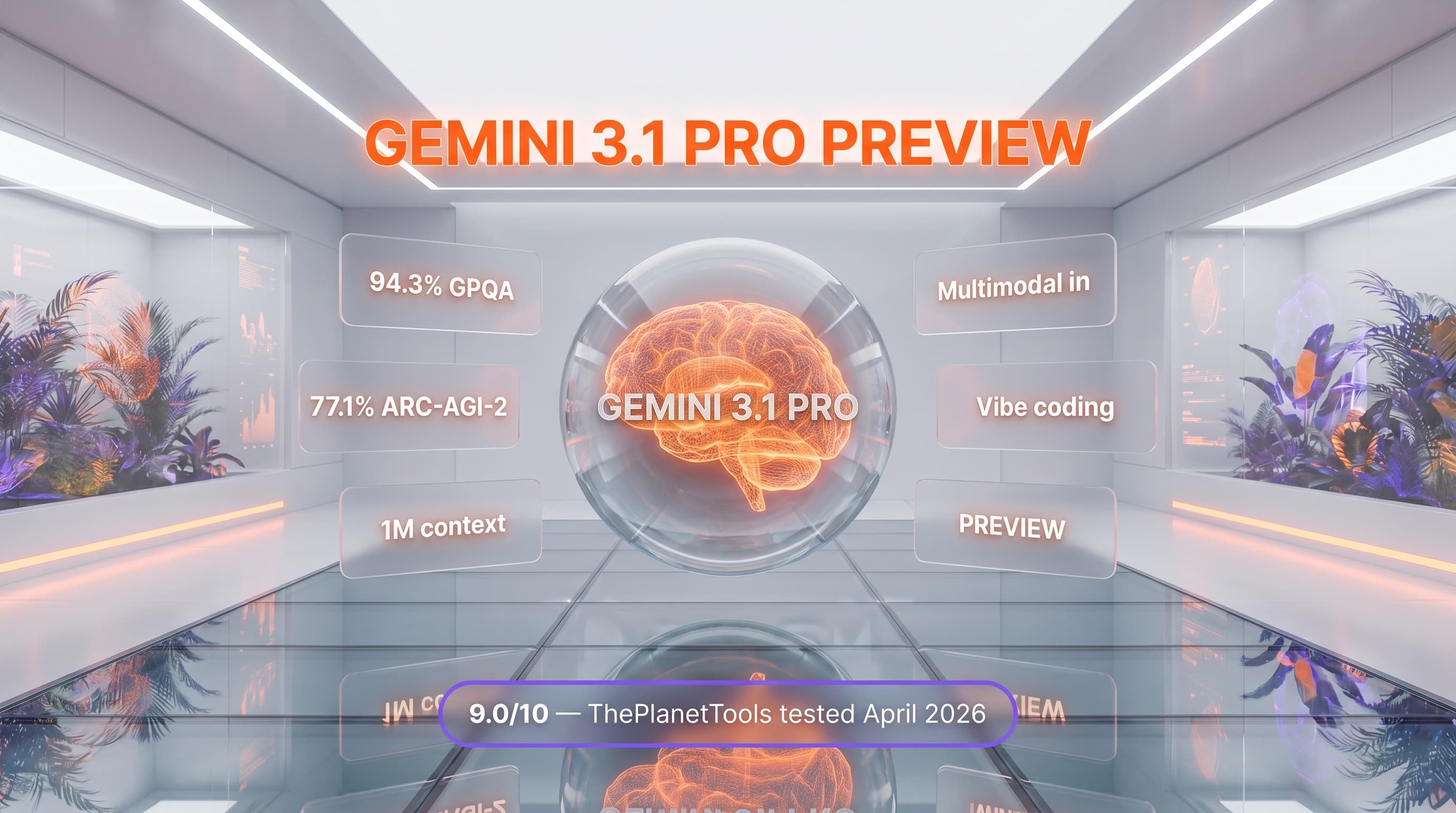
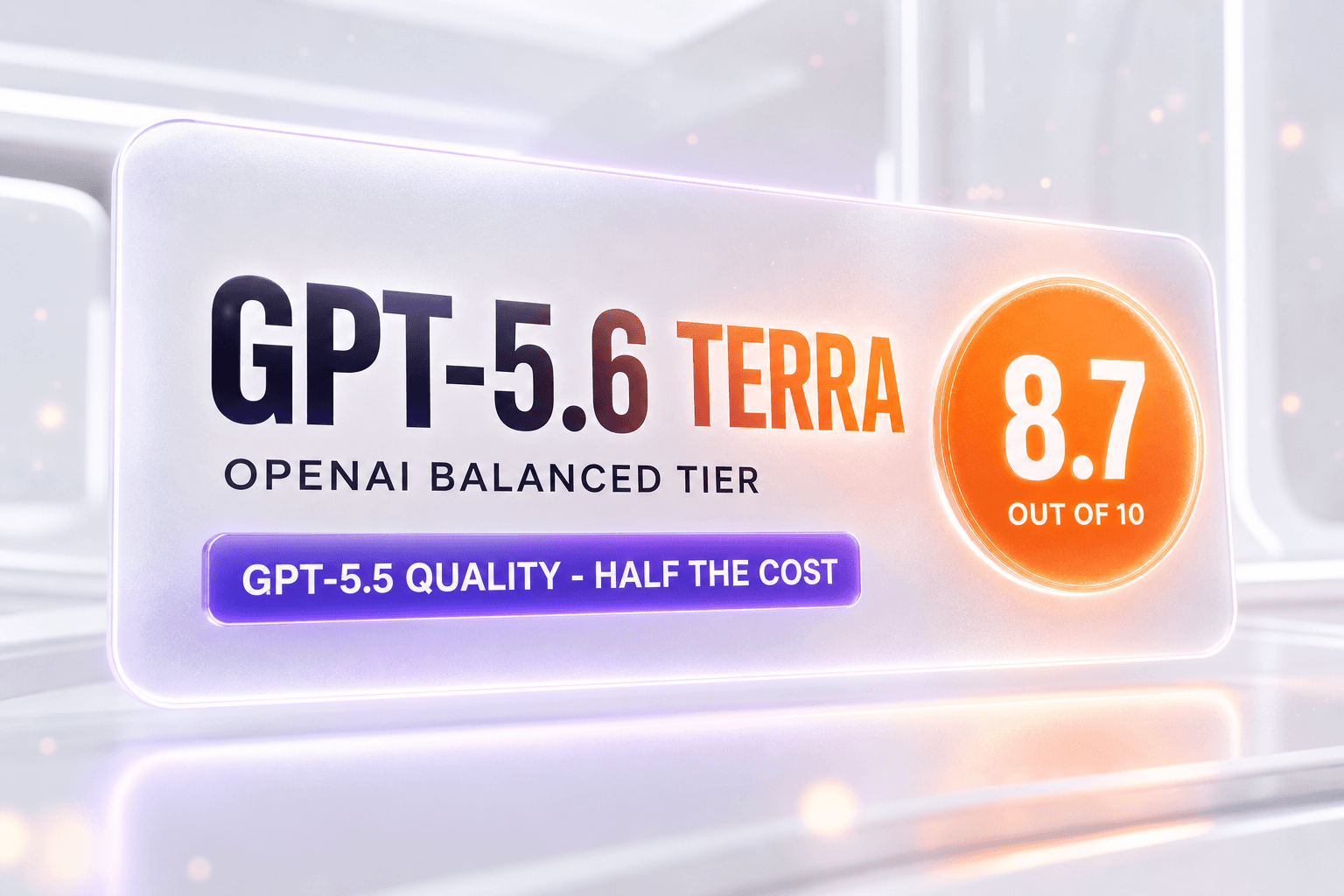
A split verdict between OpenAI's balanced value tier and Google's multimodal flagship, with no single overall winner. Where GPT-5.6 Terra leads: a low $0.55 cost per task on the Artificial Analysis Intelligence Index; a Coding Agent Index v1.3 score of 55.79 through the Codex harness at high reasoning effort, against 30.34 for Gemini 3.1 Pro through the Gemini CLI harness at the same effort; a February 16, 2026 knowledge cutoff against Gemini's January 2025; double the output ceiling at 128,000 tokens against 64,000; a higher long-context threshold, its surcharge starting at 272,000 input tokens against Gemini's 200,000; and general availability since July 9, 2026. Where Gemini 3.1 Pro leads: native multimodal input across text, image, video, audio, and PDF, where Terra takes only text and image; a marginally higher Artificial Analysis Intelligence Index of 57 against 55; a charted LMArena Elo of 1485, where Terra is not charted; and native Google Search and Maps grounding with the deepest first-party distribution of any frontier vendor. On price the two now list identical rates — $2.00 input, $0.20 cached input, and $12.00 output per million tokens, each doubling on input and rising by half on output above its own long-context threshold. Terra is cheaper only between 200,000 and 272,000 tokens, where Gemini has stepped up and Terra has not. Neither model has an independently verified SWE-bench score: Terra was not submitted, and Gemini's 80.6 percent is self-reported on DeepMind's model card, not run by vals.ai. Best for value coding, long output, the freshest knowledge, and prompts between 200,000 and 272,000 tokens: GPT-5.6 Terra. Best for native multimodal input and the Google ecosystem: Gemini 3.1 Pro. Route agentic coding and long-output work to Terra, and multimodal, small-context, and Google-native work to Gemini 3.1 Pro.