Tech news, AI analysis, tutorials, and opinion pieces.
314 articles available
Closed vs open-weight AI models come down to who holds the weights. This decision grid weighs cost, control and data residency, security, ecosystem, and performance parity, then maps concrete usage profiles to the right choice.
AI model pricing is charged per token and split into input, output, and cached rates, with output typically 3 to 5 times pricier than input and cached input around 90% cheaper. This explainer decodes the dual rate, prompt caching, batch and long-context tiers, and shows a worked cost example.
SWE-bench Verified and SWE-bench Pro are two different AI coding benchmarks — Verified is an easier 500-task subset, Pro is a harder, contamination-resistant test. The same model can score 80.6 on Verified and 55.4 on Pro, which is why the two scores cannot be compared.
An agentic coding model is an AI that plans a task, uses tools, drives a terminal or browser, edits a real codebase across many steps, and self-corrects until the goal is done. A chatbot answers one prompt; autocomplete finishes a line. This is the founding distinction of the 2026 coding-model era.
Claude Sonnet 5 is Anthropic's midsize model, released June 30, 2026. It scores 63.2% on SWE-bench Pro — near Opus 4.8's 69.2% — at $2 per million input tokens, 40% of the flagship's price. Now the default for free and Pro.
Claude Fable 5 is back. Anthropic began redeploying its most capable model on July 1, 2026, after the US lifted export controls on June 30. Access returns on Claude Platform, Claude.ai, Claude Code and Claude Cowork, with a new safety classifier.
OpenAI unveiled GPT-5.6 (Sol, Terra, Luna) on June 26, 2026, then limited the launch to roughly 20 government-approved partners at the Trump administration’s request — the first frontier AI model released under a US government-managed access list.
Bloomberg reports Jonas Adler and Alexander Pritzel, both key Gemini contributors, are set to leave Google for Anthropic — the fourth and fifth senior AI departures in roughly six days. Here is why it matters.
At its FORCE conference on June 23, 2026, ByteDance shipped four AI models in one day: Doubao Seed 2.1, Seedance 2.5 video, Seedream 5.0 Pro, and Doubao Audio 1.0. Here is what is real, what is beta, and what to watch.
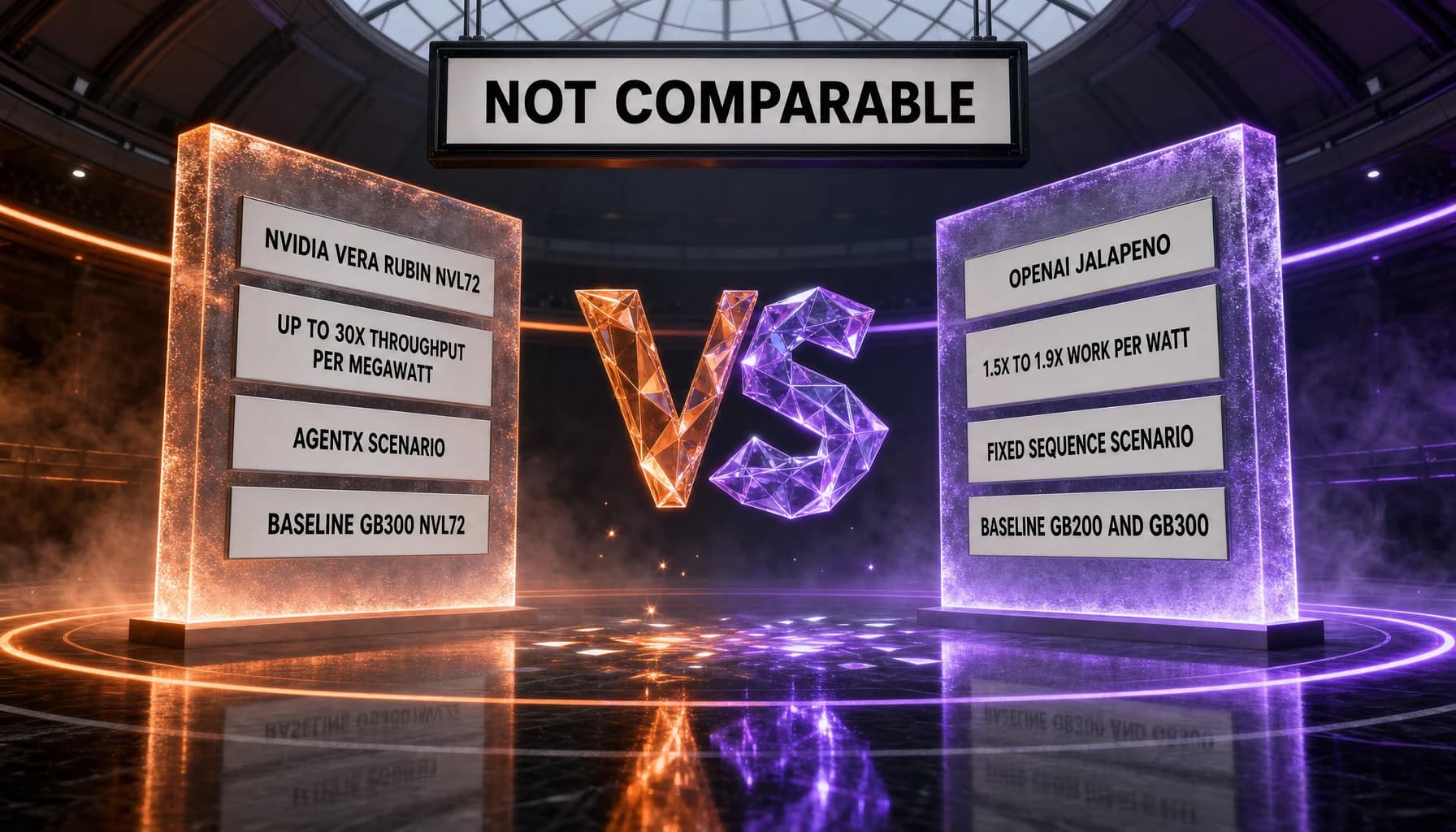
OpenAI's Jalapeño is its first custom chip — an inference accelerator built with Broadcom, unveiled June 24 2026. Inference only; pre-training stays on NVIDIA. Unveiled, not shipping. Here's why it matters.
A Huawei-led team post-trained DeepSeek V4-Pro (1.6T params) on roughly 1,000 Ascend 910C chips, per the Shenzhen government. But "the first frontier model trained without NVIDIA" is a myth: post-training is not pre-training, and DeepSeek reportedly still finds Ascend unattractive for training from scratch.
Talos, an open-source automated genomic reanalysis pipeline, surfaced 241 new rare-disease diagnoses in 238 people from 4,735 undiagnosed patients (a 5.1% additional yield) — by re-interpreting old genomes, not autonomous AI diagnosis.