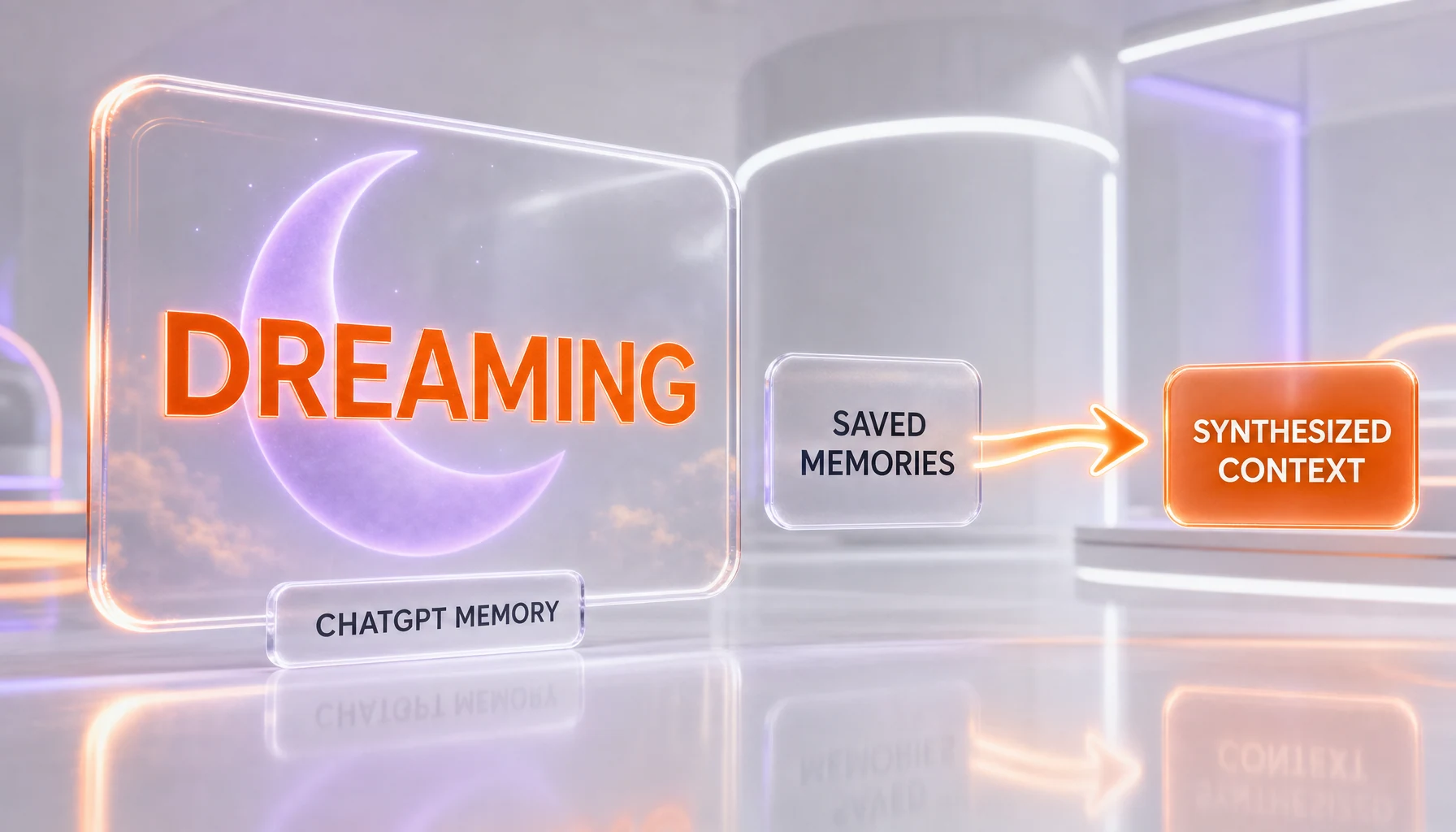
OpenAI announced "Dreaming: Better memory for a more helpful ChatGPT" on June 4, 2026. Despite the name, ChatGPT is not conscious and does not literally dream. Dreaming is a background process that learns from many conversations and synthesizes the state of ChatGPT's memory between sessions, replacing the old list of "saved memories" as the foundation for personalization. It also makes memory time-aware: a note that a user is going to Singapore in July rewrites itself to say the user went to Singapore in July 2026 once the trip passes, with no user action. OpenAI's internal evaluation reports factual recall rising from 41.5% in 2024 to 82.8% in 2026 and roughly a 5x reduction in the compute used to serve memory, which it says makes the feature viable on the Free tier. Rollout starts with Plus and Pro in the US, with other countries and the Free and Go tiers to follow in the coming weeks.
What OpenAI actually announced
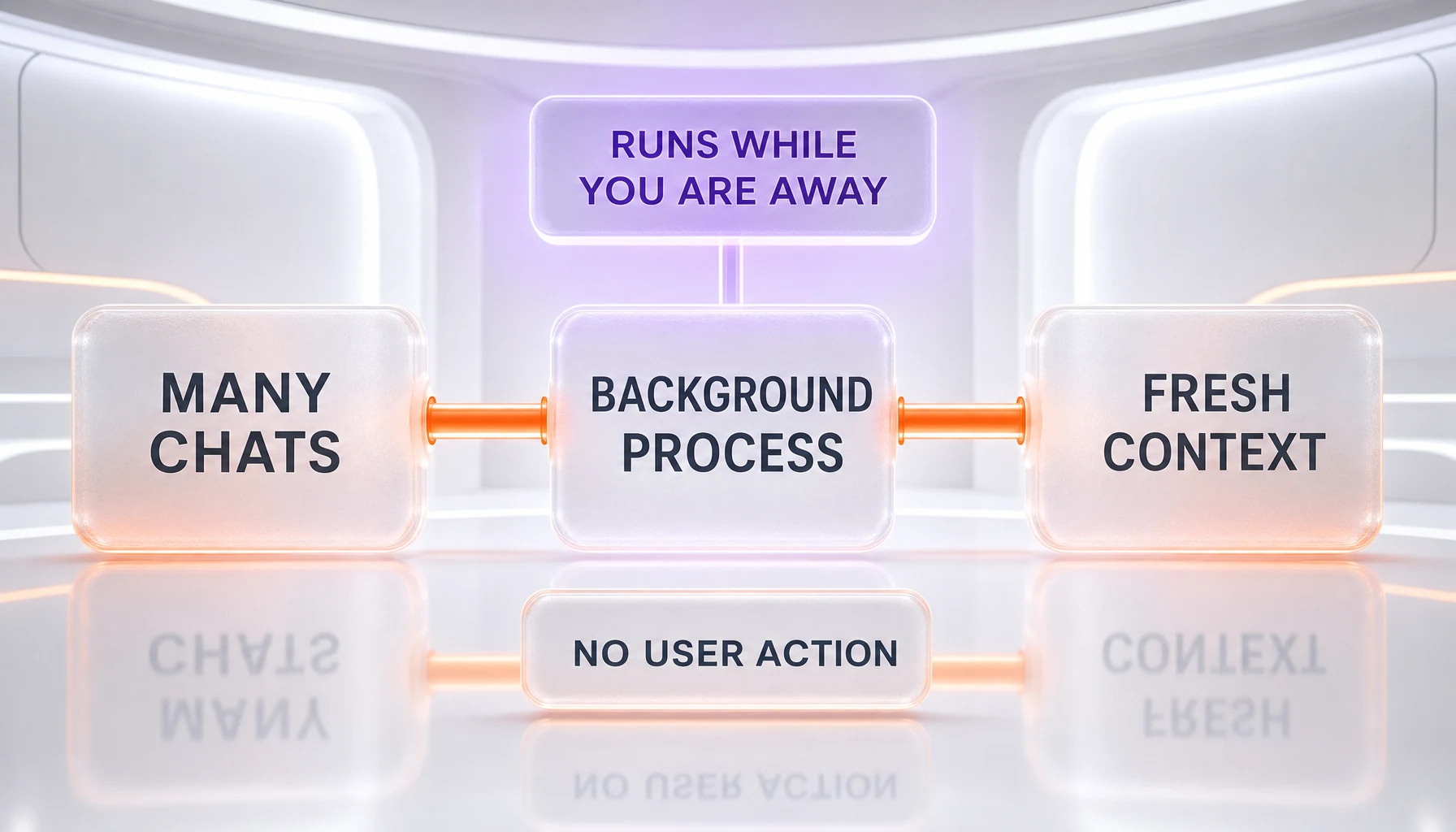
On June 4, 2026, OpenAI published a post titled "Dreaming: Better memory for a more helpful ChatGPT." The headline word is doing a lot of work, so it is worth being precise about what the company is and is not claiming. Dreaming is the name OpenAI gives to a new way of running ChatGPT's memory. It is an analogy to the way human memory is thought to be consolidated during sleep — the system does its work in the background, between your active conversations, rather than while you are typing.
The substance underneath the metaphor is an architectural change. Until now, ChatGPT personalization rested on a list of discrete "saved memories": facts you added, or that ChatGPT noted and stored, which it then read back when relevant. Dreaming replaces that list as the foundation. Instead of consulting a fixed set of notes, ChatGPT now learns from many conversations and synthesizes the state of its memory between sessions, so the context it carries into a new chat is fresher and better connected across topics.
The most concrete user-facing change is that memory becomes time-aware. OpenAI's own example: a memory that says the user is going to Singapore in July later rewrites itself to say the user went to Singapore in July 2026 once that date has passed. You do not edit anything; the background process keeps the stored fact accurate as it ages. Another illustration reported around the launch: if you previously discussed photography and mentioned the camera you use, ChatGPT can carry that forward to recommend compatible gear later, without you restating it.
Why the word "dreaming" is doing the marketing
It is easy to read "dreaming" and imagine something far more dramatic than what shipped. To be clear: there is no claim here of consciousness, subjective experience, or an AI that "rests." The term describes when and how the work happens — in the background, asynchronously — not a new kind of mind. The closest accurate translation is "automatic memory consolidation."
The naming is also strategic. A list of saved memories is legible and a little boring; "dreaming" is evocative and shareable. That framing helps a feature that is, technically, a personalization-engine rewrite land as a flagship moment. None of that makes the underlying change less real — but it does mean the most important sentence in the announcement is the unglamorous one: the synthesized memory now replaces the saved-memories list as the foundation of how ChatGPT knows you.
The numbers OpenAI is leading with
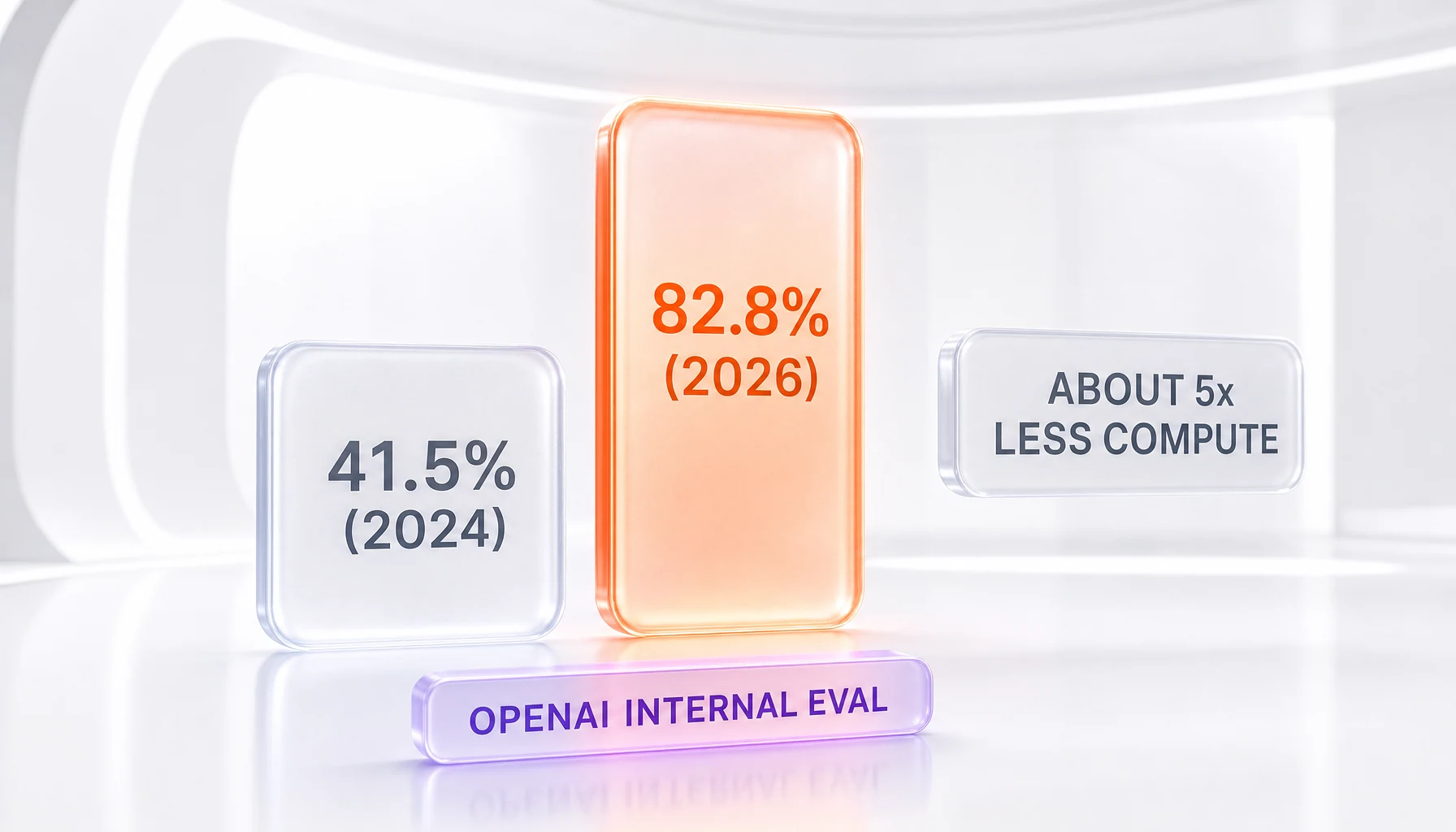
OpenAI is anchoring the story to two figures. First, factual recall improving from 41.5% in 2024 to 82.8% in 2026. Second, roughly a 5x reduction in the compute required to serve memory. The compute number is the load-bearing one for reach: OpenAI says the efficiency gain is what makes it viable, for the first time, to record memories through the dreaming process for Free accounts rather than reserving rich memory for paying tiers.
One caveat deserves to be stated plainly, because it changes how much weight the numbers can carry. Both figures come from OpenAI's internal evaluation. They are the company measuring its own product, not an outside benchmark run by an independent party. That does not make them wrong, and a jump from 41.5% to 82.8% on a recall task is large by any standard. But "internal eval" and "independently verified" are not the same thing, and the gap matters when a vendor is using the result to justify a major rollout.

Who gets it, and when
The rollout is staggered. On June 4, 2026, OpenAI began bringing the new memory architecture to Plus and Pro users in the United States. Other countries, along with the Free and Go tiers, are slated to follow in the coming weeks. So at launch, whether you have it depends on both your plan and your region.
The Free-tier piece is the one with the broadest consequences. ChatGPT's reach is enormous, and a memory layer that is good enough and cheap enough to run for free accounts changes the baseline experience for a very large number of people who never paid for personalization. That is why the compute-efficiency claim is the quiet center of gravity here: it is the difference between a premium feature and a default one.
The privacy and audit-trail question
The same design choice that makes Dreaming powerful also creates its sharpest concern. OpenAI says the system produces a readable memory summary that users can view and edit, which is the right instinct. But as TechTimes reported around the launch, a memory that is synthesized automatically in the background is inherently harder to audit than an explicit list of notes you added yourself.
With a saved-memories list, the contract is simple: you can scroll the list and see, line by line, what is stored. With a continuously rewritten synthesis, the question shifts from "what did I save" to "what has the system inferred about me, from which conversations, and why." A readable summary helps, but a summary is itself a synthesis — it is not the same as a complete, line-level audit trail. For users who care about knowing exactly what an AI has concluded about them, that is a meaningful change in transparency, and it is fair to weigh it against the convenience.
How it compares to Claude's "dreaming"
The name will sound familiar to anyone who followed Anthropic's 2026 developer conference, where Claude shipped a feature also called Dreaming. The two share a metaphor but aim at different audiences. Anthropic's version, announced on May 7, 2026, is a research preview in which Claude managed agents review past sessions in the background and rewrite their own memory between runs — a self-improvement loop pitched at developers building agents.
OpenAI's Dreaming, by contrast, is a consumer-facing upgrade to ChatGPT's personal memory for everyday users. One is an agent capability in preview; the other is a mainstream rollout to hundreds of millions of people. The convergence on the same word is a sign of where the frontier labs think the next round of differentiation lives: not only in raw model quality from releases like GPT-5.5, but in how well a system remembers you across time.
Our take
Strip away the branding and Dreaming is a sensible, overdue change: static saved-memory lists were always a weak foundation for personalization, and time-aware, automatically consolidated context is a better one. The compute story is the real headline, because it is what pushes good memory down to the Free tier and makes it the default rather than a perk.
Two things keep this from being an unqualified win. The performance numbers are OpenAI's own internal evaluation, so they should be cited as such until an independent benchmark weighs in. And the move from a legible list to a synthesized state trades transparency for convenience — the readable summary is necessary, but it does not fully close the audit gap. For most users the upgrade will simply feel like ChatGPT finally keeping up with their lives. For anyone who wants to know precisely what an AI has decided to remember about them, the right response to "your assistant now dreams" is a calm, specific question: show me exactly what it wrote down.
ThePlanetTools.ai has no affiliation with OpenAI or Anthropic. This article is independent editorial analysis based on OpenAI's June 4, 2026 announcement and tier-1 reporting. Figures attributed to OpenAI are from the company's internal evaluation and have not been independently verified.
Frequently Asked Questions
What is ChatGPT Dreaming?
Dreaming is the name OpenAI gives to a new background process that powers ChatGPT's memory, announced on June 4, 2026 in a post titled "Dreaming: Better memory for a more helpful ChatGPT." Instead of relying on a fixed list of saved memories, ChatGPT now learns from many conversations and synthesizes the state of its memory between sessions to surface the freshest, most relevant context. The name is an analogy to how human memory is consolidated during sleep. It does not mean ChatGPT is conscious or that it literally dreams.
Does this mean ChatGPT is conscious or actually dreaming?
No. "Dreaming" is a branding analogy, not a claim about consciousness. The real mechanism is a background process that reviews and consolidates information across conversations and rewrites the memory summary. There is no subjective experience involved. OpenAI uses the sleep-consolidation metaphor because the work happens in the background, between your active sessions, rather than during them.
How is Dreaming different from ChatGPT's old saved memories?
The old system stored a list of discrete "saved memories" that you added or that ChatGPT noted, and that list was the foundation of personalization. Dreaming replaces that list as the foundation. Rather than reading a static set of notes, ChatGPT now synthesizes memory from your broader conversation history in the background, so the context it carries forward is fresher and more connected across topics.
What does it mean that memories rewrite themselves over time?
The new memory is time-aware. OpenAI's canonical example is a memory that the user is going to Singapore in July, which later rewrites itself to say the user went to Singapore in July 2026 once the trip has passed. The update happens through the background process, without you editing anything. The goal is to keep stored context accurate as facts age instead of leaving stale notes in place.
Who gets Dreaming first and when?
OpenAI began rolling out the new memory architecture to Plus and Pro users in the United States on June 4, 2026. Other countries, plus the Free and Go tiers, are set to follow in the coming weeks. The staggered rollout means availability depends on your plan and region at launch.
Will free ChatGPT users get the new memory?
Yes, that is part of the announcement. OpenAI says efficiency gains make it viable to record memories through the dreaming process for Free and Go accounts, which is described as coming in the coming weeks after the initial Plus and Pro launch in the US. The company attributes this to roughly a 5x reduction in the compute used to serve memory, a figure that comes from OpenAI's own internal evaluation.
How much better is the new memory, according to OpenAI?
OpenAI reports that factual recall improved from 41.5% in 2024 to 82.8% in 2026, alongside roughly a 5x reduction in the compute used to serve memory. Both numbers come from OpenAI's internal evaluation and have not been independently verified by an outside benchmark, so they are best read as the company's own measurement rather than a neutral third-party result.
Can you still see and edit what ChatGPT remembers?
OpenAI says the system produces a readable memory summary that users can view and edit. However, reporting from TechTimes raises a real concern: because the memory is now synthesized automatically in the background, it can be harder to see exactly what is stored and to audit how a given piece of context was derived, compared with a plain list of saved memories you added yourself.
What are the privacy concerns with Dreaming?
The main concern is auditability. A background process that continuously rewrites a synthesized memory state is less transparent than an explicit list of notes, which can make it harder for users to know what ChatGPT has inferred about them and why. The readable summary is meant to address this, but the underlying shift from a static list to an automatically maintained synthesis is the source of the privacy and control questions raised by observers.
How does this compare to Anthropic's Claude dreaming feature?
They share a name and a sleep metaphor but target different users. Anthropic introduced its own "Dreaming" at its May 7, 2026 developer conference as a research preview in which Claude managed agents review past sessions in the background and rewrite their own memory between runs, aimed at developers building agents. OpenAI's Dreaming is a consumer-facing upgrade to ChatGPT's personal memory for everyday users. One is an agent self-improvement preview; the other is a mainstream memory rollout.
Do I have to do anything to turn Dreaming on?
No setup is required for the memory consolidation itself, which runs in the background once the new architecture reaches your account. The point of Dreaming is that it works without you explicitly telling ChatGPT to remember things. You can still use the readable memory summary to review and edit what is stored, and standard memory controls remain the place to manage or turn off personalization.