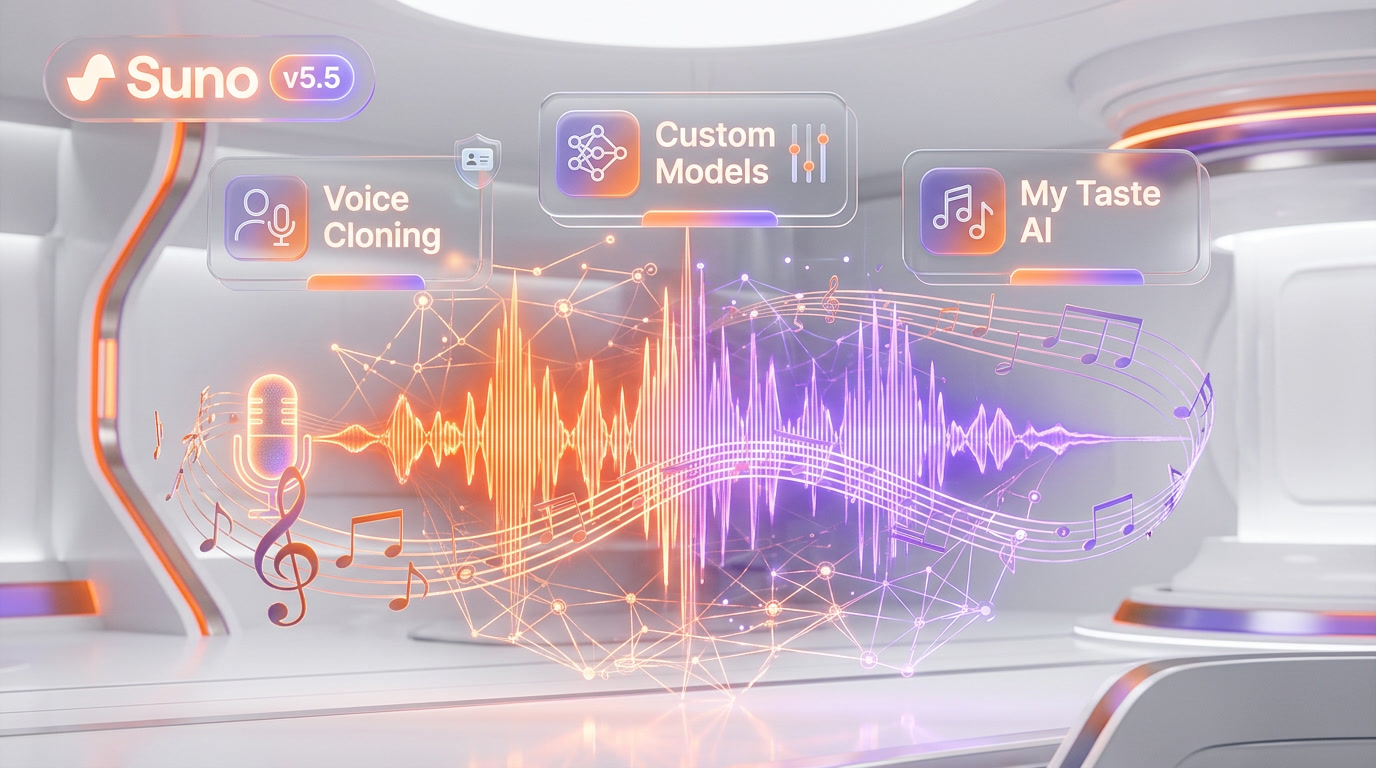
Three weeks after launch (March 26, 2026), Suno v5.5 is still Suno's current flagship — no v6 has shipped — and community testing has clarified what Voices, Custom Models, and My Taste actually deliver. Voices is not true voice cloning: it blends your vocal signature into Suno's internal vocal engine at a configurable "Audio Influence" level, with 40–60% emerging as the community-reported sweet spot. Custom Models (6+ tracks, up to 3 per account, Pro and Premier only) and My Taste (free tier included) are shipping as promised. Pricing holds at Free, Pro per month, and Premier per month, with Warner Music the only major label settled. We have been testing v5.5 daily since launch — here is the honest verdict.
What Dropped in Suno v5.5
On March 26, Suno pushed v5.5 to all users � the largest feature drop since v4 introduced the Studio concept in late 2025. Three headline features arrived simultaneously, each targeting a different layer of the music creation stack.
| Feature | What It Does | Availability | Key Detail |
|---|---|---|---|
| Voices | Clone your singing voice for AI-generated tracks | Pro & Premier | Live identity verification required |
| Custom Models | Train AI on your own uploaded music | Pro & Premier | Upload 6+ tracks, up to 3 models |
| My Taste | Adaptive preference engine for generation style | All users | Learns from your listening and creation patterns |
Best for: independent musicians who want AI assistance without losing their sonic identity, content creators needing custom voice tracks, and producers building personalized sound libraries.
The timing is not accidental. Google dropped Lyria 3 Pro the same week � March 27, 2026. Suno clearly accelerated this release to avoid being overshadowed. The AI music arms race is now officially a two-front war.
Voices: Deep Dive Into Singing Voice Cloning
Voices is the headline feature, and it is exactly what it sounds like: you record yourself singing, Suno processes the audio, and the AI can then generate new songs in your voice. But the implementation details matter more than the concept.
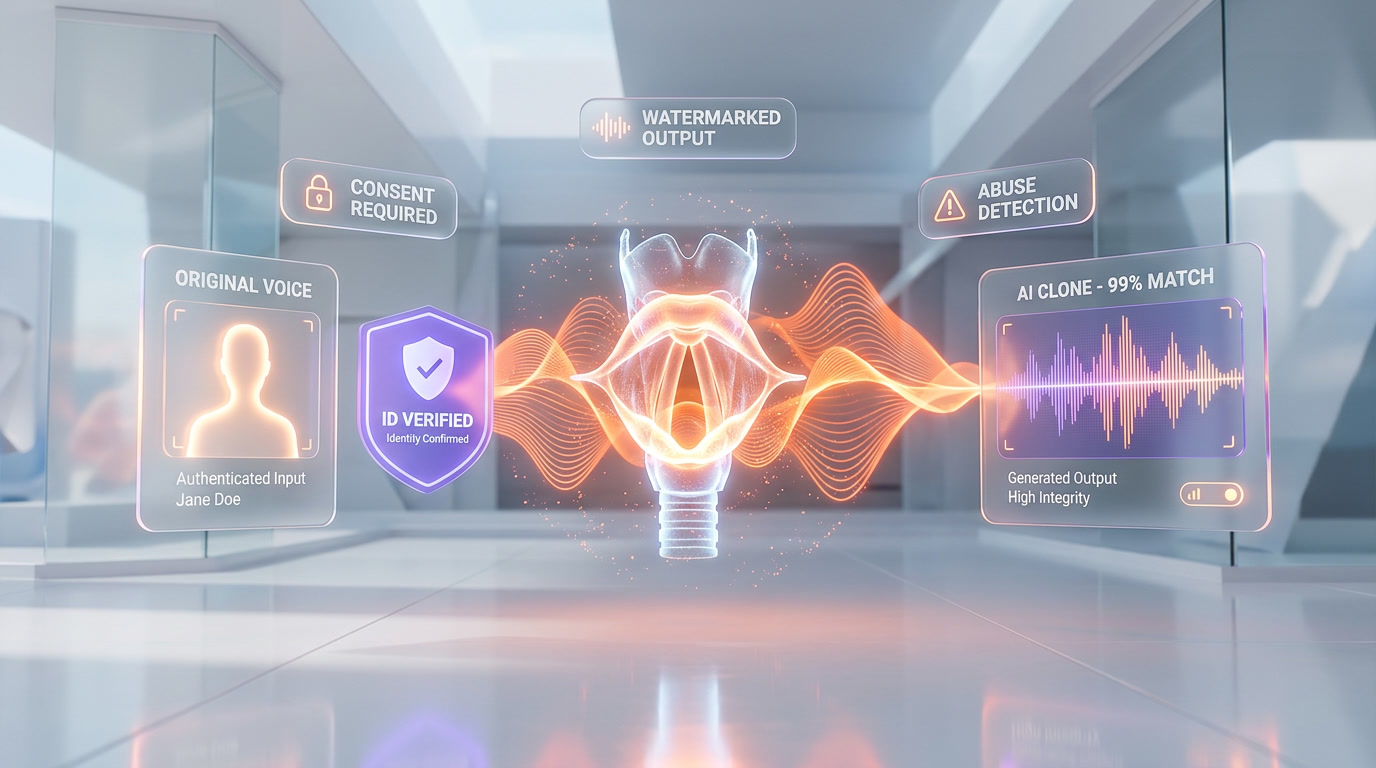
Live identity verification is mandatory. This is not optional, and it is not a checkbox you click. Suno requires real-time verification that the voice being cloned belongs to the person submitting it. You cannot clone someone else's voice. This is a direct response to the ethical and legal firestorm around AI voice cloning � and it distinguishes Suno from tools like ElevenLabs or Resemble AI, which have faced criticism over insufficient consent mechanisms.
Private by default — with a significant caveat. Your cloned voice is not shared with other users and not listed in any public library. However, to use the Voices feature, users must opt in to Suno using their voice data to train its global models. This is not a private silo — your voice recordings contribute to Suno’s overall model training. The opt-in is mandatory for Voices access, meaning there is no way to clone your voice without also feeding Suno’s training pipeline. This is a crucial detail that significantly tempers the privacy narrative.
Pro and Premier only. Free-tier users cannot access Voices. Suno's Pro plan starts at $10 per month (billed annually; monthly billing runs higher) and Premier at $30 per month. Three weeks in, Suno has not introduced a Voices-only cheaper tier — the Pro paywall is holding. Per pricing trackers verified in April 2026, the Free plan gives 50 credits per day, Pro includes 2,500 credits per month, and Premier includes 10,000 credits per month. Voice cloning is the conversion lever, and Suno is clearly leaning on it.
Quality depends heavily on source material — Suno still recommends clean a cappella clips of 30 to 60 seconds with no reverb or background instruments. But three weeks of real use has clarified the expectation problem: Voices is directional influence, not a 1:1 replica. Per the JG BeatsLab day-one teardown and follow-up community testing, at 0% influence you get pure Suno vocals, at 40% you get a "cleaned-up, production-ready" version of you, at 70–75% your identity comes through but stability drops, and at 100% the model fights your raw input. The consensus landing spot is 40–60%. Even in that sweet spot, identity drifts across regenerations of the same prompt — the cloned voice is not deterministic run-to-run. Whisper-singing and heavy vocal processing still break the clone, as predicted.
Custom Models: Train AI on Your Own Music
Custom Models is the second pillar of v5.5, and it targets a fundamentally different use case than Voices. Where Voices clones your vocal timbre, Custom Models learns your entire musical style � instrumentation, arrangement patterns, genre tendencies, production choices.
How it works: Upload a minimum of 6 tracks (your own original music). Suno trains a personalized model on your catalog. You can create up to 3 custom models simultaneously � potentially one for each genre or project style you work in. Training time has not been publicly disclosed, but early reports from beta testers suggest 2�6 hours depending on catalog size and server load.
The input requirements matter. Suno specifies original music only. Uploading copyrighted material you do not own will violate their terms of service and may result in account termination. This is both a legal safeguard and a practical one � training a model on someone else's copyrighted catalog to replicate their style sits in deeply contested legal territory.
Once trained, your custom model becomes a generation engine. You write prompts, and the AI produces music that reflects the stylistic fingerprint of your uploaded catalog. Think of it as fine-tuning GPT on your own writing corpus, but for music. The output is not a remix or a mashup � it is new composition influenced by your patterns.
This feature positions Suno as genuinely useful for working musicians, not just hobbyists. A film composer could train a model on their existing score library and generate first-draft cues in their own style. A lo-fi producer could create an infinite extension of their sound palette. An indie band could prototype ideas that sound like their band before stepping into the studio.
My Taste: The Adaptive Preference Engine
My Taste is the quietest feature in v5.5, but it may be the most strategically important. It is available to all users � including free tier � and it works passively.
The system tracks your generation history, your listening patterns within Suno's platform, and your explicit feedback (likes, skips, regenerations). Over time, it builds a preference profile that influences how the AI interprets your prompts. Two users typing the same prompt will get different outputs based on their accumulated taste profile.
This is Suno's play for retention. Voice cloning and custom models are power features for power users. My Taste is what keeps casual users coming back. It creates a personalization moat � the longer you use Suno, the better it gets at reading your creative intent, and the harder it becomes to switch to a competitor where you would start from zero.
From a product strategy perspective, My Taste also serves as a data flywheel. Every interaction refines the model's understanding of user preferences at scale, which feeds back into Suno's general model improvements. Users who opt into this are effectively co-training the next version of the platform.
The Ethics Question No One Can Avoid
Suno's voice cloning launch does not happen in a vacuum. The RIAA filed lawsuits against Suno (and Udio) in mid-2024 alleging training on copyrighted recordings without permission. Three weeks into v5.5, the landscape has shifted: Udio has settled with Universal Music Group, with UMG and Udio jointly planning a licensed successor service for 2026 release. Suno's own lawsuit remains active — and in September 2025 the major labels amended their complaint to allege Suno specifically pirated copyrighted material to train its models, escalating the legal exposure beyond the original fair-use fight. Warner Music remains the only major to have settled directly with Suno (late 2025). Universal, Sony, and hundreds of independent labels have not. The fact that v5.5 shipped on schedule while the piracy allegations intensified tells you how Suno is playing the clock: ship product, settle later.
The live identity verification requirement in Voices is Suno's most visible ethical safeguard. It directly addresses the nightmare scenario that haunts the music industry: an AI tool that lets anyone clone any artist's voice without consent. By requiring real-time proof that you are cloning your own voice, Suno draws a clear line.
The voice data opt-in is the other elephant in the room. To use the Voices feature, Suno requires users to consent to their voice data being used to train Suno’s global models. This is not optional — if you want voice cloning, you agree to feed the training pipeline. Your voice clone may be private to you, but the underlying vocal data contributes to improving Suno’s models for everyone. For artists concerned about AI training on their voice without compensation, this is a significant consideration. You get a personal tool, but Suno gets training data. The exchange is transparent, but it is not neutral.
But the line is not as clean as it appears. Custom Models, for example, requires you to upload "your own" tracks. How does Suno verify ownership? If you produced a track but a vocalist holds separate rights, who controls the training data? If you are signed to a label that owns your masters, can you legally upload those masters to train an AI model? These questions do not have settled answers in any jurisdiction.
The broader tension remains: AI music companies are building tools that could eventually replicate any artist's style � not their voice, but their compositional signature. Copyright law protects specific recordings and compositions, not styles. A custom model trained on your favorite artist's public catalog (if you could get away with it) would produce music that sounds like them without technically copying any protected work. This is the legal gray zone that will define the next decade of AI music litigation.
Google Lyria 3 Pro: The Same-Week Competitor
Google released Lyria 3 Pro on March 27, 2026 — one day after Suno v5.5. This is not a coincidence. The AI music space is now a head-to-head race between Suno (the startup) and Google (the infrastructure giant). Three weeks in, the split has held: Lyria 3 Pro is what developers reach for when they want API-driven music generation bundled into the Google AI suite, while Suno is what musicians open when they want to actually produce something. Neither has displaced the other.
| Feature | Suno v5.5 | Google Lyria 3 Pro |
|---|---|---|
| Voice cloning | Yes � live verification, private | No |
| Custom model training | Yes � up to 3 models | No |
| Adaptive preferences | Yes (My Taste) | Limited |
| Audio quality | High (improved in v5.5) | Very high (Google-scale training) |
| Full DAW features | Yes (Suno Studio) | No � generation only |
| Pricing | Free / $10 / $30 per month | Bundled in Google AI suite |
| Platform | Web + Suno Studio desktop | Web (Google ecosystem) |
| Label partnerships | Warner Music (settled) | YouTube Music licensing |
The key difference: Suno is building a creative tool. Google is building an infrastructure layer. Lyria 3 Pro produces impressive raw audio, but it does not offer the compositional workflow, editing timeline, or personalization features that Suno Studio provides. Google's approach is "generate a track." Suno's approach is "build your music, your way, with AI as a collaborator."
For musicians, Suno v5.5 is more useful today. For developers building AI music into other products, Lyria 3 Pro's API-first design may be more attractive. For listeners who just want to hear AI-generated music, both platforms deliver impressive quality.
What 3 Weeks of Real Use Revealed
After 23 days of daily use and tracking community sentiment on Reddit, Gearspace threads, and the Suno Facebook groups, a clearer picture of v5.5 has emerged. The hype cycle has cooled into a more honest assessment — here is what held up and what did not.
Voices is a blending tool, not a clone. The community reframing is almost unanimous: v5.5 Voices injects your vocal signature into Suno's internal singer, it does not reproduce your voice verbatim. Users expecting "me, but singing the AI's song" have been disappointed. Users who treat the Audio Influence slider as a directional dial — set around 40 to 50 percent — report production-usable results. This is a feature that rewards calibrated expectations.
Drift across generations is the single biggest complaint. Even at the sweet-spot influence level, two generations of the same prompt produce noticeably different vocal takes. Seed-pinning is not exposed in the UI, so consistent characterization across a multi-song project is currently a manual hunt-and-regenerate job. This is the highest-signal feedback from Suno power users after three weeks.
Geographic availability is still uneven. Several users in specific regions report the Voices feature not appearing in their account three weeks after launch. Suno's help docs confirm geographic distribution is still rolling out, with no firm timeline. If Voices is the reason you are considering a Pro upgrade, verify availability in your region before subscribing.
Billing and support have not improved. Trustpilot reviews and public complaint threads in April 2026 echo long-running pre-v5.5 grievances: subscriptions charged after cancellation, annual-tier clicks that feel like dark patterns, and slow or unresponsive customer support. v5.5 added features, not staff. If you upgrade, use a card you can freeze and document your cancellation date.
Custom Models is quietly the sleeper feature. Three weeks of training runs on real user catalogs have validated the 2 to 6 hour training window reported by beta testers. Producers with tight genre fingerprints — lo-fi, cinematic scoring, hyperpop — report the strongest results. Generalist catalogs produce a mushier "averaged" model. The 6-track minimum is the floor; uploading 20 to 30 tracks in a single coherent style produces materially better output.
My Taste is invisible but working. The preference engine leaves no UI traces, so it is hard to feel it engaging. Power users running side-by-side tests with a secondary account report that after two weeks of active use, the primary account produces outputs that better match their aesthetic on generic prompts. The moat Suno is building here is real, even if it is silent.
The v6 question. As of April 17, 2026, Suno has not announced or shipped a v6. v5.5 is still the current flagship, and the public changelog and Suno blog show no v6 hints. If you were waiting for the next jump before subscribing, the wait is not over.
What This Means for Musicians
The practical implications of Suno v5.5 depend entirely on what kind of musician you are.
Solo artists and singer-songwriters: Voice cloning plus custom models means you can prototype complete tracks � vocals and all � without booking studio time or hiring session musicians. This is not about replacing your artistry. It is about reducing the gap between an idea in your head and a listenable demo. You can iterate 20 times in an afternoon instead of spending $500 on a single studio session that may not capture the vibe you wanted.
Producers and beatmakers: Custom Models is the feature that matters most. Training a model on your production catalog gives you an AI assistant that understands your sonic vocabulary. Need a placeholder melody while you work on the beat? Generate one in your style. Want to explore a variation on a chord progression? Let the model suggest alternatives that fit your established patterns.
Content creators and podcasters: Voice cloning opens the door to custom intro/outro music sung in your own voice, without needing to actually sing well. The AI handles pitch correction and production quality. This is a niche use case, but it is a compelling one for creators who want a unique audio brand.
Session musicians and vocalists: This is where it gets complicated. If AI can clone a singer's voice and generate unlimited vocal takes, the demand for human session vocalists could decline. Not immediately � AI vocals are still detectably synthetic in many cases � but the trajectory is clear. Musicians in this category should be paying close attention to the legal frameworks emerging around voice rights and AI training consent.
The Bigger Picture
Suno v5.5 is not just a product update. It is a statement about where AI music is heading: toward radical personalization. The future is not "everyone uses the same AI to generate the same generic music." The future is "your AI sounds like you, knows what you like, and helps you make what only you would make."
Suno Studio � the desktop application that positions itself as an AI-native DAW � is the vehicle for this vision. Traditional DAWs like Ableton, Logic, and FL Studio are tools that execute your decisions. Suno Studio is a tool that collaborates on your decisions. That distinction is going to define the next generation of music software.
Whether this is exciting or terrifying depends on your relationship with the creative process. For makers, it is a superpower. For the industry's incumbent gatekeepers, it is an existential challenge.
Frequently Asked Questions
Can I clone someone else's voice with Suno v5.5?
No. Suno requires live identity verification to confirm the voice being cloned belongs to the person submitting it. You cannot clone another person's voice. This is a mandatory safeguard, not an optional setting. Attempting to circumvent it violates Suno's terms of service.
How much does Suno v5.5 cost?
My Taste is free for all users. Voices (voice cloning) and Custom Models require a Pro plan ($10 per monthnth billed annually) or Premier plan ($30 per monthnth). Free-tier users get improved base generation quality from v5.5 but cannot access the voice cloning or custom model training features.
What is the difference between Voices and Custom Models?
Voices clones your vocal timbre � the unique sound of your singing voice. Custom Models learns your entire musical style � instrumentation, arrangement, genre tendencies, and production choices � from a minimum of 6 uploaded original tracks. You can use both features together to generate music that sounds like you in every dimension.
How does Suno v5.5 compare to Google Lyria 3 Pro?
Suno v5.5 offers voice cloning, custom model training, and a full DAW experience (Suno Studio) that Google Lyria 3 Pro does not. Google Lyria 3 Pro excels in raw audio quality and API integration for developers. Suno is the better choice for musicians and creators who want hands-on control. Lyria 3 Pro is better for developers building AI music into other products.
Are there legal risks to using Suno's voice cloning?
For cloning your own voice, the direct legal risk is minimal — you own your voice. However, using Voices requires opting in to Suno using your voice data to train its global models, so your voice is not kept in a private silo. The legal risk is minimal � you own your voice. The broader legal landscape around AI music remains unsettled. The RIAA has active lawsuits against Suno over training data, and only Warner Music has settled. If you are a signed artist, check your contract before uploading masters to Custom Models, as your label may hold rights to those recordings.
Frequently Asked Questions
Is Suno v5.5 voice cloning better than ElevenLabs for singing voices?
Suno v5.5 and ElevenLabs serve different use cases. ElevenLabs focuses on speech and narration cloning, while Suno v5.5 Voices is built specifically for singing voice cloning integrated directly into AI music generation tracks. Suno enforces live identity verification — a consent mechanism ElevenLabs has been criticized for lacking. The tradeoff: Suno requires mandatory opt-in to global model training. Suno Pro starts at $10 per month; Premier at $30 per month. For singing in AI-generated music, Suno v5.5 is the more integrated solution.
How does Suno v5.5 compare to Google Lyria 3 Pro?
Google Lyria 3 Pro launched on March 27, 2026 — one day after Suno v5.5 dropped on March 26, making this the most competitive week in AI music history. Suno v5.5 differentiates with personal voice cloning, custom model training on your own catalog (6+ tracks, up to 3 models), and the My Taste adaptive preference engine. Lyria 3 Pro leverages Google's infrastructure and scale. Suno uniquely positions itself as a full AI DAW — a role Lyria 3 Pro has not claimed.
Is Suno v5.5 better than Udio for custom AI music model training?
Suno v5.5 introduces Custom Models — upload 6+ original tracks and train up to 3 personalized AI models on your own catalog. Udio does not currently offer an equivalent personal model training feature. Both Suno and Udio faced RIAA lawsuits in mid-2024 over training data. Suno v5.5's Custom Models give it a clear edge for musicians wanting to generate music in their own style, available on Pro ($10 per month) and Premier ($30 per month) plans only.
Who should use Suno v5.5 voice cloning and Custom Models?
Suno v5.5 is best for: independent musicians wanting AI assistance without losing their sonic identity, film composers training models on their score library to generate first-draft cues in their own style, content creators needing custom voice tracks, lo-fi producers extending their sound palette indefinitely, and indie bands prototyping ideas. Voices and Custom Models require Pro ($10 per month) or Premier ($30 per month). My Taste adaptive preferences are available free to all users.
What are the limitations of Suno v5.5 voice cloning?
Suno v5.5 voice cloning has five key limitations: (1) requires Pro or Premier subscription ($10 to $30 per month); (2) mandatory opt-in to Suno's global AI model training — no private-only option exists; (3) tonal fidelity drops from 80–90% on clean recordings to 60–70% on noisy or heavily stylized inputs; (4) the system struggles with heavily processed vocals or whisper-singing; (5) live identity verification is mandatory — you cannot clone another person's voice under any circumstance.
Does Suno v5.5 integrate with DAW software like Ableton Live or Logic Pro?
Suno v5.5 does not offer native plugin integration with DAWs like Ableton Live or Logic Pro at launch. Suno Studio positions itself as a standalone full AI DAW — the only product currently claiming that role. Generated tracks can be exported and imported into external DAWs manually. Custom Models let you generate music in your own style for use in external projects, but no VST or AU plugin is available as of the v5.5 release on March 26, 2026.
How does Suno v5.5 compare to Resemble AI on voice cloning consent?
Suno v5.5 explicitly differentiates from Resemble AI by implementing mandatory live identity verification — real-time proof that the voice being cloned belongs to the submitter. Resemble AI has faced criticism for insufficient consent mechanisms. However, there is a significant Suno-specific tradeoff: using Voices requires opting in to Suno's global model training pipeline. Your cloned voice is private, but your vocal recordings contribute to Suno's AI training. The consent is transparent — but not optional.
What are the privacy implications of Suno v5.5 voice data opt-in?
Suno v5.5 makes voice data opt-in mandatory to access the Voices feature. Your cloned voice is private to your account and not listed publicly — but Suno uses your voice recordings to train its global AI models. There is no way to use voice cloning without contributing to Suno's training pipeline. For artists concerned about AI training on their voice without compensation, this is a crucial consideration: you receive a personal tool, but Suno gains training data in exchange. The tradeoff is transparent but non-negotiable.