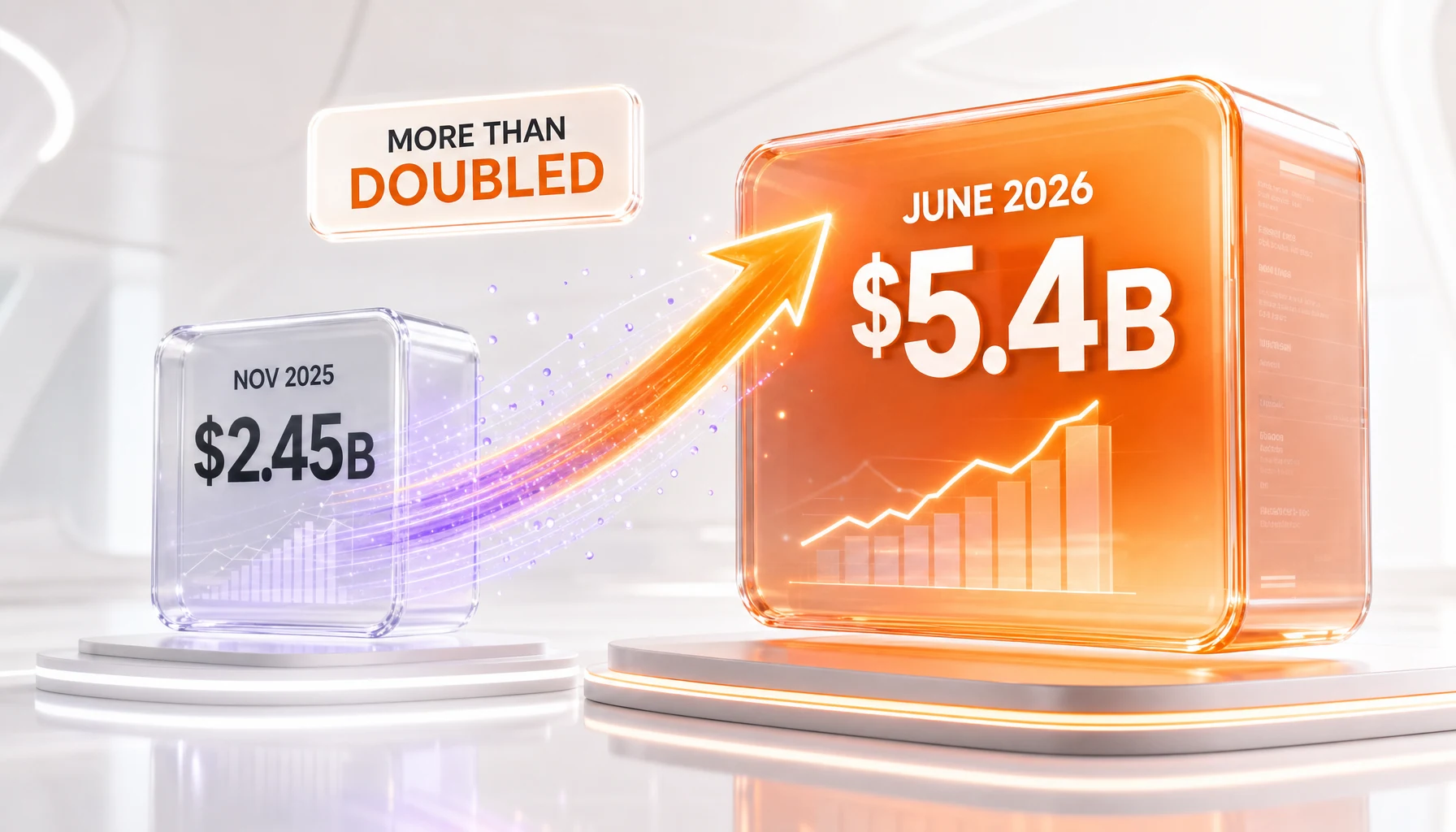
Suno raised $400 million in a Series D round on June 3, 2026, led by Bond Capital, at a $5.4 billion valuation. That figure more than doubles the $2.45 billion valuation the AI music startup carried after its $250 million round in November 2025. The raise lands while two of the three major labels, Universal Music Group and Sony Music, are still in active copyright litigation against Suno, even though Warner settled and signed a license in November 2025.
What Happened
On June 3, 2026, Suno disclosed a $400 million Series D funding round at a post-money valuation of $5.4 billion. The round was led by Bond Capital, the growth fund led by Mary Meeker, with participation from IVP, Forerunner, Union Square Ventures, Alkeon, and Quiet. Existing backers Matrix, Lightspeed, Menlo, and Schroders also returned for the round. Variety, The Hollywood Reporter, and Bloomberg each reported the terms.
The headline number is the valuation jump. Suno was valued at $2.45 billion after its $250 million round in November 2025. Roughly six months later, that mark sits at $5.4 billion. The valuation has more than doubled in about half a year, a pace that is unusual even by 2026 generative-AI standards.
Suno also shared traction figures alongside the raise: more than 2 million paying subscribers as of February 2026 and an annual recurring revenue run rate of around $300 million. For a consumer-facing AI product that launched its first viral model in 2024, those are the kind of numbers that explain why a growth fund like Bond was willing to underwrite a valuation this size.
The Round at a Glance
| Item | Detail |
|---|---|
| Round | Series D, $400 million |
| Lead investor | Bond Capital |
| Co-investors | IVP, Forerunner, Union Square Ventures, Alkeon, Quiet |
| Returning backers | Matrix, Lightspeed, Menlo, Schroders |
| Valuation (June 2026) | $5.4 billion post-money |
| Prior valuation (Nov 2025) | $2.45 billion, after a $250 million round |
| Traction | More than 2 million paying subscribers (Feb 2026), about $300 million ARR |
| Announced | June 3, 2026 |
Why It Matters
The thing that makes this round notable is not the dollar amount. It is the timing. Suno doubled its valuation while two of the three companies that own most of the recorded-music catalog in the Western market are still suing it. The investors writing these checks are pricing in an outcome where Suno is not litigated out of existence, but instead ends up paying for licenses the same way Warner already agreed it should.
That is the bet underneath the number. When the three majors first sued Suno in 2024, the open question was whether AI music generation trained on copyrighted recordings was a viable business at all, or a legal liability waiting to be unwound. Warner's settlement and license in November 2025 reframed that question. It established that at least one major label sees more upside in a licensing deal than in a courtroom victory. A $5.4 billion valuation is the market saying it expects Universal and Sony to eventually reach the same conclusion.
For the wider AI sector, the round is a signal that consumer AI products with real recurring revenue can raise at multiples that earlier looked reserved for foundation-model labs. Suno is not selling an API to enterprises. It is selling a subscription to people who want to make songs. More than 2 million of them are paying, and that is enough to support a valuation north of $5 billion.
The Lawsuit Context, Without the Common Mistake
It is worth being precise here, because the framing gets reported wrong constantly. The plaintiffs suing Suno are the record labels themselves, not a trade body. Warner Music Group, Universal Music Group, and Sony Music filed the original copyright infringement suits in 2024. The Recording Industry Association of America coordinated and publicized the litigation, but the named parties pressing the claims are the labels.
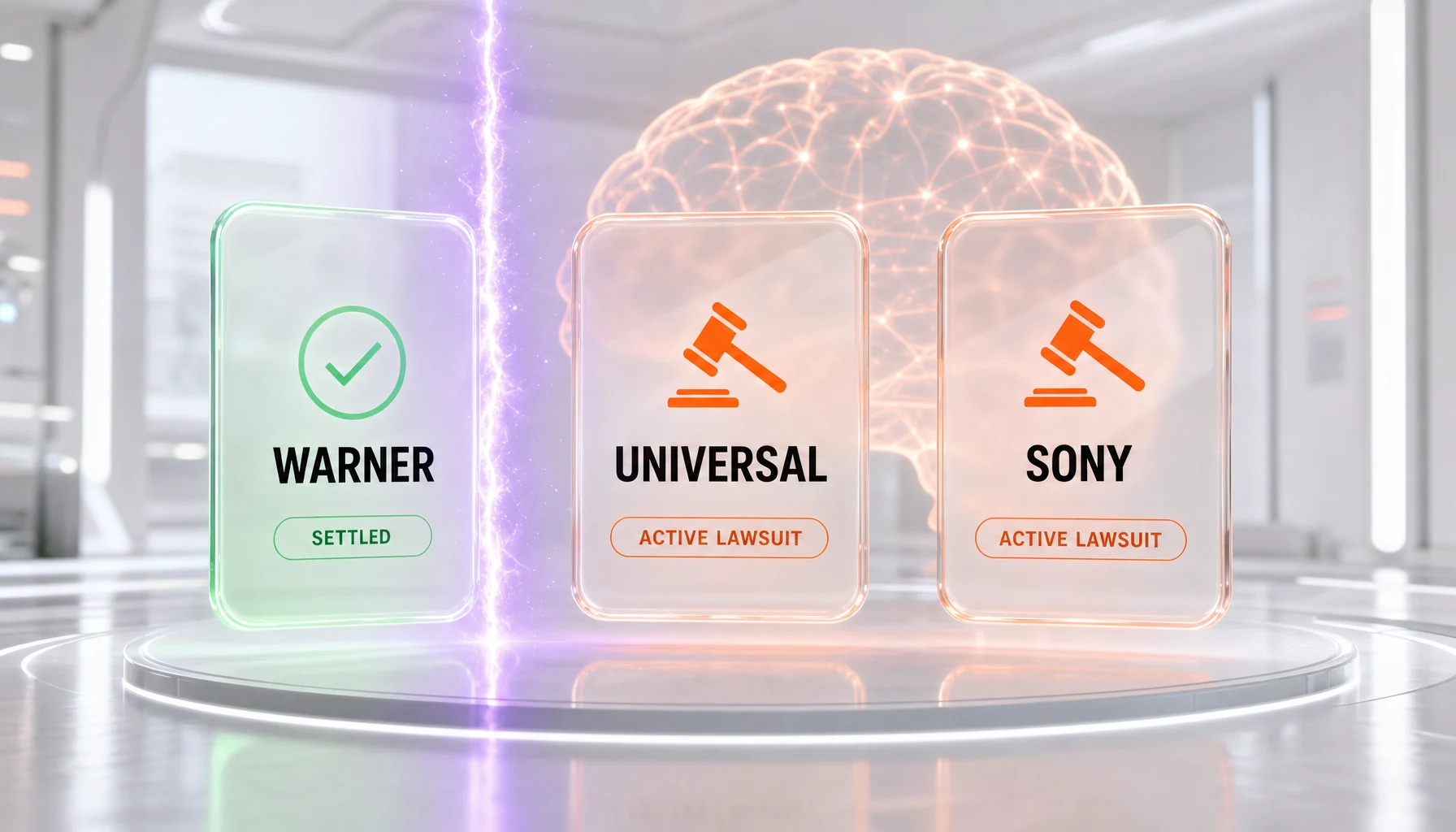
The state of play as of June 2026 is split. Warner settled with Suno in November 2025 and signed a licensing agreement, the same month Suno's prior round closed. Universal and Sony remain in active litigation. So Suno is simultaneously a licensed partner to one major and a defendant against the other two. We covered the mechanics of that fight, including the discovery dispute that followed the Warner deal, in our analysis of the Warner settlement and the UMG and Sony discovery battle.
The Warner template matters because it is now the most concrete data point any investor has. A settlement plus a forward license is a path to revenue for the labels and legal cover for Suno. If Universal and Sony follow Warner, the litigation overhang that should, in theory, depress Suno's valuation instead becomes a one-time cost of doing business. The round suggests investors are underwriting that scenario rather than the one where the courts side fully with the remaining plaintiffs.
How It Compares
Six months is a short window for a valuation to more than double. The $250 million round in November 2025 set the mark at $2.45 billion. The $400 million Series D in June 2026 set it at $5.4 billion. The pace of the markup tracks the pace of the subscriber growth and the ARR run rate, but it also tracks the de-risking of the legal picture after the Warner deal.
Against the broader generative-media field, Suno is now valued in the same conversation as the better-funded image and video startups, despite operating in a narrower category. Music has historically been the hardest creative vertical for AI to monetize cleanly, precisely because of the rights questions that put Suno in court. A $5.4 billion valuation in that category is a statement about how quickly the licensing path has become credible.
The product side has kept moving in parallel with the fundraising. Suno's model and feature releases, including its voice and custom-model work, are part of why the subscriber base grew fast enough to justify this round. We broke down those product capabilities in our coverage of Suno's v5.5 voice cloning and custom models launch, and our full hands-on profile lives on the Suno AI tool page.
Our Take
We have been tracking Suno since the original lawsuits, and the most interesting part of this round is what it implies about how the rights fight ends. Investors do not pay $5.4 billion for a company they think might be enjoined. They pay it because they have watched Warner convert litigation into a license, and they are betting the other two majors do the math the same way.
The risk that does not show up in the headline number is asymmetric. If Universal and Sony settle and license, this valuation looks early and cheap in hindsight. If they push to a precedent-setting ruling and win, the licensing assumption baked into the round gets repriced fast. The round is, in effect, a wager that the music industry has decided licensing is more lucrative than litigation, and that the holdout labels are negotiating rather than fighting to the end.
There is also a quieter signal here about the labels' own incentives. A licensing market for AI-generated music is a new revenue line for catalog owners. Warner moved first and now has a seat at that table. Every month Universal and Sony stay in court is a month they are not collecting on the same model. That incentive structure is exactly what makes a $5.4 billion valuation defensible in the middle of an active lawsuit.
What's Next
The number to watch is not Suno's next valuation. It is whether Universal or Sony moves toward the Warner template. A settlement-and-license from either remaining major would validate the thesis investors just paid for. A hard court ruling, in either direction, would do the opposite and reset how the entire AI-music category gets valued.
For now, Suno has roughly $300 million in ARR, more than 2 million paying subscribers, $400 million in fresh capital, and a $5.4 billion valuation, all while defending two lawsuits and operating under a license from the third major it used to fight. That is an unusual position, and it is the clearest sign yet that the market believes the licensing path wins. We will be watching the Universal and Sony dockets, because that is where this valuation gets confirmed or unwound.
Frequently Asked Questions
How much did Suno raise in its Series D?
Suno raised $400 million in a Series D round announced on June 3, 2026. The round was led by Bond Capital, with participation from IVP, Forerunner, Union Square Ventures, Alkeon, and Quiet, plus returning backers Matrix, Lightspeed, Menlo, and Schroders.
What is Suno's valuation after the Series D?
Suno is valued at $5.4 billion post-money after the Series D. That more than doubles the $2.45 billion valuation it carried after its $250 million round in November 2025, a jump that happened in roughly six months.
Who is suing Suno over copyright?
The three major record labels sued Suno in 2024: Warner Music Group, Universal Music Group, and Sony Music. The plaintiffs are the labels themselves, not the RIAA. Warner settled and signed a license in November 2025, while Universal and Sony remain in active litigation as of June 2026.
Did Suno settle with the record labels?
Suno settled with Warner Music Group in November 2025 and signed a licensing agreement with the label. Universal Music Group and Sony Music have not settled and are still litigating their copyright claims against Suno as of June 2026.
How can Suno raise money while being sued?
Investors are pricing in a licensing outcome rather than a courtroom defeat. Warner's November 2025 settlement and license established that at least one major label prefers a paid deal to litigation. A $5.4 billion valuation reflects the bet that Universal and Sony will eventually follow the same path.
How many paying subscribers does Suno have?
Suno reported more than 2 million paying subscribers as of February 2026, alongside an annual recurring revenue run rate of about $300 million. That recurring revenue is a key reason the Series D priced the company above $5 billion.
Who led Suno's Series D round?
Bond Capital led Suno's $400 million Series D. Co-investors included IVP, Forerunner, Union Square Ventures, Alkeon, and Quiet, while existing investors Matrix, Lightspeed, Menlo, and Schroders also participated in the round.
How does this round compare to Suno's previous funding?
Suno's prior round in November 2025 raised $250 million at a $2.45 billion valuation. The June 2026 Series D raised $400 million at a $5.4 billion valuation, so both the amount raised and the company's valuation roughly doubled in about six months.
How many paying subscribers does Suno have?
Suno reported more than 2 million paying subscribers as of February 2026, with annual recurring revenue of roughly $300 million. That paying base is part of what investors pointed to when valuing the company at $5.4 billion.
What is Suno and what does it do?
Suno is an AI music generation platform that produces full songs — vocals, instrumentation, and lyrics — from short text prompts. It competes with tools such as Udio and ElevenLabs Music in the fast-growing generative music space.
Why did investors back Suno despite the copyright lawsuits?
Investors valued Suno at $5.4 billion even though Universal Music Group and Sony Music are still litigating copyright claims. The round suggests backers view the Warner settlement and licensing deal from November 2025 as a template for resolving the remaining cases.
What is the RIAA's role in the Suno lawsuits?
The RIAA is the trade group that represents the major labels and coordinated the original 2024 complaints against Suno. The plaintiffs in the active cases, however, are the individual labels — Universal Music Group and Sony Music — not the RIAA itself.