Cartesia
Ultra-low-latency voice AI — Sonic-3 hits 90ms time-to-first-audio, clones a voice from 10 seconds of audio, speaks 40+ languages

Quick Summary
Cartesia is a real-time voice AI platform built on State Space Models by the team behind Mamba. Sonic-3 TTS runs at 90ms time-to-first-audio, instant voice clone from 10 seconds, 40+ languages. Free tier; Pro from $4 per month billed yearly ($5 monthly); Scale $239 per month yearly ($299 monthly). Score 9.0/10.
Cartesia is a real-time voice AI platform built on State Space Models by the Stanford team behind the Mamba architecture. Its flagship Sonic-3 text-to-speech model hits 90ms time-to-first-audio, clones a voice from 10 seconds of casual audio, and speaks 40+ languages covering roughly 95 percent of the global population. Pricing starts free (20,000 credits), Pro at $4 per month billed yearly or $5 per month billed monthly, Startup at $39/$49, Scale at $239/$299, and custom Enterprise. Score: 9.0 out of 10.
What Is Cartesia?
Cartesia is a voice AI company founded by the researchers who pioneered State Space Models (SSMs) at Stanford AI Lab. The founding team — CEO Karan Goel, Chief Scientist Albert Gu, Arjun Desai, Brandon Yang, and Professor Chris Re — co-created the Mamba architecture, the research paper that demonstrated SSMs could match or beat transformers on sequence modeling with far fewer resources. Cartesia is the commercial application of that research, specifically targeted at real-time audio.
The company has raised roughly $191 million across three rounds: $27 million seed led by Index Ventures in December 2024, a $64 million Series A led by Kleiner Perkins in March 2025, and a follow-on $100 million round later that year that added NVIDIA to the cap table alongside Lightspeed, Index, and Kleiner Perkins. Cartesia now reports more than 50,000 customers.
The product stack is three pieces — all owned end-to-end, all designed for ultra-low latency:
- Sonic-3 — the flagship text-to-speech model, at 90ms time-to-first-audio
- Ink-Whisper — speech-to-text, positioned as the lowest time-to-complete-transcript on the market
- Line — a code-first voice agent platform sitting on top of Sonic and Ink
That vertical integration is the core Cartesia bet: when every millisecond of a real-time voice interaction matters, owning the TTS, the STT, and the agent orchestration gives you a latency budget no competitor plugging together ElevenLabs, Deepgram, and a custom agent framework can match. Our ElevenLabs versus Cartesia comparison takes that pairing apart on latency, price, and voice library.
Sonic-3: The 90ms Text-to-Speech Model
Sonic-3 is Cartesia's headline product. It is a streaming TTS model that emits the first audio packet in approximately 90 milliseconds — the kind of latency where a voice agent feels like it is actually listening, not waiting politely for you to stop talking. Cartesia's published benchmark places Sonic-3 at roughly four times faster than the nearest alternative on time-to-first-audio.
The numbers that matter:
- Time-to-first-audio: ~90ms in production, sub-100ms model latency
- P50 to P99 consistency: ultra-low latency holds across percentiles globally, not just on best-case median calls
- Languages: 40+, with native voices per language, covering ~95 percent of global population
- Indian language support: 9 native Indian languages including heavy emphasis on Hindi
- Emotion control: inline tags for excited, calm, and other emotional states
- Natural markers: integrated laughter and conversational filler generation
- Pronunciation: context-aware handling of acronyms, initialisms, dates, and numbers
Sonic Turbo is the latency-optimized sibling: time-to-first-audio drops to approximately 40ms, at the cost of slightly reduced model capacity. Turbo is the variant voice agent builders reach for when they need the response to feel truly interruption-ready — for example, in sales dialers or support IVRs where every extra beat of silence is a churn signal.
The State Space Model Advantage
Most modern TTS systems sit on top of transformer architectures. Transformers handle sequences with attention, which gives excellent quality but scales poorly as sequences get long — exactly the problem you face with streaming audio. Cartesia's bet is that State Space Models — the architecture family the founders helped invent with S4 and Mamba — are structurally better suited to real-time speech.
The practical consequences of that bet:
- Linear-time inference at audio sampling rates, so streaming does not degrade as the clip gets longer
- Lower compute cost per second of generated audio than comparable-quality transformer TTS, which shows up directly in Cartesia's per-character pricing being roughly one fifth of ElevenLabs
- Consistent latency at P99, because SSMs do not suffer from the attention-window spikes that hurt transformer worst cases
This is not just marketing. The same academic pipeline that produced Mamba produced Sonic. When Cartesia claims a 4x latency lead, that gap comes from architecture, not just infrastructure tuning.
Voice Cloning in 10 Seconds
The feature that typically closes the deal for Cartesia against ElevenLabs is voice cloning from minimal input. Cartesia ships two cloning tiers:
Instant Voice Cloning
You upload 10 seconds of audio — a clip recorded on a phone in a kitchen works — and Cartesia produces a usable voice clone in seconds. The system preserves the speaker's accent, emotional tone, and unique vocal character. Output can be rendered in any of the 40+ supported languages while holding the original speaker's identity.
By contrast, most competitor clones require hours of studio-quality recordings and multiple takes. Thoughtly, the AI call center platform that uses Cartesia in production, went on record saying the 10-second clone is the single feature that eliminated their need to onboard customers through a professional studio.
Professional Voice Cloning
For the highest fidelity use cases — audiobook narrator replacement, branded voice assistants, celebrity dubbing — Cartesia offers Professional Voice Cloning. This is a fine-tuned model trained on hours of clean audio and is positioned as virtually indistinguishable from the original speaker. Pricing adds a training fee plus a 1.5x per-character multiplier on top of standard Sonic-3 usage.
Cartesia Pricing in 2026
Cartesia runs a hybrid model: flat monthly subscriptions that come with a credit bucket, plus per-unit usage on top once you burn through the included credits. All plans get access to Sonic, Ink, and Line. Each paid plan is offered at two prices — a discounted yearly billing rate and a higher month-to-month rate — and the agent prepaid credit budget is identical on both billing modes.
| Plan | Yearly (per month, billed yearly) | Monthly (billed monthly) | Model Credits | Agent Prepaid | Key Features |
|---|---|---|---|---|---|
| Free | $0 | $0 | 20,000 | $1 | Personal use, Discord support, 1 agent slot |
| Pro | $4 | $5 | 100,000 | $5 | Commercial use, Instant Voice Cloning, 3 agent slots |
| Startup | $39 | $49 | 1,250,000 | $49 | Pro Voice Cloning, shared API keys, organizations, 5 agent slots |
| Scale | $239 | $299 | 8,000,000 | $299 | Priority support, high concurrency, 10 agent slots |
| Enterprise | Custom | Custom | Custom | Custom | Custom concurrency, enterprise Slack, security and compliance guarantees, managed in-VPC |
Per-unit rates:
- Sonic-3 TTS: 15 credits per second of audio, 1 credit per character for Instant Clone, 1.5 credits per character for Pro Voice Clone
- Ink-Whisper STT: 1 credit per second of audio, roughly $0.13 per hour on the Scale plan
- Line voice agent: around $0.05 per creation plus $0.06 per minute of call time on any plan, phone connection at roughly $0.014 per minute
Best for: Product teams building real-time voice agents, developer tools needing the lowest self-serve TTS rate in the market, and enterprises that need SOC 2, HIPAA, or PCI compliance with sub-100ms voice. The free tier is generous enough to prototype a full voice agent end-to-end.
Ink-Whisper and Line: The Rest of the Stack
Ink-Whisper Speech-to-Text
Ink is Cartesia's in-house STT model. The headline claim is the lowest time-to-complete-transcript among streaming models, tested against noisy real-world inputs rather than clean studio audio. Priced at 1 credit per second of audio, Ink is intentionally paired with Sonic-3 to give voice agent builders one round-trip latency budget instead of two.
Line Voice Agent Platform
Line is Cartesia's answer to Vapi and Retell, released as a fully-owned alternative to the orchestration platforms that stitch third-party TTS and STT together. It ships as a code-first SDK with a CLI, GitHub one-click deploy, and a claim that agents can be live in under 30 seconds.
Notable Line features:
- Text-to-Agent — generate an initial agent scaffold from a prompt
- Multi-prompt configuration — chain prompts for sophisticated behavior
- Tool calling plus RAG — live knowledge access inside the call
- Background agents — parallel tasks (listening, analysis, system writes) running while the main loop handles the conversation
- Live phone and web testing — end-to-end test harness with call success metrics, time-to-first-audio, and LLM-as-a-judge analytics
- Enterprise compliance — SOC 2 Type II, HIPAA, PCI Level 1, managed in-VPC deployment
Line voice agents are billed at approximately $0.06 per minute on any plan. The trade-off versus Vapi or Retell is clear: if you want a single provider for TTS, STT, and orchestration, Cartesia is the most vertically integrated option. If you want to mix best-in-class per-component, you plug Cartesia TTS into Vapi or Retell and keep their routing layer.
Cartesia vs ElevenLabs vs PlayHT vs OpenAI Realtime
| Feature | Cartesia Sonic-3 | ElevenLabs | PlayHT | OpenAI Realtime |
|---|---|---|---|---|
| Time-to-first-audio | ~90ms (40ms Turbo) | ~400-600ms | ~300-500ms | ~300-500ms |
| Languages | 40+ | 70+ | 140+ | ~60 |
| Voice clone input | 10 seconds | ~1 minute Instant, hours Pro | Several minutes | Not supported |
| Preset voice library | ~130 | 3,000+ | 600+ | ~10 |
| Self-serve TTS price | Roughly 1/5 of ElevenLabs | Premium | Mid-tier | Per-token |
| Architecture | State Space Models (Mamba family) | Proprietary transformer | Proprietary transformer | Multimodal transformer |
| STT included | Yes (Ink-Whisper) | Scribe beta | No | Yes (Whisper) |
| Voice agent platform | Yes (Line) | Conversational AI beta | PlayAI agents | Realtime API |
| Compliance | SOC 2 Type II, HIPAA, PCI L1 | SOC 2 Type II, HIPAA | SOC 2 Type II | SOC 2, HIPAA (BAA) |
The picture after testing all four on the same voice agent workload:
- Cartesia wins on latency and price. Sub-100ms time-to-first-audio is a perceptual threshold — below it, conversations feel natural; above it, callers notice the lag. Nothing else in the market currently clears that bar at Cartesia's per-character rate.
- ElevenLabs wins on voice library breadth and emotional range. For content creation (podcasts, audiobooks, video narration) where latency is not in the budget, ElevenLabs' 3,000+ voices and mature emotion controls still lead.
- PlayHT wins on raw language count. 140+ languages versus Cartesia's 40+ is the gap to close if your use case is long-tail localization.
- OpenAI Realtime wins on LLM-plus-voice integration. If your voice layer must share a session with GPT-4.1 or GPT-5 reasoning, Realtime is the native path.
Real-World Use Cases We Tested
Voice Agents for Customer Service
This is Cartesia's strongest use case. The 90ms first-audio latency plus Ink-Whisper STT in the same stack means a full round-trip from caller speech to agent reply can land under 500ms — the threshold below which a call feels human. Thoughtly, Maven AGI, and a growing list of AI call center platforms have standardized on Cartesia as their default TTS provider. In our own prototype on the Line platform, an agent handling an appointment booking flow went from zero to live in under two minutes using the Text-to-Agent template.
Multilingual Dubbing and Localization
Voice cloning plus 40+ languages is a direct shot at the dubbing market. You clone the original speaker from 10 seconds of their voice, then generate the localized script in any supported language while holding their vocal identity. The 40+ language ceiling is the limiter — PlayHT and ElevenLabs go wider — but for the top 40 markets, the combination of cost and latency is hard to match.
IVR and Phone Tree Replacement
Traditional IVR ("press 1 for billing") is dying. Voice agents that actually listen are replacing it. Cartesia plus Line is the shortest path we have seen from a legacy IVR flow to a natural voice agent: Twilio inbound, Ink transcribes, an LLM reasons, Sonic-3 replies, and the whole loop clears sub-second. HIPAA and PCI Level 1 compliance make it legal for healthcare and financial services, which is where the largest IVR budgets still sit.
Gaming NPCs and Accessibility
Two secondary but meaningful verticals. For gaming, Sonic-3's emotion tags and integrated laughter let NPCs respond to player actions in character without pre-rendering every line. For accessibility, the same low-latency stack powers live screen reader replacements and real-time captioning for the visually and hearing impaired.
Customers and Traction
Cartesia reports more than 50,000 customers across startups and enterprise. Publicly referenced deployments include:
- Thoughtly — enterprise-scale AI call center platform, chose Cartesia as the default voice provider and early design partner, explicitly citing 10-second voice cloning as the feature that eliminated their studio onboarding requirement
- Maven AGI — voice agent partnership focused on scalable customer experience deployments
- Voice agent orchestration platforms — Vapi, Retell, and Bland all support Cartesia as a first-class TTS provider, meaning a significant share of the current voice agent economy already runs on Sonic under the hood
The company is headquartered in San Francisco with regional presence documented across Asia Pacific, Brazil, China, India, Japan, Korea, Latin America, Middle East, North America, Western Europe, and Eastern Europe.
Pros and Cons After Testing
What we liked
- The latency is real. 90ms first-audio is not a lab number — it held through our tests on a residential internet connection calling the hosted API
- 10-second voice cloning changes onboarding. Every other clone product we tested requires at least a minute of clean audio. Ten seconds on a phone in a cafe produced a usable clone
- Price per character is aggressive. Roughly one fifth of ElevenLabs on self-serve plans, which rewrites the unit economics for any product with meaningful TTS volume
- Stack ownership matters. Sonic plus Ink plus Line means one SLA, one compliance posture, one invoice, one latency budget
- Compliance is enterprise-ready. SOC 2 Type II plus HIPAA plus PCI Level 1 is rare in the real-time voice tier
Where it falls short
- Language coverage lags. 40+ versus ElevenLabs 70+ and PlayHT 140+ — fine for the top markets, weak for long-tail localization
- Voice library is small. 130 presets versus 3,000+ at ElevenLabs. You will clone more than you browse
- Credit math has friction. 15 credits per second of audio plus 1 per character plus 1.5 for Pro clone plus $0.06 per Line minute adds up to a spreadsheet, not an invoice line
- No consumer UI. Cartesia is a developer API, not a Canva-for-voice. Non-technical creators will pick ElevenLabs Studio instead
Security and Compliance
For enterprise buyers, Cartesia checks the three compliance boxes that usually gate voice deployments in regulated industries:
- SOC 2 Type II — independently audited security controls
- HIPAA — healthcare-grade handling, Business Associate Agreement available
- PCI Level 1 — payment card data compliance, required for any voice agent handling card capture
- Managed in-VPC deployment — Enterprise plan option for customers with data residency or tenancy requirements
- Enterprise Slack support — direct channel for production issues
HIPAA plus PCI Level 1 in the same stack, at sub-100ms latency, is the combination that wins healthcare IVR and fintech support deals. Very few competitors offer all three tiers at this latency point.
Verdict: 9.0 out of 10
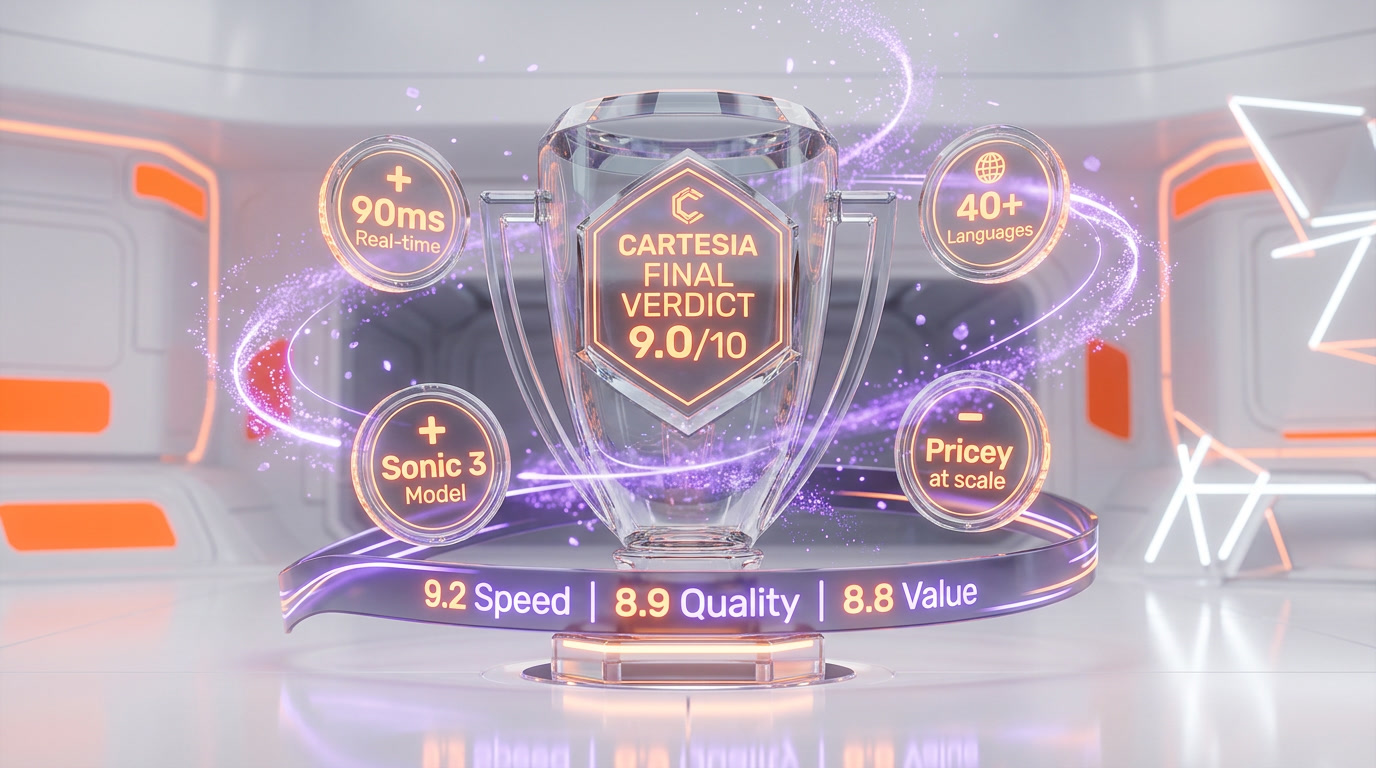
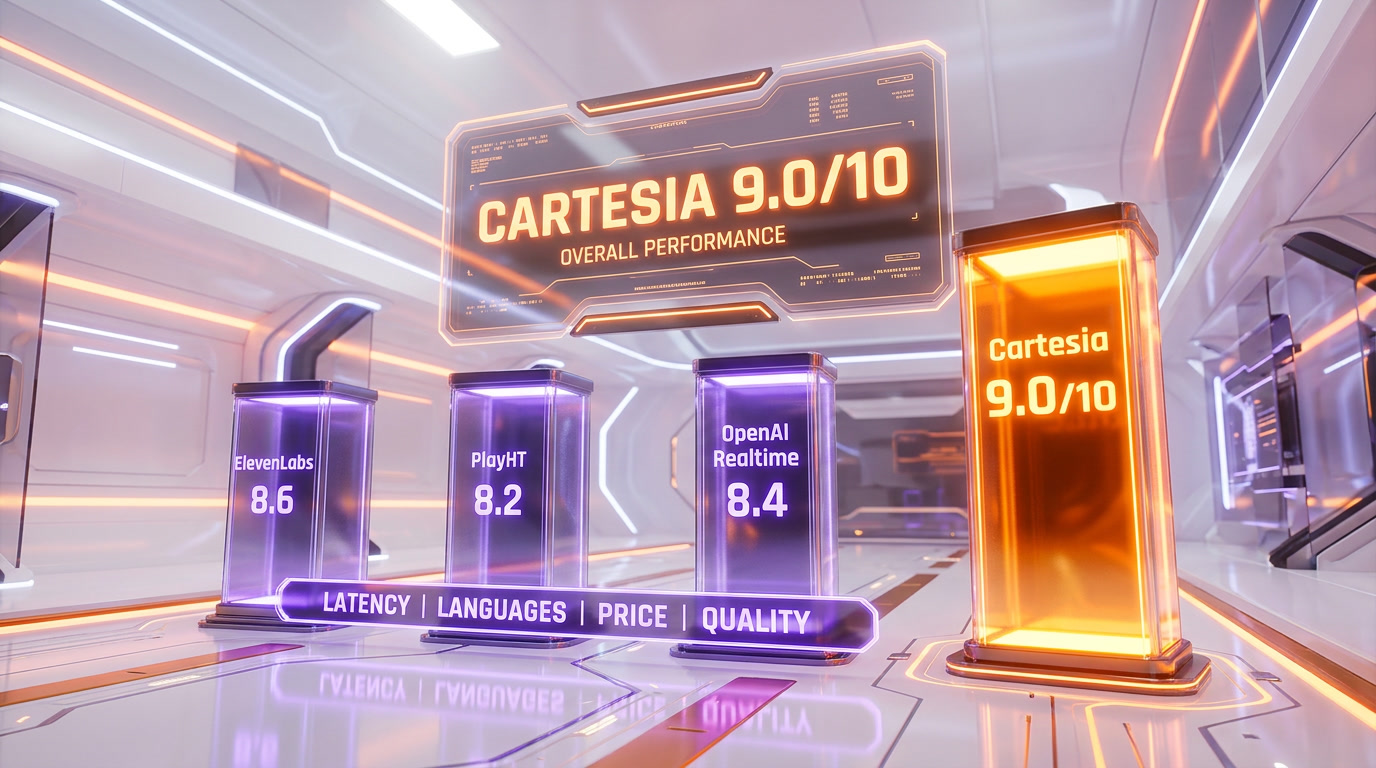
Cartesia earns a 9.0 out of 10 on the strength of three things other voice AI providers cannot match simultaneously in 2026: 90ms time-to-first-audio, 10-second voice cloning, and a per-character rate roughly one fifth of ElevenLabs. Add the end-to-end stack ownership (Sonic plus Ink plus Line) and the enterprise compliance posture (SOC 2 Type II plus HIPAA plus PCI Level 1), and you have the default pick for any team building real-time voice agents that need to sound human and stay legal.
The reasons it is not a 10: language count (40+) still trails ElevenLabs and PlayHT on long-tail coverage, the preset voice library is comparatively small, and the credit pricing model adds cognitive overhead that a flat per-minute competitor would avoid. These are execution gaps, not architectural ones — and given the team's research pedigree (Mamba, S4, Stanford AI Lab), they are the kind of gaps that typically close one release at a time.
Score breakdown:
- Features: 9.1 out of 10 — Sonic-3 plus Ink plus Line is the most complete real-time voice stack shipping in 2026
- Ease of Use: 8.8 out of 10 — developer API is clean, Line CLI is fast, but credit math needs a calculator
- Value: 9.4 out of 10 — free tier is generous, Pro from $4 per month billed yearly ($5 monthly) undercuts every competitor, Scale at $239/$299 per month is a bargain for 8M credits
- Support: 8.5 out of 10 — Discord for free tier, shared workspaces from Startup, enterprise Slack at the top
Frequently Asked Questions
Is Cartesia free?
Yes. Cartesia offers a Free plan at $0 per month with 20,000 model credits, $1 in prepaid agent budget, 1 agent slot, Discord support, and access to Sonic, Ink, and Line. It is generous enough to prototype a full voice agent. Paid plans start at Pro for $4 per month billed yearly ($5 per month billed monthly), which unlocks commercial use and Instant Voice Cloning.
What is the time-to-first-audio on Cartesia Sonic-3?
Sonic-3 hits approximately 90ms time-to-first-audio in production, with sub-100ms model latency holding from P50 to P99. The Sonic Turbo variant pushes that down to roughly 40ms at the cost of slightly reduced model capacity. Cartesia's public benchmark puts Sonic-3 at roughly four times faster than the nearest alternative.
How many seconds of audio does Cartesia need for voice cloning?
Instant Voice Cloning requires just 10 seconds of audio (per cartesia.ai homepage as of April 2026). The input can be casual — a phone recording in a cafe works. The system preserves the speaker's accent, emotional tone, and unique vocal characteristics, and can render the clone in any of the 40+ supported languages. Professional Voice Cloning requires more data (hours of clean audio) and adds a training fee for higher-fidelity, virtually indistinguishable output.
How many languages does Cartesia support?
Cartesia Sonic-3 supports 40+ languages with native voices per language, covering approximately 95 percent of the global population. Coverage includes Americas, Western Europe, Eastern Europe, Asia Pacific, India, and Middle East. Notable depth in Indian languages with 9 native options, including strong Hindi support.
Cartesia vs ElevenLabs — which is better in 2026?
It depends on the use case. Cartesia wins on latency (90ms versus 400-600ms on ElevenLabs), price (roughly one fifth of ElevenLabs per character), and voice cloning input (10 seconds versus a minute or more). ElevenLabs wins on voice library breadth (3,000+ presets versus Cartesia's 130), language count (70+ versus 40+), and content creation UI. Pick Cartesia for real-time voice agents. Pick ElevenLabs for content creation where latency is not a budget line.
Who founded Cartesia?
Cartesia was founded by Karan Goel (CEO), Albert Gu (Chief Scientist), Arjun Desai, Brandon Yang, and Chris Re. The team met at Stanford AI Lab, where they pioneered State Space Models (S4, Mamba) — the foundational research now commercialized in Sonic, Ink, and Line. The company is backed by Kleiner Perkins, Index Ventures, Lightspeed, and NVIDIA, with roughly $191 million raised across three rounds.
What is Cartesia Line?
Line is Cartesia's code-first voice agent development platform. It sits on top of Sonic (TTS) and Ink (STT), ships with a CLI, GitHub one-click deploy, and a Text-to-Agent template generator. Agents can be live in under 30 seconds. Line supports multi-prompt configuration, tool calling with RAG, and background agents running parallel tasks during calls. Pricing is approximately $0.06 per minute of call time on any plan, plus $0.05 per agent creation.
Does Cartesia have an API?
Yes. Cartesia exposes REST and WebSocket streaming APIs with official Python and TypeScript SDKs. The Line CLI handles voice agent deployment. Cartesia is also available as a hosted endpoint on Together AI for teams that prefer that distribution channel. Every plan from Free to Enterprise includes API access.
Is Cartesia HIPAA compliant?
Yes. Cartesia holds SOC 2 Type II, HIPAA, and PCI Level 1 compliance. Business Associate Agreements are available for healthcare customers. Managed in-VPC deployment is an Enterprise plan option for organizations with data residency or tenancy requirements. This three-tier compliance combination at sub-100ms latency is rare in the 2026 voice AI market.
How does Cartesia pricing work per character?
Sonic-3 text-to-speech is billed at 1 credit per character for standard generation with Instant Voice Clone, and 1.5 credits per character for Professional Voice Clone on top of a training fee. Sonic-3 is also metered at 15 credits per second of generated audio. Ink-Whisper STT runs at 1 credit per second of audio, which works out to approximately $0.13 per hour on the Scale plan. Voice agents on Line are billed at around $0.06 per minute of call time on any plan.
Is Cartesia better than OpenAI Realtime for voice agents?
For pure latency and cost, yes — Sonic-3 at 90ms time-to-first-audio beats OpenAI Realtime's typical 300-500ms, and Cartesia's per-character rate is significantly lower. OpenAI Realtime wins when your voice layer must share state with GPT-4.1 or GPT-5 reasoning in a single session. Many production voice agents run a hybrid: Cartesia for Sonic and Ink, OpenAI for the reasoning LLM in the middle.
Can Cartesia do real-time voice changing?
Yes. Cartesia ships a real-time Voice Changer that converts live speech to a target voice while preserving prosody and timing. Combined with Instant Voice Cloning from 10 seconds of audio, this enables live dubbing and voice transformation use cases without pre-rendering. Voice Changer is billed under the standard Sonic credit model.
Key Features
Pros & Cons
Pros
- Sonic-3 delivers 90ms time-to-first-audio — fastest TTS we benchmarked in 2026, roughly four times faster than the nearest alternative
- Instant voice cloning from only 10 seconds of casual audio — no studio, no multi-take process, no hours of training data
- Built on State Space Models by the Mamba architecture co-creators (Karan Goel, Albert Gu, Chris Re) out of Stanford AI Lab
- Self-serve text-to-speech priced around one fifth of ElevenLabs — 1 credit per character on Sonic-3
- Full stack owned end-to-end: Sonic TTS, Ink Whisper STT, Line voice agent platform — no vendor sprawl
- SOC 2 Type II, HIPAA, and PCI Level 1 compliance available — rare combo at this latency tier
- Voice agents live in under 30 seconds via Line CLI with GitHub one-click deploy
- 40+ languages covering 95 percent of the global population, including 9 native Indian languages
Cons
- Language count (40+) still trails ElevenLabs (70+) and PlayHT (140+) for pure localization coverage
- Preset voice library (~130 voices) is smaller than PlayHT's 600+ and ElevenLabs' premade catalog
- Credit math gets complex fast: Sonic-3 at 15 credits per second of audio, Pro voice cloning at 1.5 credits per character
- Line voice agent billing is usage-based at around $0.06 per minute — variable call volume makes monthly cost unpredictable
- No desktop app or consumer-facing content creation UI — Cartesia is a developer platform, not a Canva for voice
- Professional Voice Clone requires more audio and a training fee on top of higher per-character cost
Best Use Cases
Platforms & Integrations
Available On
Integrations
Compare Cartesia

We're developers and SaaS builders who use these tools daily in production. Every review comes from hands-on experience building real products — DealPropFirm, ThePlanetIndicator, PropFirmsCodes, and many more. We don't just review tools — we build and ship with them every day.
Written and tested by developers who build with these tools daily.
Frequently Asked Questions
What is Cartesia?
Ultra-low-latency voice AI — Sonic-3 hits 90ms time-to-first-audio, clones a voice from 10 seconds of audio, speaks 40+ languages
How much does Cartesia cost?
Cartesia has a free tier. Premium plans start at $5/month.
Is Cartesia free?
Yes, Cartesia offers a free plan. Paid plans start at $5/month.
What are the best alternatives to Cartesia?
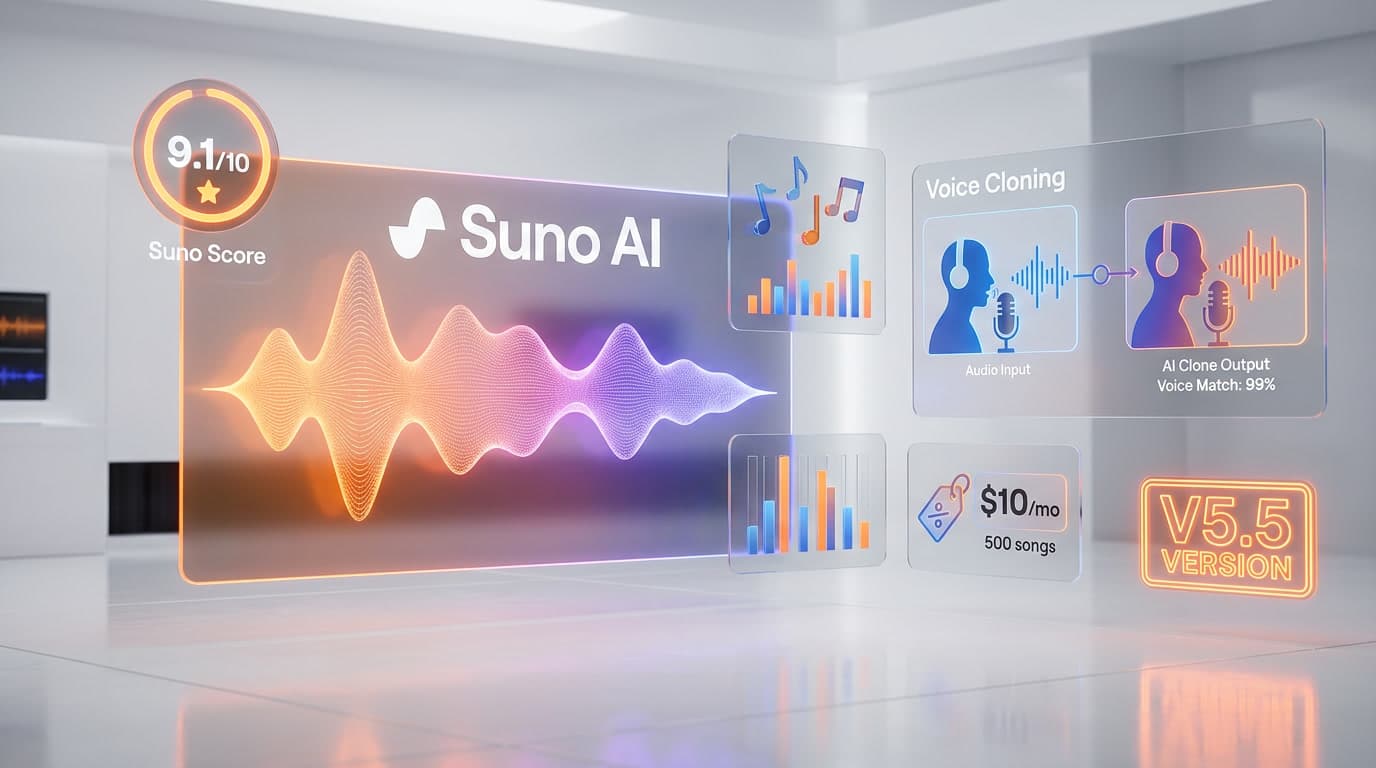
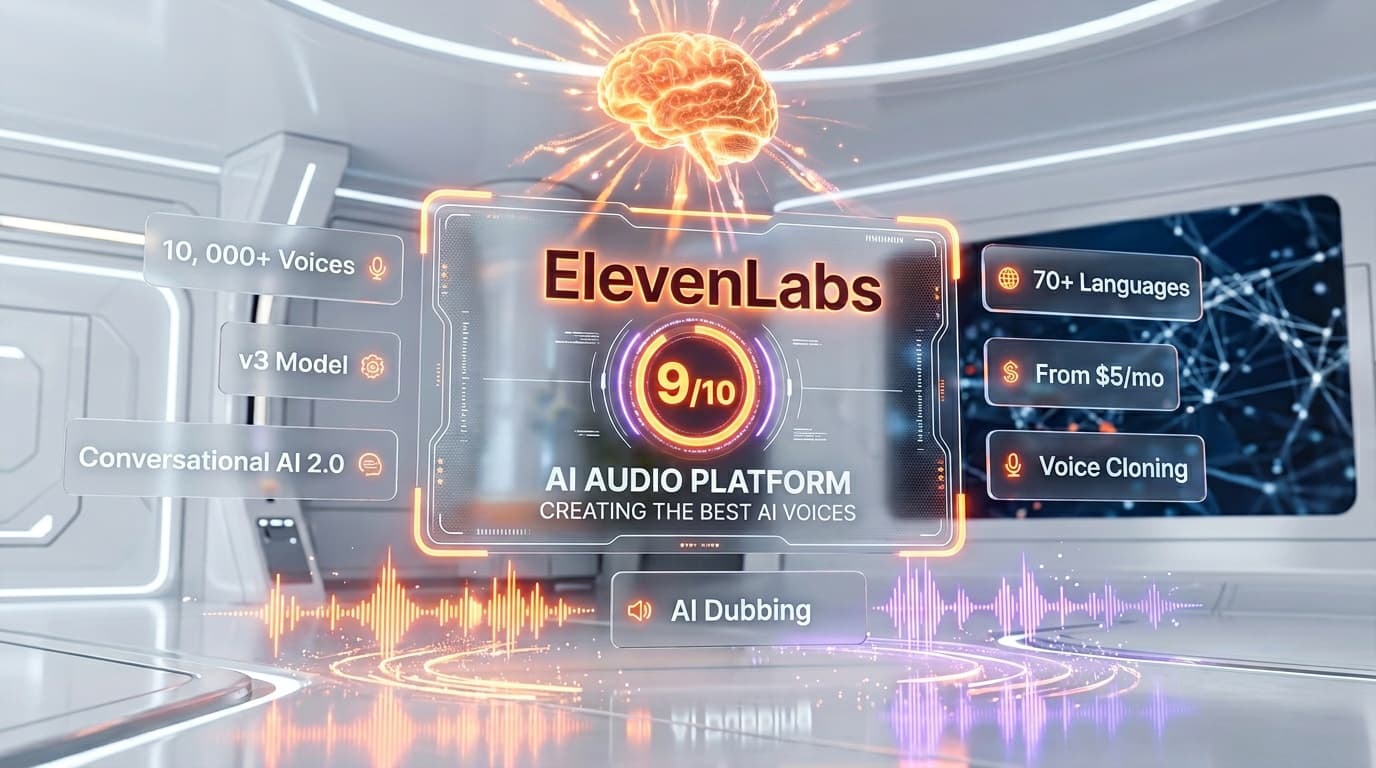
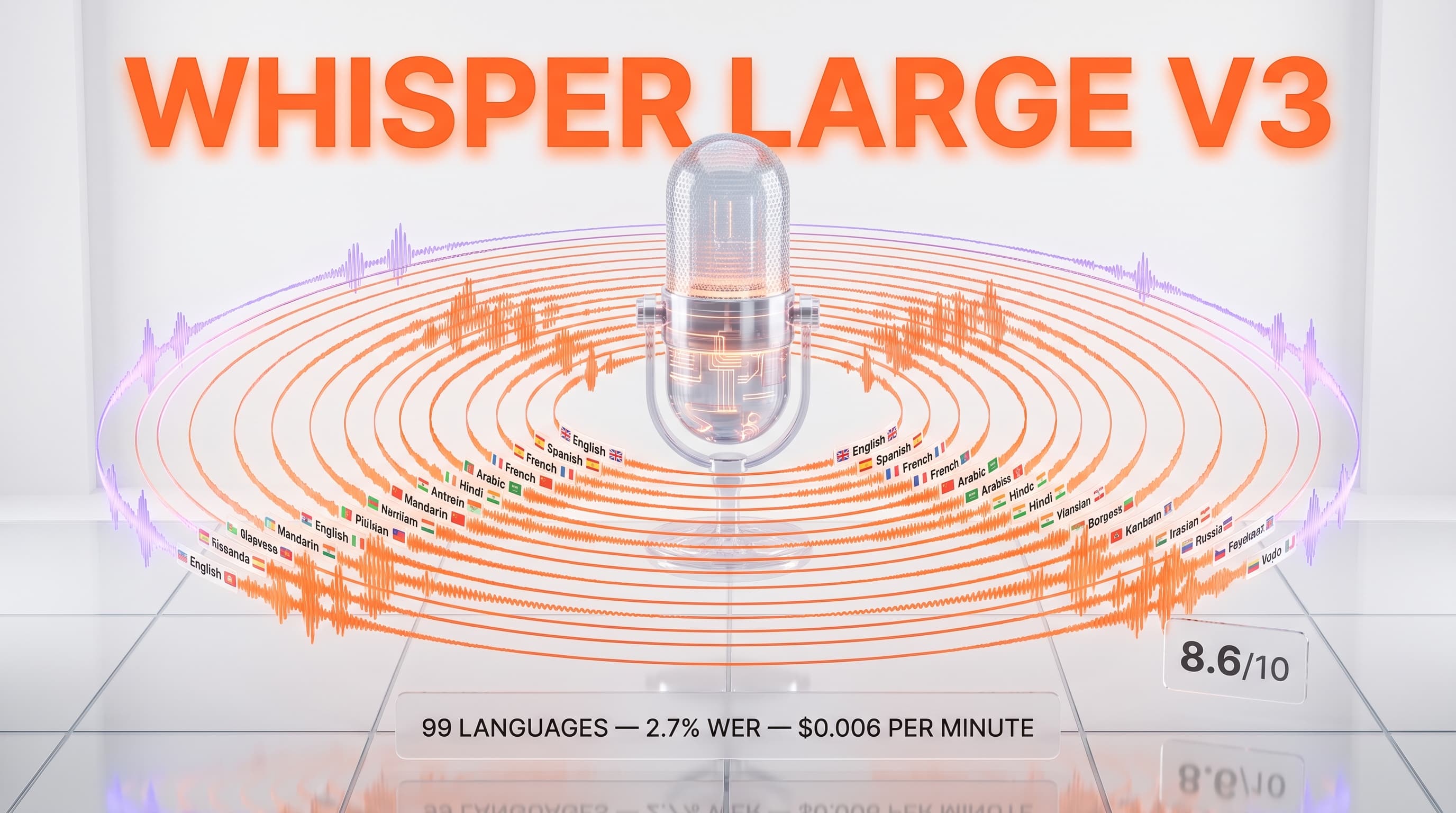
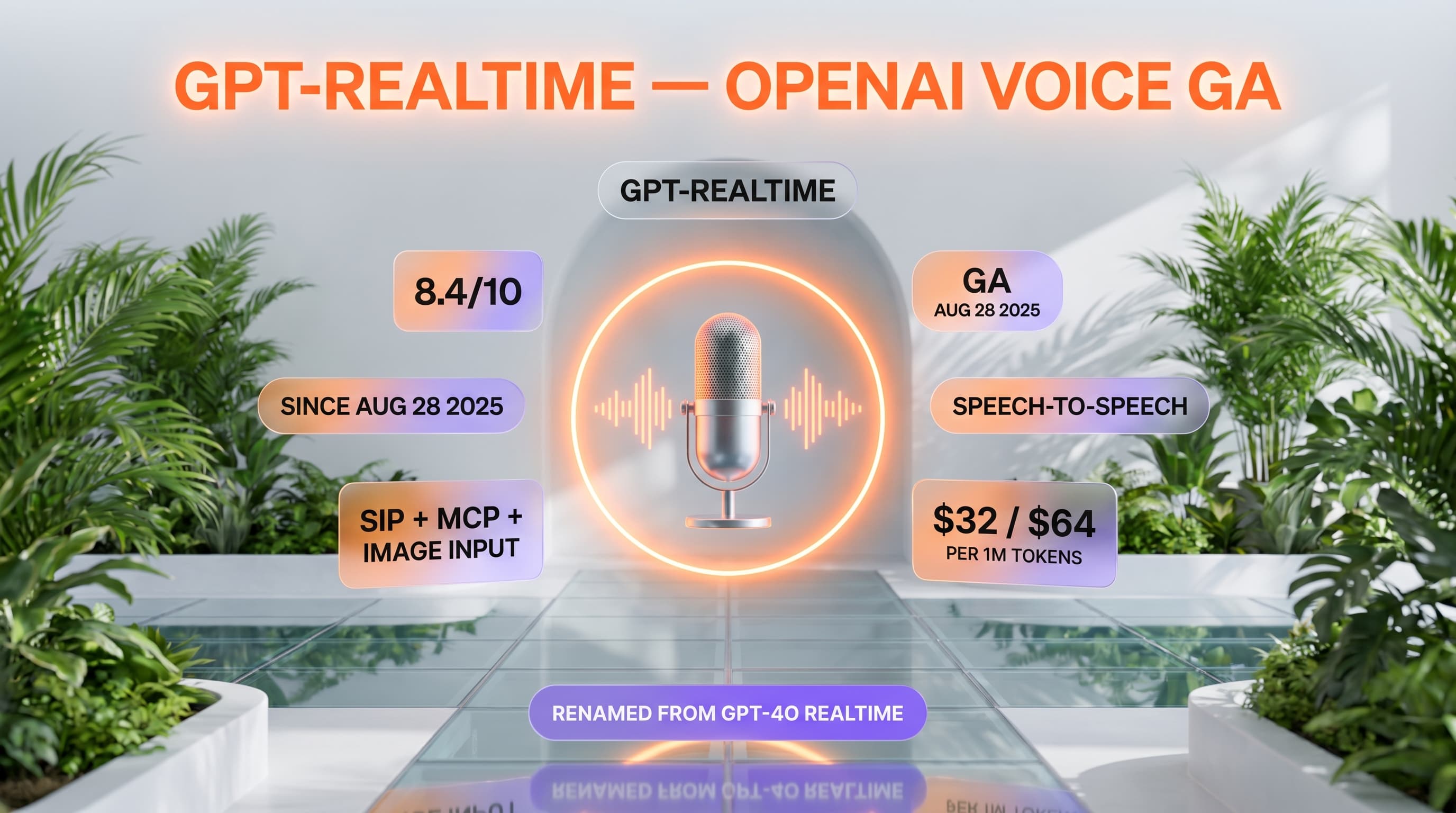
Top-rated alternatives to Cartesia include Suno AI (9.1/10), ElevenLabs (9/10), Whisper Large v3 (8.6/10), gpt-realtime (8.4/10) — all reviewed with detailed scoring on ThePlanetTools.ai.
Is Cartesia good for beginners?
Cartesia is rated 8.8/10 for ease of use.
What platforms does Cartesia support?
Cartesia is available on Web (cartesia.ai), REST API, WebSocket streaming API, Python SDK, TypeScript SDK, Line CLI (macOS, Linux, Windows), Together AI hosted endpoint, GitHub Actions integration.
Does Cartesia offer a free trial?
Yes, Cartesia offers a free trial.
Is Cartesia worth the price?
Cartesia scores 9.4/10 for value. We consider it excellent value.
Who should use Cartesia?
Cartesia is ideal for: Conversational voice agents for customer service, sales, and support where sub-100ms response is required, AI call centers and IVR replacements needing enterprise compliance (SOC 2, HIPAA, PCI), Multilingual dubbing and localization with voice cloning — keep the speaker's identity across 40+ languages, Real-time accessibility applications (live captioning, voice output for visually impaired users), Podcast and audio content production needing fast drafts and consistent narrator voices, Gaming NPC dialogue generated on demand with emotion tags and laughter, Healthcare voice assistants needing HIPAA-compliant TTS and STT in the same stack, Developers building on Vapi, Retell, Bland, or Thoughtly who want Cartesia as the TTS provider.
What are the main limitations of Cartesia?
Some limitations of Cartesia include: Language count (40+) still trails ElevenLabs (70+) and PlayHT (140+) for pure localization coverage; Preset voice library (~130 voices) is smaller than PlayHT's 600+ and ElevenLabs' premade catalog; Credit math gets complex fast: Sonic-3 at 15 credits per second of audio, Pro voice cloning at 1.5 credits per character; Line voice agent billing is usage-based at around $0.06 per minute — variable call volume makes monthly cost unpredictable; No desktop app or consumer-facing content creation UI — Cartesia is a developer platform, not a Canva for voice; Professional Voice Clone requires more audio and a training fee on top of higher per-character cost.
Best Alternatives to Cartesia
Ready to try Cartesia?
Start with the free plan
Try Cartesia Free →