GPT-5
OpenAI flagship LLM legacy from August 2025 — 400K context, $1.25/$10 per million tokens, retired from ChatGPT February 2026, still live via API.

Quick Summary
GPT-5 is OpenAI legacy flagship LLM released August 7, 2025 — 400K context window, 128K max output, $1.25 per million input and $10 per million output tokens. Retired from ChatGPT February 13, 2026 but still available via API for developers locked into existing pipelines. Score 7.2/10.
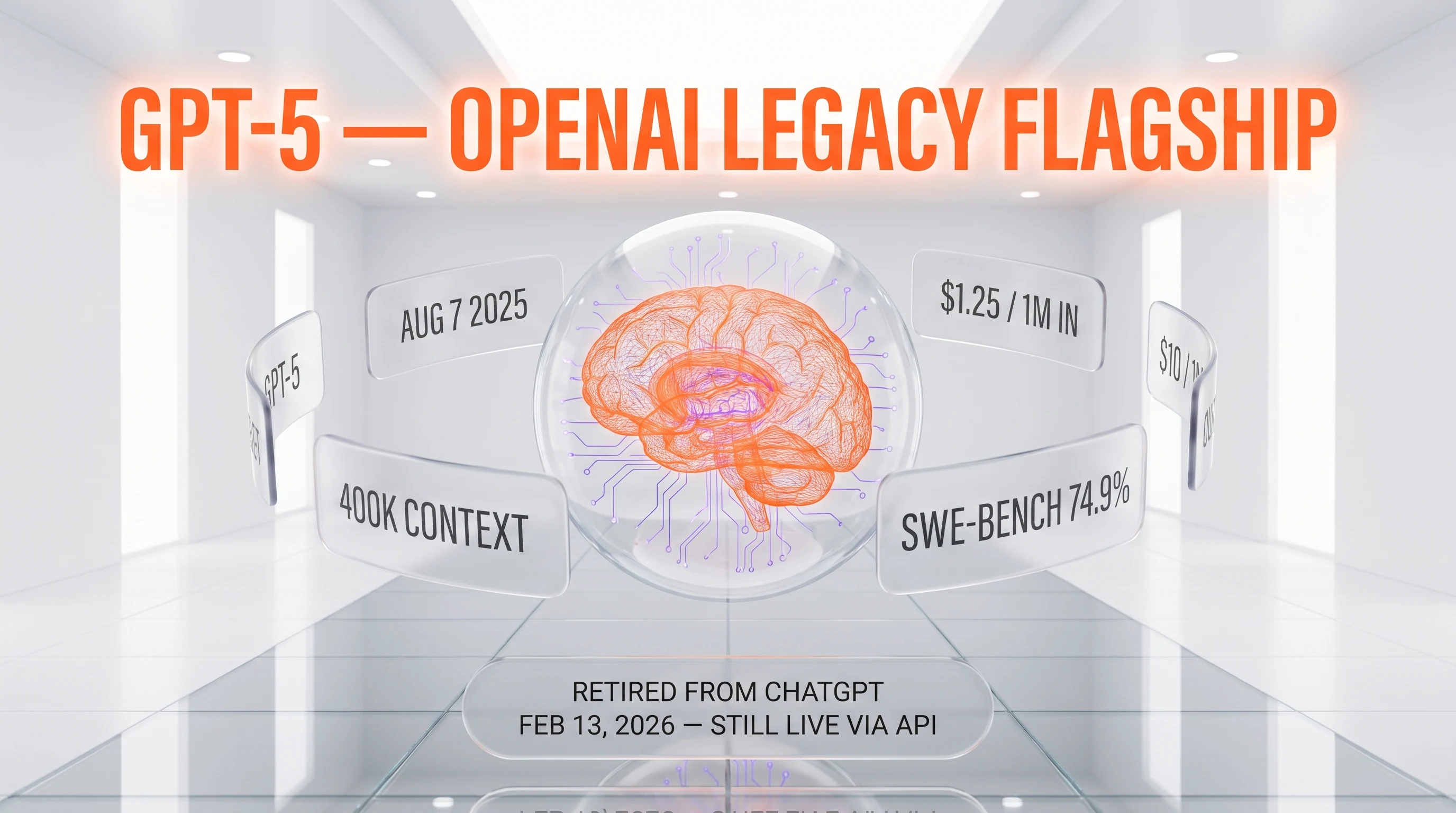
GPT-5 is OpenAI legacy flagship large language model released August 7, 2025. It offers a 400,000-token context window, 128,000 max output tokens, and is priced at $1.25 per million input tokens and $10 per million output tokens. GPT-5 was retired from ChatGPT on February 13, 2026 but remains available via the OpenAI API. Score: 7.2 out of 10.
TL;DR — Our Verdict
Score: 7.2 out of 10. GPT-5 is the OpenAI flagship LLM that launched on August 7, 2025 with strong benchmarks (SWE-bench Verified 74.9 percent, AIME 2025 94.6 percent) and a controversial reception. It was retired from ChatGPT on February 13, 2026 but remains live via the API at $1.25 per million input tokens. Best for legacy pipelines pinned to gpt-5-2025-08-07 that need stable behavior. Skip it for new projects — GPT-5.5 dominates on context (1M), benchmarks (82.7 percent Terminal-Bench), and modalities (text plus image plus audio).
- Strong reasoning baseline at launch (SWE-bench 74.9 percent, AIME 94.6 percent, GPQA 88.4 percent)
- Sharp price-to-context ratio at $1.25 per million input tokens for 400K context
- Three-tier API family (full, mini, nano) for cost optimization
- Retired from ChatGPT February 13, 2026 — only API access remains
- Hallucination and model-router issues documented across 10,000+ Reddit threads at launch
- GPT-5.5 outclasses it on context (1M), tokens efficiency (40 percent fewer), and modalities
What Is GPT-5?
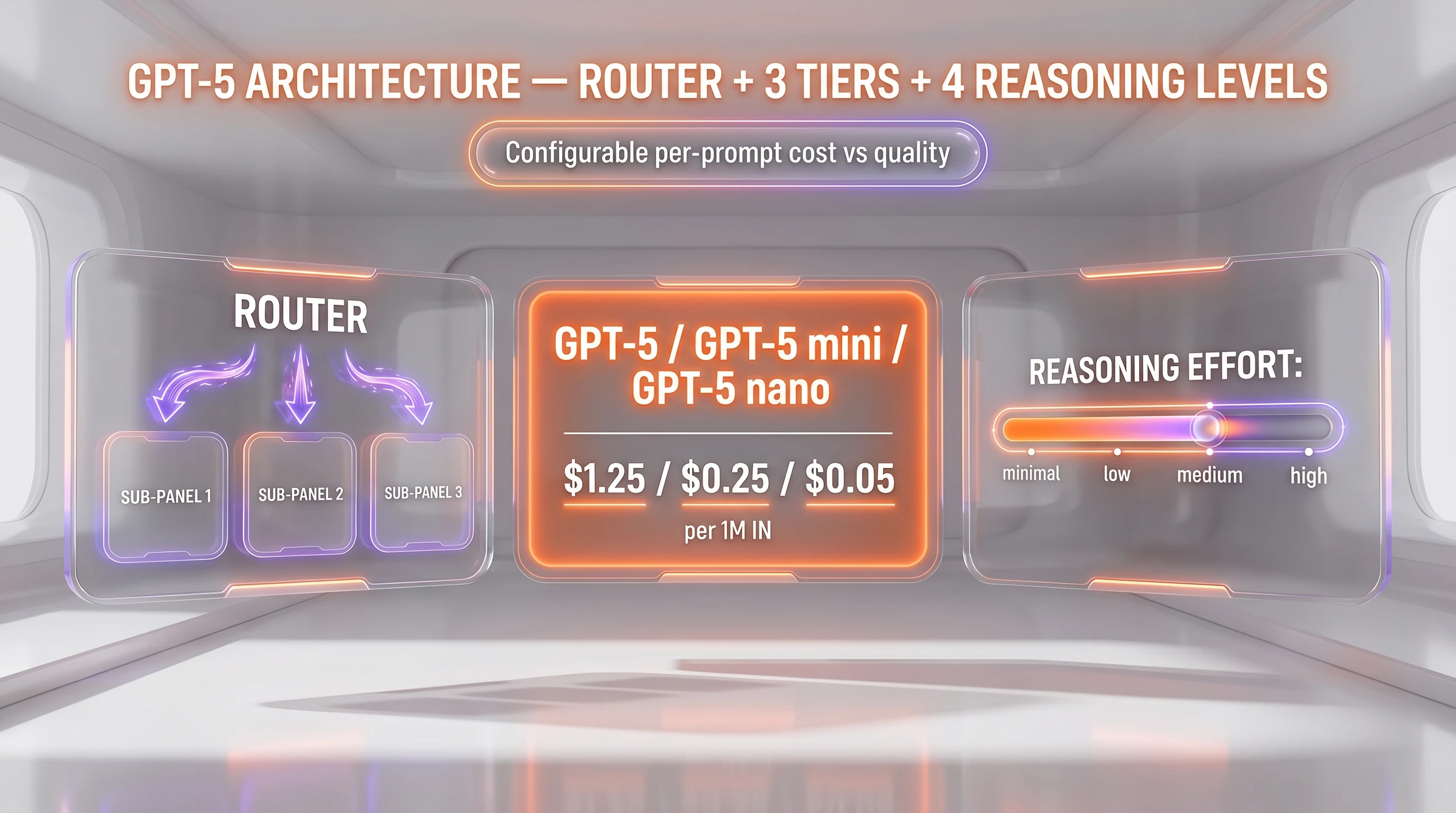
GPT-5 is the OpenAI flagship large language model released to the public on August 7, 2025. OpenAI introduced it as a unified system that combines reasoning, coding, and agentic capabilities in a single API surface, with configurable reasoning effort levels (minimal, low, medium, high). The model ID is gpt-5 and the snapshot pin is gpt-5-2025-08-07.
The model launched with a 400,000-token context window — at the time, one of the largest context windows on a frontier reasoning model. It supports text input and output plus native image input. Audio and video are not supported (those arrived later with GPT-5.2 and GPT-5.5). The knowledge cutoff is September 30, 2024.
GPT-5 was the first OpenAI model to ship with a real-time model router — a system that automatically picks which sub-model to spin up for each prompt. Stronger sub-variants handle hard prompts, weaker and cheaper sub-variants handle easy ones. The router was the most controversial feature at launch (Fortune, August 12, 2025): many users on X and Reddit reported the router selecting weak variants on tasks they expected the full GPT-5 to handle.
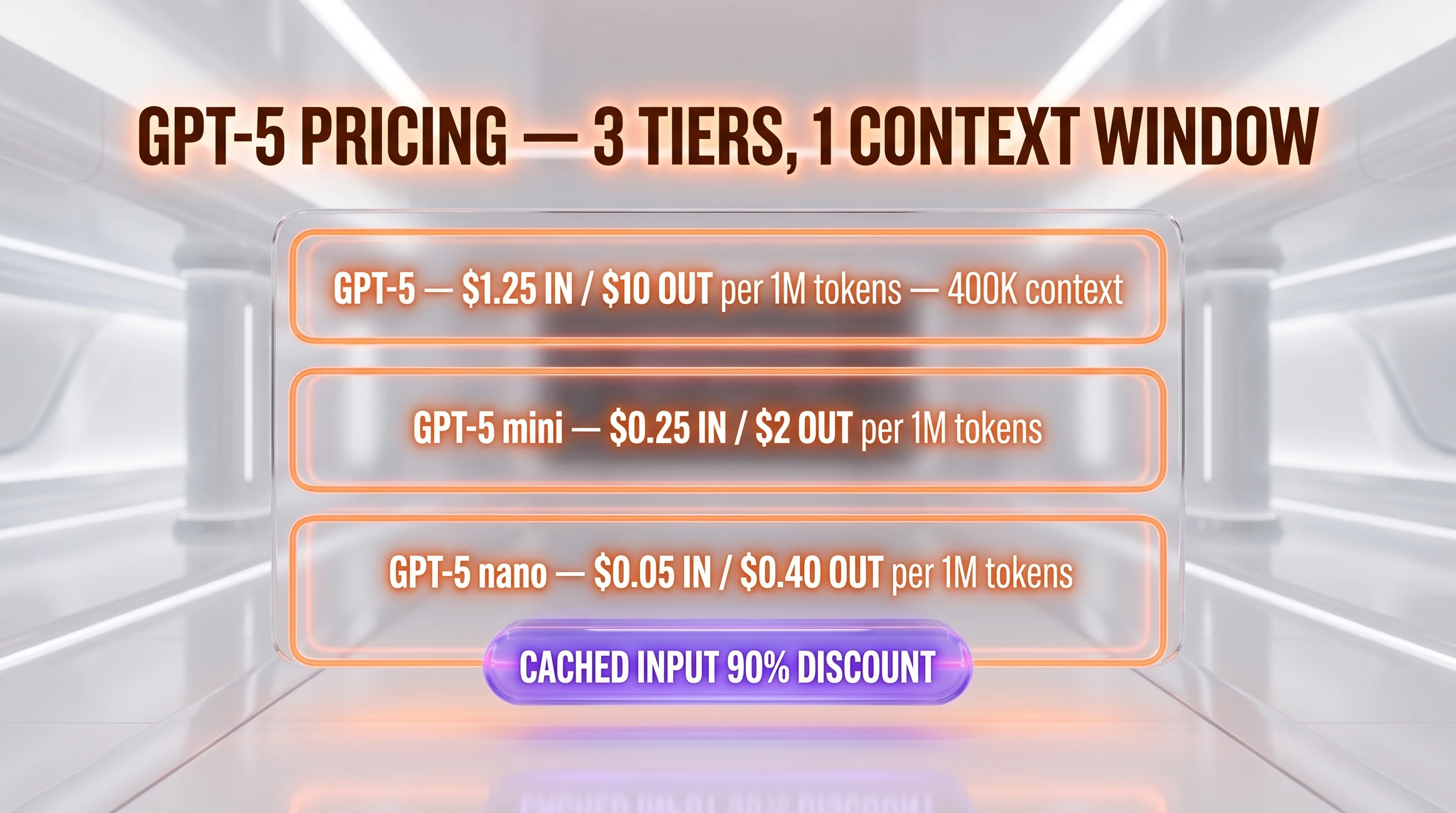
OpenAI shipped GPT-5 in three API tiers: GPT-5 ($1.25 per million input tokens and $10 per million output tokens), GPT-5 mini ($0.25 input and $2 output per million), and GPT-5 nano ($0.05 input and $0.40 output per million). All three share the 400K context window.
On February 13, 2026, OpenAI retired GPT-5 (Instant and Thinking) modes from ChatGPT alongside several other models, in favor of GPT-5.5 as the default consumer model. The API access was kept, with OpenAI committing to give advance notice before any future API deprecation.
Key Features
400,000-token context window
GPT-5 ships with 400,000 tokens of context and 128,000 max output tokens. This puts it ahead of GPT-4o (128K context, 16K output) and competitive with Claude Opus 4.5 at the time of launch. For long-document analysis (legal contracts, multi-PDF research, full codebases), 400K is enough to skip aggressive chunking strategies. By April 2026, GPT-5.5 ships with a 1,000,000-token context that puts it ahead — but for legacy pipelines, 400K is still substantial.
Configurable reasoning effort
GPT-5 introduced four reasoning levels: minimal, low, medium, and high. Minimal mode skips most chain-of-thought and behaves like a standard chat model. High mode runs extended reasoning that drove the GPQA score to 88.4 percent at launch. The trade-off is latency and cost — high reasoning can multiply output token consumption by 5x or more on hard prompts.
Three API tiers (GPT-5, mini, nano)
The full GPT-5 tier costs $1.25 per million input tokens and $10 per million output tokens. GPT-5 mini drops that to $0.25 input and $2 output per million — useful for routing simpler steps in agentic pipelines. GPT-5 nano lands at $0.05 input and $0.40 output per million, which puts it roughly on par with GPT-4o-mini for cost on cheap traffic. All three share the same 400K context window and the same image-input capability.
Text plus image input (no native audio or video)
GPT-5 handles text and image input natively in the API. There is no native audio understanding or video understanding — those arrived later with GPT-5.2 (text plus image plus audio plus video) and GPT-5.5 (text plus image plus audio). For audio workflows on GPT-5, you still need to pair it with Whisper for STT and a TTS model for output.
Tool use, function calling, MCP support
GPT-5 supports function calling, structured outputs, streaming, distillation, the OpenAI hosted tools (web search, file search, code interpreter, image generation), and Model Context Protocol (MCP) tools. It is one of the first OpenAI models to add MCP support natively at launch.
Model router (controversial)
The model router was the headline feature at launch and the most criticized. The router decides per-prompt whether to use a weaker cheaper sub-variant or a stronger more expensive one. In the first weeks after August 7, 2025, multiple developer forums (OpenAI Community, Reddit, Hacker News) reported the router preferring weak variants on hard prompts — making the model feel less capable than its predecessors GPT-4o or o1. OpenAI patched the router behavior over the following months, but the launch reputation stuck.
Cached input pricing
OpenAI offers a 90 percent discount on cached input tokens — $0.125 per million instead of $1.25 per million on full GPT-5. For agentic pipelines that re-send the same system prompt and tool definitions on every step, cached input dramatically cuts cost on long-running sessions.
Snapshot pinning for reproducibility
The snapshot ID gpt-5-2025-08-07 lets you pin to a specific model version. This matters for production pipelines that need stable behavior through OpenAI silent updates. Snapshot pinning is the main reason to keep GPT-5 in 2026 over migrating everything to GPT-5.5 — you control exactly when the behavior changes.
GPT-5 Pricing in 2026
GPT-5 follows OpenAI standard pay-per-token pricing on the API. There is no monthly subscription — you pay only for tokens consumed. The three tiers (full, mini, nano) share the 400K context window but differ on price and capability.
| Plan | Input price | Cached input | Output price | Best for |
|---|---|---|---|---|
| GPT-5 | $1.25 per million tokens | $0.125 per million tokens | $10 per million tokens | Hardest reasoning, coding, long-document analysis |
| GPT-5 mini | $0.25 per million tokens | not published | $2 per million tokens | Mid-complexity tasks, balanced cost-quality |
| GPT-5 nano | $0.05 per million tokens | not published | $0.40 per million tokens | High-volume cheap traffic, classification, routing |
Best for: developers running existing production pipelines on GPT-5 who need stable snapshot pinning at gpt-5-2025-08-07. New projects should evaluate GPT-5.5 ($5 input, $30 output, 1M context, more recent knowledge cutoff) before locking in.
Our Methodology for This Review
We researched GPT-5 rather than tested it hands-on as our primary daily driver in 2026. By the time of this review (April 2026), GPT-5 has been retired from ChatGPT for two months, and in production we run Claude Opus 4.7 with selective GPT-5.5 calls. This review compiles GPT-5 official launch announcement and developer documentation (OpenAI, August 7, 2025), the OpenAI Deprecations page (last checked April 2026), three benchmark sources (Vellum GPT-5 Benchmarks, BinaryVerse Independent GPT-5 Benchmarks, OpenAI System Card), and post-launch reception coverage from MIT Technology Review (August 7, 2025), Fortune (August 12, 2025), Axios (August 12, 2025), and Gary Marcus on Substack. Our score reflects benchmark performance at launch weighted against the post-launch reception, the February 13, 2026 ChatGPT retirement, and the value proposition versus newer GPT-5.x models in 2026.
Benchmarks at Launch
OpenAI published three headline benchmarks at the August 7, 2025 launch:
- SWE-bench Verified — 74.9 percent. Real-world software engineering tasks. State-of-the-art at launch, ahead of Claude Opus 4 (72.5 percent at the time) and GPT-4o (around 33 percent).
- AIME 2025 — 94.6 percent without tools. American Invitational Mathematics Examination. Near-saturation on a hard math benchmark.
- GPQA — 88.4 percent without tools (with extended reasoning). Graduate-level science reasoning. State-of-the-art at launch.
Independent re-runs (BinaryVerse, Vellum) confirmed the SWE-bench and AIME numbers within a 1-2 percentage point margin. The GPQA number is conditional on extended reasoning at high effort — running GPT-5 at minimal reasoning drops the score to roughly 78-80 percent.
Eight months later (April 2026), GPT-5 sits below GPT-5.5 (Terminal-Bench 82.7 percent, 40 percent fewer tokens than GPT-5.4) and below GPT-5.2 (AIME 2025 100 percent on its variant) on most reasoning leaderboards. It still outperforms GPT-4o by a wide margin and remains a strong baseline for legacy pipelines.
Pros and Cons After Research
What stands out
- Strong reasoning baseline at launch. SWE-bench 74.9, AIME 94.6, GPQA 88.4 made GPT-5 the SOTA reasoning model from August 2025 to early 2026.
- 400K context window with 128K max output. Covers most enterprise long-document workloads without aggressive chunking.
- Sharp pricing for the tier. $1.25 per million input tokens makes GPT-5 cheaper than GPT-5.5 ($5 input) and competitive with mid-tier models for legacy pipelines.
- Three API tiers cover the cost-quality spectrum. Full, mini, and nano let you route per-task complexity instead of overpaying on every call.
- Native image input. Vision-language workflows work in a single API call without an extra model.
- Snapshot pinning at gpt-5-2025-08-07. Production pipelines get stable behavior through deprecation windows with advance notice.
Where it falls short
- Retired from ChatGPT February 13, 2026. Consumer surface gone — only API access remains. New ChatGPT users land on GPT-5.5 by default.
- Rough launch reception. Hallucinations, factual errors, and a broken model router on launch day August 7, 2025 generated 10,000+ critical Reddit threads in the first week (WordCrafter analysis).
- Model router preferring weak variants on hard prompts. Multiple developer reports in the first weeks. OpenAI patched it over the following months but the reputation stuck.
- No native audio or video. Text plus image only. Audio workflows need Whisper plus a separate TTS, video needs a separate video model.
- Knowledge cutoff September 30, 2024. Anything after that needs browsing or RAG, which adds latency and cost.
- Newer GPT-5.x models outclass it. GPT-5.5 ships with 1M context, more recent cutoff, native audio, 40 percent fewer tokens per task — making GPT-5 a hard sell for new projects.
Real-World Use Cases
Long-document analysis (legal, research, codebase)
GPT-5 400K context covers most enterprise long-document workloads. Legal contracts, multi-PDF research, full repositories under 400K tokens fit in a single prompt. The 128K max output handles long structured analyses without truncation.
Reasoning-heavy coding pipelines
Configurable reasoning effort lets you balance cost and depth. Use minimal for boilerplate generation, high for hard refactors and architectural decisions. The SWE-bench Verified 74.9 percent at launch translates well to real-world coding agents like Cursor and Aider that integrate GPT-5 as a backend option.
Vision-language workflows
Mix screenshots, diagrams, charts, and text in a single prompt. Useful for UI testing automation, document OCR with structured extraction, and visual QA on dashboards.
Cost-optimized agentic workflows
Three-tier pricing makes GPT-5 ideal for agent architectures that route per-step. Use GPT-5 nano for classification and routing decisions ($0.05 per million input). Use GPT-5 mini for mid-complexity reasoning. Reserve full GPT-5 for the hardest steps. Cached input at 90 percent discount on repeated context cuts cost further on long-running sessions.
Legacy production pipelines pinned to gpt-5-2025-08-07
The single strongest reason to keep GPT-5 in 2026: snapshot pinning. Production systems that are validated against a specific model behavior want exactly that behavior frozen. GPT-5 snapshot pinning gives you that contract through any deprecation window, with OpenAI commitment to advance notice before API retirement.
Education and research benchmarking
GPT-5 SWE-bench, AIME, GPQA scores are well-documented. For comparative research papers benchmarking reasoning models, GPT-5 is a stable reference point through 2026.
GPT-5 vs GPT-5.5 vs Claude Opus 4.7
By April 2026, GPT-5 is no longer the default choice for new projects. Here is how it stacks up against the current frontier reasoning models.
| Feature | GPT-5 | GPT-5.5 | Claude Opus 4.7 |
|---|---|---|---|
| Released | Aug 7, 2025 | April 2026 | April 2026 |
| Context window | 400K tokens | 1,000,000 tokens | 1,000,000 tokens |
| Max output | 128K tokens | 128K tokens | 128K tokens |
| Input price (per million) | $1.25 | $5.00 | $5.00 |
| Output price (per million) | $10.00 | $30.00 | $25.00 |
| Modalities | Text + image input | Text + image + audio | Text + image + audio |
| Knowledge cutoff | Sept 30, 2024 | Late 2025 | Early 2026 |
| Status in ChatGPT/consumer | Retired Feb 13, 2026 | Default | Available via Claude.ai |
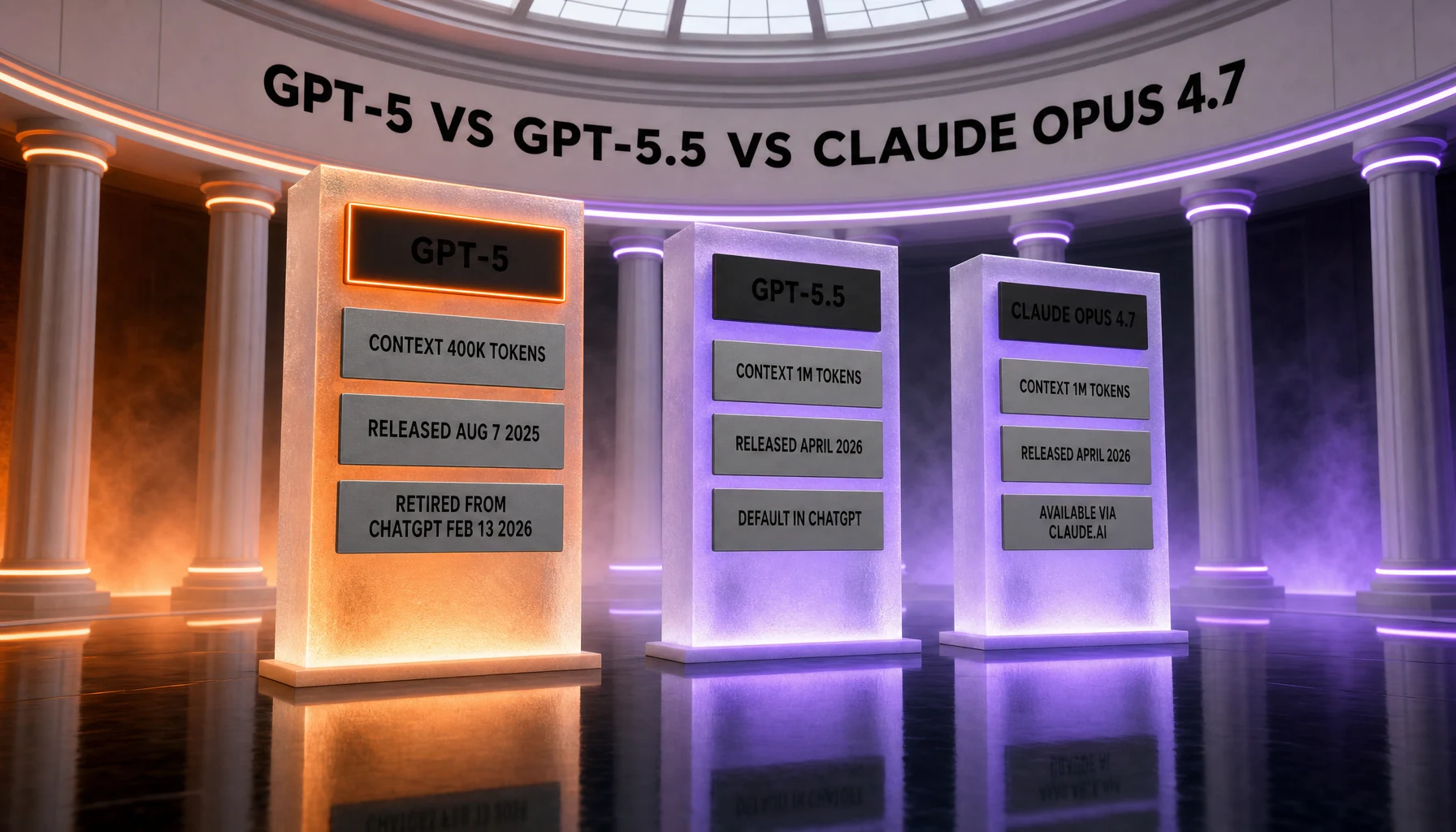
Pick GPT-5 if: you are running a legacy production pipeline pinned to gpt-5-2025-08-07, your context budget fits in 400K, you are price-sensitive ($1.25 input is the cheapest of the three), and you do not need audio or video input.
Pick GPT-5.5 if: you need 1M context, more recent knowledge cutoff, native audio input, and 40 percent fewer tokens per task on agentic workloads. Pay $5 input instead of $1.25 — worth it for new projects.
Pick Claude Opus 4.7 if: you prioritize coding quality and long-form writing nuance over raw price. Opus is more expensive ($5 input) but tends to produce cleaner code and more thoughtful prose for complex tasks.
Frequently Asked Questions
Is GPT-5 still available in 2026?
GPT-5 was retired from ChatGPT on February 13, 2026. The consumer-facing GPT-5 (Instant and Thinking) modes are gone, replaced by GPT-5.5 as the default. However, GPT-5 remains available via the OpenAI API for developers, with OpenAI committing to give advance notice before any future API retirement. As of April 2026, you can still hit the gpt-5 model ID and the gpt-5-2025-08-07 snapshot.
How much does GPT-5 cost per million tokens?
GPT-5 costs $1.25 per million input tokens, $0.125 per million cached input tokens (90 percent discount on repeated context), and $10 per million output tokens. The mini variant drops to $0.25 input and $2 output per million. The nano variant drops further to $0.05 input and $0.40 output per million. There is no monthly subscription — you pay only for tokens consumed.
What is the GPT-5 context window?
GPT-5 ships with a 400,000-token context window and 128,000 max output tokens. All three tiers (full, mini, nano) share the same 400K context. By comparison, GPT-5.5 ships with a 1,000,000-token context window.
When was GPT-5 released?
GPT-5 was released to the public on August 7, 2025. The snapshot pin is gpt-5-2025-08-07. The knowledge cutoff is September 30, 2024 — anything after that requires web search or RAG to retrieve.
How does GPT-5 compare to GPT-5.5?
GPT-5.5 (April 2026) outclasses GPT-5 on most fronts. GPT-5.5 ships with 1M context (vs 400K), a more recent knowledge cutoff, native audio input, and 40 percent fewer tokens per task on agentic workloads (Terminal-Bench 82.7 percent). GPT-5.5 is more expensive ($5 input vs $1.25 input per million) but the per-task cost is similar because of the token efficiency gain. For new projects, GPT-5.5 is the default. For legacy pipelines pinned to gpt-5-2025-08-07, GPT-5 stays.
Does GPT-5 support audio or video?
GPT-5 supports text and image input only. There is no native audio understanding and no video understanding. For audio workflows you need to pair GPT-5 with Whisper for speech-to-text and a separate text-to-speech model. GPT-5.2 added text plus image plus audio plus video; GPT-5.5 ships with text plus image plus audio.
What were the GPT-5 launch benchmarks?
OpenAI published three headline benchmarks at the August 7, 2025 launch: SWE-bench Verified 74.9 percent (real-world software engineering), AIME 2025 94.6 percent without tools (mathematics), and GPQA 88.4 percent without tools with extended reasoning at high effort (graduate-level science). These were state-of-the-art at launch. By April 2026, newer GPT-5.x models pass these scores.
What is the GPT-5 model router?
The model router is a real-time system that automatically picks which sub-variant of GPT-5 to use for each prompt. Stronger sub-variants handle hard prompts, weaker and cheaper sub-variants handle easy ones. The router was the most controversial feature at launch — Fortune (August 12, 2025) and 10,000+ Reddit threads documented the router preferring weak variants on hard prompts in the first weeks. OpenAI patched the router behavior over the following months.
Is GPT-5 worth it in 2026?
For new projects, no. GPT-5.5 ships with a larger context window, more recent knowledge, native audio, and 40 percent fewer tokens per task. The price premium ($5 vs $1.25 per million input tokens) is offset by token efficiency. For existing production pipelines pinned to gpt-5-2025-08-07 that need stable behavior, GPT-5 stays the right choice — until you have time to validate a migration.
Does GPT-5 have a free tier?
GPT-5 does not have a free API tier. You pay per token consumed, with prices starting at $0.05 per million input tokens for GPT-5 nano and $1.25 per million for full GPT-5. OpenAI Free trial credits ($5 over three months) are available for new accounts and let you experiment with GPT-5 before scaling up. Note: the ChatGPT consumer Free plan, which previously gave limited GPT-5 access, no longer offers GPT-5 since February 13, 2026 retirement.
What programming languages does GPT-5 work with?
GPT-5 works with all major programming languages — Python, TypeScript, JavaScript, Java, Go, Rust, C++, Ruby, PHP, Swift, Kotlin and others. SWE-bench Verified 74.9 percent at launch was driven primarily by Python performance. The OpenAI SDKs ship official bindings for Python and TypeScript, with community bindings for the rest.
What is the difference between GPT-5, GPT-5 mini, and GPT-5 nano?
The three tiers share the same 400K context window and image input capability. They differ on price and capability. GPT-5 ($1.25 input and $10 output per million) handles the hardest reasoning. GPT-5 mini ($0.25 input and $2 output per million) covers mid-complexity tasks at one-fifth the cost. GPT-5 nano ($0.05 input and $0.40 output per million) is for high-volume cheap traffic — classification, routing, simple extraction. Most agentic pipelines mix all three.
Verdict: 7.2 out of 10
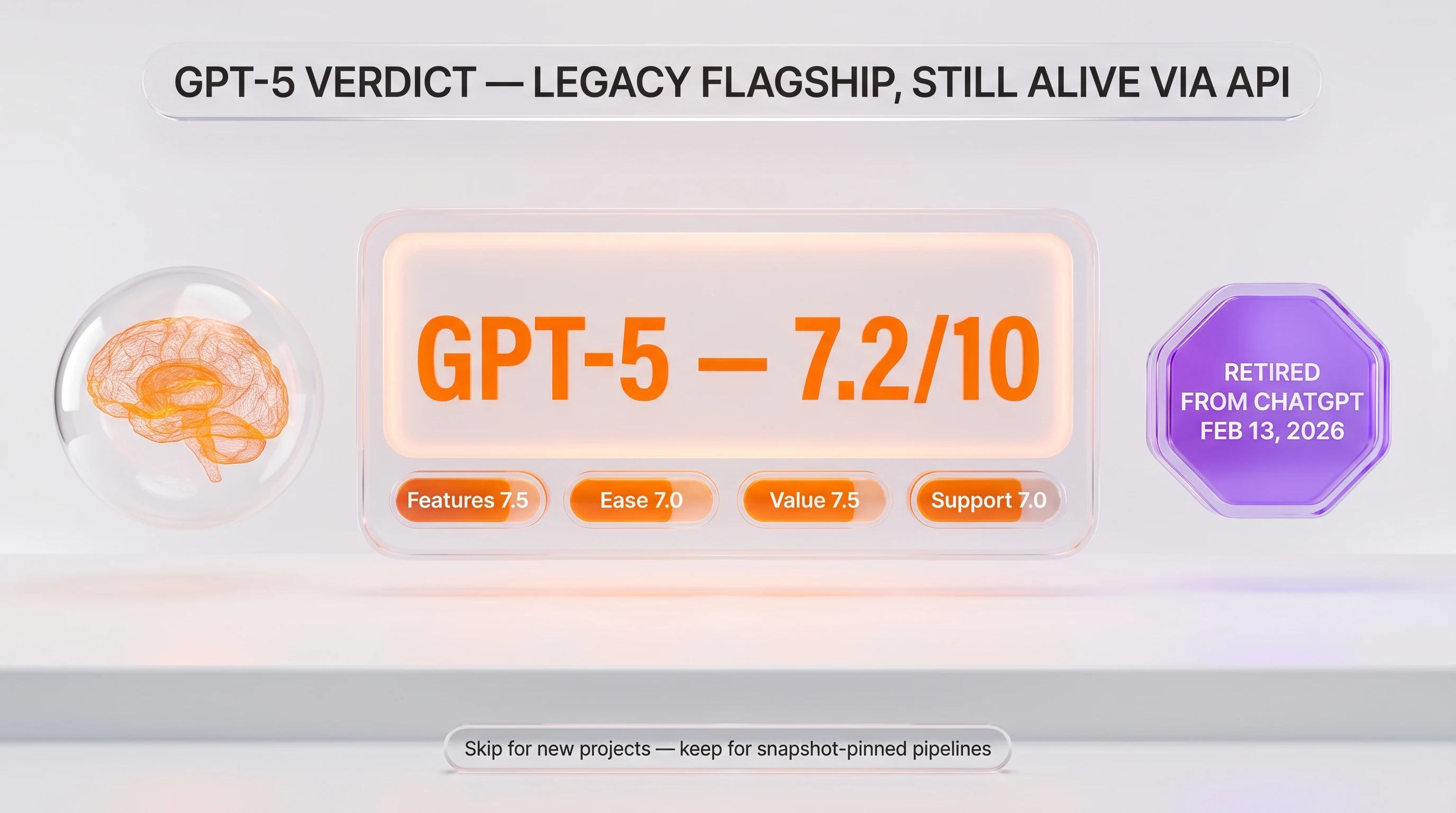
GPT-5 earns a 7.2 out of 10 for its strong reasoning baseline at launch (SWE-bench 74.9, AIME 94.6, GPQA 88.4), its sharp price-to-context ratio at $1.25 per million input tokens for 400K context, and its three-tier API family that covers the cost-quality spectrum cleanly. The launch reception (hallucinations, broken model router, 10,000+ critical Reddit threads) and the February 13, 2026 ChatGPT retirement drag the score down. GPT-5.5 outclasses it on context, modalities, and token efficiency, which makes GPT-5 a hard recommendation for new projects.
Score breakdown:
- Features: 7.5 out of 10 — strong reasoning, 400K context, three tiers, MCP support, but no native audio/video and surpassed by GPT-5.5
- Ease of Use: 7.0 out of 10 — standard OpenAI API, snapshot pinning works well, but model router opacity confused developers in the first weeks
- Value: 7.5 out of 10 — $1.25 input is sharp for 400K context, cached input 90 percent discount adds value on repeated prompts, but GPT-5.5 token efficiency erodes the gap
- Support: 7.0 out of 10 — OpenAI Help Center coverage is solid, advance notice commitment on API retirement is welcome, but ChatGPT Free users got zero direct support and Plus support runs 24-48h
Final word: Keep GPT-5 if you have a production pipeline pinned to gpt-5-2025-08-07 that works. Migrate to GPT-5.5 (or Claude Opus 4.7 if you prioritize coding) when you have time to validate the new behavior. Skip GPT-5 entirely for new projects in 2026 — the newer GPT-5.x models outclass it on context, modalities, and per-task cost. External community ratings on Trustpilot, G2, and Capterra were not directly available for GPT-5 specifically (most reviews aggregate across all OpenAI ChatGPT plans rather than the API model), which is why our score reflects benchmark performance and post-launch coverage rather than a Trustpilot or G2 average.
Key Features
Pros & Cons
Pros
- Strong reasoning baseline — SWE-bench Verified 74.9%, AIME 2025 94.6%, GPQA 88.4% with extended reasoning at launch made GPT-5 the state-of-the-art reasoning model from August 2025 to early 2026.
- 400K-token context window with 128K max output covers most enterprise long-document workloads (legal contracts, codebases, research papers) without aggressive chunking.
- Sharp pricing for the tier — $1.25 per million input tokens and $0.125 per million cached input tokens make GPT-5 cheaper than GPT-5.5 ($5 input) and competitive with mid-tier models for legacy pipelines.
- Three-tier API family — GPT-5 ($1.25/$10), GPT-5 mini ($0.25/$2), GPT-5 nano ($0.05/$0.40) lets you scale cost-vs-quality on a per-route basis.
- Image input native — vision-language workflows work natively in the API without adding a separate vision model on top.
- Still live via API in 2026 — retired only from ChatGPT consumer surface February 13, 2026. Existing API pipelines keep working with advance notice promised before any future API deprecation.
Cons
- Retired from ChatGPT February 13, 2026 — the consumer-facing GPT-5 (Instant and Thinking) modes are gone. New users land on GPT-5.5 by default with no path back.
- Rough launch reputation — Gary Marcus, MIT Technology Review and 10,000+ Reddit threads documented hallucinations, factual errors, and a broken model router on launch day August 7, 2025. The reputation never fully recovered.
- Model router controversy — GPT-5 was a network of cheaper and stronger sub-models stitched together by an automatic router. Many developers reported the router preferring weak variants on hard prompts, especially in the first weeks.
- No native audio or video — unlike GPT-5.2 (text + image + audio + video) and GPT-5.5 (text + image + audio), GPT-5 only handles text and image input. Audio and video workflows need additional models.
- Knowledge cutoff September 30, 2024 — facts beyond that date require browsing or RAG, which adds latency and cost compared to GPT-5.5 with a more recent cutoff.
- Newer GPT-5.x models outclass it — GPT-5.5 (1M context, $5/$30 per million, scores 82.7 percent on Terminal-Bench, 40 percent fewer tokens than GPT-5.4) makes GPT-5 a hard sell for new projects.
Best Use Cases
Platforms & Integrations
Available On
Integrations

We're developers and SaaS builders who use these tools daily in production. Every review comes from hands-on experience building real products — DealPropFirm, ThePlanetIndicator, PropFirmsCodes, and many more. We don't just review tools — we build and ship with them every day.
Written and tested by developers who build with these tools daily.
Frequently Asked Questions
What is GPT-5?
OpenAI flagship LLM legacy from August 2025 — 400K context, $1.25/$10 per million tokens, retired from ChatGPT February 2026, still live via API.
How much does GPT-5 cost?
GPT-5 costs $1.25/month.
Is GPT-5 free?
No, GPT-5 starts at $1.25/month.
What are the best alternatives to GPT-5?
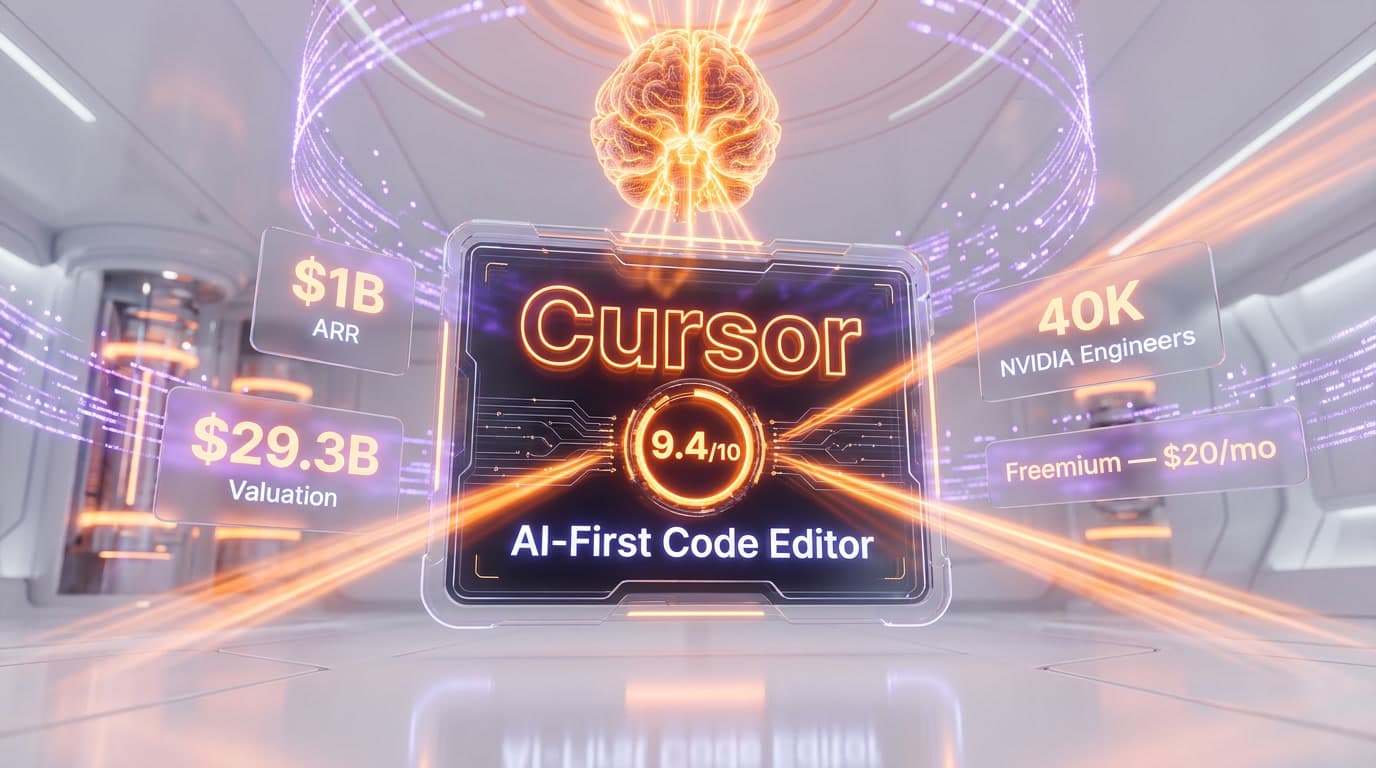
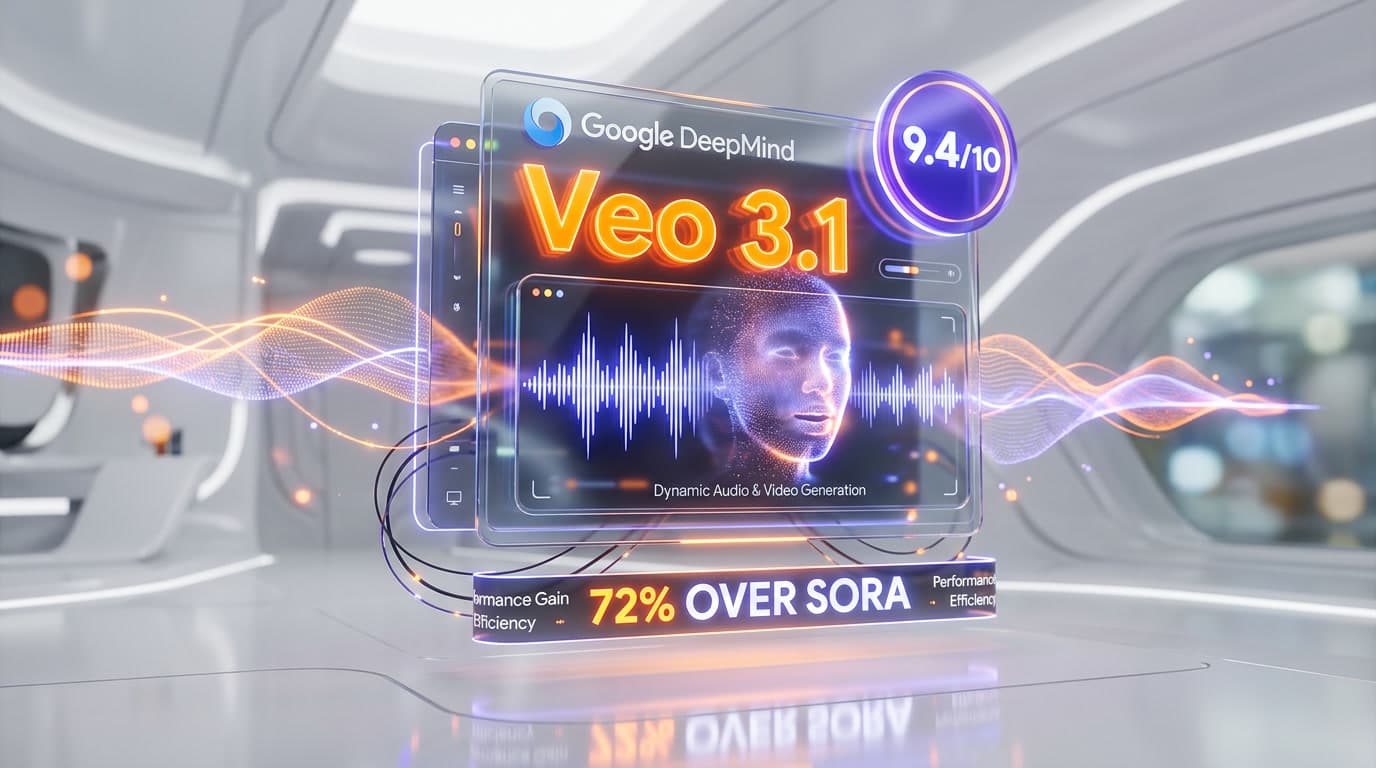
Top-rated alternatives to GPT-5 include Claude Code (9.9/10), Cursor (9.5/10), Veo 3.1 (9.4/10), Claude Opus 4.7 (9.4/10) — all reviewed with detailed scoring on ThePlanetTools.ai.
Is GPT-5 good for beginners?
GPT-5 is rated 7/10 for ease of use.
What platforms does GPT-5 support?
GPT-5 is available on OpenAI API, Azure OpenAI Foundry, OpenRouter, Microsoft Copilot Studio.
Does GPT-5 offer a free trial?
Yes, GPT-5 offers a free trial.
Is GPT-5 worth the price?
GPT-5 scores 7.5/10 for value. It offers good value.
Who should use GPT-5?
GPT-5 is ideal for: Long-document analysis where 400K context covers full legal contracts, multi-PDF research, or whole-codebase reviews without chunking, Reasoning-heavy coding pipelines using configurable reasoning effort to balance cost and depth, Vision-language workflows that mix screenshots, diagrams, and text in a single prompt, Cost-optimized agentic workflows routing simple steps to GPT-5 nano and hard steps to full GPT-5, Existing production pipelines pinned to gpt-5-2025-08-07 that need stable behavior through deprecation cycles, Education and research projects evaluating reasoning quality on AIME, GPQA and SWE-bench style tasks.
What are the main limitations of GPT-5?
Some limitations of GPT-5 include: Retired from ChatGPT February 13, 2026 — the consumer-facing GPT-5 (Instant and Thinking) modes are gone. New users land on GPT-5.5 by default with no path back.; Rough launch reputation — Gary Marcus, MIT Technology Review and 10,000+ Reddit threads documented hallucinations, factual errors, and a broken model router on launch day August 7, 2025. The reputation never fully recovered.; Model router controversy — GPT-5 was a network of cheaper and stronger sub-models stitched together by an automatic router. Many developers reported the router preferring weak variants on hard prompts, especially in the first weeks.; No native audio or video — unlike GPT-5.2 (text + image + audio + video) and GPT-5.5 (text + image + audio), GPT-5 only handles text and image input. Audio and video workflows need additional models.; Knowledge cutoff September 30, 2024 — facts beyond that date require browsing or RAG, which adds latency and cost compared to GPT-5.5 with a more recent cutoff.; Newer GPT-5.x models outclass it — GPT-5.5 (1M context, $5/$30 per million, scores 82.7 percent on Terminal-Bench, 40 percent fewer tokens than GPT-5.4) makes GPT-5 a hard sell for new projects..
Best Alternatives to GPT-5
Ready to try GPT-5?
Start your free trial
Try GPT-5 Free →