Ideogram 4.0
The open-weight design model that spells — 9.3B Diffusion Transformer with native 2K, structured JSON prompting, and best-in-class text rendering

Quick Summary
Ideogram 4.0 is Ideogram AI's first open-weight text-to-image model, released June 3, 2026. A 9.3B Diffusion Transformer trained from scratch with native 2K output and structured JSON prompting. Transparent cutouts run through Ideogram's separate Background Remover, not the model. Ranks #1 open-weight on DesignArena. Free plan, Plus from $20 per month, API from $0.03 per image. Score: 8.6/10.
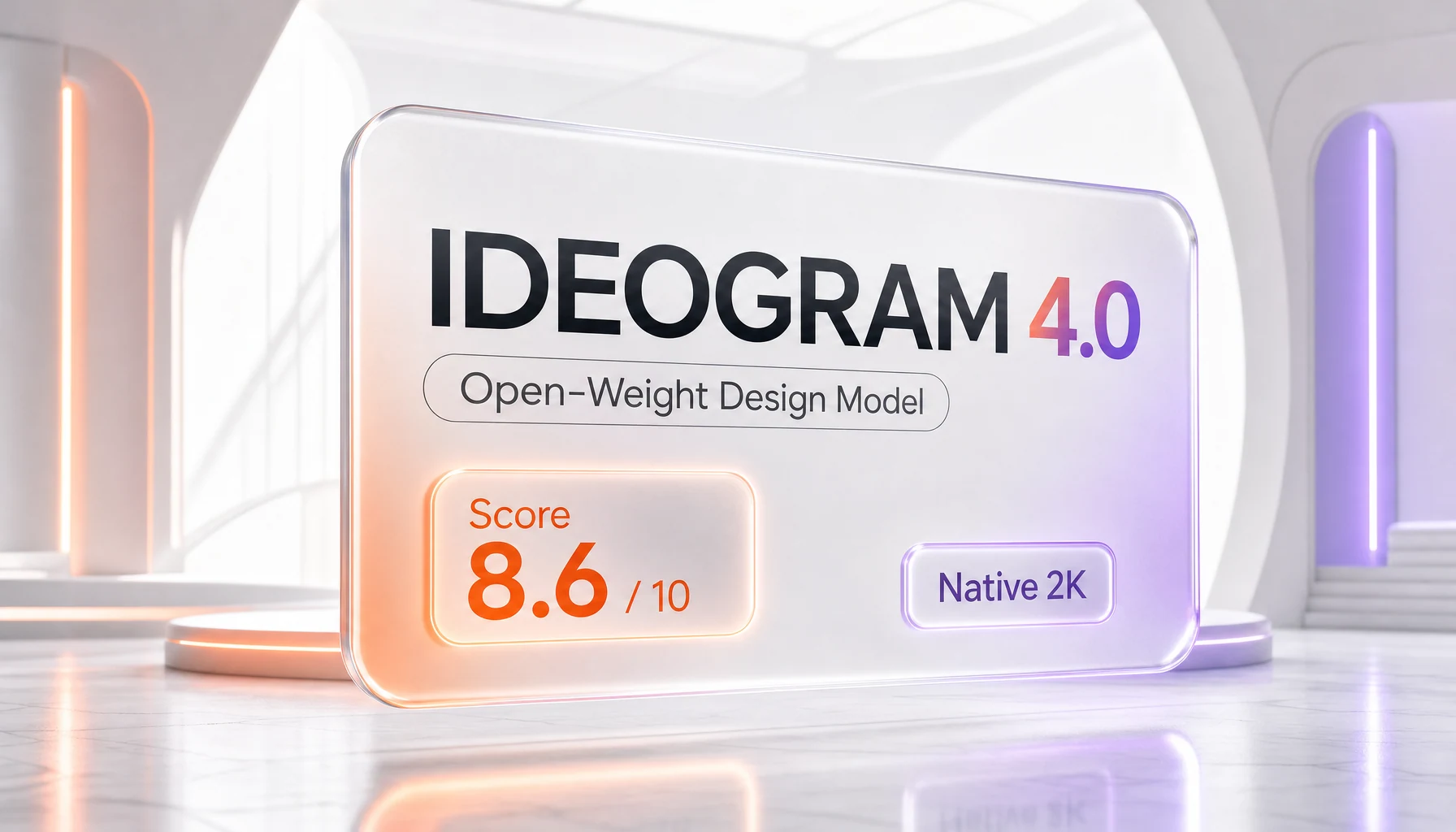
Ideogram 4.0 is an open-weight text-to-image model released by Ideogram AI on June 3, 2026. It is a 9.3 billion parameter single-stream Diffusion Transformer trained from scratch, shipping with native 2K resolution and a structured JSON prompting interface that lets you place text, bounding boxes, and hex color palettes like a design brief. Transparent cutouts come from Ideogram's separate Background Remover rather than from the model itself; Ideogram says alpha channels direct from inference arrive in the next 4.0 release. The weights are downloadable under the non-commercial Ideogram Open Model Agreement, while the inference code is Apache 2.0. It ranks first among open-weight models on the DesignArena designer-preference leaderboard. Subscription pricing starts free, with Plus at $20 per month and Pro at $60 per month, and an API from $0.03 per image. After two weeks of hands-on testing, our verdict is 8.6 out of 10.
Our Review: Ideogram 4.0 in One Paragraph
We tested Ideogram 4.0 for two weeks across the kind of work that actually pays our bills: ad creative with headlines, YouTube thumbnails, product mockups with transparent cutouts, and structured layout posters. Ideogram 4.0 is not chasing photoreal portraits and it is not chasing the widest stylistic range on the market. It is chasing a very specific crown: the open-weight model that designers prefer, that spells correctly, and that you can drive like a layout engine instead of a slot machine. On that axis it delivers. The headline upgrade over Ideogram 3 is not the image quality alone. It is the combination of three things shipping together for the first time: open weights you can download and self-host, native 2K output with no separate upscale step, and a JSON prompt format that turns vague creative direction into a deterministic spec. For a production design workflow, that combination is the story.
What Is Actually New in Ideogram 4.0
Ideogram 3 was a closed, hosted-only model. Ideogram 4.0 changes the shape of the product in three concrete ways that we verified against the vendor pages and tested in practice — plus one capability that is routinely misreported, which we pin down below.
Open Weights You Can Download
This is the headline. Ideogram 4.0 is the company's first downloadable foundation model. The weights live on Hugging Face and GitHub in fp8 and nf4 quantized builds, and the nf4 variant fits on a single 24 GB GPU. We ran the nf4 build locally on a 24 GB card and it generated 2K images without falling over. The catch matters: the published weights are governed by the Ideogram Open Model Agreement, which permits research, evaluation, and personal projects but not commercial production. The inference code is Apache 2.0 on GitHub. For commercial or client-facing use you need either a paid subscription on the hosted product or a separate commercial license for full-precision access. Read the license before you ship.
Native 2K With No Upscale Step
Ideogram 4.0 generates at 256 to 2048 pixels per side natively, with flexible aspect ratios. In Ideogram 3 you generated at a base resolution and then ran a separate upscale to reach 2K. In 4.0 the 2K output comes straight out of the model. In our testing the difference is most obvious on text-heavy posters, where the separate upscale pass in older versions occasionally softened small kerned characters. Generating natively at 2K kept fine typography crisp.
Transparent Backgrounds: How It Actually Works Today
This is the claim we most often see garbled, so here is the precise state of play. Ideogram 4.0 does not return an alpha channel from inference today. Transparency is a second pass: Ideogram's Background Remover, in the vendor's own words, "produces a clean alpha cutout from any generation", and the API exposes background removal as its own step rather than as a parameter on the generate call. You still get the logo, sticker, or product cutout you came for — but you get it in two calls, and any pipeline you build has to budget the second one at one cent per input image. Native alpha is on the roadmap, not in the build: Ideogram writes that "the next release of 4.0 returns alpha channels and editable text layers directly from inference. No second pass, no masking step." Until that release ships, plan for the Background Remover.
Structured JSON Prompting
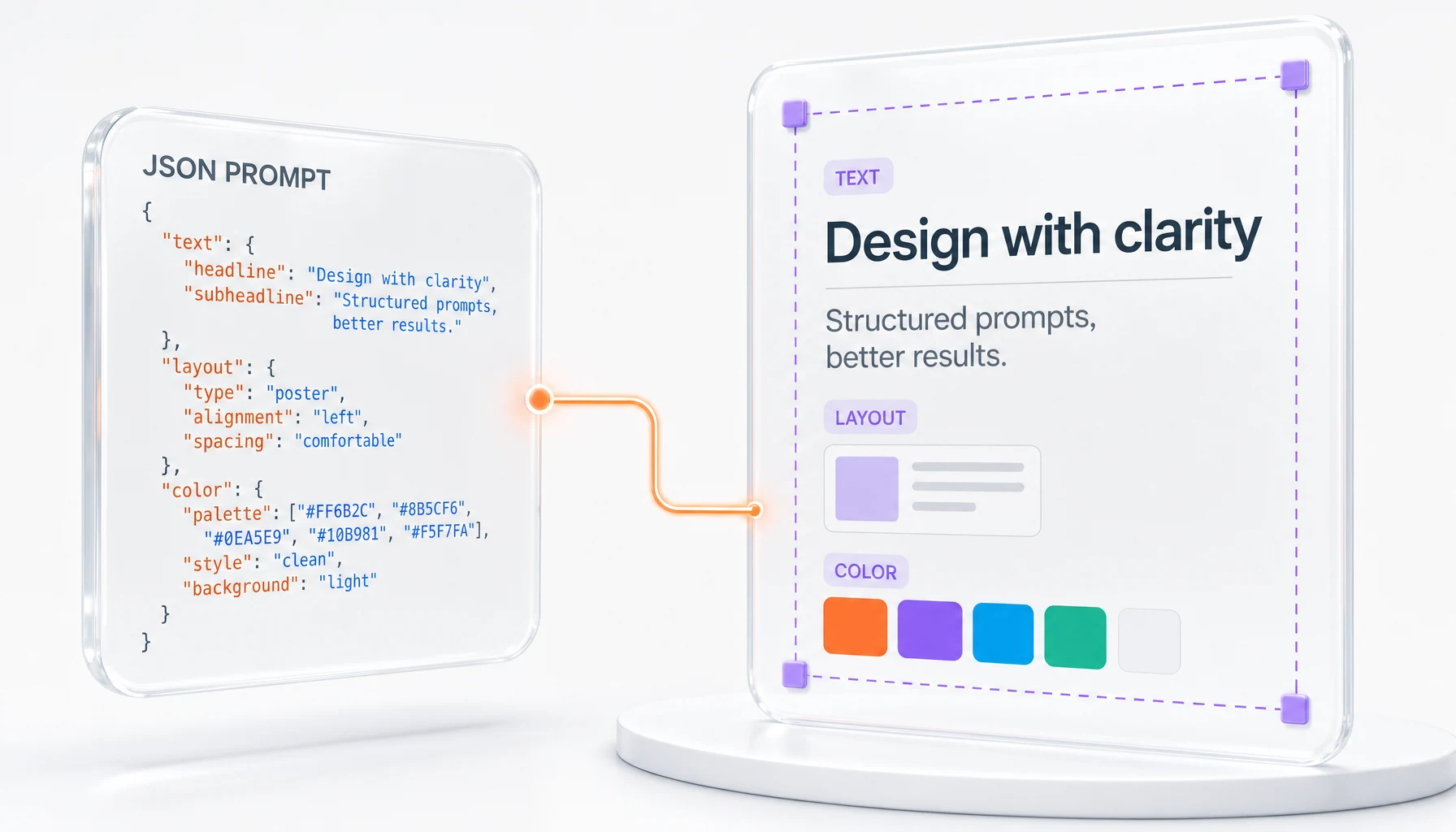
This is the feature that changes how a serious team will use the model. Ideogram 4.0 was trained on structured JSON captions, and it accepts a JSON prompt that specifies layout, color, and text placement like a spec sheet. You can define typed text elements with literal strings and visual styling, place them with normalized bounding box coordinates from 0 to 1000, and pin a palette of up to 16 hex colors per image and 5 per element. In plain English: you can tell the model exactly where the headline goes, exactly what it says, and exactly which brand colors to use, and it largely respects all three. That is a different category of control from a free-text prompt, and it is the reason developers building automated design pipelines are paying attention.
Text Rendering: Still the Reason People Show Up
Ideogram built its reputation on rendering legible, correctly spelled text inside images, and 4.0 holds the line. On the X-Omni English OCR benchmark the model scores 0.97, and the vendor reports it outperforms every other open-weight model on text rendering. Our own testing matched the spirit of that number: across short-phrase prompts of six words or fewer, spelling was essentially perfect, and longer multi-line layouts held up far better than what we see from general-purpose models. Where Ideogram 4.0 pulls ahead of its own predecessor is the marriage of text accuracy with JSON layout control. In Ideogram 3 you could get correct text but you fought the model on placement. In 4.0 you specify the text string and its bounding box together, so the headline lands where you put it and reads correctly. For a brand team that ships dozens of on-message assets a week, that is the workflow unlock.
Hands-On Testing: Two Weeks, Real Production Work
We ran Ideogram 4.0 across two weeks of live work: ad creative for two campaigns, a run of YouTube thumbnails, transparent sticker and logo cutouts, and a set of structured layout posters built through the JSON interface. We used the hosted Plus plan for the bulk of the work and ran the nf4 open weights locally for the experiments that needed self-hosting.
Three findings stood out. First, the JSON prompt format genuinely changed our hit rate on layout. On a free-text prompt the model is good. On a JSON prompt with typed text elements and bounding boxes, the first generation was usable far more often, because the placement was no longer a roll of the dice. Second, native 2K removed a recurring annoyance from our older workflow: we stopped babysitting a separate upscale pass and stopped seeing it soften small text. Third, transparency stayed a two-step job. Every cutout in the sticker and logo batches meant a generation call followed by a separate Background Remover pass — tolerable by hand, a real line item once you script it, and precisely the step Ideogram says the next 4.0 release will fold into inference.
The frustrations were honest ones. Photorealism is not the point of this model, and it shows on skin, hair, and natural light, where dedicated photoreal models remain ahead. The open weights are tempting but the non-commercial license blocks the obvious move of self-hosting for client work, so most teams will end up on the paid hosted product anyway. And the JSON interface, powerful as it is, has a learning curve. A casual user who just wants a quick image will never touch it, and that is fine, but the model's biggest advantage is locked behind a format that most people have to learn.
Ideogram 4.0 Pricing and Plans (2026)
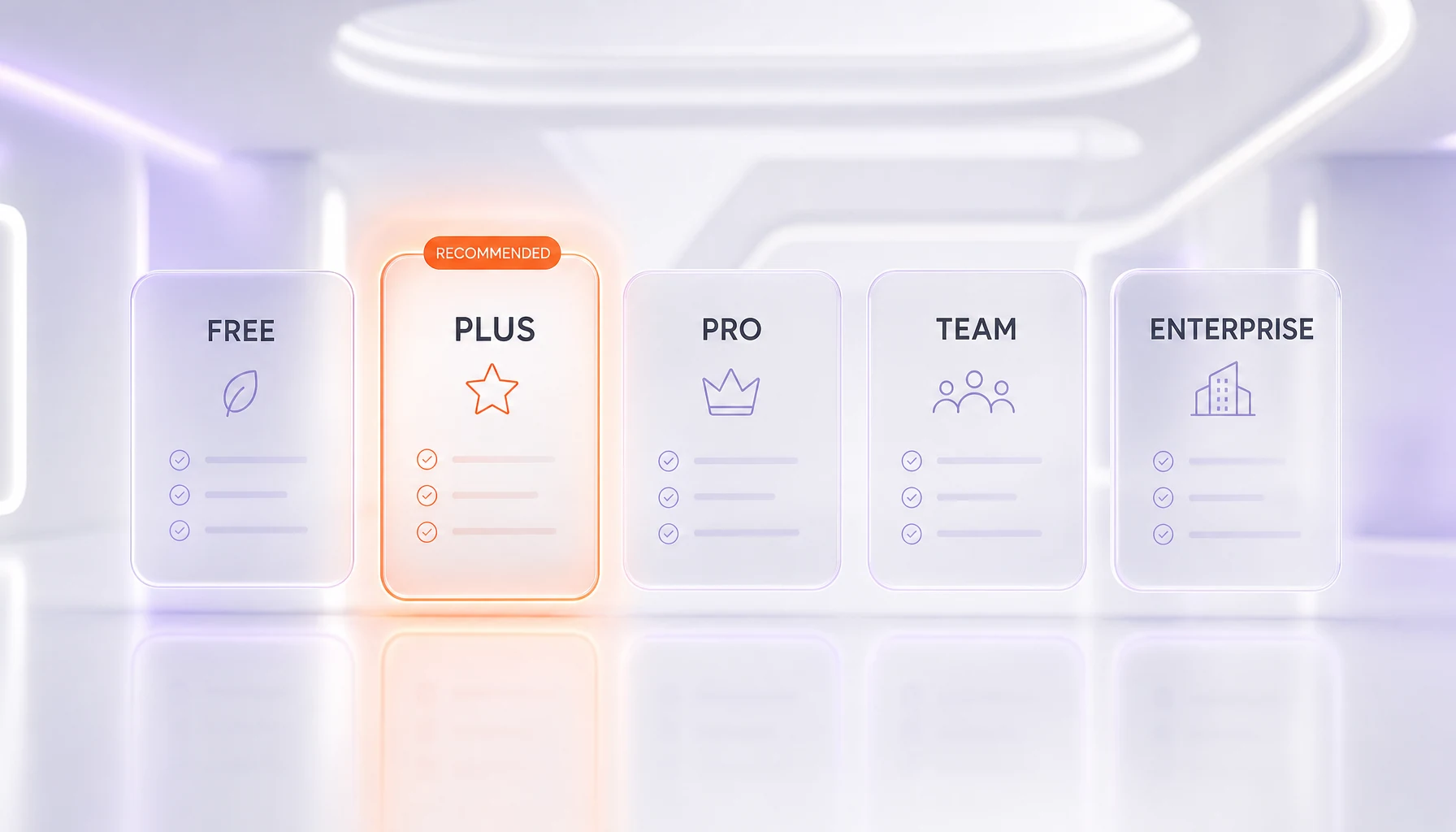
Ideogram runs a credit-based subscription model. We verified every number below directly on the live Ideogram pricing page in June 2026. Annual billing saves 25 percent on Plus and 30 percent on Pro.
| Plan | Monthly Price | Annual (per month) | Priority Credits | Concurrent Generations | Key Features |
|---|---|---|---|---|---|
| Free | $0 | $0 | None | 1 | 10 slow credits per week, limited public generation |
| Plus | $20 per month | $15 per month | 1,000 per month | 8 | Private generation, unlimited slow credits, unlimited character consistency, quality export |
| Pro | $60 per month | $42 per month | 3,500 per month | 32 | Everything in Plus plus batch generation and the largest queue |
| Team | $30 per user per month | $20 per user per month | 1,500 per user per month | 32 | Central billing and administration, early access to collaboration features |
| Enterprise | Custom | Custom | Custom | Custom | Private custom models trained on your data, volume API discounts, priority support |
How credits map to Ideogram 4.0 images: at the native 2K resolution, one Ideogram 4.0 image costs 2 credits in Turbo, 4 credits in Balanced, or 6 credits in Quality. So a Plus plan's 1,000 priority credits per month yields roughly 500 Turbo images, 250 Balanced images, or about 166 Quality images. Top-up credits are available at 150 priority credits for $4 on Plus and 250 priority credits for $4 on Pro.
API pricing is separate from subscriptions. Ideogram 4.0 costs $0.03 per image in Turbo, $0.06 per image in Default, and $0.10 per image in Quality. The Remove Background endpoint costs one cent per input image. Volume discounts on the API are available on annual commitments.
Best for: Plus at $20 per month is the sweet spot for solo marketers and creators. Pro at $60 per month earns its keep for agencies running batch generation at volume. Team is for small studios that need shared billing. The Free plan is fine for evaluation but every creation is public and lacks commercial rights, so it is unusable for client work.
The Open-Weight Question: Can You Actually Self-Host It?
Because the open weights generated most of the launch headlines, it is worth being precise about what you can and cannot do. You can download the fp8 or nf4 weights from Hugging Face today. You can run them locally, and the nf4 build fits on a single 24 GB consumer GPU. You can fine-tune them. You can use them for research, evaluation, and personal projects. What you cannot do under the published Ideogram Open Model Agreement is deploy them commercially. The moment you ship client work, a paid product, or a revenue-generating service, you need either the hosted subscription or a separate commercial license for full-precision access. The Apache 2.0 license covers only the inference code, not the weights. This is a common pattern in 2026 open-weight releases, and it means the practical commercial path for most teams is the hosted product, with self-hosting reserved for experimentation. Treat the open weights as a research and prototyping asset, not a free production model, and you will not get a nasty surprise.
Ideogram 4.0 vs the 2026 Image Model Field
The 2026 image generation market is crowded, and Ideogram 4.0 wins on a specific bundle of attributes rather than on raw beauty. We tested it against the kind of work each competing strength implies.
| Capability | Ideogram 4.0 | General closed models (OpenAI, Google) | Other open-weight models |
|---|---|---|---|
| Open weights | Yes (non-commercial) | No | Yes |
| Text rendering (open-weight class) | Best in class | Very strong | Trails Ideogram |
| Designer preference (DesignArena) | 1st open-weight, 2nd overall | 1st overall | Behind Ideogram |
| Native 2K output | Yes | Varies | Varies |
| Alpha channel straight from inference | No — separate Background Remover pass (announced for the next 4.0 release) | Limited | Varies |
| Structured JSON prompting | Yes | No | Rare |
| Photorealism | Good, not class-leading | Class-leading | Varies |
| Self-host on 24 GB GPU | Yes (nf4) | No | Some |
Versus Closed Frontier Models
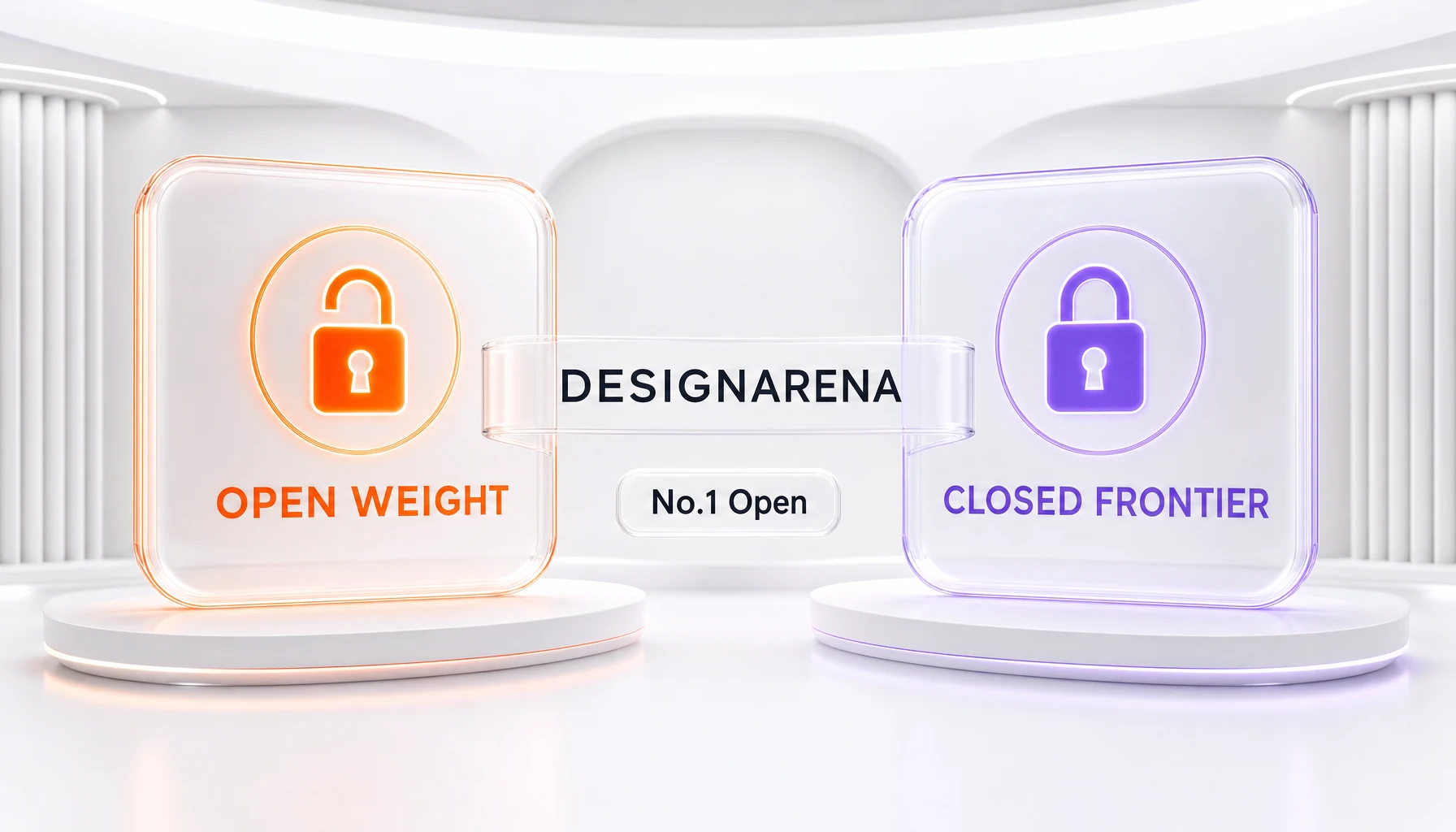
On the DesignArena designer-preference leaderboard, Ideogram 4.0 sits second overall, behind only closed frontier models from OpenAI and Google. Those closed models still edge it on raw photorealism and on the widest stylistic range. What they cannot offer is downloadable weights, a JSON layout interface, or the ability to run on your own hardware. If your priority is the single most beautiful photoreal image and you do not care about openness or layout control, a closed frontier model such as Midjourney or GPT Image 2 is a reasonable pick. If your priority is correct text, deterministic layout, transparent cutouts, and the option to self-host for research, Ideogram 4.0 is the stronger fit.
Versus Other Open-Weight Models
Among open-weight models, Ideogram 4.0 leads the DesignArena open-weight ranking and posts the best text rendering of the class. It is also deliberately parameter-efficient at 9.3 billion parameters, which is why the nf4 build runs on a single 24 GB GPU rather than demanding a multi-GPU rig like some larger open releases such as FLUX 2. For a team that wants an open model they can prototype with locally and that actually spells, it is the clear leader in its weight class as of June 2026.
Who Should Use Ideogram 4.0
Ideogram 4.0 is built for people who ship designs with words and layout, and who value control over surprise.
- Brand and marketing teams producing ad creative, social posts, and thumbnails where text accuracy and brand color control are non-negotiable.
- Print-on-demand and merch sellers who need correctly spelled text on the first generation, with cutouts one Background Remover pass away.
- Developers building automated design pipelines who want the deterministic control of a JSON prompt instead of free-text roulette.
- Agencies running batch generation at volume, where the Pro plan's batch feature and large queue pay for themselves.
- Researchers and tinkerers who want to download open weights and run a strong text-to-image model on a single consumer GPU.
Who Should Not Use Ideogram 4.0
- Photographers and portrait artists chasing the most photoreal faces and natural light, where closed frontier models still win.
- Filmmakers who need image-to-video, which Ideogram 4.0 does not do.
- Teams hoping to self-host for client work for free — the non-commercial weights license blocks that, so you will land on the paid product anyway.
- Casual users who just want a quick one-off image and will never learn the JSON interface that delivers most of the model's advantage.
Frequently Asked Questions
What is Ideogram 4.0?
Ideogram 4.0 is an open-weight text-to-image model released by Ideogram AI on June 3, 2026. It is a 9.3 billion parameter single-stream Diffusion Transformer trained from scratch, with native 2K output and a structured JSON prompting interface for controlling layout, color, and text placement. Transparent cutouts come from Ideogram's separate Background Remover, not from the model itself.
Is Ideogram 4.0 really open-weight, and can I use it commercially?
The weights are downloadable from Hugging Face and GitHub, but they are governed by the non-commercial Ideogram Open Model Agreement. You may use them for research, evaluation, and personal projects, but not for commercial production. The inference code is Apache 2.0. For commercial or client-facing use you need a paid subscription or a separate commercial license for full-precision access.
How much does Ideogram 4.0 cost in 2026?
Ideogram offers a Free plan, Plus at $20 per month ($15 per month billed annually) with 1,000 priority credits, Pro at $60 per month ($42 per month billed annually) with 3,500 priority credits, and Team at $30 per user per month ($20 per user per month billed annually). At native 2K, one Ideogram 4.0 image costs 2 credits in Turbo, 4 in Balanced, or 6 in Quality.
How much does the Ideogram 4.0 API cost per image?
The Ideogram 4.0 API costs $0.03 per image in Turbo, $0.06 per image in Default, and $0.10 per image in Quality. The separate Remove Background endpoint costs one cent per input image. Volume discounts are available on annual commitments.
What is structured JSON prompting in Ideogram 4.0?
Ideogram 4.0 was trained on structured JSON captions and accepts a JSON prompt that specifies layout, color, and text like a spec sheet. You can define typed text elements with literal strings, place them with normalized bounding box coordinates from 0 to 1000, and pin a palette of up to 16 hex colors per image and 5 per element. It gives you deterministic control over placement that a free-text prompt cannot match.
Can Ideogram 4.0 generate transparent backgrounds?
Not from the model itself, not yet. Ideogram 4.0 does not return an alpha channel from inference today. Transparency is a second pass through Ideogram's Background Remover, which the vendor says "produces a clean alpha cutout from any generation", and the Remove Background call costs one cent per input image. Ideogram has announced that "the next release of 4.0 returns alpha channels and editable text layers directly from inference", so the one-step version is coming — it is just not what you get today.
How good is Ideogram 4.0 at rendering text?
Text rendering is Ideogram's signature strength. Ideogram 4.0 scores 0.97 on the X-Omni English OCR benchmark and is reported to outperform every other open-weight model on text rendering. In our testing, short phrases of six words or fewer were essentially perfect, and multi-line layouts held up well, especially when combined with JSON bounding-box placement.
Can I run Ideogram 4.0 on my own GPU?
Yes, for non-commercial use. Ideogram 4.0 ships in fp8 and nf4 quantized builds, and the nf4 variant fits on a single 24 GB consumer GPU. We ran it locally and it generated 2K images without issue. Remember that the open weights are licensed for research, evaluation, and personal projects only, not commercial deployment.
How does Ideogram 4.0 rank against other models?
On the DesignArena designer-preference leaderboard, Ideogram 4.0 ranks first among open-weight models and second overall, behind only closed frontier models from OpenAI and Google. It also posts strong layout control and prompt alignment scores. It is the clear open-weight leader for text-heavy and layout-driven design work as of June 2026.
What is the difference between Ideogram 4.0 and Ideogram 3?
Ideogram 3 was a closed, hosted-only model. Ideogram 4.0 adds three major changes: downloadable open weights, native 2K output with no separate upscale step, and a structured JSON prompting interface for deterministic layout and color control. Transparency is not one of them — cutouts still run through the separate Background Remover on both versions. Text rendering remains the headline strength in both.
Does Ideogram 4.0 generate video?
No. Ideogram 4.0 is a still image model. It does not generate video and has no image-to-video capability. If you need video, you will need a dedicated video generation model from another provider.
What resolution does Ideogram 4.0 output?
Ideogram 4.0 generates natively at 256 to 2048 pixels per side, supporting flexible aspect ratios. The native 2K output means you do not need a separate upscale pass to reach high resolution, which keeps fine typography crisp in text-heavy designs.
Verdict: 8.6 out of 10
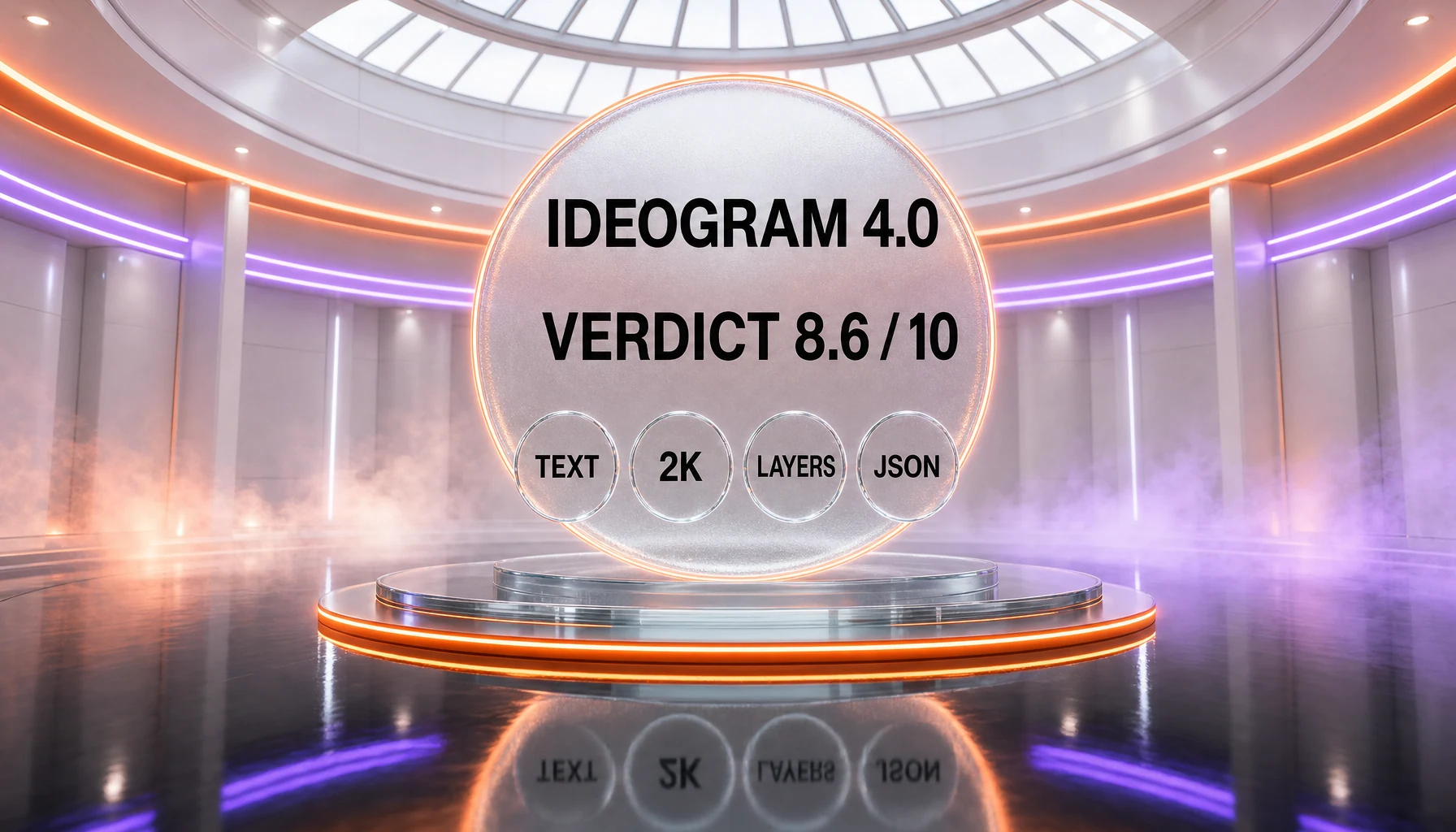
Ideogram 4.0 earns an 8.6 out of 10. It is the strongest open-weight image model for design work shipping in June 2026, and the combination of best-in-class text rendering, native 2K, and a structured JSON prompt interface makes it a genuine production tool rather than a toy. The two real caveats are honest ones: photorealism trails the closed frontier models, and the non-commercial weights license means most teams will pay for the hosted product rather than self-host. For any brand, agency, or developer whose output is built on text and layout, Ideogram 4.0 belongs in the stack.
Score breakdown:
- Features: 9.0 out of 10 — open weights, native 2K, and JSON prompting together are a step change for design workflows
- Ease of Use: 8.0 out of 10 — the hosted product is simple, but the JSON interface that unlocks the real power has a learning curve
- Value: 8.7 out of 10 — Plus at $20 per month and an API from $0.03 per image are strong, and the open weights add research value
- Support: 8.0 out of 10 — solid docs, an active community, and an enterprise support tier, though no dedicated support on the free plan
Key Features
Pros & Cons
Pros
- Best-in-class text rendering for an open-weight model — 0.97 on X-Omni English OCR
- Open weights downloadable from Hugging Face and GitHub, with an nf4 build that fits on a single 24 GB GPU
- Native 2K output with no separate upscale step, keeping fine typography crisp
- Layerize returns headlines and body copy as separate editable layers, so typography stays revisable after generation
- Structured JSON prompting gives deterministic control over layout, text, and a hex palette
- Ranks first among open-weight models and second overall on the DesignArena designer-preference leaderboard
- Strong value — Plus at $20 per month and an API from $0.03 per image
Cons
- Photorealism on skin, hair, and natural light trails closed frontier models
- The open weights are non-commercial only, so client work still requires the paid hosted product or a commercial license
- The JSON prompting interface that unlocks the real power has a learning curve
- No video generation or image-to-video capability
Best Use Cases
Platforms & Integrations
Available On
Integrations

We're developers and SaaS builders who use these tools daily in production. Every review comes from hands-on experience building real products — DealPropFirm, ThePlanetIndicator, PropFirmsCodes, and many more. We don't just review tools — we build and ship with them every day.
Written and tested by developers who build with these tools daily.
Frequently Asked Questions
What is Ideogram 4.0?
The open-weight design model that spells — 9.3B Diffusion Transformer with native 2K, structured JSON prompting, and best-in-class text rendering
How much does Ideogram 4.0 cost?
Ideogram 4.0 has a free tier. Premium plans start at $20/month.
Is Ideogram 4.0 free?
Yes, Ideogram 4.0 offers a free plan. Paid plans start at $20/month.
What are the best alternatives to Ideogram 4.0?
Top-rated alternatives to Ideogram 4.0 can be found in our WebApplication category, where we've reviewed and scored every tool on ThePlanetTools.ai.
Is Ideogram 4.0 good for beginners?
Ideogram 4.0 is rated 8/10 for ease of use.
What platforms does Ideogram 4.0 support?
Ideogram 4.0 is available on Web, API, Hugging Face, GitHub.
Does Ideogram 4.0 offer a free trial?
No, Ideogram 4.0 does not offer a free trial.
Is Ideogram 4.0 worth the price?
Ideogram 4.0 scores 8.7/10 for value. We consider it excellent value.
Who should use Ideogram 4.0?
Ideogram 4.0 is ideal for: Ad creative with headlines and brand-color control, Social posts and YouTube thumbnails where text must be correct, Print-on-demand and merch designs with transparent cutouts, Logos and layered design assets, cut out with a Background Remover pass, Automated design pipelines driven by structured JSON prompts, Batch generation of on-brand assets at agency volume, Local research and prototyping with downloadable open weights.
What are the main limitations of Ideogram 4.0?
Some limitations of Ideogram 4.0 include: Photorealism on skin, hair, and natural light trails closed frontier models; The open weights are non-commercial only, so client work still requires the paid hosted product or a commercial license; The JSON prompting interface that unlocks the real power has a learning curve; No video generation or image-to-video capability.
Ready to try Ideogram 4.0?
Start with the free plan
Try Ideogram 4.0 Free →