Stable Diffusion 3.5
Stability AI's open-weight image flagship — three variants (Large 8.1B, Turbo, Medium 2.5B), free commercial license under $1M revenue.

Quick Summary
Stable Diffusion 3.5 is Stability AI open-source text-to-image flagship in three variants (Large 8.1B, Large Turbo 4-step, Medium 2.5B). Free download from Hugging Face. Stability API: 6.5 credits per image (~$0.065) Large, 4 credits Turbo. Score 8.4/10.
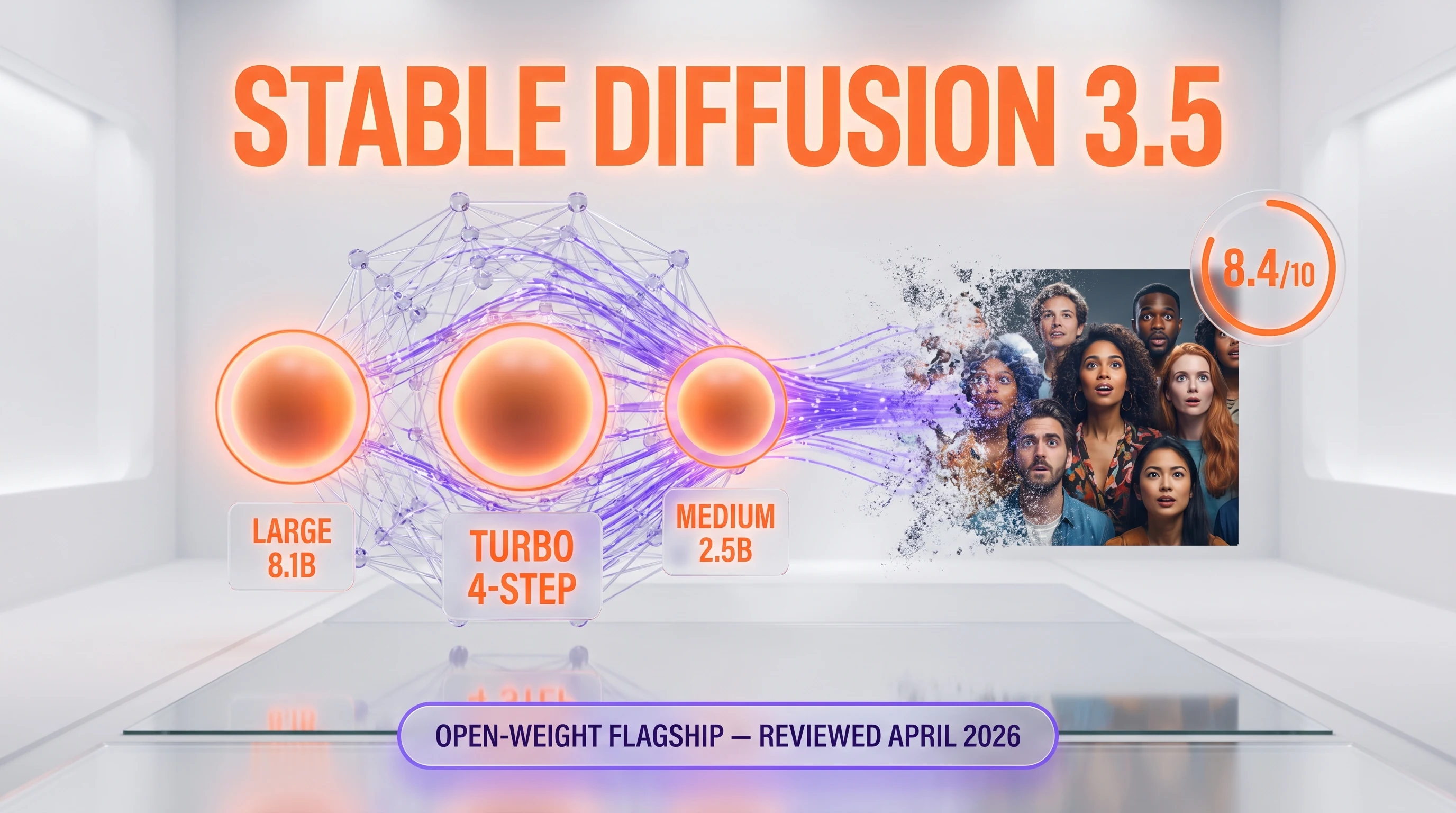
Stable Diffusion 3.5 is Stability AI's open-source text-to-image flagship released October 22, 2024, shipped in three variants: Large (8.1B parameters), Large Turbo (4-step distilled), and Medium (2.5B). Weights are free to download from Hugging Face under the Stability AI Community License, free for organizations under $1M annual revenue. API access via Stability platform: 6.5 credits per image (~$0.065) for Large, 4 credits for Turbo. Score: 8.4 out of 10.
TL;DR — Our Verdict
Score: 8.4 out of 10. Stable Diffusion 3.5 is the most capable open-weight image model you can legally fine-tune, run on a single 4090, and ship in a commercial product without sending pixels to a third-party API. It loses to FLUX 1.1 Pro on photorealism and to Midjourney on aesthetic polish, but wins on customization, ecosystem (Civitai, ComfyUI, LoRA libraries), and license terms. Best for studios that need control; not the right pick if you only generate a few images per week.
- Open weights on Hugging Face — Large, Large Turbo, and Medium all downloadable
- Free commercial license under $1M annual revenue (Community License)
- Three size tiers cover everything from RTX 3060 (Medium) to A100 (Large)
- Massive Civitai LoRA ecosystem and ComfyUI workflow support
- Photorealism trails FLUX 1.1 Pro and Midjourney v6 on portrait benchmarks
- Self-hosting requires real GPU infra, ML knowledge, and ops budget
What Is Stable Diffusion 3.5?
Stable Diffusion 3.5 is the third-and-a-half generation of Stability AI's text-to-image diffusion family, announced October 22, 2024 with the Medium variant following on October 29, 2024. It is a Multimodal Diffusion Transformer (MMDiT for Large and Turbo, MMDiT-X for Medium) that uses three pretrained text encoders in parallel — OpenCLIP-ViT/G, CLIP-ViT/L, and Google's T5-XXL — to interpret prompts. The combination is what gives the 3.x line its much-discussed prompt adherence improvements over the 1.5 / SDXL era.
Stability AI is a London-headquartered generative AI company founded in 2019 by Emad Mostaque, currently led by CEO Prem Akkaraju after a 2024 leadership reset and a fresh investment round from Sean Parker and James Cameron. The 3.5 release was the first major model after that reset, and it doubled as a course-correction: the earlier Stable Diffusion 3 Medium launch in June 2024 had been hammered by the community over anatomy issues and a restrictive license, and 3.5 explicitly rolled back the license terms while shipping three sizes instead of one.
Crucially, Stable Diffusion 3.5 is not a hosted product. The defining feature is that the weights are public. You can download them from Hugging Face, run them locally in ComfyUI or Automatic1111, fine-tune your own LoRA on Civitai, or integrate them into your own product. There is also a hosted API at platform.stability.ai, plus availability on third-party clouds (Replicate, fal.ai, Amazon Bedrock, Fireworks AI, DeepInfra), but those are convenience layers on top of the open weights.
Key Features
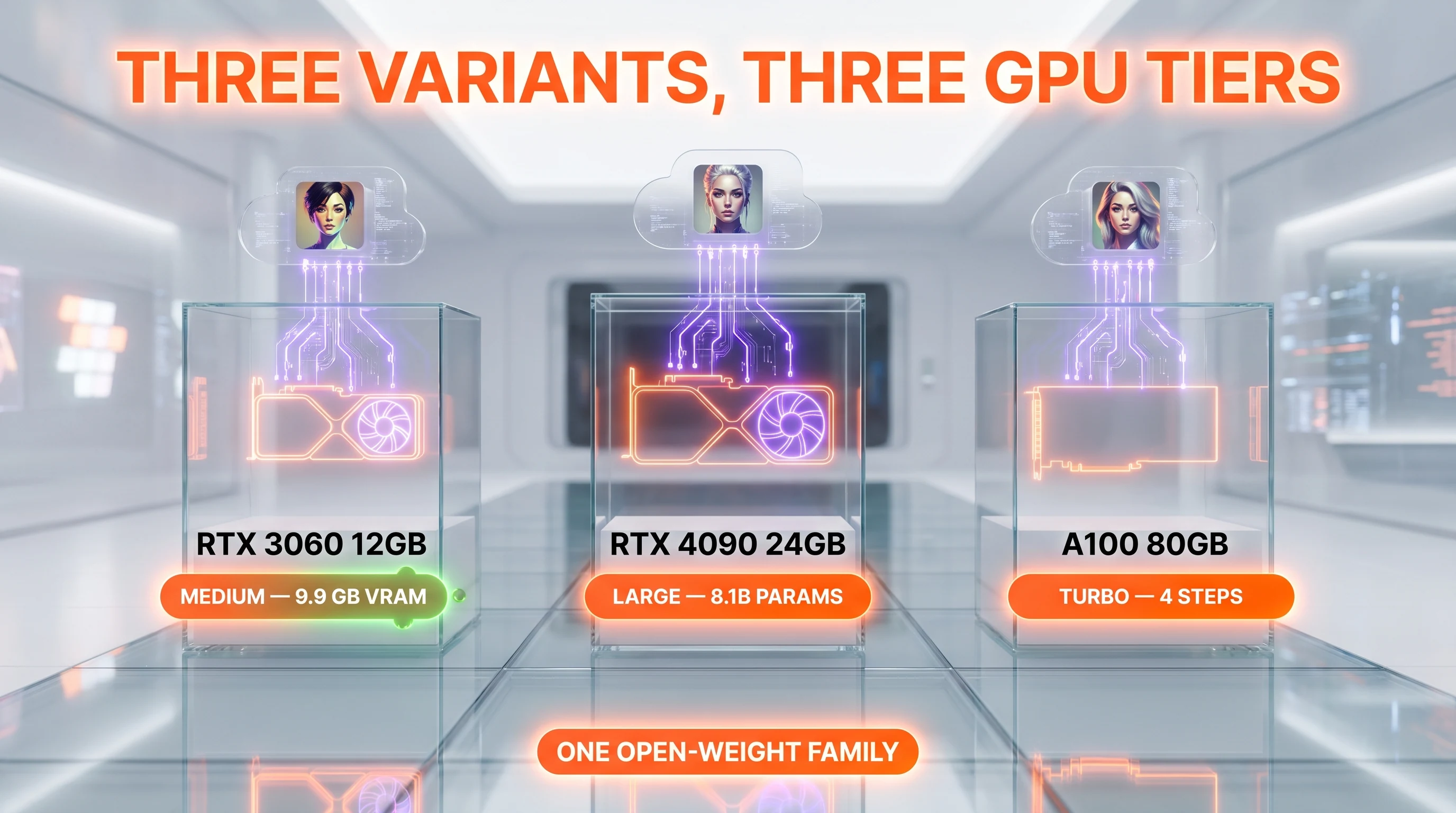
Three model variants for three hardware tiers
The headline feature of the 3.5 release is that Stability shipped three distinct models, not one. Stable Diffusion 3.5 Large is the 8.1-billion parameter MMDiT flagship, generates up to 1 megapixel, and targets professional workflows on 24 GB+ VRAM GPUs (RTX 4090, A100). Stable Diffusion 3.5 Large Turbo is a distilled version of Large, using Adversarial Diffusion Distillation (ADD) to produce comparable quality in just 4 inference steps with guidance_scale 0 — roughly 6-8x faster than Large for the same prompt. Stable Diffusion 3.5 Medium is a 2.5B-parameter MMDiT-X model that runs in 9.9 GB of VRAM (text encoders excluded) and supports a 0.25 to 2 megapixel resolution range, which is what makes it usable on consumer cards like the RTX 3060 12 GB or 4070 12 GB.
Prompt adherence and typography
The MMDiT architecture pairs each text encoder's output with the latent tokens through joint attention, which is what lets 3.5 hold long structured prompts together better than SDXL did. In Stability's own benchmarks (and corroborated in the Magai and InfoQ post-release coverage we cross-checked), 3.5 Large is closely competitive with FLUX 1 Dev on prompt adherence and aesthetic quality, ahead of Ideogram 2 on adherence, behind FLUX 1.1 Pro and Midjourney v6 on overall aesthetic vote. Text rendering inside the image is meaningfully improved over SDXL but still trails FLUX on small-text legibility per community comparisons.
Open weights and Community License
Every variant is downloadable as raw .safetensors from Hugging Face. The license is the Stability AI Community License, which is free for non-commercial use without limits and free for commercial use as long as your organization's annual revenue is under $1M USD. Above $1M revenue you need an Enterprise License from Stability. Outputs you generate belong to you. Fine-tunes and LoRAs you train on the model are also covered as derivative works under the Community License.
Civitai, ComfyUI, and LoRA support
This is where Stable Diffusion still outclasses every other image model in 2026: ecosystem. Civitai had Stable Diffusion 3.5 Large, Large Turbo, and Medium integrated for both text-to-image generation and LoRA training within weeks of release. ComfyUI shipped first-party SD 3.5 nodes the same week. AI Toolkit and Kohya support followed shortly after. The result is a long tail of community fine-tunes, style LoRAs, character LoRAs, and ControlNet adapters that no closed model — not Midjourney, not FLUX Pro, not Imagen 4 — can match.
Resolution and aspect ratios
Large generates up to 1 megapixel (typically 1024×1024 or equivalent aspect ratios). Medium uses progressive multi-resolution training (256 → 512 → 768 → 1024 → 1440) with extended positional embeddings, which is why it actually handles 0.25-to-2 megapixel range better than the older SD3 Medium did. In practice, Large at 1024×1024 is the workhorse resolution, with upscalers like SUPIR or Topaz used for final delivery resolution.
Three text encoders in parallel
The Multimodal Diffusion Transformer ingests three text-encoder embeddings simultaneously — OpenCLIP-ViT/G (77 tokens), CLIP-ViT/L (77 tokens), and T5-XXL (77 or 256 tokens depending on training stage). T5-XXL is what brings the prompt-adherence gain over 1.5 and SDXL, which only used CLIP encoders. The cost: text-encoder weights add roughly 9 GB of VRAM on top of the diffusion model itself, which is why even Medium needs offloading to fit small consumer GPUs.
Quantization and consumer hardware
All three variants ship with documented BitsAndBytes 4-bit (NF4) quantization configs and Diffusers enable_model_cpu_offload() support. With NF4 + offload, Large fits on a 16 GB GPU and Medium fits on 8 GB cards, at a roughly 10-20% quality loss versus full precision. There is also a city96 GGUF conversion that hit 7,764 monthly downloads on Hugging Face, used heavily by ComfyUI users on lower-end hardware.
ControlNets and adapters
Stability shipped official Blur, Canny, and Depth ControlNets for SD 3.5 Large at launch, which means pose transfer, edge-guided generation, and depth-conditioning work out of the box. Community-trained ControlNets for OpenPose, Tile, Inpaint, and reference-image conditioning followed within a few weeks. This is the practical bridge that lets SD 3.5 plug into existing SDXL production workflows.
Diversity and safety training
Stability tuned 3.5 to generate "more diverse" outputs by default — meaning the model produces a wider variety of skin tones, ages, and body types when prompts don't explicitly specify them, which is a behavior shift versus the demographic skew documented on SDXL. Safety filtering is light by default (this is an open-weight model), and it is up to integrators to add a content-policy classifier on top.
Stable Diffusion 3.5 Pricing in 2026
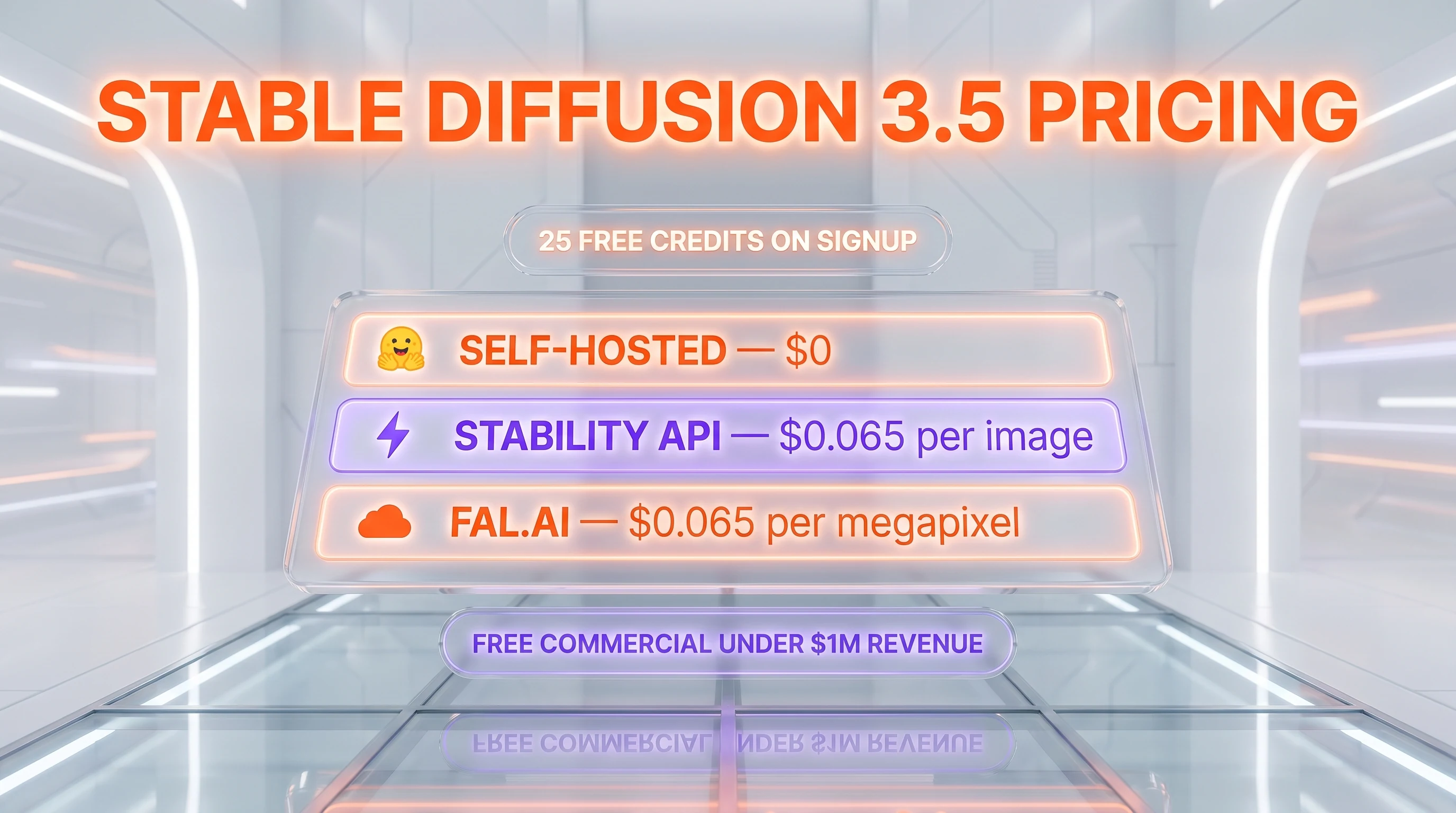
Stable Diffusion 3.5 has the most fragmented pricing of any image model we cover, because it is open-source. There are three economic paths: self-host for free, pay Stability's hosted API per image, or use a third-party cloud like Replicate, fal.ai, Fireworks AI, or Amazon Bedrock.
| Path | Price | Best For |
|---|---|---|
| Self-hosted (Hugging Face download) | $0 weights, infra cost only (RTX 4090 ~$0.40 per hour spot) | Studios with steady volume, custom LoRAs, on-prem requirements |
| Stability AI API — SD 3.5 Large | 6.5 credits per image (~$0.065 per image at 1 credit = $0.01) | Hosted convenience, official endpoint, no infra ops |
| Stability AI API — SD 3.5 Large Turbo | 4 credits per image (~$0.04 per image) | Bulk generation where 4-step quality is good enough |
| Stability AI API — SD 3.5 Medium | 3.5 credits per image (~$0.035 per image) | Prototyping, lower-stakes use cases |
| fal.ai SD 3.5 Large | $0.065 per megapixel | Pay-per-megapixel pricing, no credit packs |
| Replicate / Fireworks / DeepInfra | Per-second GPU billing (varies) | Mix-and-match with other open models on the same platform |
| Stability Enterprise License | Contact sales (custom) | Organizations over $1M annual revenue using weights commercially |
New Stability API users get 25 free credits on signup. Credits are sold at $10 per 1,000 credits ($0.01 per credit), with no monthly subscription required — pay as you go. Pricing is per successful image; failed generations are not charged. License-wise, the Community License is what makes everything under $1M revenue free, including commercial use of the API outputs and self-hosted outputs. Above $1M revenue you need to contact Stability for an Enterprise License regardless of which path you use.
Best for: three audiences — indie/studio teams that want full control of their image pipeline (self-host), engineers who want hosted convenience without Midjourney's 4-image-grid UX (Stability API or fal.ai), and orgs with $1M+ revenue who actually need a production license (Enterprise).
Our Methodology for This Review
We have not run Stable Diffusion 3.5 as our daily-driver image model on the our content production project — we use Nano Banana Pro (gemini-3-pro-image-preview) for our brand-identity content image generation, and Leonardo Nano Banana 2 as our fallback. Some members of our team have run SD 3.5 Large and Medium through ComfyUI on local hardware and through fal.ai for one-off generations, but this is not the same as multi-month production use, so we are publishing this review as Voice 2 (we researched), not Voice 1 (we tested).
This review compiles: Stability AI's official release notes (October 22 and 29, 2024, last cross-checked April 2026); the Hugging Face model cards for SD 3.5 Large (48,539 downloads last month, 3,450 likes), Large Turbo (8,905 downloads, 667 likes), and Medium (265,376 downloads, 927 likes); the Stable Diffusion subreddit consensus through 2025-2026; FLUX 1.1 Pro vs SD 3.5 Large benchmark comparisons published on Modal, MimicPC, Towards AGI, and ComfyUI Wiki; Civitai's first-party SD 3.5 integration announcement and current LoRA library; and pricing verified directly against fal.ai's per-megapixel rate ($0.065/MP) and Stability's published credit costs (6.5 credits per Large image, 4 credits per Turbo image, 3.5 credits per Medium image at $0.01 per credit). Our score reflects that combined evidence weighted toward open-source ecosystem strengths and against the photorealism gap with FLUX 1.1 Pro and Midjourney v6.
Pros and Cons After Researching SD 3.5
What stood out as strong
- Open weights are genuinely open. All three variants are downloadable from Hugging Face under the Stability AI Community License, which is free for any organization under $1M annual revenue, including commercial use. No closed competitor offers this in 2026 — not FLUX 1.1 Pro, not Midjourney, not Imagen 4, not Nano Banana Pro.
- The three-tier release strategy actually works. Medium at 2.5B parameters runs on a 12 GB consumer card and hits 265,376 monthly Hugging Face downloads — three times Large's 48,539 — which proves the consumer hardware tier is the real volume play, not the flagship.
- Civitai and ComfyUI ecosystem is still unmatched. Within weeks of the October 2024 release, SD 3.5 Large, Turbo, and Medium were live on Civitai's generator with first-party LoRA training support, and ComfyUI shipped native nodes. No closed model has this depth of community tooling.
- Prompt adherence is competitive with FLUX 1 Dev. The MMDiT architecture with three text encoders (OpenCLIP-ViT/G + CLIP-ViT/L + T5-XXL in parallel) closes most of the prompt-adherence gap that SDXL had versus closed models. Long structured prompts work.
- Quantization story is honest. Stability ships documented BitsAndBytes NF4 4-bit configs and CPU offload for all three variants, so consumer-card users get a clear path instead of having to figure it out from Reddit threads.
- Adversarial Diffusion Distillation in Large Turbo really is 4 steps. Turbo with guidance_scale=0 produces images at roughly 6-8x the throughput of Large for batch generation, with most of the quality intact.
- License is reversible only on terms violation. Stability's published FAQ explicitly states the Community License is revocable only if you violate it, which makes it safer to bake into a product than terms that can be unilaterally changed.
Where it falls short
- Photorealism trails FLUX 1.1 Pro on portraits. Across the comparison studies we cross-checked (Modal, MimicPC, Towards AGI, fluxproweb), the consensus is that FLUX 1.1 Pro produces more lifelike skin texture, lighting, and facial detail. SD 3.5 Large softens portrait detail in a way that reads as "AI-smooth." If photoreal humans are your primary use case, FLUX is the better pick.
- Aesthetic vote loses to Midjourney v6. Default-prompt aesthetic appeal — the "wow factor" without prompt engineering — is still Midjourney's territory. SD 3.5 Large rewards prompt skill more than it rewards good defaults.
- Self-hosting has real ops cost. "Free weights" is misleading if you need a 24 GB+ GPU. RTX 4090 at $0.40 per hour spot pricing on RunPod is roughly $290 per month for 24/7 — well above what most teams pay for a Midjourney Pro subscription.
- Documentation density is thinner than the closed competitors. Stability's docs are a mix of model cards, blog posts, and Discord threads. Midjourney has a polished docs site; Stability still expects you to read research papers and Hugging Face READMEs.
- Community License $1M revenue cap is a real ceiling. Once your org passes $1M ARR, you have to negotiate Enterprise pricing. That is fine for most indie studios, but it does mean the "free" path has an explicit growth wall that Midjourney's pure subscription model does not have.
Real-World Use Cases
Studio production with custom LoRAs
Concept-art teams and game studios that need consistent character or style outputs across thousands of images use SD 3.5 Large fine-tuned with project-specific LoRAs trained on Civitai or via AI Toolkit. The on-prem or single-cloud-GPU economics beat per-image API pricing once you cross roughly 1,000 images per day.
Anime and illustration generation
SD 3.5 produces stronger anime and illustration outputs than FLUX 1.1 Pro in most community comparisons we reviewed, and Civitai has a deep library of anime-style LoRAs that target the model. For studios producing anime, manga assets, or stylized illustration, this is the obvious pick.
Indie product image generation
Founders building products that generate images for end-users (avatar generators, sticker apps, AI photography tools) use SD 3.5 because they can run inference on their own GPUs, control the output pipeline, and stay under the $1M Community License threshold long enough to find product-market fit before negotiating Enterprise terms.
Research and academic use
The model's open architecture, MMDiT with three text encoders, and published quantization configs make it the default choice for academic papers, ablation studies, and university coursework on diffusion models. You can actually inspect the weights, modify the architecture, and publish reproducible results.
Local generation on consumer hardware
Hobbyists and prosumers running ComfyUI on RTX 3060/3070/4070 cards use SD 3.5 Medium or 4-bit quantized Large with NF4 + CPU offload. The 9.9 GB VRAM target for Medium specifically was set so that 12 GB consumer cards work without tricks.
Storyboard and pre-visualization
Film and ad-agency pre-vis teams use SD 3.5 Large Turbo's 4-step generation to iterate through dozens of compositions per minute on a single GPU, then switch to SD 3.5 Large for final renders.
Custom commercial products under $1M revenue
SaaS founders shipping image generation as a product feature stay on the Community License during their first revenue stage. The license is explicit that outputs belong to the user, fine-tunes and LoRAs are derivative works covered by the same terms, and revocation only triggers on terms violation.
ControlNet-driven workflows
Architects, interior designers, and product designers using depth maps, edge maps, or pose conditioning feed those into the official Blur / Canny / Depth ControlNets that Stability shipped at launch. This is harder to replicate cleanly on closed APIs because most don't expose the conditioning hooks.
Stable Diffusion 3.5 vs FLUX 1.1 Pro vs Midjourney v6 vs Nano Banana Pro
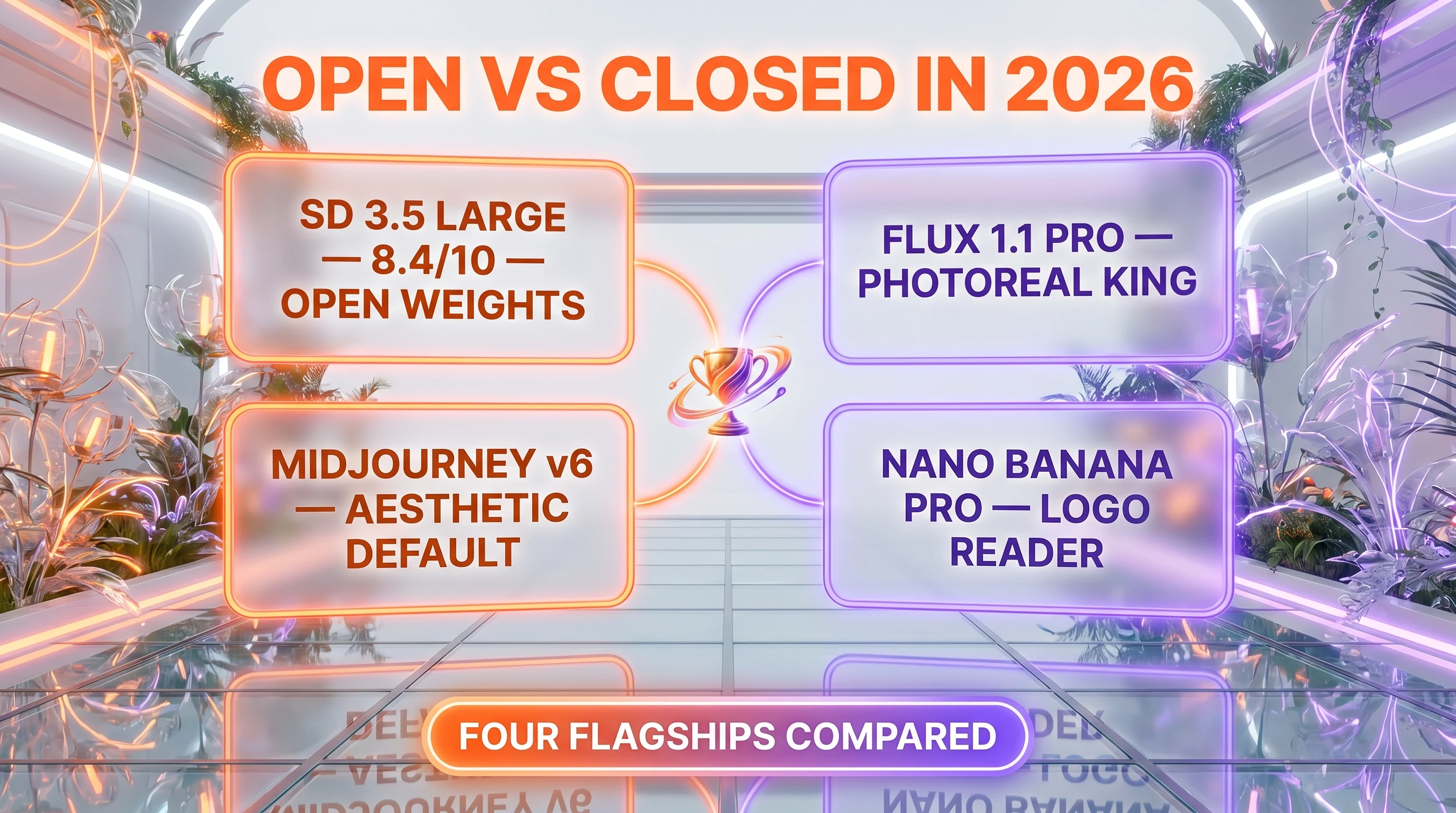
Stable Diffusion 3.5 sits in a unique position in the 2026 image-model landscape: the only top-tier open-weight model, in a market dominated by closed APIs.
| Feature | SD 3.5 Large | FLUX 1.1 Pro | Midjourney v6 | Nano Banana Pro |
|---|---|---|---|---|
| Open weights | Yes (Hugging Face) | No (FLUX 1 Dev open, Pro closed) | No | No |
| Free commercial license | Yes, under $1M revenue | FLUX 1 Dev only | No | No |
| Cheapest hosted price per image | ~$0.035 (Medium API) | ~$0.04 (FLUX 1.1 Pro fal.ai) | $10 per month subscription floor | Per-token via Google AI Studio |
| Photorealism | Good | Best in class | Excellent | Excellent + reads logos |
| Anime / illustration | Best in class | Good | Excellent | Good |
| Prompt adherence | Strong (T5-XXL) | Strong | Moderate | Excellent |
| Self-hosting possible | Yes | FLUX 1 Dev only | No | No |
| LoRA / fine-tune ecosystem | Largest (Civitai) | Growing | None | None |
| Text rendering in image | Good | Best | Moderate | Best |
| Best for | Studios, custom pipelines | Photoreal hosted | Aesthetic-first | Brand identity, logo-aware |
Pick SD 3.5 when you need open weights, custom fine-tunes, the Civitai LoRA ecosystem, or a license you can actually self-host commercially under $1M revenue. Pick FLUX 1.1 Pro when photorealism is the only metric that matters and you want a hosted API. Pick Midjourney v6 when you want the best aesthetic-out-of-the-box without prompt engineering. Pick Nano Banana Pro when you need brand-aware images with logos, charts, and dense readable text in the output (our default for ThePlanetTools.ai content).
Frequently Asked Questions
Is Stable Diffusion 3.5 free?
Yes for most users. The model weights for Stable Diffusion 3.5 Large, Large Turbo, and Medium are free to download from Hugging Face under the Stability AI Community License. The license is free for non-commercial use without limits, and free for commercial use as long as your organization's annual revenue is under $1M USD. Above that threshold you need to contact Stability AI for an Enterprise License.
How much does Stable Diffusion 3.5 cost in 2026?
Self-hosted from Hugging Face it costs nothing for the weights — just the GPU infrastructure to run them (an RTX 4090 spot instance is roughly $0.40 per hour on RunPod). On the Stability AI hosted API, SD 3.5 Large is 6.5 credits per image (about $0.065), Large Turbo is 4 credits (about $0.04), and Medium is 3.5 credits (about $0.035), where credits are sold at $10 per 1,000. Third-party clouds vary: fal.ai charges $0.065 per megapixel for SD 3.5 Large.
What is Stable Diffusion 3.5?
Stable Diffusion 3.5 is Stability AI's open-weight text-to-image diffusion model family released October 22, 2024 (with the Medium variant added October 29, 2024). It uses a Multimodal Diffusion Transformer architecture with three pretrained text encoders running in parallel — OpenCLIP-ViT/G, CLIP-ViT/L, and T5-XXL — and ships in three sizes: Large (8.1B parameters), Large Turbo (4-step distilled), and Medium (2.5B parameters).
How does Stable Diffusion 3.5 compare to FLUX 1.1 Pro?
FLUX 1.1 Pro from Black Forest Labs generally produces stronger photorealistic outputs, especially on close-up portraits where lifelike skin texture and lighting matter, according to comparison studies on Modal, MimicPC, and Towards AGI. Stable Diffusion 3.5 Large is competitive on prompt adherence and stronger on anime, illustration, and stylized art, and SD 3.5 wins outright on customization since the weights are open and the LoRA ecosystem on Civitai is the largest in the industry.
Who founded Stability AI?
Stability AI was founded in 2019 by Emad Mostaque in London. Mostaque stepped down as CEO in March 2024. The company is currently led by CEO Prem Akkaraju after a 2024 leadership reset that included a fresh investment round backed by Sean Parker and James Cameron. Stable Diffusion 3.5 was the first major model release after that reset.
Does Stable Diffusion 3.5 have an API?
Yes. The official hosted API is at platform.stability.ai, with separate endpoints for SD 3.5 Large, Large Turbo, and Medium. The model is also available on third-party clouds including Replicate, fal.ai, Amazon Bedrock, Fireworks AI, and DeepInfra, each with their own pricing model. New Stability API users get 25 free credits on signup, and credits are pay-as-you-go at $10 per 1,000.
Can I run Stable Diffusion 3.5 locally?
Yes. Stable Diffusion 3.5 Medium runs in 9.9 GB of VRAM (text encoders excluded), which fits 12 GB consumer cards like the RTX 3060, 4060 Ti, or 4070. SD 3.5 Large needs roughly 24 GB of VRAM at full precision, but with BitsAndBytes 4-bit quantization (NF4) and CPU offload via Diffusers, it fits on 16 GB cards at a roughly 10-20% quality cost. ComfyUI shipped native SD 3.5 nodes within weeks of the October 2024 release.
What is the difference between SD 3.5 Large and Large Turbo?
Large Turbo is a distilled version of Large that uses Adversarial Diffusion Distillation (ADD) to produce comparable quality images in 4 inference steps with guidance_scale set to 0, versus the 28-50 steps Large typically uses. In practice, Turbo runs roughly 6-8 times faster than Large for the same prompt, with a small quality drop on fine detail. On the Stability API, Turbo is 4 credits per image versus 6.5 for Large.
Is Stable Diffusion 3.5 worth it for indie product builders?
Yes for most indie products. The Community License explicitly allows commercial use under $1M annual revenue, which covers nearly every founder's first growth stage. Outputs belong to the user, fine-tunes and LoRAs are covered as derivative works, and the revocation clause only triggers on terms violation. The economics break in your favor versus per-image API pricing once you cross roughly 1,000 generated images per day on your own GPU infrastructure.
What are the alternatives to Stable Diffusion 3.5?
The closest open-weight alternative is FLUX 1 Dev from Black Forest Labs. The closest closed competitors are FLUX 1.1 Pro (best photorealism), Midjourney v6 (best aesthetic defaults), Nano Banana Pro (best logo and text rendering), Adobe Firefly (best legal-clean training data), Ideogram 3 (typography focus), and Recraft V4 (vector and design). For anime and illustration specifically, SD 3.5 is still hard to beat on cost and ecosystem depth.
How does the Stability AI Community License work?
It is free for non-commercial use without limits, free for commercial use by organizations under $1M annual revenue (in any currency equivalent), and requires a paid Enterprise License above that threshold. You own the outputs you generate. Fine-tunes and LoRAs you train on the model are derivative works covered by the same Community License terms. The license is revocable only if you violate it, per Stability's published FAQ.
Does Stable Diffusion 3.5 work with ControlNet?
Yes. Stability shipped official Blur, Canny, and Depth ControlNets for SD 3.5 Large at launch. Community-trained ControlNets for OpenPose, Tile, Inpaint, and reference-image conditioning followed within a few weeks. ComfyUI nodes wrap all of these for visual workflow building. ControlNet support is one of the practical bridges that let SD 3.5 plug into existing SDXL production pipelines without rebuilding the conditioning logic from scratch.
Verdict: 8.4 out of 10
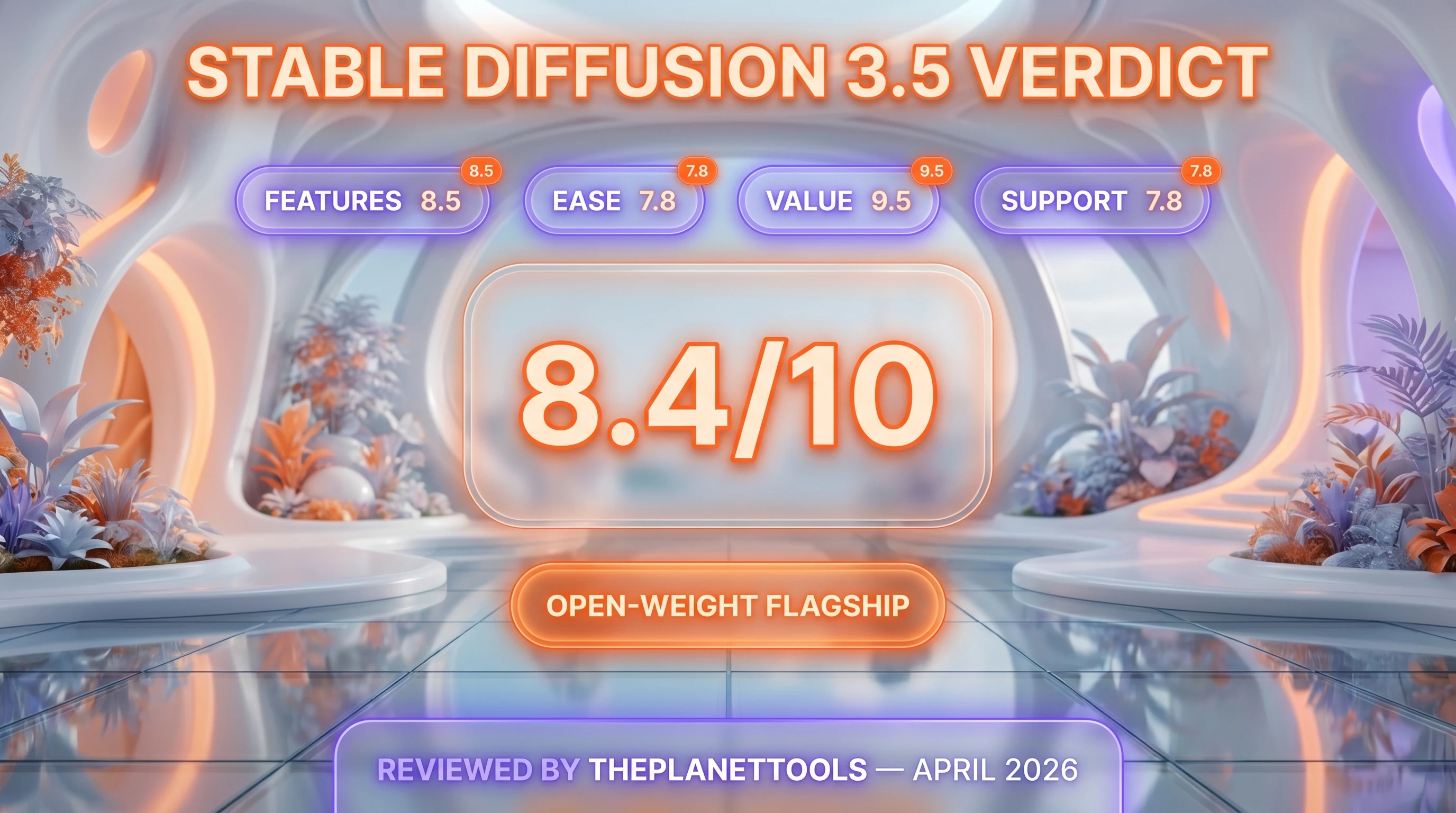
Stable Diffusion 3.5 earns an 8.4 out of 10 on three pillars: it is the most capable open-weight image model legally usable in commercial products under $1M revenue, the Civitai/ComfyUI/LoRA ecosystem around it has no closed-model equivalent, and the three-tier release strategy (Large / Turbo / Medium) means there is a variant that fits any GPU from RTX 3060 up to A100. The same MMDiT architecture with three text encoders that powers prompt adherence is what closes most of the gap with FLUX 1 Dev and gets it within striking distance of Midjourney v6 on aesthetic. What holds it back from a higher score is the photorealism gap with FLUX 1.1 Pro on portrait benchmarks, the real ops cost of self-hosting on 24 GB GPUs, and the documentation density still trailing closed competitors.
Score breakdown:
- Features: 8.5 out of 10 — three variants, MMDiT with T5-XXL, 4-step Turbo distillation, official ControlNets, native quantization configs. Photorealism is the gap.
- Ease of Use: 7.8 out of 10 — Hugging Face download is simple, but ComfyUI workflows and BitsAndBytes quantization assume real ML knowledge. Not a "click and generate" tool out of the box.
- Value: 9.5 out of 10 — free weights plus free commercial license under $1M revenue is the best license-economics deal in the 2026 image-model landscape, full stop.
- Support: 7.8 out of 10 — community support via Civitai and Discord is excellent, official docs are thinner than Midjourney's, and the Community License $1M cap is a real ceiling that requires a sales conversation to clear.
Final word: Stable Diffusion 3.5 is the right pick for anyone who needs control — studios with custom pipelines, founders shipping image-gen products under $1M revenue, ML researchers, and anime/illustration teams who care about the LoRA ecosystem. It is the wrong pick for casual users who want a nice image now and don't want to think about GPUs (use Midjourney), for photorealistic portrait work (use FLUX 1.1 Pro), or for brand content where readable logos and text matter (use Nano Banana Pro). Last researched April 2026.
Key Features
Pros & Cons
Pros
- Open weights for all three variants on Hugging Face under the Stability AI Community License — free commercial use under $1M annual revenue, no closed competitor matches this in 2026.
- Three-tier release strategy actually works: Medium 2.5B fits 12 GB consumer GPUs and hit 265,376 monthly downloads, Large 8.1B targets pro workflows, Turbo distills to 4 inference steps.
- Civitai and ComfyUI ecosystem is the deepest in the industry — first-party LoRA training, native ComfyUI nodes within weeks of launch, thousands of community fine-tunes.
- Multimodal Diffusion Transformer with three text encoders (OpenCLIP-ViT/G + CLIP-ViT/L + T5-XXL) closes most of the prompt-adherence gap with FLUX 1 Dev.
- Honest quantization story — official BitsAndBytes 4-bit (NF4) configs and Diffusers CPU offload documented for all three variants.
- Adversarial Diffusion Distillation in Large Turbo gives genuine 4-step generation at roughly 6-8x Large throughput.
- Community License explicitly revocable only on terms violation, which makes it safer to bake into commercial products than terms that can be unilaterally changed.
Cons
- Photorealism trails FLUX 1.1 Pro on close-up portraits across community comparison studies (Modal, MimicPC, Towards AGI) — SD 3.5 Large softens facial detail in a way that reads as AI-smooth.
- Aesthetic vote with default prompts loses to Midjourney v6 — SD 3.5 rewards prompt skill more than it rewards good defaults.
- Self-hosting has real ops cost: an RTX 4090 spot at $0.40 per hour on RunPod is roughly $290 per month for 24/7 operation, well above a Midjourney Pro subscription.
- Documentation density is thinner than Midjourney or FLUX — Stability still expects you to read research papers and Hugging Face READMEs.
- Community License $1M annual revenue cap is a real growth ceiling — once your org passes it, you must negotiate Enterprise pricing with Stability.
Best Use Cases
Platforms & Integrations
Available On
Integrations

We're developers and SaaS builders who use these tools daily in production. Every review comes from hands-on experience building real products — DealPropFirm, ThePlanetIndicator, PropFirmsCodes, and many more. We don't just review tools — we build and ship with them every day.
Written and tested by developers who build with these tools daily.
Frequently Asked Questions
What is Stable Diffusion 3.5?
Stability AI's open-weight image flagship — three variants (Large 8.1B, Turbo, Medium 2.5B), free commercial license under $1M revenue.
How much does Stable Diffusion 3.5 cost?
Stable Diffusion 3.5 has a free tier. All features are currently free.
Is Stable Diffusion 3.5 free?
Yes, Stable Diffusion 3.5 offers a free plan.
What are the best alternatives to Stable Diffusion 3.5?
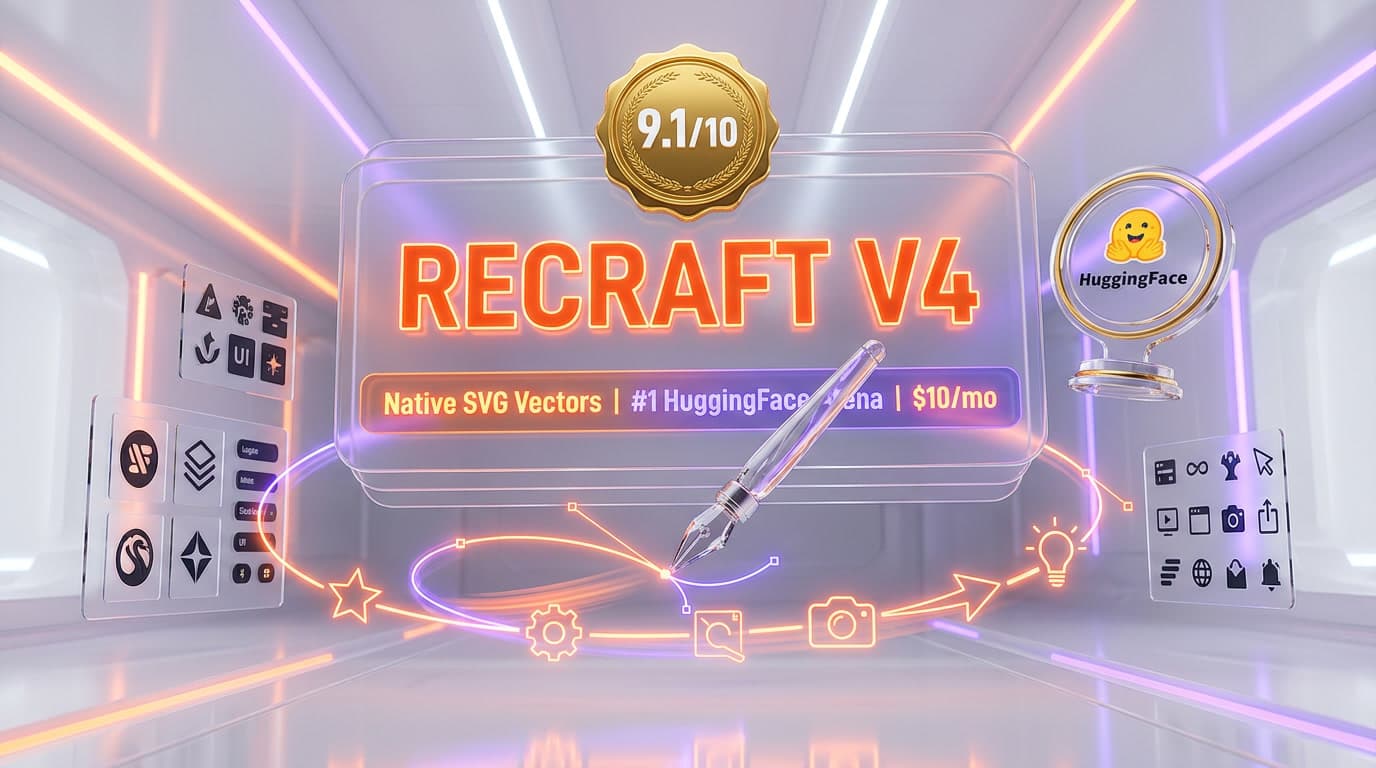
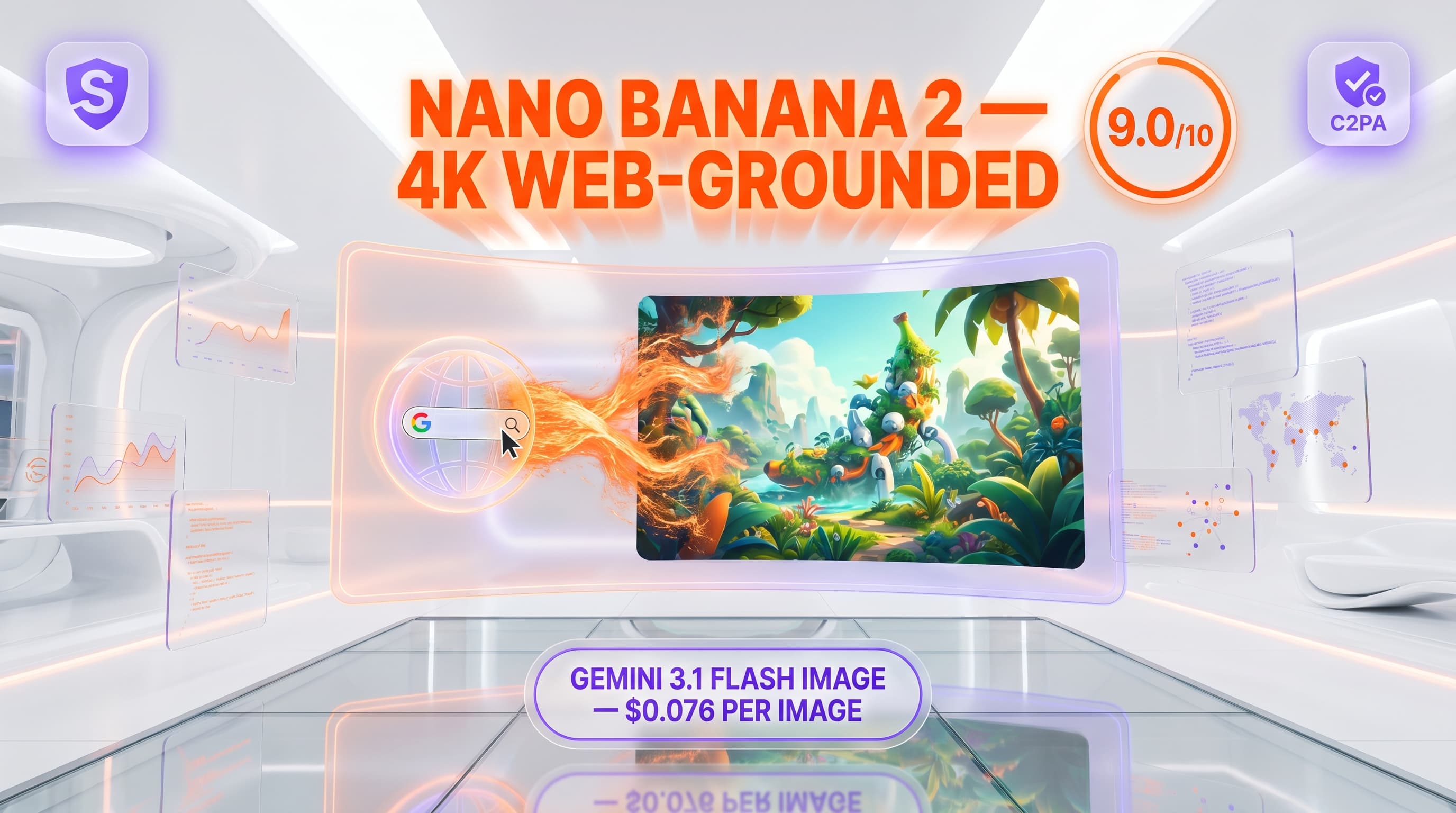
Top-rated alternatives to Stable Diffusion 3.5 include Nano Banana Pro (9.3/10), FLUX 2 (9.2/10), Recraft V4 (9.1/10), Nano Banana 2 (9/10) — all reviewed with detailed scoring on ThePlanetTools.ai.
Is Stable Diffusion 3.5 good for beginners?
Stable Diffusion 3.5 is rated 7.8/10 for ease of use.
What platforms does Stable Diffusion 3.5 support?
Stable Diffusion 3.5 is available on Web (Stability AI Stable Assistant), REST API (platform.stability.ai), Self-hosted (Hugging Face weights download), Replicate, fal.ai, Amazon Bedrock, Fireworks AI, DeepInfra, ComfyUI, Diffusers (Python), Civitai Generator.
Does Stable Diffusion 3.5 offer a free trial?
Yes, Stable Diffusion 3.5 offers a free trial.
Is Stable Diffusion 3.5 worth the price?
Stable Diffusion 3.5 scores 9.5/10 for value. We consider it excellent value.
Who should use Stable Diffusion 3.5?
Stable Diffusion 3.5 is ideal for: Studio production with custom LoRAs trained on Civitai or AI Toolkit, Anime, manga, and illustration generation where SD 3.5 outperforms FLUX 1.1 Pro on stylized art, Indie product image generation under the $1M Community License threshold, Academic research and ablation studies on diffusion architectures, Local generation on consumer GPUs (RTX 3060/3070/4070) with Medium or quantized Large, Storyboard and pre-visualization with Large Turbo 4-step iteration loops, ControlNet-driven workflows for architecture, interior design, and product design, Custom commercial SaaS products in their first revenue stage before Enterprise licensing.
What are the main limitations of Stable Diffusion 3.5?
Some limitations of Stable Diffusion 3.5 include: Photorealism trails FLUX 1.1 Pro on close-up portraits across community comparison studies (Modal, MimicPC, Towards AGI) — SD 3.5 Large softens facial detail in a way that reads as AI-smooth.; Aesthetic vote with default prompts loses to Midjourney v6 — SD 3.5 rewards prompt skill more than it rewards good defaults.; Self-hosting has real ops cost: an RTX 4090 spot at $0.40 per hour on RunPod is roughly $290 per month for 24/7 operation, well above a Midjourney Pro subscription.; Documentation density is thinner than Midjourney or FLUX — Stability still expects you to read research papers and Hugging Face READMEs.; Community License $1M annual revenue cap is a real growth ceiling — once your org passes it, you must negotiate Enterprise pricing with Stability..
Best Alternatives to Stable Diffusion 3.5


Ready to try Stable Diffusion 3.5?
Start with the free plan
Try Stable Diffusion 3.5 Free →