CrewAI
The Python-first multi-agent framework — 45K+ GitHub stars, 100K+ certified developers, used by PwC, IBM, NVIDIA, and Capgemini

Quick Summary
CrewAI is an open-source Python framework for orchestrating role-based autonomous AI agents. Score 8.7/10. Free OSS tier, Basic at $99 per month. 45K+ stars, 1.4B agentic automations per month, funded by Insight Partners.
CrewAI is an open-source Python framework for orchestrating role-based autonomous AI agents that collaborate as a crew. As of April 2026 it holds 45,900+ GitHub stars, powers over 100,000 certified developers, runs 1.4 billion agentic automations per month, and is used by 60 percent of the Fortune 500 including PwC, IBM, NVIDIA, and Capgemini. The open-source framework is free to self-host, and the managed CrewAI AMP platform has a free Basic plan with custom-priced Enterprise above it. Overall score: 8.7 out of 10.
What Is CrewAI?
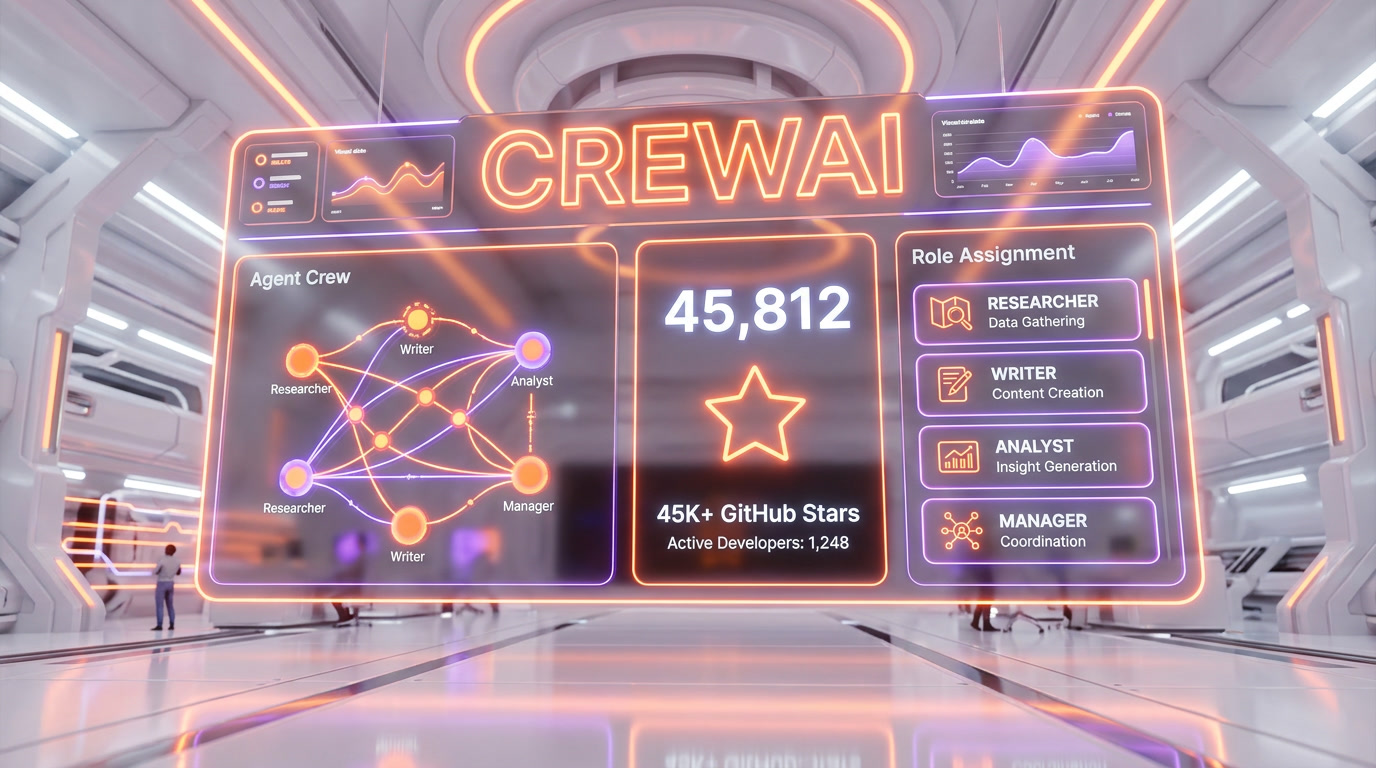
CrewAI is a lightweight, Python-first framework for building multi-agent systems where each agent has an explicit role, a goal, a backstory, and a toolset. Instead of one monolithic prompt trying to do everything, you define a Researcher, a Writer, an Editor, and an SEO specialist — each with its own instructions — and let them collaborate on a task through a Crew orchestrator. The mental model mirrors how humans actually staff projects, which is why it has become the fastest-adopted multi-agent framework in the Python ecosystem.
The project was founded by Joao Moura in 2023 as an independent framework, built from the ground up with zero dependency on LangChain or any other agent library. In October 2024 the company raised $18 million in Series A funding led by Insight Partners, with participation from boldstart ventures, Craft Ventures, and angel investments from Andrew Ng and HubSpot CTO Dharmesh Shah. That funding catalyzed the transition from pure OSS project to enterprise platform — and by early 2026 CrewAI had launched its AMP (Agent Management Platform) serving the largest companies on earth.
What makes CrewAI different from LangGraph, AutoGen, or OpenAI Swarm is not raw capability — it is the abstraction. The role-based primitive (Agent, Task, Tool, Crew) maps directly to how engineers and product teams actually think about work. A junior developer can read a well-written Crew definition and understand what each agent does in under 60 seconds. That readability is the real moat, and it compounds: teams ship faster, onboard faster, and debug faster.
Role-Based Agents: The Deep Dive
The core primitive in CrewAI is the Agent. Unlike a traditional LLM call where you stuff role, task, context, and output format into a single prompt, a CrewAI Agent separates these concerns cleanly. Conceptually, you define an agent with four fields: role (what they are), goal (what they are trying to achieve), backstory (why they exist and what expertise they bring), and tools (what capabilities they have). The framework compiles these into the system prompt automatically.
Agent Anatomy
A typical CrewAI agent definition in Python looks roughly like this conceptually: you instantiate an Agent with a role string like "Senior Market Research Analyst," a goal like "Identify the top 5 trends shaping enterprise AI adoption in 2026," a multi-line backstory that grounds the persona in expertise and constraints, and a list of tools like SerperDevTool for web search and WebsiteSearchTool for RAG on specific URLs. You can optionally set verbose=True for live trace output, allow_delegation=True to let the agent hand off sub-tasks to other agents, and max_iter to cap its reasoning loops.
Task Anatomy
Tasks are the unit of work. Each Task takes a description (what to do), an expected_output (what good looks like), and an agent assignment. Optionally you can pass context — a list of prior tasks whose outputs feed into this one. This is how you wire up dependencies: the Research Task produces a findings summary, the Writer Task receives that summary as context and produces a draft, the Editor Task receives the draft and produces a polished final. The framework handles serialization, memory injection, and output passing automatically.
Crew Orchestration and Process Types
The Crew is the container. You instantiate a Crew with a list of agents, a list of tasks, and a process type. CrewAI supports three process types out of the box: Sequential (tasks run one after another in the order defined — simplest and most predictable), Hierarchical (a manager agent — which you can define explicitly or let CrewAI auto-generate — delegates tasks to workers, reviews outputs, and can re-assign), and Consensual (agents vote or debate before finalizing — useful for review and quality-control workflows). In production most teams start with Sequential and graduate to Hierarchical as complexity grows.
Memory System
CrewAI ships with a layered memory architecture. Short-term memory holds the current crew run. Long-term memory persists across runs and is useful when a crew needs to remember what it learned last week. Entity memory tracks specific people, companies, or objects the crew encounters. Contextual memory pulls relevant past interactions into the current prompt. You can enable memory at the Crew level with a single flag, and back it with any vector database — Chroma, Pinecone, Qdrant, Weaviate, or a local store for development.
CrewAI Flows: Event-Driven Production Orchestration
For production deployments, CrewAI introduced Flows — an event-driven orchestration layer that sits above Crews. Flows solve the cases where a pure Crew is too rigid: conditional branching, dynamic routing, state management across multiple crews, and precise control over individual LLM calls versus full agent loops.
A Flow is a Python class with decorated methods. The @start() decorator marks the entry point. The @listen() decorator wires a method to fire when a prior method emits an event. The @router() decorator lets you branch based on computed conditions. Flows maintain a shared state object (a Pydantic model of your choice) so every step can read and write structured data. You can embed a full Crew inside a Flow step when you need autonomous agent reasoning, or fire a single precise LLM call when you know exactly what you want.
In practice, Flows are how serious teams ship CrewAI to production. The role-based Crew is still the core — but the Flow is what turns a prototype into a deployable pipeline with retries, error handling, and predictable cost per run. It is also the architecture CrewAI Enterprise AMP uses under the hood for managed execution.
CrewAI Studio: The Visual Builder
CrewAI Studio is the no-code/low-code UI layer inside CrewAI Enterprise AMP. It lets non-engineer stakeholders — product managers, analysts, marketing ops — assemble Crews through a drag-and-drop interface: pick agents from a library, define tasks with natural language, attach tools, and deploy. Under the hood Studio generates real Python Crew code that engineers can export, version, and extend in a proper IDE.
The sweet spot for Studio is prototyping and iteration. A marketing team can build a content research Crew in an afternoon, test it on real briefs, and hand the exported code to engineering for productionization. It dramatically shortens the feedback loop between business and engineering — the classic AI adoption bottleneck inside large organizations.
Studio is bundled with paid AMP tiers. There is no standalone Studio-only subscription, and the free tier gives you enough executions to prototype a few crews before you need to upgrade.
CrewAI Enterprise AMP: Production at Scale
CrewAI AMP (Agent Management Platform) is the commercial offering. It is a unified control plane for building, deploying, monitoring, and iterating on multi-agent systems at enterprise scale. The platform covers the three phases every serious AI deployment needs:
Plan and Build
Either code your crews in the open-source framework or assemble them visually in Studio. AMP ships with crew templates for the most common business workflows: lead qualification, content generation, data analysis, customer support triage, document processing. Templates cut weeks off the initial build phase for teams that have not yet developed their own patterns.
Deploy and Monitor
AMP deploys crews as serverless workloads with autoscaling, secrets management, VPC options, and role-based access control. Observability is real-time: every agent thought, every tool call, every LLM completion is traced. When something breaks at 3 AM, an on-call engineer can replay the exact failure path instead of reverse-engineering from log fragments. AgentOps, LangFuse, and MLflow integrations are built in for teams that already standardize on those platforms.
Assess and Iterate
AMP ships with agent training tooling — you can run evaluations against golden datasets and let agents self-improve through reinforcement from feedback. Task guardrails let you enforce output format, forbidden content, and cost ceilings. ROI dashboards track executions, success rate, time saved, and downstream business metrics. For regulated industries, audit trails cover every agent action for SOC 2, HIPAA, and GDPR compliance reviews.
CrewAI Pricing and Plans (April 2026)
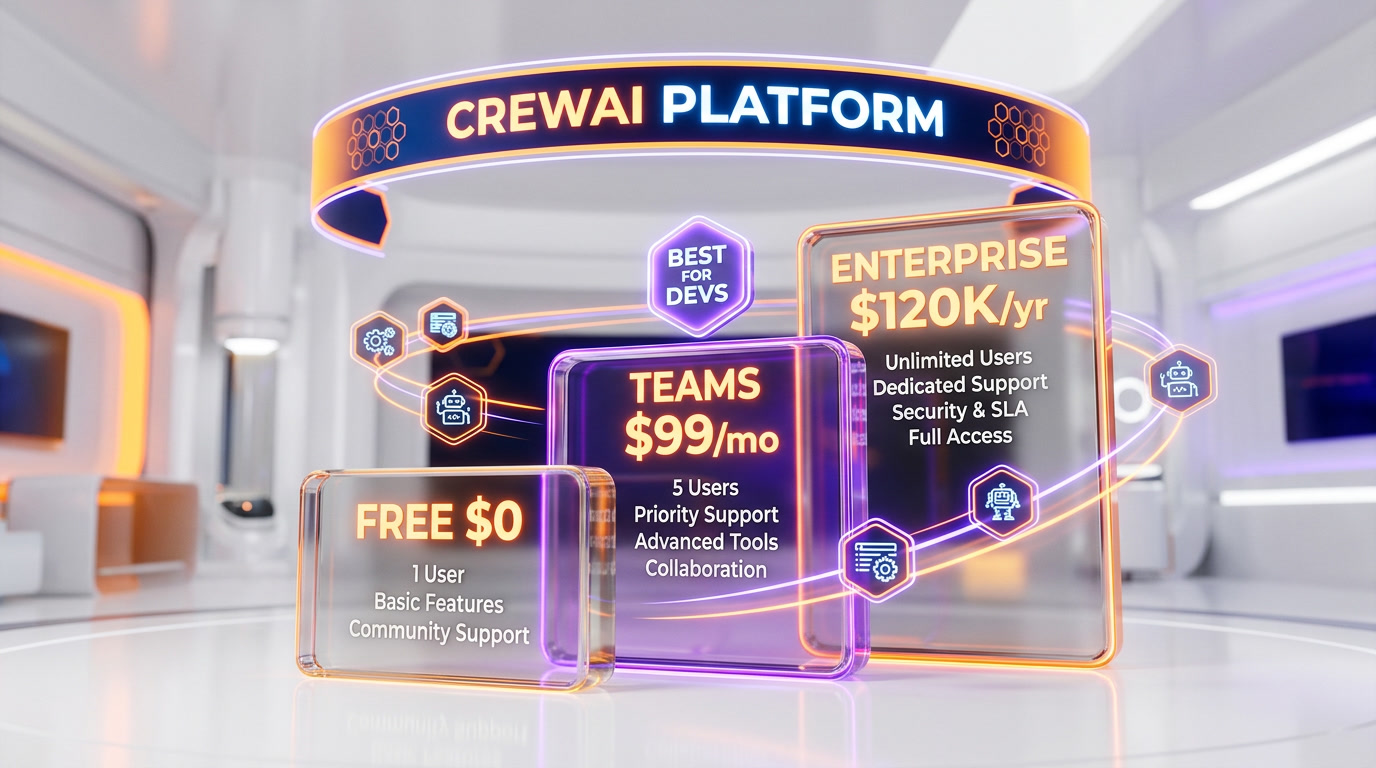
CrewAI uses a two-track pricing model: the open-source framework is completely free forever, and the managed AMP platform offers a free Basic plan that scales up to a custom-priced Enterprise tier.
| Plan | Price | Executions per Month | Best For | Key Features |
|---|---|---|---|---|
| Open Source | Free | Unlimited (self-hosted) | Solo builders, research teams, compliance-driven self-hosting | Full framework, Crews, Flows, Tools, Memory — you host the infra |
| Basic (AMP) | Free | 50 included, then $0.50 per extra execution | Prototyping and small managed workloads | Visual editor, AI copilot, GitHub integration, Studio, tracing, guardrails |
| Enterprise (AMP) | Custom (contact sales) | Up to 30,000 included, then $0.50 per extra execution | Fortune 500 deployments at scale | Everything in Basic, plus CrewAI or private infrastructure, SSO, role-based access control, on-site support and training, 50 development hours per month |
Best for: The open-source tier is best for solo builders, research teams, and any team that wants to self-host for cost or compliance reasons. The free Basic AMP tier suits small teams that want managed hosting, the visual Studio editor, and GitHub integration without standing up their own infrastructure — it includes 50 executions per month, with additional executions billed at $0.50 each. The custom-priced Enterprise tier is built for Fortune 500 deployments that need CrewAI or private infrastructure, SSO, role-based access control, on-site support and training, 50 development hours per month, and up to 30,000 included executions per month.
One honest friction point: CrewAI AMP no longer offers a low-cost paid plan between the free Basic tier and a custom Enterprise contract. Once you exhaust the 50 included monthly executions, you either pay $0.50 per additional execution or move to an Enterprise quote. Solo builders and small teams with steady volume often self-host the open-source framework on a low-cost VPS rather than scaling usage-based execution fees on AMP.
CrewAI vs LangGraph: Role-Based Simplicity vs Graph-Based Control
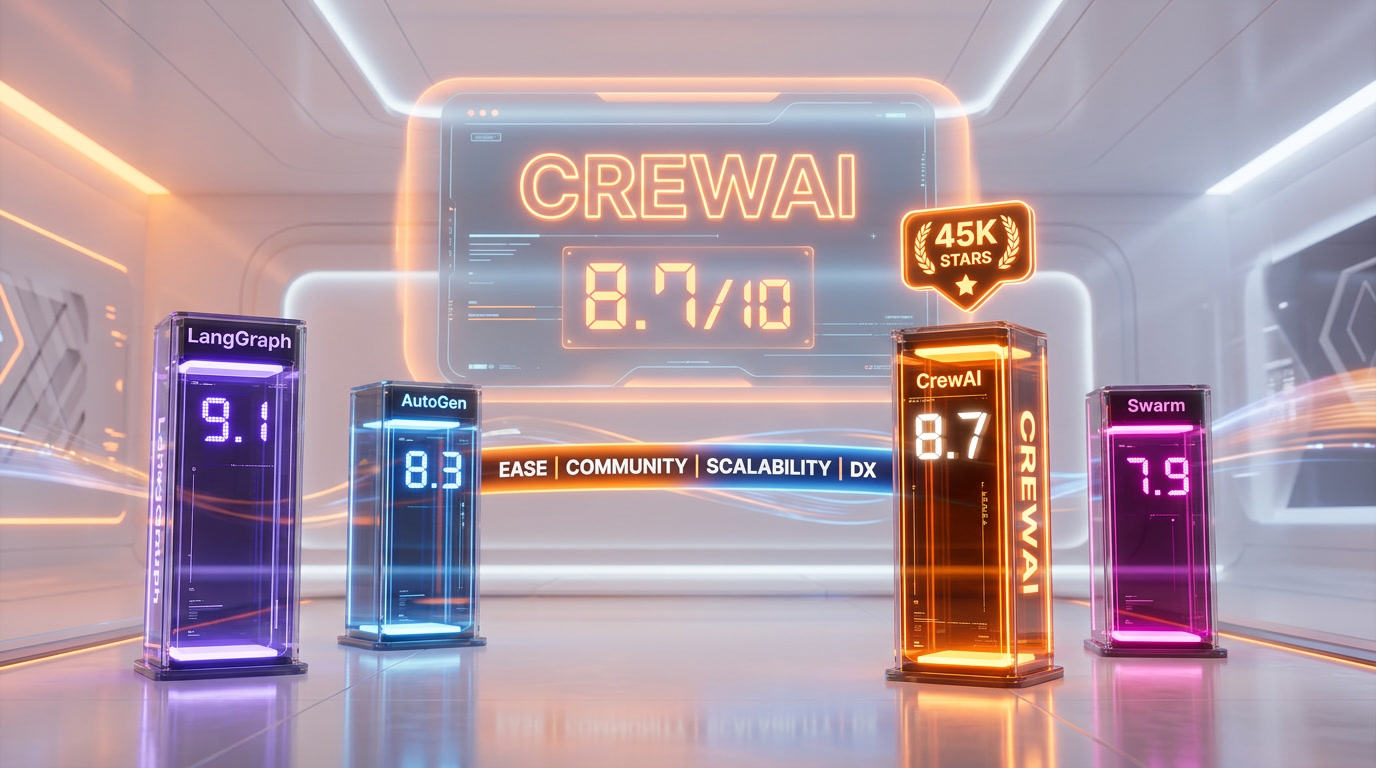
LangGraph, built by the LangChain team, takes the opposite approach to CrewAI. Where CrewAI exposes a role-based abstraction (Agent, Task, Crew), LangGraph exposes a directed graph abstraction (Nodes, Edges, State). In LangGraph you explicitly define every state transition — which makes it more verbose for simple workflows but dramatically more powerful for complex ones with conditional routing, human-in-the-loop checkpoints, and cyclic reasoning.
Choose CrewAI when: you want to ship a multi-agent prototype in hours, your workflow maps cleanly to roles (researcher, writer, reviewer), your team prefers readable Python over state machines, and your production volume is measured in thousands of runs per day rather than millions.
Choose LangGraph when: you need fine-grained control over state and transitions, your workflow has complex branching that breaks role-based models, you are already deep in the LangChain ecosystem with LangSmith observability, or you need to support cyclic agent loops with explicit termination conditions.
In practice, many production teams use both: LangGraph for the core control flow of their product feature, CrewAI for content ops and internal automation where role-based clarity beats graph complexity.
CrewAI vs AutoGen: Role-Based Crews vs Conversational Group Chat
AutoGen, originally from Microsoft Research, frames multi-agent systems as conversations. Agents literally chat with each other in a turn-based group chat, and coordination emerges from the conversation rather than from explicit task assignment. This is powerful for research and exploratory problem-solving, but expensive at scale — every agent turn involves a full LLM call with the accumulated conversation history.
A 4-agent AutoGen debate with 5 rounds is minimum 20 LLM calls, each with a growing context window. For high-volume, real-time use cases like customer support or lead scoring, the token cost adds up fast. CrewAI's task-based model is significantly more efficient because each task is a scoped LLM call with exactly the context it needs, not the entire conversation history.
Microsoft has also officially shifted AutoGen to maintenance mode in favor of the broader Microsoft Agent Framework. That makes CrewAI the safer long-term bet for teams building on a stable, actively developed foundation.
CrewAI vs OpenAI Swarm: Production Framework vs Educational Reference
OpenAI Swarm was released in October 2024 as an experimental, educational framework for exploring agent handoff patterns. OpenAI explicitly positioned it as a reference implementation — not a production framework. It is intentionally minimal: a few hundred lines of Python that show the handoff pattern clearly.
CrewAI is a production framework. It ships with memory, tools, observability hooks, process types, Enterprise deployment, Studio UI, and a commercial support contract. If you are evaluating multi-agent frameworks for a real deployment, the comparison is not apples-to-apples — Swarm is educational, CrewAI is shippable. For production, pick CrewAI or LangGraph. Use Swarm to learn the underlying handoff pattern.
Real-World Use Cases: Where CrewAI Shines
Content Operations: Research to Publish in One Crew
The most common CrewAI deployment we see in the wild is a content-ops crew with four agents: a Researcher armed with SerperDevTool and WebsiteSearchTool for gathering sources, a Writer armed with memory of brand voice guidelines, an Editor that reviews for clarity and factual accuracy, and an SEO Specialist that optimizes headings, meta description, and internal links. The Researcher's output feeds the Writer as context, the Writer's draft feeds the Editor, and the Editor's polished version feeds the SEO Specialist. Total runtime: 4 to 8 minutes per article. Total cost: roughly $0.80 per article on GPT-4o-mini, or $3 to $5 per article on Claude Sonnet 4.5.
Sales: Lead Enrichment and Personalized Outbound
CrewAI's sales use case is a classic: a Lead Researcher enriches a raw lead with company size, recent news, and tech stack from public sources; a Lead Scorer applies your qualification rubric and outputs a 1-to-10 score; a Personalization Writer drafts an outbound email referencing the specific company context. A human-in-the-loop task then surfaces the draft to a sales rep for approval before sending. Teams we have spoken with report 3x to 5x lift in reply rates versus generic templated outbound — and more importantly, a 70 to 80 percent reduction in the SDR manual research time.
Research and Analysis: Synthesizing at Scale
Financial services firms use CrewAI to ingest morning news, earnings call transcripts, and SEC filings, then synthesize them into analyst briefs before the market opens. A News Aggregator agent pulls from wire services, an Earnings Parser extracts guidance and tone signals from transcripts, a Filings Analyst diffs 10-Ks and 10-Qs against prior filings, and a Brief Writer produces the final 1-page memo with citations. PwC publicly reported boosting code-generation accuracy from 10 percent to 70 percent using CrewAI for their internal tooling.
Observability and Production Deployment
Out of the box, CrewAI provides verbose logging at the Agent and Task level. For production you will want to plug in one of the supported observability backends. AgentOps is the native choice — it gives you a full waterfall view of every agent action, tool call, and LLM completion, with cost tracking per run. LangFuse is popular for teams already on the LangChain ecosystem. MLflow is preferred by ML platform teams who want to track agent performance alongside traditional model metrics. Amazon CloudWatch and OpenTelemetry are the right picks for teams standardizing on AWS or open standards.
Deployment options are broad. The simplest path is a Python process on a single VPS or container — fine for internal tools and batch jobs. For scale, teams deploy on AWS Lambda (for short crews), Fargate or Cloud Run (for longer crews with state), or Kubernetes (for mixed workloads). CrewAI AMP handles all of this for you if you prefer managed infrastructure — including autoscaling, secrets management, and VPC deployment for regulated industries.
Security and Compliance
For the open-source framework, security is your responsibility — you control the infrastructure, the secrets, the data flow. For AMP, CrewAI ships with enterprise-grade controls: SOC 2 Type II certification, SSO (SAML and OIDC), role-based access control, audit logs covering every agent action, data residency options, and CMEK (customer-managed encryption keys) on Ultra and Enterprise tiers. The Ultra tier also supports VPC deployment for teams that cannot send data to multi-tenant infrastructure.
One important nuance: because CrewAI agents call LLMs on your behalf, your data compliance posture depends on which LLM provider you route to. Anthropic and OpenAI both offer zero-retention enterprise tiers. AWS Bedrock, Azure OpenAI, and Google Vertex AI keep data inside your cloud perimeter. Ollama and self-hosted models keep data entirely on-premise. CrewAI itself is provider-agnostic — pick the LLM that matches your compliance posture.
Who Should Use CrewAI?
Ideal Users
- Python teams shipping multi-agent systems who want the fastest path from idea to working prototype
- Content ops and marketing teams automating research, writing, editing, and SEO pipelines at scale
- Sales and RevOps teams automating lead enrichment, scoring, and personalized outbound
- Research teams synthesizing large volumes of sources into analyst briefs and reports
- Enterprise IT teams replacing brittle RPA with role-based agent crews across business units
- Solo builders and indie hackers who can self-host the OSS framework on a cheap VPS
- Fortune 500 organizations that need SOC 2, SSO, VPC, and dedicated support via AMP Enterprise
Not the Best Fit For
- JavaScript, TypeScript, Go, or Rust teams — CrewAI is Python-only and there is no official non-Python SDK
- Teams needing fine-grained state-machine control — LangGraph's directed graph model fits better
- Teams deep in the Microsoft ecosystem — Microsoft Agent Framework and Semantic Kernel are the natural picks, though AutoGen is in maintenance mode
- Teams needing a fixed-price paid plan between the free Basic AMP tier and a custom Enterprise contract — self-hosting the open-source framework is the answer, not AMP
Our Experience
We have been running CrewAI in production for internal content ops since late 2025. The role-based abstraction genuinely is the fastest way we have found to go from a sketched workflow on a whiteboard to a working prototype in Python. A new team member can read an existing Crew definition and understand what each agent does without asking questions. Onboarding time dropped from weeks to days once we standardized on the Agent-Task-Crew pattern.
The honest downsides: the Python-only constraint is real — we cannot use CrewAI for our Next.js front-end automation work. And once you outgrow the 50 free monthly executions on AMP, the only paths are usage-based execution fees or a custom Enterprise contract, with no fixed-price plan in between — so we self-host on a VPS for lower-volume internal crews and only use AMP for customer-facing production workloads where observability and SSO are mandatory.
Frequently Asked Questions
Is CrewAI free?
Yes, the CrewAI open-source framework is completely free forever under the MIT license. You can self-host it on any infrastructure you control. The managed CrewAI AMP platform also has a free Basic plan with 50 executions per month, the visual Studio editor, an AI copilot, and GitHub integration. Above it sits a custom-priced Enterprise tier; additional executions beyond the free quota are billed at $0.50 each.
What is CrewAI used for?
CrewAI is used to orchestrate teams of autonomous AI agents that collaborate on complex tasks. Common use cases include content ops (research-to-publish pipelines), sales automation (lead enrichment and personalized outbound), research synthesis, marketing strategy generation, customer support triage, and internal IT automation. PwC, IBM, NVIDIA, and Capgemini all run CrewAI in production.
How is CrewAI different from LangChain?
CrewAI is 100 percent independent of LangChain — it does not depend on it, wrap it, or require it. CrewAI focuses specifically on multi-agent orchestration with a role-based abstraction (Agent, Task, Crew). LangChain is a broader LLM application framework covering retrieval, prompting, tools, and chains.
Is CrewAI better than LangGraph?
It depends on your workflow. CrewAI is better when your problem maps cleanly to roles (researcher, writer, reviewer) and you want the fastest path to prototype. LangGraph is better when you need fine-grained control over state transitions, complex conditional branching, or cyclic agent loops. Many production teams use both.
Does CrewAI support JavaScript or TypeScript?
No, CrewAI is Python-only as of April 2026. There is no official JavaScript, TypeScript, Go, or Rust SDK. For non-Python stacks, the common pattern is to wrap CrewAI in a Python microservice with an HTTP API that your non-Python application calls.
What LLMs does CrewAI work with?
CrewAI is LLM-agnostic. It supports OpenAI (GPT-4o, GPT-5), Anthropic (Claude Sonnet and Opus), Google Gemini, AWS Bedrock models, Groq, Ollama for self-hosted models, and any model accessible through LiteLLM. You can mix models within a single crew — for example, a cheap model for research and a premium model for final writing.
What is CrewAI Studio?
CrewAI Studio is the no-code/low-code visual builder inside CrewAI Enterprise AMP. It lets non-engineers assemble crews through drag-and-drop, pick agents from a library, define tasks in natural language, and deploy without writing Python. Under the hood, Studio generates real Python Crew code that engineers can export and extend.
What is CrewAI AMP?
CrewAI AMP (Agent Management Platform) is the commercial hosted platform for building, deploying, and monitoring multi-agent systems at enterprise scale. It includes Studio, managed hosting with autoscaling, real-time observability, agent training, task guardrails, SSO, audit logs, SOC 2 Type II compliance, and 24/7 support on Enterprise tiers.
How much does CrewAI Enterprise cost?
CrewAI Enterprise pricing is custom and requires a sales conversation. The Enterprise tier covers up to 30,000 included executions per month, CrewAI or private infrastructure, SSO, role-based access control, on-site support and training, and 50 development hours per month, with additional executions billed at $0.50 each. The free Basic AMP plan sits below it for prototyping and smaller managed workloads.
Who funded CrewAI?
CrewAI raised an $18 million Series A in October 2024, led by Insight Partners with participation from boldstart ventures, Craft Ventures, and angel investments from Andrew Ng (Coursera, DeepLearning.AI) and Dharmesh Shah (HubSpot co-founder and CTO). The funding enabled the launch of CrewAI AMP.
Is CrewAI production-ready?
Yes. CrewAI powers 1.4 billion agentic automations per month across customers including PwC, IBM, NVIDIA, Capgemini, and 60 percent of the Fortune 500 as of April 2026. The open-source framework has 45,900+ GitHub stars and over 100,000 certified developers. For mission-critical deployments, CrewAI AMP Enterprise adds SOC 2 Type II, SSO, VPC, and dedicated support.
CrewAI vs AutoGen — which should I pick in 2026?
CrewAI is the safer pick in 2026. Microsoft has officially shifted AutoGen to maintenance mode in favor of the broader Microsoft Agent Framework. CrewAI continues active development, ships a commercial enterprise platform (AMP), and the task-based model is significantly more token-efficient than AutoGen's conversational group chat approach.
Verdict: 8.7 out of 10
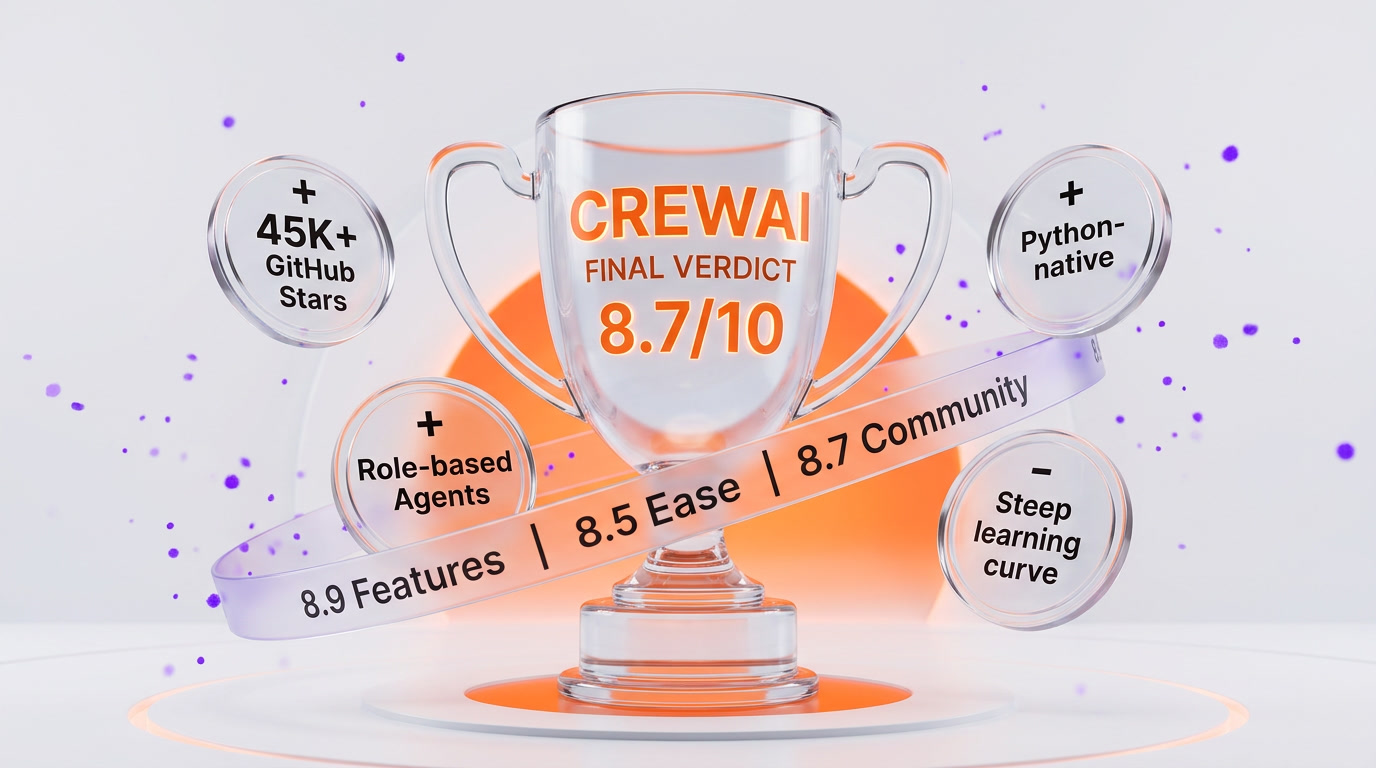
CrewAI earns an 8.7 out of 10 for delivering the clearest, most readable multi-agent abstraction in the Python ecosystem, backed by the broadest enterprise adoption (60 percent of the Fortune 500, 100K+ certified developers, 1.4B monthly automations), and a sustainable commercial path via AMP. The Python-only constraint and the absence of a fixed-price AMP plan between the free Basic tier and a custom Enterprise contract keep it from a perfect score, but for Python teams shipping multi-agent systems in 2026, CrewAI is the default pick.
Score breakdown:
- Features: 9.0 out of 10 — Crews, Flows, Tools, Memory, Studio, and AMP together cover the entire multi-agent lifecycle from prototype to production
- Ease of Use: 9.1 out of 10 — The role-based mental model is the most readable abstraction in the field; junior engineers ship in days
- Value: 8.6 out of 10 — the open-source framework is free forever and the Basic AMP plan is free too, but the lack of a fixed-price plan between Basic and a custom Enterprise contract pushes growing teams toward self-hosting
- Support: 8.1 out of 10 — Strong community and documentation on the OSS side; paid AMP tiers get proper SLAs and CSMs, but entry-level paid support is thin
Key Features
Pros & Cons
Pros
- Role-based mental model (Agent + Task + Tool + Crew) is the fastest path from idea to working multi-agent prototype in the entire framework ecosystem
- 100% independent of LangChain with zero heavy abstractions — lean Python core keeps cold starts, memory footprint and debugging simple
- Three native process types (sequential, hierarchical, consensual) cover 90 percent of real-world business workflows without custom code
- Hundreds of open-source tools out of the box — web search, vector DB queries, file I/O, scraping, and CrewAI-specific integrations
- CrewAI Flows adds event-driven, state-managed orchestration on top of Crews for production-grade deployments
- Enterprise AMP platform ships with real-time observability, agent training, task guardrails, SSO, and 24/7 support
- Proven enterprise footprint — PwC, IBM, NVIDIA, Capgemini, and 60 percent of the Fortune 500 run CrewAI in production
Cons
- Python-only — no official JavaScript, TypeScript, Go, or Rust SDK, which blocks teams on non-Python stacks
- Paid tiers jump from free directly to $99 per month Basic — no $20-30 per month hobby tier for solo builders experimenting beyond 50 executions
- Pricing tiers only become visible after creating a free account, and the Ultra tier at $120,000 per year is opaque without a sales call
- Less explicit state control than LangGraph — complex branching workflows with conditional routing still feel cleaner on a directed graph
- Observability requires third-party integrations (AgentOps, LangFuse, MLflow, CloudWatch) unless you pay for Enterprise AMP
Best Use Cases
Platforms & Integrations
Available On
Integrations

We're developers and SaaS builders who use these tools daily in production. Every review comes from hands-on experience building real products — DealPropFirm, ThePlanetIndicator, PropFirmsCodes, and many more. We don't just review tools — we build and ship with them every day.
Written and tested by developers who build with these tools daily.
Frequently Asked Questions
What is CrewAI?
The Python-first multi-agent framework — 45K+ GitHub stars, 100K+ certified developers, used by PwC, IBM, NVIDIA, and Capgemini
How much does CrewAI cost?
CrewAI has a free tier. All features are currently free.
Is CrewAI free?
Yes, CrewAI offers a free plan.
What are the best alternatives to CrewAI?
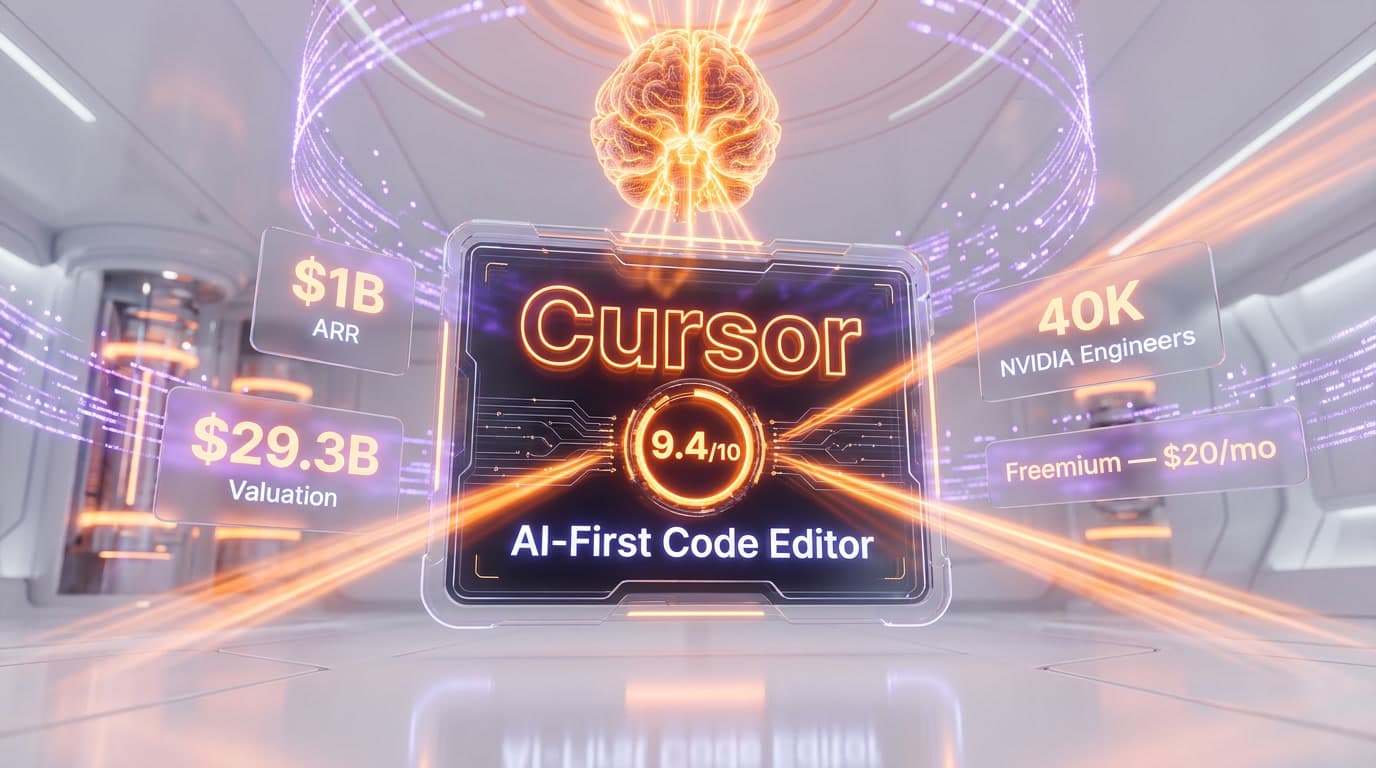
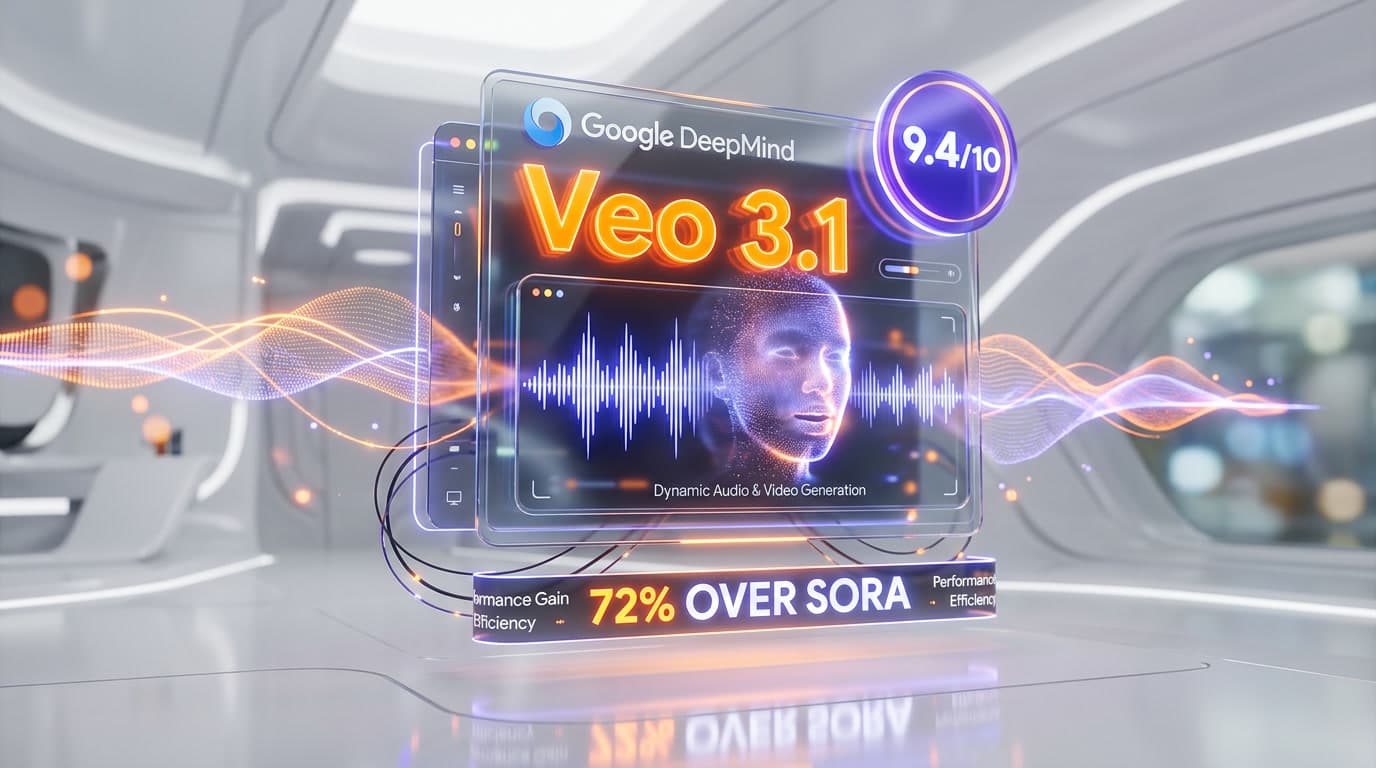
Top-rated alternatives to CrewAI include Claude Code (9.9/10), Cursor (9.5/10), Veo 3.1 (9.4/10), Claude Opus 4.7 (9.4/10) — all reviewed with detailed scoring on ThePlanetTools.ai.
Is CrewAI good for beginners?
CrewAI is rated 9.1/10 for ease of use.
What platforms does CrewAI support?
CrewAI is available on Python 3.10+, Linux, macOS, Windows, AWS (Bedrock, Lambda, Fargate), Google Cloud (Vertex AI, Cloud Run), Azure (OpenAI, Container Apps), Docker, Kubernetes, CrewAI AMP (hosted).
Does CrewAI offer a free trial?
Yes, CrewAI offers a free trial.
Is CrewAI worth the price?
CrewAI scores 8.6/10 for value. We consider it excellent value.
Who should use CrewAI?
CrewAI is ideal for: Content ops teams running research-to-publish pipelines (research agent + writer agent + editor agent + SEO agent), Sales teams automating lead enrichment, scoring, and personalized outbound email generation with human approval, Marketing teams generating multi-channel campaigns — blog, LinkedIn, X, email — from a single brief, Financial services firms synthesizing earnings calls, news, and filings into daily analyst briefs, Enterprise IT teams replacing brittle RPA with role-based agent crews for invoicing, ticket triage, and data entry, E-commerce teams analyzing purchase patterns and generating product descriptions at SKU scale, Research teams running literature review + synthesis + gap analysis crews across arXiv, SSRN, and internal knowledge bases, Startups prototyping agentic products in days rather than months thanks to the role-based abstraction.
What are the main limitations of CrewAI?
Some limitations of CrewAI include: Python-only — no official JavaScript, TypeScript, Go, or Rust SDK, which blocks teams on non-Python stacks; Paid tiers jump from free directly to $99 per month Basic — no $20-30 per month hobby tier for solo builders experimenting beyond 50 executions; Pricing tiers only become visible after creating a free account, and the Ultra tier at $120,000 per year is opaque without a sales call; Less explicit state control than LangGraph — complex branching workflows with conditional routing still feel cleaner on a directed graph; Observability requires third-party integrations (AgentOps, LangFuse, MLflow, CloudWatch) unless you pay for Enterprise AMP.
Best Alternatives to CrewAI
Ready to try CrewAI?
Start with the free plan
Try CrewAI Free →