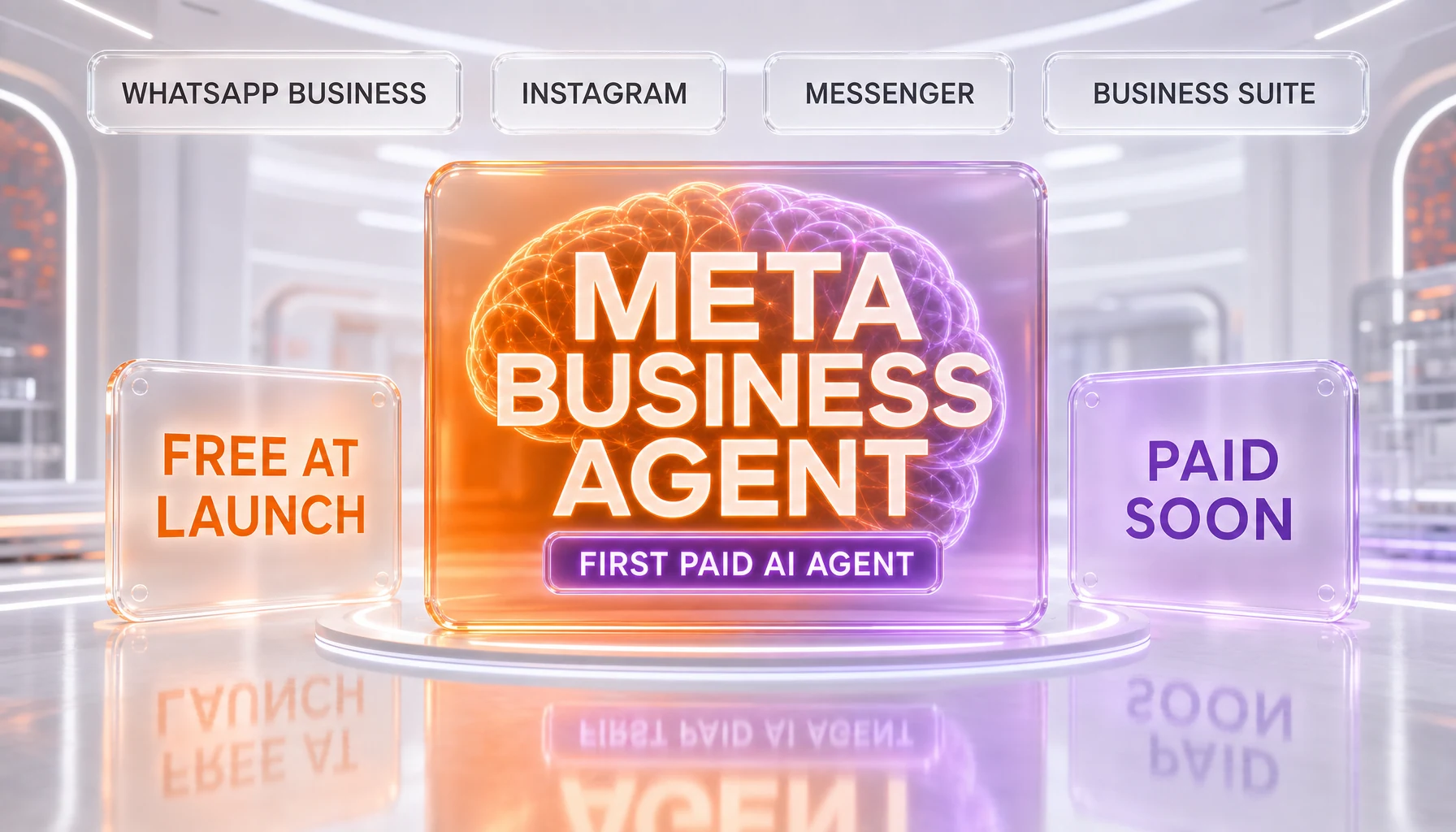
On June 3, 2026, Meta launched Meta Business Agent globally — an AI assistant that businesses run inside WhatsApp Business, Instagram DMs and Instagram Pro, Messenger, and Meta Business Suite to chat with their customers. It answers product questions, recommends items, books appointments, qualifies leads, and hands off to a human when needed. Getting started is free, but Meta has confirmed paid subscription tiers are coming in the months ahead. It is widely described as the first time Meta will charge businesses for access to an AI agent — a strategic move to grow revenue beyond advertising.
What Happened
Meta rolled out Meta Business Agent worldwide on June 3, 2026. The product is a customer-facing AI agent: a business plugs it into its messaging channels, and the agent handles the conversation with shoppers in the thread. According to TechCrunch, it can answer customer questions, recommend products, book appointments, qualify sales leads, and reroute queries to a human, while also surfacing daily briefings of overnight chats. It runs across WhatsApp Business, Instagram Pro, Messenger, and the Meta Business Suite.
The headline is not the feature set — it is the price tag. Per Bloomberg, this is the first time Meta is selling businesses access to an AI agent, part of a push to generate revenue that offsets the company's heavy AI investment. Meta's own WhatsApp Business announcement puts the framing plainly: "Getting started with the Business Agent is free. In the coming months, businesses will access the agent through our paid subscription offerings, with options for businesses of every size."
The key nuance to get right: this is free today and paid tomorrow, not paid yet. Meta has outlined two monetization paths. Smaller businesses are expected to pay through WhatsApp Business Premium subscription tiers. Large businesses will be charged on a token-usage basis — pay-as-the-agent-works. Exact prices for those paid tiers have not been published.
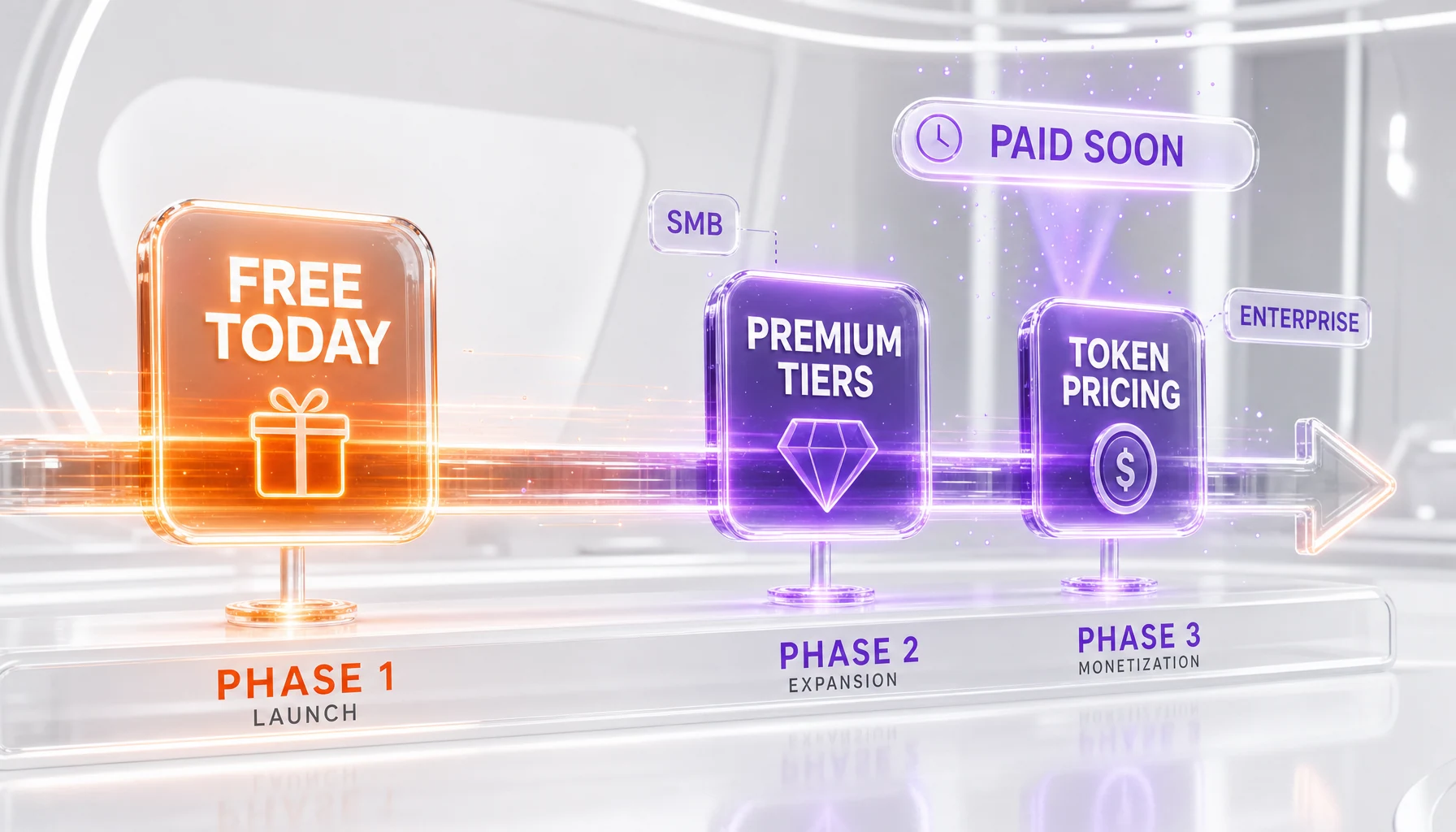
This did not appear overnight. Meta ran roughly two years of pilots in markets including India, Mexico, and Brazil — three of the largest WhatsApp economies on the planet — before flipping the switch worldwide. That long runway in high-volume messaging markets is how Meta tuned the agent on real customer-service traffic before exposing it to every business at once.
What the Agent Actually Does
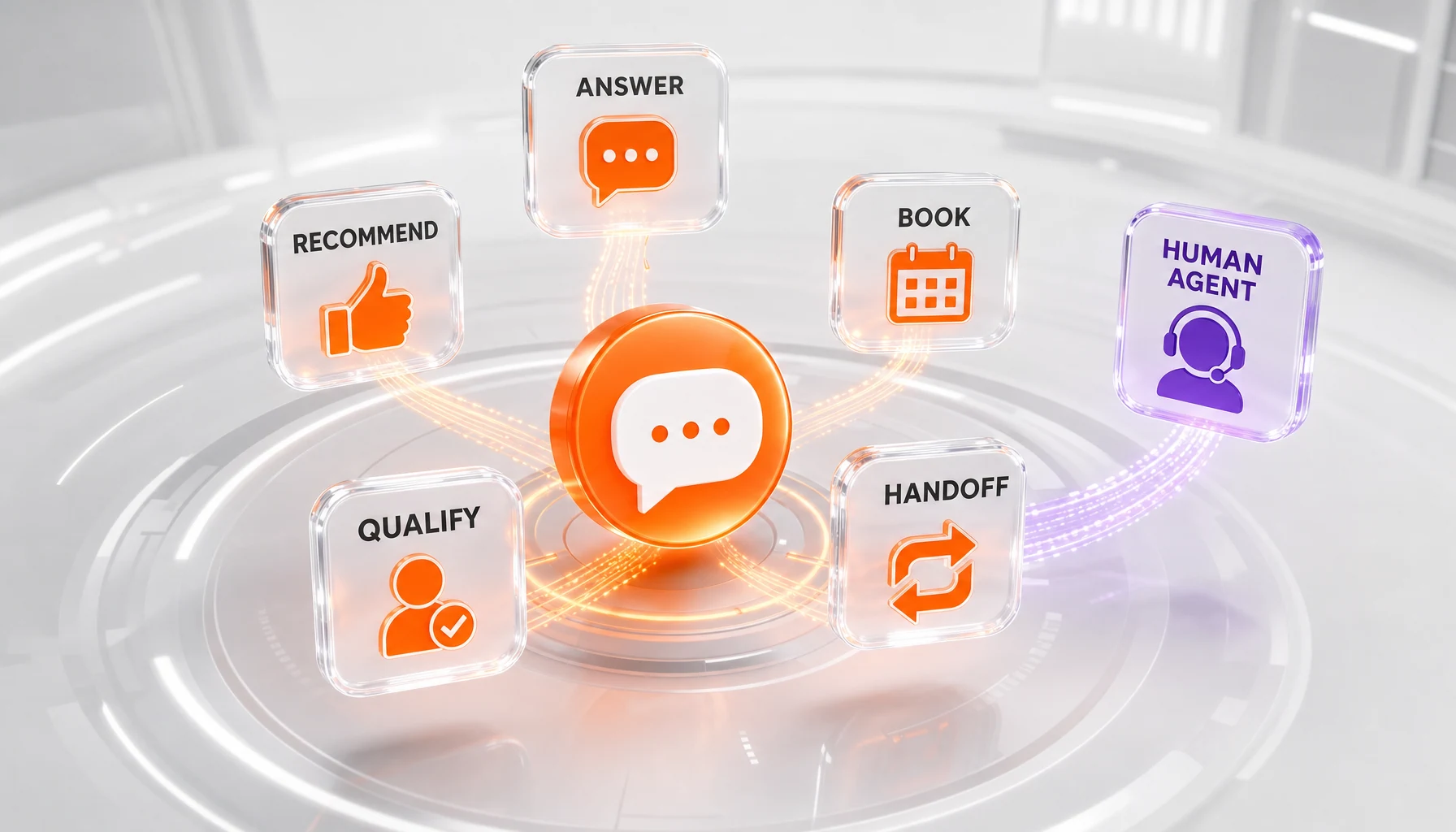
At launch, Meta Business Agent is an end-to-end conversational sales and support layer. A customer messages a business; the agent answers business-specific questions, pulls product recommendations from the catalog, books appointments, qualifies whether a lead is worth a salesperson's time, and helps move toward a sale. When a query gets too complex or the customer asks for a person, it reroutes to a human team member. In effect, Meta is turning WhatsApp Business into an always-on sales desk.
The roadmap reaches further. TechCrunch reports planned capabilities including market research, highlighting product features, managing calendars, extracting competitive insights, surfacing businesses in search, and connecting to outside tools like Shopify, Zendesk, and Shopee. That last point matters: an agent that plugs into a merchant's existing commerce and support stack is no longer a chat widget — it is an operating layer for the business.
One thing Meta has not disclosed is which model powers the agent. The company has been moving its flagship consumer experiences onto its closed Muse Spark model, while Llama stays its open-weight developer brand. Until Meta confirms it, we are not naming a model as fact.
Why It Matters: Meta Finally Diversifies Past Ads
For two decades, Meta has been one of the most efficient advertising machines ever built — and almost entirely dependent on it. Meta Business Agent is the clearest sign yet that the company wants a second engine. Charging businesses directly for an agentic product, rather than selling their attention to advertisers, is a different revenue model with a different customer relationship.
The timing is not subtle. Meta is spending enormous sums on AI infrastructure and talent, and investors have spent a year asking how that spend converts into revenue. An agent that bills through WhatsApp Business Premium and token usage is a direct answer: monetize the AI in the same apps where the engagement already lives. That is why the launch reads less like a feature drop and more like the opening of a new line of business.
It also lands in a broader pattern we have been tracking — AI labs and platforms racing to make agents pay. We covered Anthropic shipping ten finance agents into Wall Street and Amdocs putting telco agents on Google's Gemini Enterprise Marketplace. Meta is now entering that same race, but from a position no one else has: direct messaging access to billions of consumers.
How It Compares
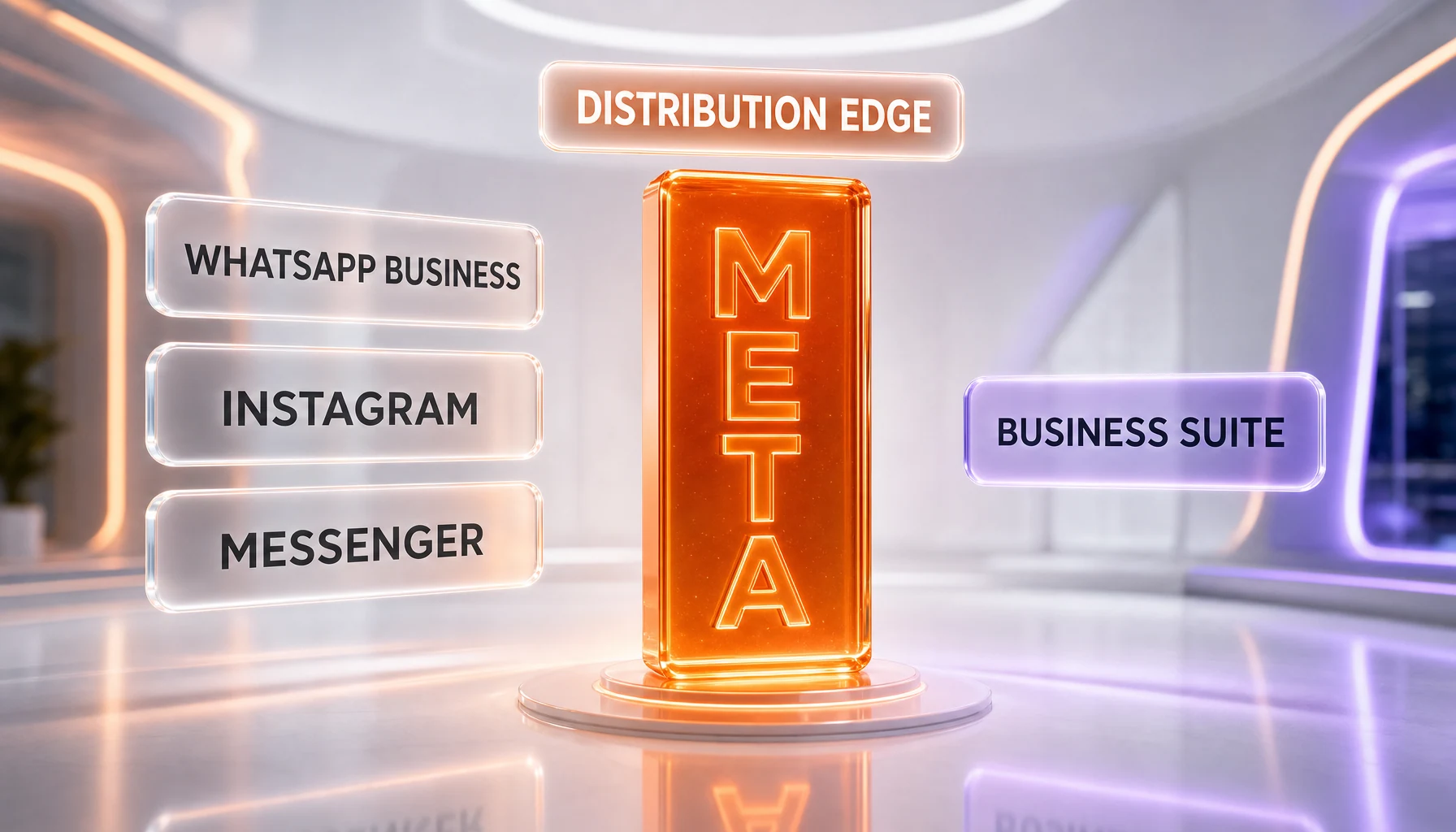
On paper, business AI agents are a crowded field. Salesforce sells Agentforce. Google sells Gemini Enterprise agents. Microsoft sells Copilot agents. The strategic difference is where the agent lives. Those competitors put agents inside CRMs, help desks, and productivity suites — surfaces a business has to buy into and configure. Meta puts its agent inside WhatsApp, Instagram, and Messenger, the apps where billions of customers already message brands every day.
For a small or mid-size business, that distinction is decisive. There is no separate CRM to purchase, no portal to migrate to. The customer is already in the chat; now the chat answers back. That distribution advantage is Meta's real moat here — not the agent's raw capabilities, which broadly resemble what rivals offer, but the fact that it sits on the world's busiest messaging rails.
The flip side is cost exposure for the biggest players. Token-based pricing scales with volume, and a high-traffic retailer fielding millions of messages could watch its bill climb in step with usage. The same token-economics question we explored in our analysis of when AI agents cost more than employees applies directly here: an agent is only a bargain until the meter runs hot.
Our Take
The most important word in this launch is "first." Meta has built AI features for years, but it gave them away to drive engagement that it then sold to advertisers. Putting a price directly on an agent breaks that pattern. It signals that Meta now sees agents not as engagement bait but as a product worth billing for — and that conviction, more than the feature list, is the story.
What excites us is the distribution math. If even a fraction of the businesses already operating on WhatsApp and Instagram convert to a paid agent, Meta has a revenue stream that compounds inside surfaces it fully controls. This is the broader agentic web shift arriving in the most consumer-facing place imaginable: the chat thread between a shopper and a shop.
What we are watching warily is the pricing reveal. "Free at launch" is a customer-acquisition tactic; the real test is what the WhatsApp Business Premium tiers and token rates look like when they land, and whether small businesses still see value once the meter turns on. Meta has promised "options for businesses of every size," but until the numbers are public, the value question stays open. There is also the trust dimension — handing customer conversations to a Meta-run agent is a different bargain than running ads, and businesses will weigh control and data alongside convenience.
What's Next
The next milestone is the pricing announcement. When Meta publishes the WhatsApp Business Premium tiers and the token rates for large accounts, the market will get its first real read on how aggressive — or how forgiving — Meta intends to be. The promised integrations with Shopify, Zendesk, and Shopee are the second thing to watch, because they decide whether the agent becomes a true operating layer or stays a smart auto-responder.
Longer term, this is a template. If Meta can charge for a business agent on its messaging apps, expect more agentic products with price tags across its surfaces, and expect competitors to answer with their own distribution plays. We will keep tracking it. For now, the takeaway is simple: Meta just proved it is willing to charge for an AI agent — and it picked the apps where the most customers are already listening.
Frequently Asked Questions
What is Meta Business Agent?
Meta Business Agent is an AI assistant that businesses can deploy to chat with their customers across WhatsApp Business, Instagram DMs and Instagram Pro, Messenger, and Meta Business Suite. It answers product questions, recommends items from a catalog, books appointments, qualifies sales leads, and reroutes complex queries to a human. Meta launched it globally on June 3, 2026.
Is Meta Business Agent free or paid?
Getting started is free at launch. Meta has confirmed that in the coming months businesses will access the agent through paid subscription offerings. Small and mid-size businesses are expected to pay through WhatsApp Business Premium subscription tiers, while large businesses will be charged on a token-usage basis. So it is free today and paid tomorrow — not paid yet.
Why is Meta Business Agent a big deal?
It is widely described as the first time Meta will charge businesses for access to an AI agent. For a company that earns almost all its revenue from advertising, charging directly for an agentic product is a strategic shift — Meta is opening a second revenue line to help offset its heavy AI spending. That makes this less about one feature and more about a new business model.
Which apps does Meta Business Agent run on?
It runs inside WhatsApp Business, Instagram DMs and Instagram Pro, Messenger, and the Meta Business Suite. The core experience is a business chatting with its customers in the messaging thread, with the agent handling the conversation until a human is needed.
What can Meta Business Agent actually do?
At launch it answers business-specific questions, recommends products from a catalog, books appointments, qualifies leads, helps close sales, and hands conversations to a team member. Meta has signaled more capabilities coming, including daily briefings of overnight chats, market research, calendar management, and connections to tools like Shopify, Zendesk, and Shopee.
How will Meta charge for the Business Agent?
Meta plans two pricing paths. Smaller businesses will pay through WhatsApp Business Premium subscription tiers. Large businesses will be charged based on token usage — the more the agent processes, the more they pay. Meta has said there will be options for businesses of every size, but exact prices for the paid tiers have not been published.
How long did Meta test the Business Agent before launch?
Meta ran roughly two years of pilots in markets including India, Mexico, and Brazil before the global rollout on June 3, 2026. Those pilots let Meta refine the agent on real customer-service traffic in high-volume messaging markets before shipping it worldwide.
How does Meta Business Agent compare to other business AI agents?
The differentiator is distribution. Salesforce Agentforce, Google Gemini Enterprise agents, and Microsoft Copilot agents live inside CRMs and productivity suites. Meta Business Agent lives where billions of customers already message brands — WhatsApp, Instagram, and Messenger. For a small shop, that means an AI sales desk inside the chat app its customers already open, with no separate CRM to buy.
Is Meta Business Agent built on Llama?
Meta has not published which model powers the Business Agent. The company has been moving its flagship consumer surfaces onto its closed Muse Spark model, while Llama remains its open-weight developer brand. Until Meta confirms it, the model behind the Business Agent is unconfirmed, and we will not state one as fact.
Who should care about Meta Business Agent?
Small and mid-size businesses that already sell over WhatsApp or Instagram DMs are the clearest fit — the agent can field after-hours questions and qualify leads without extra headcount. Large retailers and marketplaces should watch the token-based pricing, since high message volume could make costs scale fast. Competitors building business AI agents should treat Meta entering paid agents as a market-defining move.
When can businesses start using Meta Business Agent?
Now. Meta Business Agent became available globally on June 3, 2026, and getting started is free. Businesses can set it up inside the WhatsApp Business app, Instagram Pro, Messenger, or the Meta Business Suite. The paid subscription tiers are expected to arrive in the months ahead.