Update, August 22, 2026. Two of the conditions this article named as things that would change its conclusion have since happened. DeepSeek replaced the flat rates quoted throughout with a peak and off-peak grid on August 16, 2026, in which every rate is higher than the flat rate it replaced, and it shipped a general availability build of V4-Pro on August 13, 2026 that scores above V4-Flash-0731 on every agentic benchmark DeepSeek publishes for both. The measurements below are preserved as they stood on August 1, 2026 and the prices are marked with the dates through which they applied. For the current grid and what it costs, see our analysis of the August 2026 DeepSeek price increase.
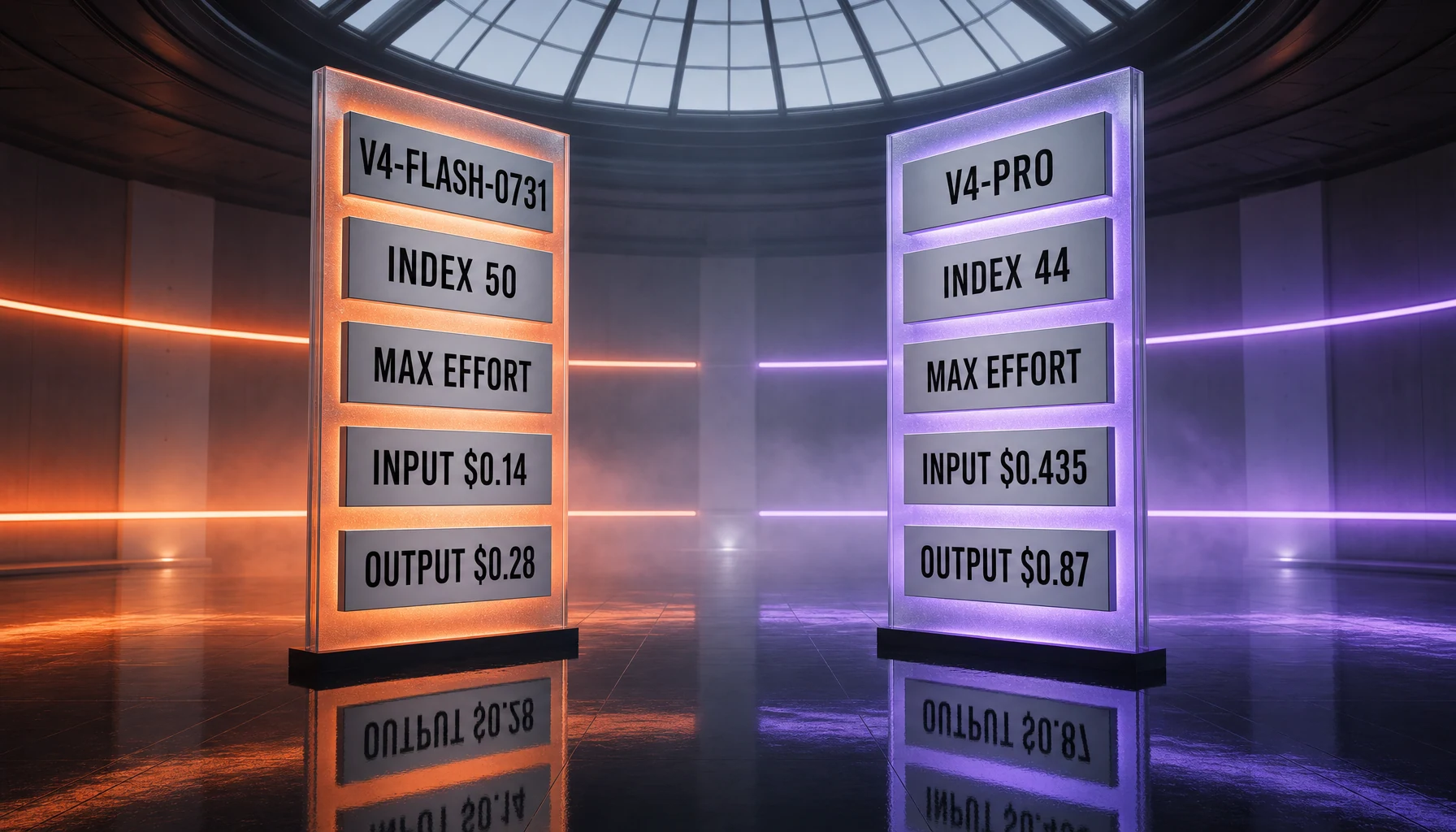
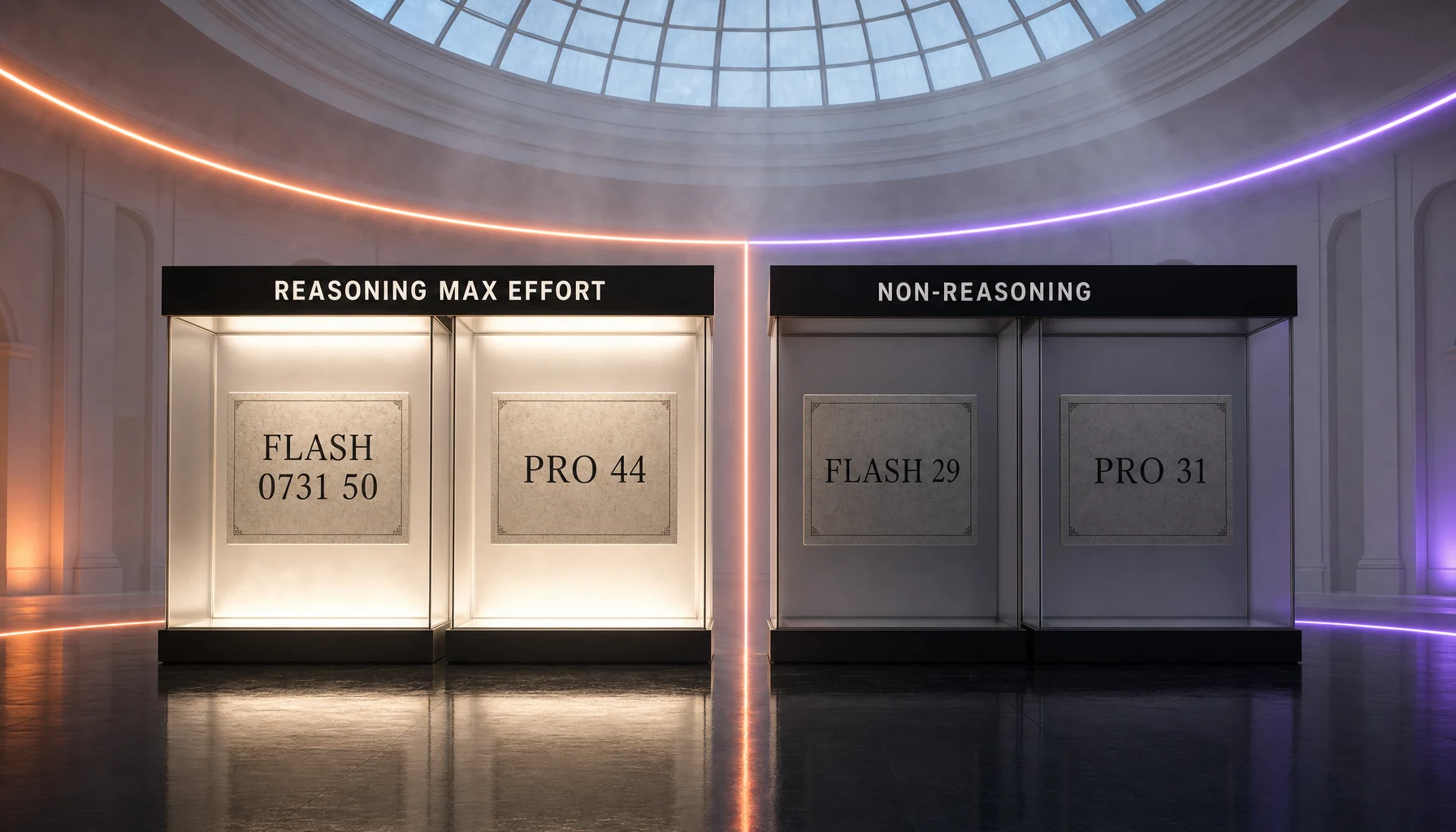
DeepSeek released DeepSeek-V4-Flash-0731 on July 31, 2026, the final version of its small V4 model, replacing the preview that had been in the API since April. On version 4.1 of the Artificial Analysis Intelligence Index, an evaluation run by a third party rather than by DeepSeek, the new Flash scores 50 in its Reasoning, Max Effort configuration, against 44 for DeepSeek-V4-Pro in its own maximum-effort configuration. The small model now measures above the large model from the same vendor on the same independent index. List prices did not move with this release: through August 15, 2026, deepseek-v4-flash billed $0.14 per million input tokens on a cache miss and $0.28 per million output tokens, against $0.435 and $0.87 for deepseek-v4-pro, which made Pro almost exactly 3.1 times more expensive per token. DeepSeek raised every rate in its catalog on August 16, 2026. The weights are on Hugging Face under the MIT license, and DeepSeek's changelog states the update touches the V4-Flash API only, leaving the V4-Pro API and the app and web models unchanged.
Key takeaways
- The clean comparison is 50 against 44, both at max effort. Artificial Analysis also lists non-reasoning entries for the same two models at 29 and 31. Mixing a non-reasoning number with a reasoning one produces a gap that describes nothing.
- The price did not change with this release. Through August 15, 2026 DeepSeek's pricing page listed $0.14 per million input tokens on a cache miss and $0.28 per million output tokens for Flash. The cheaper model got better without getting more expensive — for two more weeks, until the August 16, 2026 increase.
- The cache-hit discount was not proportional. Under the grid described here, Flash undercut Pro by 3.1 times on cache-miss input and on output, but only by about 1.3 times on cache-hit input, so heavily cached workloads saved far less than the headline ratio suggested. The August 16, 2026 grid removed that asymmetry, setting Pro at 3.14 times the price of Flash on cache hits too.
- DeepSeek's own table puts Claude Opus 4.8 ahead on all nine benchmark rows — and compares against Opus 4.8 rather than Claude Opus 5, which Anthropic had already released on July 24, 2026.
- The weights are MIT-licensed and self-hostable, with a speculative decoding module attached to the shipped checkpoint and a documented 384K token maximum output at high and max reasoning effort.
What did DeepSeek actually ship on July 31, 2026?
DeepSeek published DeepSeek-V4-Flash-0731 as the final replacement for the V4-Flash preview that launched in April. The model card describes it as the official release of DeepSeek-V4-Flash, superseding the preview version, with substantially enhanced agentic capabilities. It answers to the same API string, deepseek-v4-flash, keeps the 1M token context window and the 384K token maximum output, and ships its weights on Hugging Face under the MIT license.
The release is narrower than a new model launch. DeepSeek's changelog for July 31 is explicit that the update only upgrades the DeepSeek-V4-Flash API, and that the DeepSeek-V4-Pro API and the app and web models are unchanged. Anyone calling deepseek-v4-pro on August 1 is calling exactly what they were calling on July 30. The changelog also records that the model natively supports the Responses API format and has been specifically adapted for Codex, which places the release squarely in the agentic coding lane rather than in general chat.
The model card adds one operational change that matters for anyone running it: the reasoning_effort parameter now supports three levels, low, high and max, controlling how much deliberation the model spends before answering. That parameter is not a detail. It is the reason the rest of this article spends so much time on which number belongs to which configuration.
For background on how the V4 family was originally split into a small and a large model, our earlier coverage of the April 2026 V4 launch documents the hybrid attention design and the original pricing, and the DeepSeek V4 tool page carries the current specification.
Why "it jumped from 29 to 50" is the wrong way to read this
Artificial Analysis lists DeepSeek's models several times, once per configuration. DeepSeek V4 Flash appears at 29 and DeepSeek V4 Pro at 31 as non-reasoning entries. DeepSeek V4 Flash 0731 appears at 50 and DeepSeek V4 Pro at 44 in maximum-effort reasoning configurations. Reading the 29 and the 50 as a before-and-after describes a change in configuration, not a change in the model.
This is the single easiest way to get this story wrong, and it is worth being precise about why. A reasoning configuration lets the model spend tokens deliberating before it answers. A non-reasoning configuration does not. The two produce different scores from the same weights, at different costs, with different latency. They are separate rows on the leaderboard because they are separate products in practice.
So the honest framing of this release has two independent parts, and they should not be merged:
- Flash 0731 against the older Flash preview, on DeepSeek's own benchmark table, where the preview's DeepSWE score of 7.3 rises to 54.4 and its Cybergym score of 38.7 rises to 76.7. These are vendor-reported figures.
- Flash 0731 against V4-Pro, at max effort on both sides, on the independent index: 50 against 44. This is the comparison that carries the headline.
A six-point lead on a 100-point index is a real result but a modest one, roughly 14 percent above the Pro score. It is not the 21-point chasm that a careless reading of 29 and 50 would suggest. The interesting fact is not the size of the gap. It is the direction: a vendor's cheap model is now measured above its own expensive one.
What does the independent measurement actually say?
Artificial Analysis scores DeepSeek-V4-Flash-0731 at 50 on Intelligence Index version 4.1, in the configuration it labels Reasoning, Max Effort. DeepSeek-V4-Pro scores 44 at max effort and 43 at high effort. All three figures were read on August 1, 2026. Because the index is periodically re-run and re-versioned, a score is only meaningful when quoted with both its index version and its effort configuration.
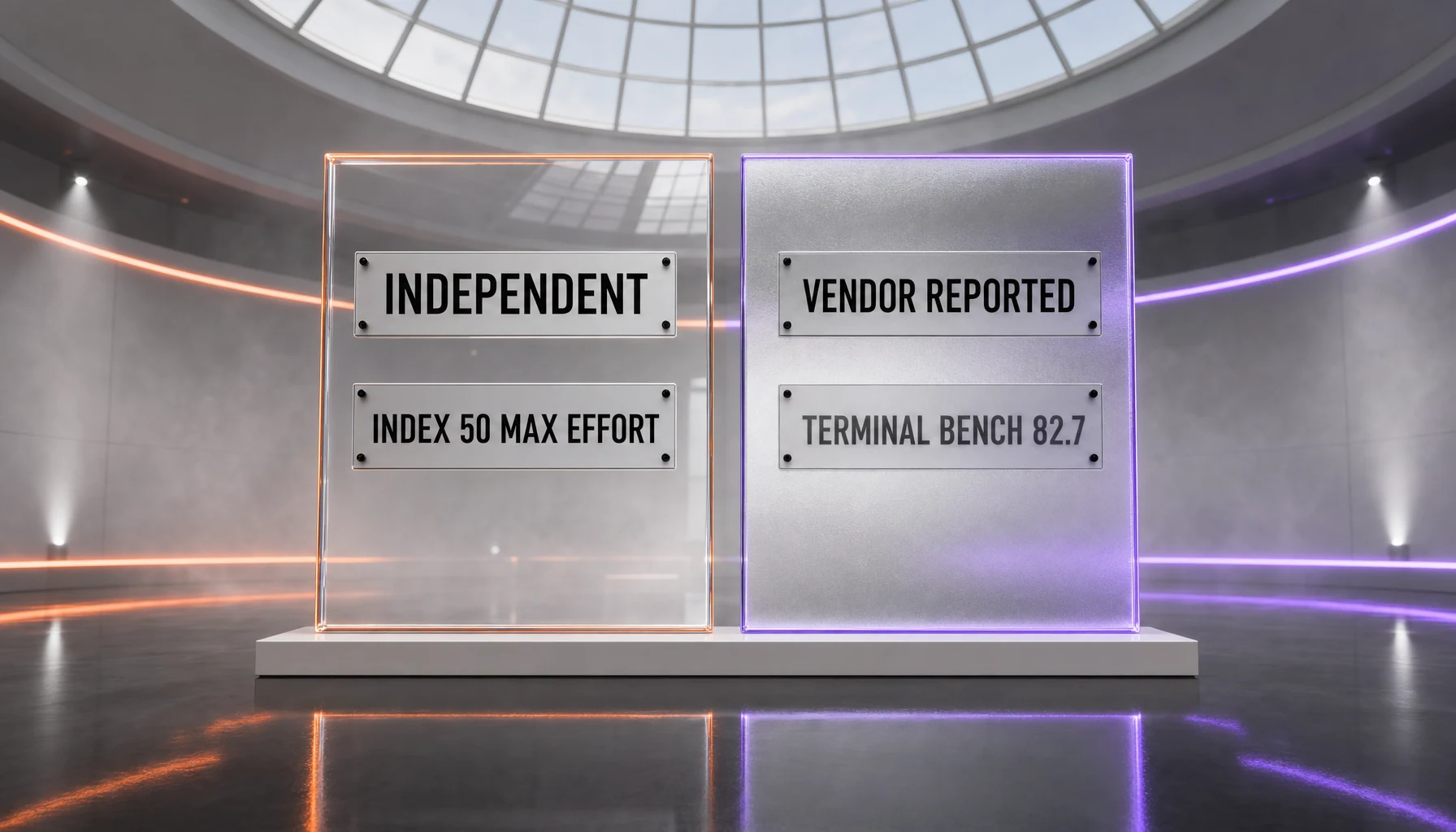
Two properties of this measurement make it worth more than the vendor's own table. First, Artificial Analysis has no commercial stake in the result, whereas DeepSeek's benchmark table is published by the party being measured. Second, it applies the same harness and the same task set to every model it lists, which is what makes a cross-vendor comparison meaningful at all. DeepSeek's own table, by contrast, evaluates its models with what the model card calls the minimal mode of DeepSeek Harness, described as still to be released — a framework nobody outside DeepSeek can currently run.
The corollary is that the 50 and the 44 belong on the same line, and the DeepSeek-reported benchmark scores belong on a different line. They are not two views of one ranking. They are one independent measurement and one set of self-reported claims.
Cost per task and the $72.02 evaluation bill are not the same number
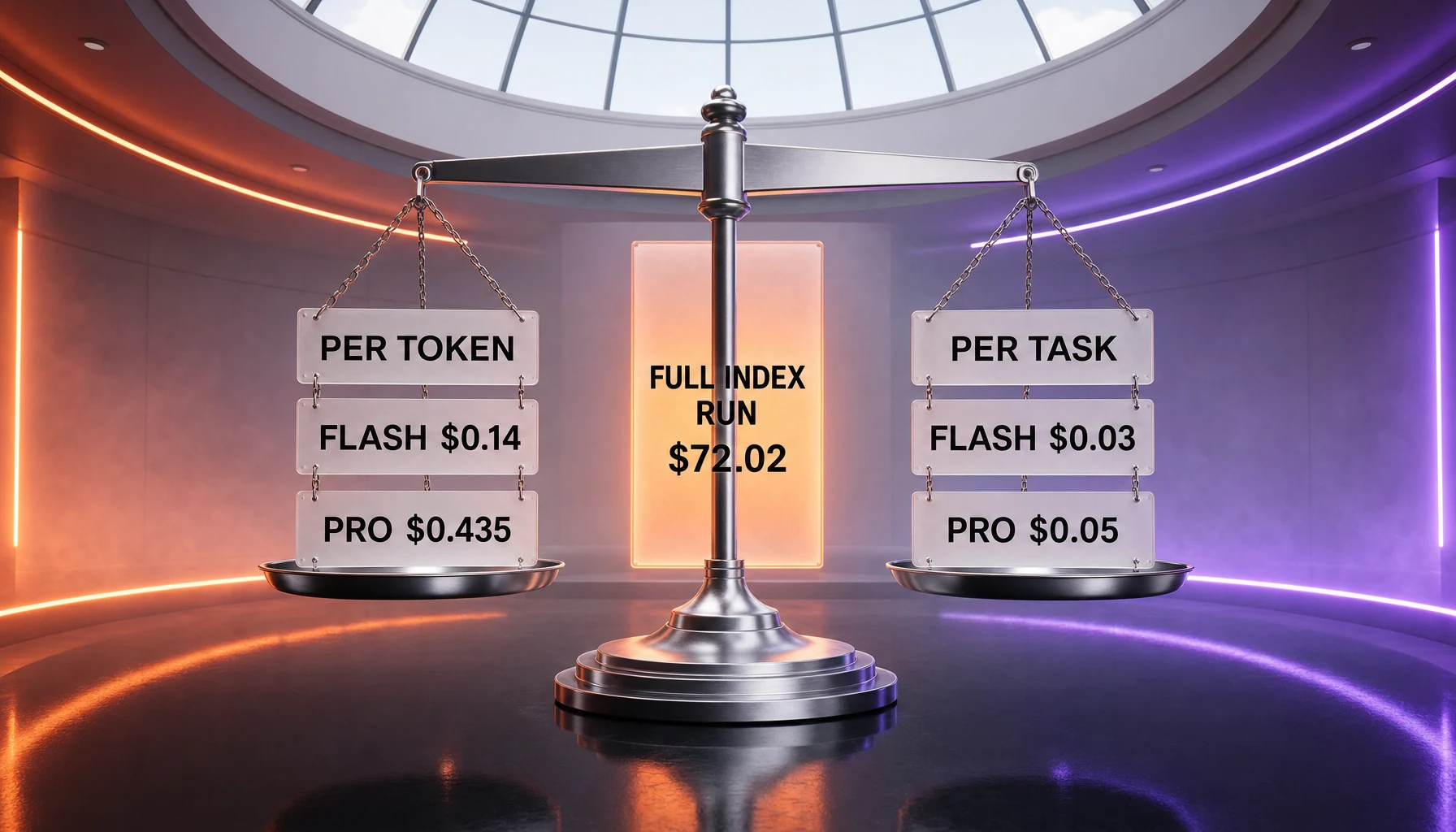
Artificial Analysis publishes a cost per task of $0.03 for DeepSeek-V4-Flash-0731 at max effort, against $0.05 for DeepSeek-V4-Pro at max effort. It separately states that in total it cost $72.02 to evaluate DeepSeek V4 Flash 0731 in that configuration on the Intelligence Index. The first figure is a per-task average; the second is the bill for one complete pass over the whole evaluation suite. Quoting either as the other overstates or understates the cost by orders of magnitude.
The per-task figures carry a second, less obvious lesson. On the list prices then in force, Pro cost 3.1 times more than Flash per token — and precisely 3.1 times on both cache-miss input and output, so the ratio held no matter how a workload split between the two. Yet the measured cost per task differs by a factor of only about 1.7. Since price per token is a constant multiple, the gap has to come from token volume: Flash at max effort is emitting materially more tokens per task than Pro does.
That was the practical caveat for anyone modeling a migration at the time. Moving from Pro to Flash did not divide the bill by 3.1. On the evidence of this evaluation it divides it by something closer to 1.7, because the cheaper model thinks longer. One honest limitation: Artificial Analysis rounds cost per task to the cent, so a $0.03 against $0.05 comparison is directionally sound but arithmetically coarse, and the true ratio could sit anywhere in a fairly wide band around 1.7.
Did the price really stay the same?
It did, for another two weeks. Through August 15, 2026, DeepSeek's pricing page listed deepseek-v4-flash at $0.0028 per million input tokens on a cache hit, $0.14 per million input tokens on a cache miss, and $0.28 per million output tokens, unchanged across the July 31 release, and the changelog for that date announced no price change. At 16:00 UTC on August 16, 2026 DeepSeek replaced those flat rates with a peak and off-peak grid in which every rate is higher than the one it replaced. Both models carry a 1M token context window and a 384K token maximum output.
The table below is the grid as it stood on August 1, 2026, and it is kept here because the rest of this article reasons from it. It is no longer the price of anything.
| Item (per million tokens) | deepseek-v4-flash | deepseek-v4-pro | Pro as a multiple of Flash |
|---|---|---|---|
| Input, cache hit | $0.0028 | $0.003625 | 1.3 times |
| Input, cache miss | $0.14 | $0.435 | 3.1 times |
| Output | $0.28 | $0.87 | 3.1 times |
| Context length | 1M | 1M | equal |
| Maximum output | 384K | 384K | equal |
| Concurrency limit | 2500 | 500 | 0.2 times |
Three details in that table deserve more attention than they usually get. The cache-hit discount was not proportional: Flash was 3.1 times cheaper on fresh input but only about 1.3 times cheaper on cached input, so a workload that hit cache constantly saved far less by switching than a workload that did not. That asymmetry did not survive August 16, 2026. The concurrency limit runs the other way from price, with Flash allowed 2500 concurrent requests against 500 for Pro — a five-fold advantage for the cheaper model. And the Responses API supported deepseek-v4-flash but not deepseek-v4-pro, with DeepSeek stating it would add Pro support in early August 2026 — which it did, in the changelog entry of August 13, 2026.
One forward-looking caveat belonged here, and it is worth preserving because of how it resolved. On August 1, 2026 DeepSeek's pricing page carried a footnote stating that the API service would soon adopt a peak and off-peak pricing policy, under which prices would be twice the regular rates during peak hours, applicable to all billing items, with peak hours defined as 9:00 to 12:00 and 14:00 to 18:00 Beijing Time. The same footnote stated that the effective date would be subject to official announcement. As of August 1, 2026 that was an announced intention and not a rate anyone was being charged, and this article said so.
The policy took effect at 16:00 UTC on August 16, 2026, and it was harsher than that footnote implied. The windows held — 9:00 to 12:00 and 14:00 to 18:00 Beijing Time are 01:00 to 04:00 and 06:00 to 10:00 UTC — but the base moved underneath them. Off-peak did not stay at the rates in the table above; it landed between 1.52 and 6.07 times higher, with peak at double that again. A cost model built on the August 1 footnote would have understated the outcome, not overstated it. We covered the delivered grid in our analysis of the August 2026 price increase.
What DeepSeek reports about itself — and what it leaves out
DeepSeek publishes a nine-row benchmark table on the model card comparing DeepSeek-V4-Flash-0731 with the Flash preview, the V4-Pro preview, GLM-5.2 and Claude Opus 4.8. These are figures DeepSeek measured and published about its own model. They are not independent, they were produced with an unreleased harness, and two of the nine rows are DeepSeek's own internal test sets.
| Benchmark (DeepSeek-reported) | V4-Flash-0731 | V4-Flash Preview | V4-Pro Preview | GLM-5.2 | Opus 4.8 |
|---|---|---|---|---|---|
| Terminal Bench 2.1 | 82.7 | 61.8 | 72.1 | 81.0 | 85.0 |
| NL2Repo | 54.2 | 39.4 | 38.5 | 48.9 | 69.7 |
| Cybergym | 76.7 | 38.7 | 52.7 | not listed | 83.1 |
| DeepSWE | 54.4 | 7.3 | 12.8 | 46.2 | 58.0 |
| Toolathlon-Verified | 70.3 | 49.7 | 55.9 | 59.9 | 76.2 |
| Agents' Last Exam | 25.2 | 15.8 | 16.5 | 23.8 | 25.7 |
| AutomationBench Public | 25.1 | 10.8 | 12.8 | 12.9 | 27.2 |
| DSBench-FullStack (internal) | 68.7 | 37.0 | 41.8 | 61.8 | 71.6 |
| DSBench-Hard (internal) | 59.6 | 25.8 | 31.1 | 54.5 | 71.7 |
Read down the last column and the release looks different from its headline. Claude Opus 4.8 posts the higher score on every one of the nine rows, in DeepSeek's own table, on DeepSeek's own harness. The widest gaps are on NL2Repo, 69.7 against 54.2, and on DeepSeek's internal DSBench-Hard, 71.7 against 59.6. DeepSeek does not overclaim here: the model card says only that the model is broadly competitive with the strongest proprietary models available. That is a fair description of the table, and it is a weaker claim than most summaries of this release imply.
Two of the nine rows carry a dagger in the original, marking DSBench-FullStack as an internal full-stack development test set and DSBench-Hard as an internal set of difficult coding-agent problems. Nobody outside DeepSeek can run them, reproduce them, or check what they contain. They belong in the table for completeness and nowhere near a cross-vendor ranking. Our published comparison of Claude Opus 4.8 against DeepSeek V4 and of GLM-5.2 against DeepSeek V4 both cover the same two rivals that appear in this table.
Who is DeepSeek comparing itself against?
DeepSeek's benchmark table uses Claude Opus 4.8 as its proprietary reference point. Anthropic released Claude Opus 5 on July 24, 2026, one week before DeepSeek published this model. The comparison set was therefore already one generation behind on the day it went up, and the Opus 4.8 column should be read as a comparison against a superseded model rather than against Anthropic's current flagship.
This is not an accusation of bad faith. Benchmark tables are assembled weeks before a release and a one-week-old competitor is genuinely hard to include. But the consequence for a reader is concrete: the strongest proprietary model in DeepSeek's table is not the strongest proprietary model available, and the gap between Flash 0731 and the actual frontier is wider than the table shows. Our coverage of the Claude Opus 5 launch documents what shipped on July 24 and at what price.
Is the architecture really unchanged?
DeepSeek gives two accounts that need to be read together. The changelog states that DeepSeek-V4-Flash-0731 keeps the same model architecture and size as DeepSeek-V4-Flash-Preview, and was only re-post-trained. The Hugging Face card states that it has the same model structure as DeepSeek-V4-Flash-DSpark, meaning it comes with a speculative decoding module attached. The published configuration file lists DSpark target layers, confirming the module ships inside the checkpoint.
These are reconcilable, but only under a framing DeepSeek supplies itself. The DSpark model card states that DeepSeek-V4-Flash-DSpark is not a new model, and that it is the same checkpoint with an additional speculative decoding module attached. Under that definition, bolting on the module is not an architecture change, and the changelog's claim stands. Under a stricter definition — what is actually in the file you download — the 0731 checkpoint carries something the plain preview repository does not document.
The practical reading is therefore: the intelligence gain comes from re-post-training, exactly as the changelog says, and the speculative decoding module is an inference-speed feature that happens to travel in the same checkpoint. Writing "the architecture is strictly identical" would flatten a distinction the sources themselves do not flatten. For what the module does, our earlier piece on DeepSeek's DSpark speculative decoding covers the speedup claims and their conditions.
How big is this model, really?
The 0731 model card publishes no parameter count. It says only that the model outperforms DeepSeek-V4-Pro despite its far smaller activated parameter count. The DSpark card, which the 0731 card names as sharing its structure, documents 284 billion total parameters with 13 billion activated. DeepSeek-V4-Pro is documented at 1.6 trillion total with 49 billion activated, so Flash activates roughly 3.8 times fewer parameters per forward pass.
A figure of about 304 billion is visible in the Hugging Face repository metadata for the 0731 model, and it is tempting to read it as a model size that grew from the preview's 284 billion. That reading does not hold. The metadata counts stored tensor elements in a quantized checkpoint — the bulk of it int8 — and the same metadata reports about 158 billion for the preview repository, whose own card says 284 billion. A number that contradicts its own model card by 45 percent is measuring storage, not parameters, and the two repositories are not even packed the same way.
So the defensible statement is the conservative one: 284 billion total and 13 billion activated, sourced from DeepSeek's card for the structurally identical checkpoint and consistent with a changelog that says the size did not change. The efficiency claim behind this release is real and it is the interesting part — a model activating 13 billion parameters measuring above one activating 49 billion.
What changes for someone running it themselves
The weights are published under the MIT License, which DeepSeek applies to both the repository and the model weights. That permits commercial use, modification and redistribution without a separate agreement, and it is the reason this release matters beyond DeepSeek's own API. A model that measures at 50 on an independent index and can be run on your own hardware is a different proposition from one that can only be rented.
Several operational notes come straight from the model card. Speculative decoding is enabled with a single flag in vLLM, using a speculative config with the dspark method, and in SGLang with a DSpark speculative algorithm and no separate draft model path, because target and draft weights come from the same checkpoint. DeepSeek recommends a temperature of 1.0, with top_p of 0.95 for agentic scenarios and 1.0 otherwise. For the high and max reasoning effort levels it recommends a maximum output length of 384K tokens. This release also ships no Jinja chat template: DeepSeek provides an encoding folder of Python scripts instead, so any harness that assumed a standard template will need adapting.
Open weights at this level keep changing the shape of the market rather than just the price list — the pattern our coverage of the model DeepSeek never shipped traced through the first half of 2026.
What would change this conclusion
Four things would move the verdict, and it is worth naming them in advance rather than defending the reading later.
- A re-run of the index. Artificial Analysis re-runs and re-versions its measurements. A score of 50 on version 4.1 read on August 1, 2026 is a snapshot, and a later pass on a later index version could narrow or widen the six-point gap.
- An updated V4-Pro. The changelog was explicit that the Pro API was untouched. DeepSeek re-post-training Pro the way it had just re-post-trained Flash would likely restore the expected ordering. This happened on August 13, 2026: the general availability build DeepSeek-V4-Pro-0813 scores 87.9 on Terminal Bench 2.1, 61.5 on NL2Repo, 62.7 on DeepSWE and 83.3 on Cybergym, against 82.7, 54.2, 54.4 and 76.7 for V4-Flash-0731, on DeepSeek's own vendor-reported table. The ordering this article describes is reversed for those benchmarks.
- The peak-hour policy taking effect. A doubling during two daily windows would change every cost calculation in this article for anyone whose traffic sat inside those windows. This happened on August 16, 2026, and it changed every cost calculation here for everyone, not only for traffic inside the windows, because the off-peak tier also came in above the old flat rate.
- Independent scores for the agentic benchmarks. The nine-row table is currently vendor-reported and produced with an unreleased harness. Outside replication would either confirm the agentic gains or shrink them.
The bottom line
The story here is narrower and more interesting than "DeepSeek beats the frontier." DeepSeek's own table shows Claude Opus 4.8 ahead on all nine rows, against a comparison set that had already been superseded by Claude Opus 5 a week earlier. What actually happened is that a vendor's cheap model overtook that vendor's expensive one on a neutral index, at max effort on both sides, 50 against 44, with no change at the time to a price that sat at roughly a third of the larger model's — and with the weights published under a license that lets anyone run them.
For DeepSeek that created an awkward product question: as of August 1, 2026, V4-Pro was the more expensive, lower-scoring, lower-concurrency option in its own catalog, and it did not yet support the Responses API that Flash did. DeepSeek answered that question within two weeks. The August 13, 2026 general availability build of V4-Pro added Responses API support and, on DeepSeek's own benchmark table, moved back above V4-Flash-0731; the August 16, 2026 pricing change then raised both models and set Pro at exactly three times Flash on cache-miss input and output. The reading in this article held for the state of the catalog on August 1, 2026; the ordering it describes no longer holds today.
DeepSeek-V4-Flash-0731 FAQ
What is DeepSeek-V4-Flash-0731?
DeepSeek-V4-Flash-0731 is the final release of DeepSeek-V4-Flash, published on July 31, 2026. DeepSeek describes it as the official release of DeepSeek-V4-Flash, superseding the preview version, with substantially enhanced agentic capabilities. It is served through the API under the model string deepseek-v4-flash, carries a 1M token context window and a 384K token maximum output, and its weights are published on Hugging Face under the MIT license.
Does DeepSeek-V4-Flash-0731 really beat DeepSeek-V4-Pro?
On one independent measurement, yes. Artificial Analysis scores DeepSeek-V4-Flash-0731 at 50 on version 4.1 of its Intelligence Index in the Reasoning, Max Effort configuration, against 44 for DeepSeek-V4-Pro in its own max configuration, as read on August 1, 2026. DeepSeek also states on its model card that the new Flash outperforms DeepSeek-V4-Pro on the benchmarks it publishes, despite a far smaller activated parameter count. Both statements point the same way, but only the Artificial Analysis figure comes from outside the vendor.
Why do some leaderboards show DeepSeek V4 Flash at 29 instead of 50?
Because those are different configurations of the model, not different results for the same one. Artificial Analysis lists DeepSeek V4 Flash at 29 and DeepSeek V4 Pro at 31 as non-reasoning entries, and separately lists DeepSeek V4 Flash 0731 at 50 and DeepSeek V4 Pro at 44 in max-effort reasoning configurations. Comparing the 29 with the 50 mixes a non-reasoning entry with a reasoning one and produces a meaningless gap. The only clean comparison is max effort against max effort: 50 against 44.
How much does DeepSeek-V4-Flash-0731 cost?
These were the rates through August 15, 2026: DeepSeek listed deepseek-v4-flash at $0.0028 per million input tokens on a cache hit, $0.14 per million input tokens on a cache miss, and $0.28 per million output tokens, and deepseek-v4-pro at $0.003625, $0.435 and $0.87 for the same three items, which made V4-Pro almost exactly 3.1 times as expensive as V4-Flash on cache-miss input and on output. DeepSeek replaced these flat rates with a peak and off-peak grid on August 16, 2026, in which V4-Flash bills $0.22 and $0.44 per million cache-miss input tokens and $0.66 and $1.32 per million output tokens.
Did DeepSeek raise the price for the new Flash model?
Not for that release. The rates published for deepseek-v4-flash on July 31, 2026 were the same figures that applied before it, and the changelog for that date announced no price change. DeepSeek raised prices separately on August 16, 2026 at 16:00 UTC, replacing the flat rates with a peak and off-peak grid in which peak hours are 01:00 to 04:00 and 06:00 to 10:00 UTC and off-peak is half of peak. Every rate in that grid, including off-peak, is above the flat rate it replaced.
What is the difference between the cost per task figure and the $72.02 evaluation figure?
They measure different things and should never be used interchangeably. Artificial Analysis reports a cost per task of $0.03 for DeepSeek-V4-Flash-0731 at max effort, which is a per-task average. It separately states that in total it cost $72.02 to evaluate DeepSeek V4 Flash 0731 in that configuration on the Intelligence Index, which is the bill for running the entire evaluation suite once. The first number describes one task, the second describes the whole run.
Is DeepSeek-V4-Flash-0731 open source?
The weights are openly published. DeepSeek states that the repository and the model weights are licensed under the MIT License, which permits commercial use, modification and redistribution. That makes the model self-hostable without a commercial agreement. DeepSeek does not publish the training data or the full training recipe, so the release is open-weight under a permissive license rather than fully reproducible.
Did the model architecture change from the preview version?
DeepSeek gives two descriptions that need reading together. The changelog states that DeepSeek-V4-Flash-0731 keeps the same model architecture and size as DeepSeek-V4-Flash-Preview, and was only re-post-trained. The Hugging Face model card states that it has the same model structure as DeepSeek-V4-Flash-DSpark, meaning it comes with a speculative decoding module attached, and the published configuration file lists DSpark target layers. Those reconcile only under DeepSeek's own framing, stated on the DSpark card, that attaching the module does not make a new model. In practice, the checkpoint downloaded today ships with a module the plain preview repository does not document.
How many parameters does DeepSeek-V4-Flash-0731 have?
DeepSeek does not state a parameter count on the 0731 model card. The DeepSeek-V4-Flash-DSpark card, which the 0731 card names as having the same model structure, states 284 billion total parameters with 13 billion activated, and the changelog says the size is unchanged from the preview. DeepSeek-V4-Pro is documented at 1.6 trillion total parameters with 49 billion activated, so Flash activates roughly 3.8 times fewer parameters per forward pass. The figure of about 304 billion visible in the Hugging Face repository metadata counts stored tensor elements in a quantized checkpoint and is not the same measurement.
Which models does DeepSeek compare DeepSeek-V4-Flash-0731 against?
The benchmark table on the model card compares it with DeepSeek-V4-Flash Preview, DeepSeek-V4-Pro Preview, GLM-5.2 and Claude Opus 4.8. That comparison set was already one generation behind on the day of publication, because Anthropic released Claude Opus 5 on July 24, 2026, a week before the DeepSeek release. Readers should treat the Opus 4.8 column as a comparison against a superseded model rather than against the current Anthropic flagship.
Does DeepSeek-V4-Flash-0731 beat Claude Opus 4.8?
Not on the figures DeepSeek itself publishes. In DeepSeek's own benchmark table, Claude Opus 4.8 posts the higher score on all nine rows, including 85.0 against 82.7 on Terminal Bench 2.1 and 69.7 against 54.2 on NL2Repo. DeepSeek claims only that the model is broadly competitive with the strongest proprietary models available. The headline result of this release is that Flash passed DeepSeek's own larger model, not that it passed the frontier.
Should I switch from DeepSeek-V4-Pro to DeepSeek-V4-Flash-0731?
That was the reading on August 1, 2026, when the independent index put Flash at 50 against 44 for Pro while Flash cost roughly a third as much per token and carried a concurrency limit of 2500 against 500. Two things have changed since. DeepSeek shipped a general availability build of V4-Pro on August 13, 2026 that scores above V4-Flash-0731 on every agentic benchmark DeepSeek publishes for both models, and added Responses API support to it. And the August 16, 2026 pricing change raised both models, leaving Pro at exactly three times Flash on cache-miss input and on output. The concurrency gap of 2500 against 500 is unchanged, and a max-effort reasoning configuration still emits far more tokens than a non-reasoning one, so a token bill never falls by the full price ratio.
Sources
- Hugging Face - deepseek-ai/DeepSeek-V4-Flash-0731 (model card, benchmark table, reasoning effort levels, MIT license)
- DeepSeek API Docs - Change Log (entry dated 2026-07-31: re-post-training, scope of the update, Responses API)
- DeepSeek API Docs - Models Pricing (per-token rates, context and output limits, concurrency limits, peak-hour policy)
- Artificial Analysis - DeepSeek V4 Flash (Intelligence Index version 4.1 score and total evaluation cost)
- Artificial Analysis - Model leaderboard (per-configuration index scores and cost per task)
- Hugging Face - deepseek-ai/DeepSeek-V4-Flash-DSpark (parameter counts and the statement that the module does not make a new model)
- Hugging Face - deepseek-ai/DeepSeek-V4-Pro (V4-Pro total and activated parameter counts)
- arXiv:2606.19348 - DeepSeek-V4 technical report (architecture of the V4 series, cited from the model card)
Every measurement attributed to Artificial Analysis was read on August 1, 2026. Independent index scores are re-run over time and can move; the version of the index is stated wherever a score appears.