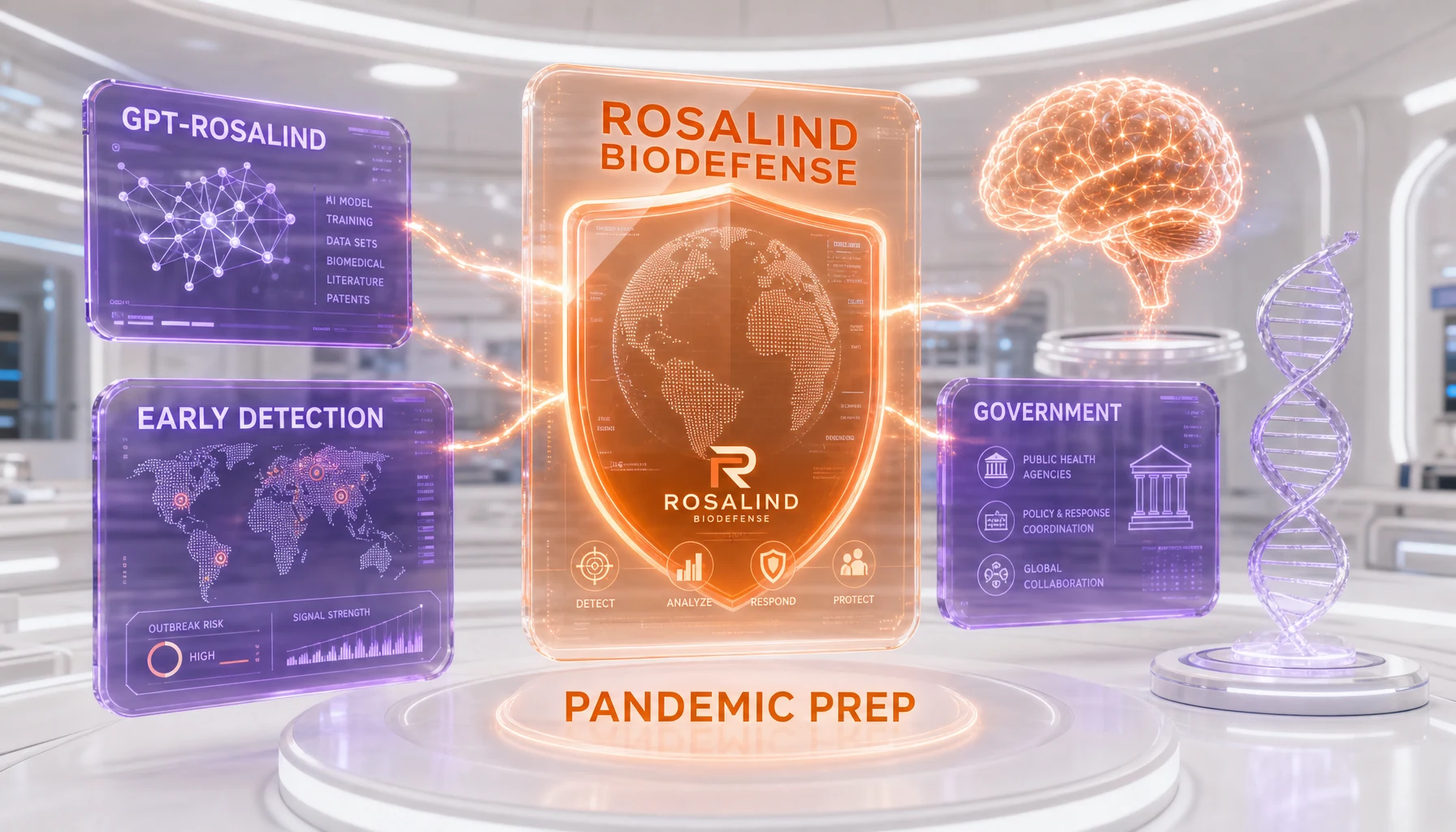
Rosalind Biodefense is a program OpenAI announced on May 29, 2026 that pairs its frontier life-sciences reasoning model, GPT-Rosalind, with vetted government and allied partners to build biodefense and pandemic-preparedness capabilities. OpenAI sponsors the institutional API access tier and provides launch support across the full biological-threat lifecycle, from prevention and early detection to societal resilience and medical countermeasure development. It is the company's most explicit move yet to position frontier AI as national-security infrastructure rather than a consumer product.
What OpenAI Announced
OpenAI unveiled Rosalind Biodefense this week in a post titled "Strengthening societal resilience with Rosalind Biodefense." The program connects GPT-Rosalind, the company's frontier model specialized for the life sciences, with what OpenAI describes as verified government and allied partners. The stated goal is to help those partners stand up biodefense and pandemic-preparedness capabilities that span the entire arc of a biological threat.
The framing matters. OpenAI is not selling a chatbot to a health ministry. It is offering a sponsored access tier, covering or subsidizing the API costs that would otherwise gate institutional usage, plus hands-on launch support to get specific use cases running. According to the announcement, those use cases include epidemiological modeling, early detection, screening, preparedness planning, and the design of non-pharmaceutical interventions such as masking, distancing, and travel measures.
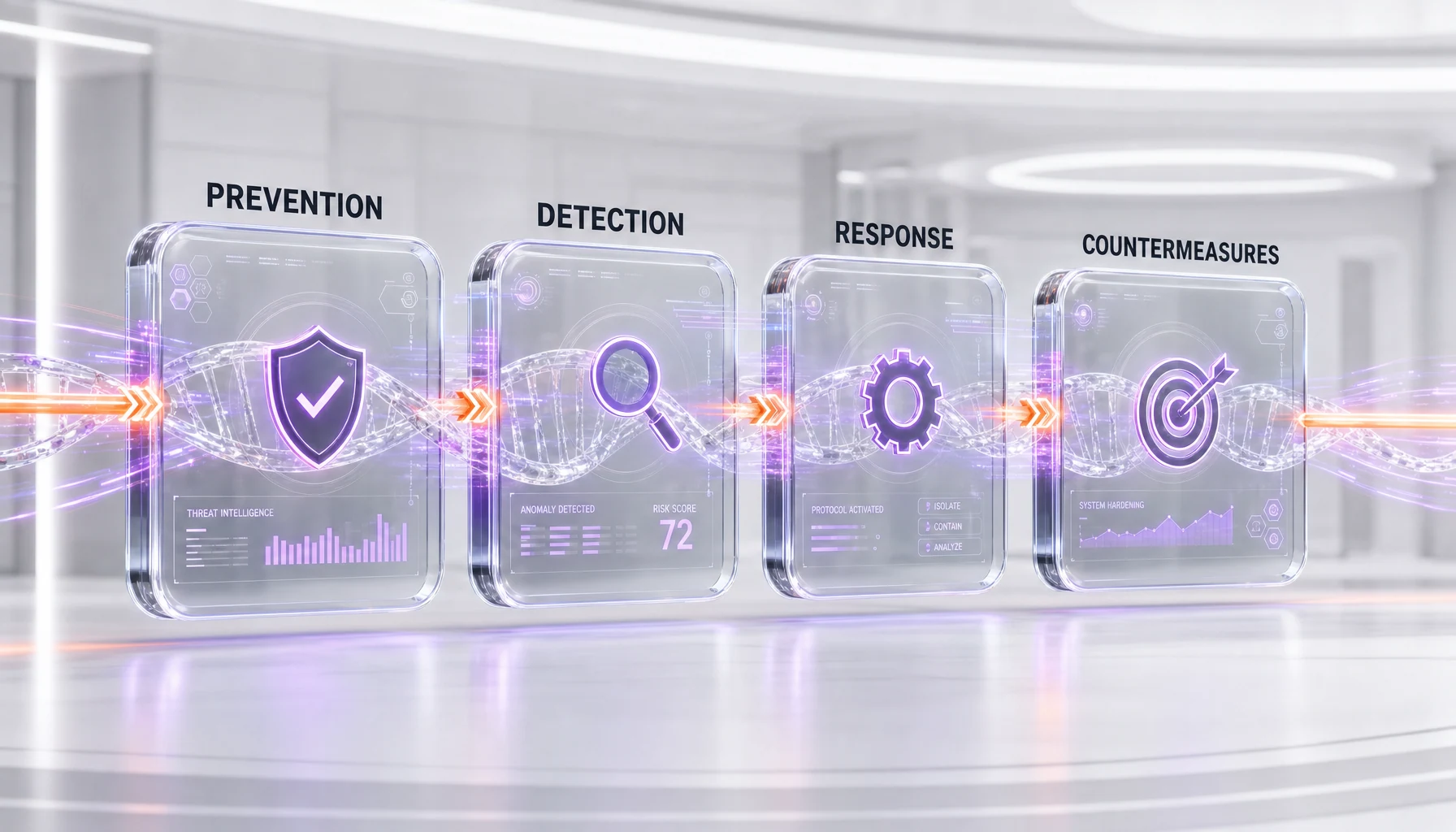
OpenAI describes the scope as covering the threat lifecycle "from prevention and early detection to societal resilience and medical countermeasure development." That phrasing is deliberately end-to-end. It signals that OpenAI wants GPT-Rosalind embedded not just in the lab where a pathogen is first sequenced, but in the public-health response that follows, all the way to the development of vaccines and therapeutics.
One sourcing note worth stating plainly: OpenAI's own announcement page returned an access error to automated fetching at the time of writing, and we confirmed the core details through Axios, which reported the launch first. The specifics below that come from secondary reporting are flagged as such.
What Is GPT-Rosalind?
GPT-Rosalind is the engine underneath the program. OpenAI introduced the model in April 2026 as a frontier reasoning system tuned for the life sciences, named after Rosalind Franklin, whose X-ray crystallography work was foundational to understanding the structure of DNA. The model launched in research preview inside ChatGPT, Codex, and the API for qualified customers admitted through OpenAI's trusted access program.
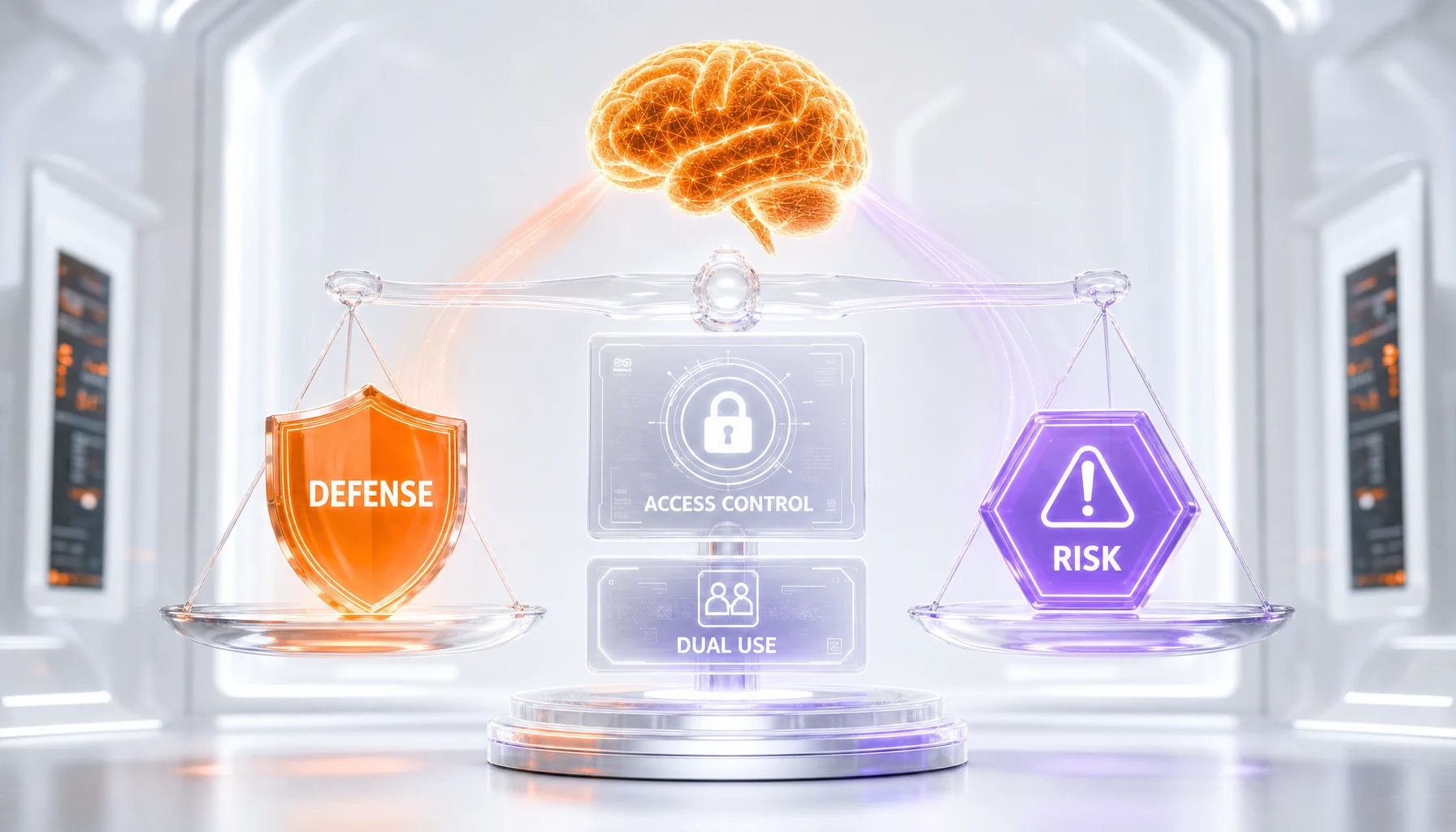
The "trusted access" gating is the key design choice. Rather than ship a life-sciences reasoning model to anyone with a credit card, OpenAI restricted GPT-Rosalind to vetted institutions. Rosalind Biodefense extends that same gated logic into the public sector: the partners get a sponsored access tier, but only after verification. This is the dual-use problem made operational. A model good enough to accelerate vaccine design is, in principle, a model good enough to accelerate the design of something far worse, and OpenAI's answer is to control who gets in rather than to weaken the model.
That approach stands in contrast to the open-weight world, where guardrails can be stripped in minutes. We covered exactly that failure mode when a tool called Heretic removed safety guardrails from open-weight Meta and Google models, demonstrating that for downloadable models, safety is a user-interface choice rather than a hard wall. A gated frontier model like GPT-Rosalind does not have that exposure, which is precisely why OpenAI is leaning on access control as its primary safeguard.
The Reported Partners
Here the sourcing distinction becomes important. OpenAI's announcement page describes the partner structure in general terms, but the specific organizations named below come from secondary reporting, not from OpenAI's own page. According to reports, the reported partners include Lawrence Livermore National Laboratory, Johns Hopkins Applied Physics Laboratory, CEPI (the Coalition for Epidemic Preparedness Innovations), Fourth Eon, and SecureDNA. Reporting also indicates that OpenAI has briefed the White House and federal agencies on the program.
If accurate, that roster is telling. Lawrence Livermore is one of the United States' premier national laboratories, with deep expertise in nuclear and biological threat modeling. Johns Hopkins APL is a defense-adjacent research powerhouse. CEPI is the international body that helped coordinate vaccine development during recent pandemics. SecureDNA is a screening initiative focused on stopping the synthesis of dangerous genetic sequences before they are ever printed. Fourth Eon works in biosecurity and threat assessment. Taken together, these are exactly the institutions you would assemble if your goal were to wire a frontier model into the existing biosecurity establishment rather than to build a parallel one.
We have no independent confirmation of the financial or contractual terms behind these partnerships, and OpenAI has not, as far as we can verify, published them. So treat the partner list as reported rather than confirmed, and treat the White House briefing the same way.
Why It Matters
The significance of Rosalind Biodefense is less about any single capability and more about a positioning shift. OpenAI is staking a claim that frontier AI belongs inside national biosecurity, and it is doing so with a sponsored-access model that lowers the cost barrier for governments. That is a different posture than selling enterprise seats.
For the public-health world, the promise is speed. Epidemiological modeling that once took teams weeks can, in principle, be compressed. Early-detection pipelines that scan genomic and clinical signals for anomalies can run continuously. Screening systems can flag dangerous sequences faster. And medical countermeasure development, the design of vaccines and therapeutics, is precisely the kind of structured-reasoning problem where frontier models have shown the most credible gains.
That last point connects to a broader trend we have been tracking: AI moving from the chat window into the wet lab. When a University of Pennsylvania group used AI to design peptide antibiotics that beat a last-resort drug, it was a concrete demonstration that AI-designed molecules can outperform existing standards of care. Rosalind Biodefense is the institutional version of that same bet, applied to the entire defensive stack rather than a single molecule.
It also slots into OpenAI's accelerating push into the life sciences and health more broadly. The company's six-domain partnership with Novo Nordisk earlier in 2026 signaled that pharma was a strategic priority. Rosalind Biodefense extends that ambition from commercial drug discovery into the public-sector, national-security layer that sits above it.
There is a strategic logic to going after the defensive layer first. Commercial drug discovery is a crowded, competitive market where OpenAI is one supplier among many. National biodefense is a category where the buyer is the state, the relationships are sticky, and the incumbent advantage compounds. By sponsoring the access tier, OpenAI is not chasing short-term revenue; it is buying position in a domain where being early and trusted matters more than being cheap. That is a patient, infrastructure-style bet, and it is consistent with how the company has approached its other government-facing moves this year.
The Dual-Use Tension
No honest read of this announcement can skip the dual-use problem, and it is the reason the program is gated rather than open. The same reasoning capabilities that let GPT-Rosalind help design a vaccine could, absent controls, help a bad actor design a pathogen or a delivery mechanism. Biosecurity researchers have warned for years that advanced AI lowers the expertise barrier for biological misuse. A program explicitly built to give a frontier life-sciences model to governments cannot pretend that risk away.
OpenAI's structural answer is verification plus restriction: trusted access for the model, vetted partners for the program, and sponsorship rather than open distribution. This is a containment strategy. It assumes that the dangerous capability is best managed by controlling who can touch it, and that the institutions on the partner list, national labs and established biosecurity bodies, are the right hands. That is a defensible position, but it is a bet, not a guarantee. Verification regimes can be gamed, partner organizations can be compromised, and the definition of "allied" governments is itself a moving political target.
There is also a concentration question. If frontier biodefense capability flows primarily through one company's sponsored program, then that company becomes a de facto gatekeeper of who gets state-of-the-art biological reasoning. That is a lot of soft power to vest in a private lab, however responsibly it intends to wield it.
How It Fits OpenAI's Government Strategy
Rosalind Biodefense does not exist in a vacuum. It is the latest move in a clear pattern of OpenAI courting the public sector and aligning its safety story with government priorities. The company has been actively shaping its relationship with regulators on both sides of the Atlantic. Its EU Cyber Action Plan, which opened a specialized model to Europe while a rival kept its equivalent closed, showed OpenAI willing to lead with openness as a competitive and political lever.
The biodefense play complements that. Where the cyber action plan was about defending networks, Rosalind Biodefense is about defending populations. Both position OpenAI as a partner to the state rather than a wildcard to be regulated. That positioning is well-timed, because the policy environment is shifting toward harder oversight of frontier capabilities. We reported on the White House studying FDA-style pre-release reviews for advanced AI, a sign that Washington is moving toward treating frontier models like regulated products. A company that has already embedded itself in government biodefense is far better placed to navigate, and shape, that kind of regime than one standing outside it.
This is also distinct from the biosecurity posture of OpenAI's chief rival. Anthropic has built its safety narrative around interpretability and defensive cyber work; this is OpenAI staking out the biological frontier specifically, with a government-partnership structure rather than a research-and-publish model. The two companies are increasingly differentiating not just on model quality but on which arm of the state they choose to wire themselves into.
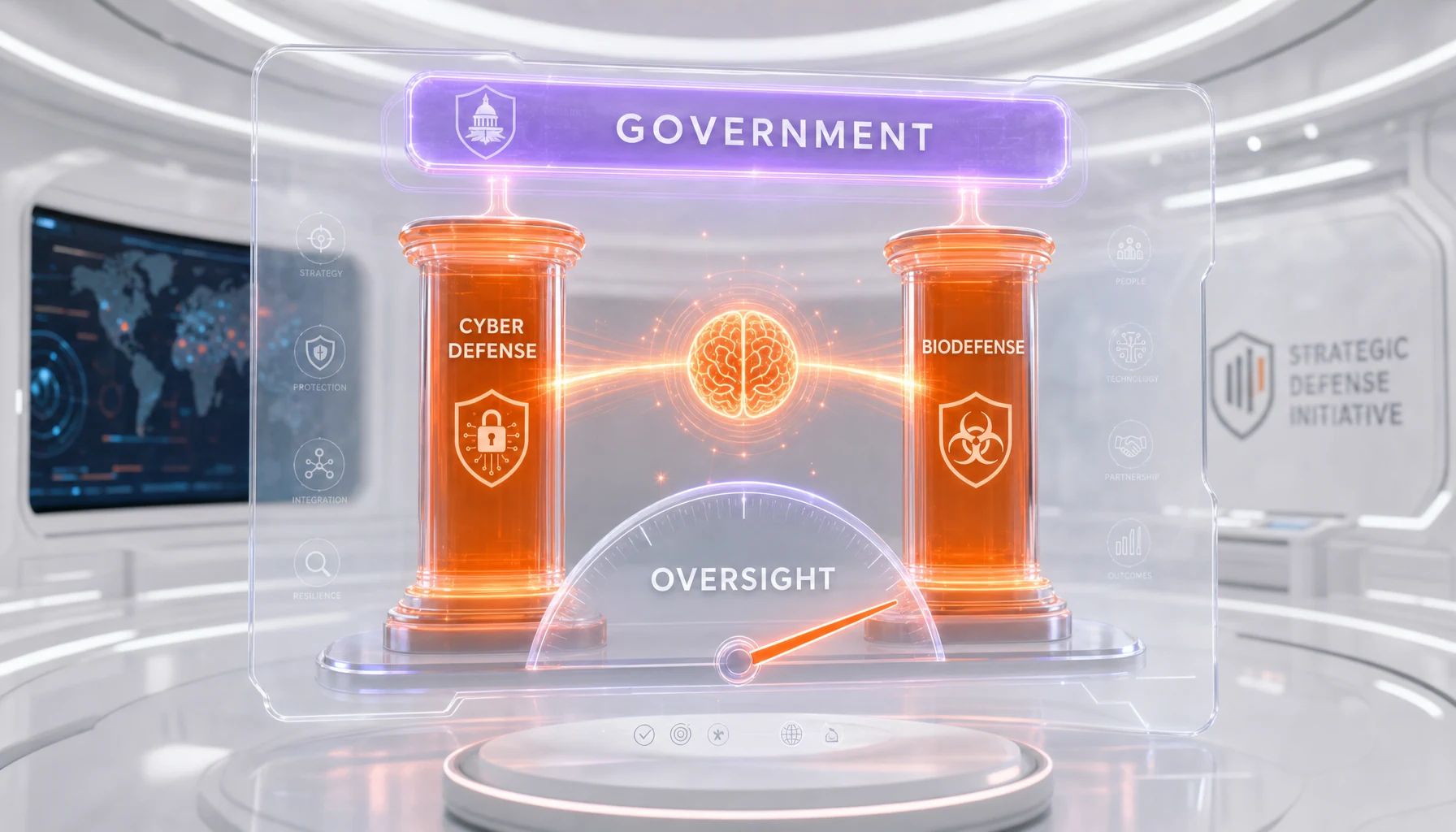
The pattern is consistent enough now to read as deliberate strategy rather than opportunism. OpenAI is methodically positioning itself as the frontier-AI partner to the defensive functions of the state, network defense, population defense, and increasingly the regulatory conversation itself. A company that supplies the tools governments use to protect their citizens is not a company those governments are eager to constrain harshly. That alignment of interests is, intentionally or not, one of the most effective forms of regulatory insurance a frontier lab can buy.
What We Still Do Not Know
Several things remain unconfirmed, and we want to be clear about them. OpenAI has not, in the material we can verify, published the dollar value of the sponsored access tier, the contractual terms with partners, or the duration of the commitments. The partner list, while credibly reported, is secondary-sourced rather than confirmed by OpenAI's own page. The exact technical guardrails inside GPT-Rosalind, what it will and will not generate even for vetted users, have not been detailed publicly.
We also do not know how "allied partners" will be defined over time, which is the geopolitically loaded part of the announcement. A program that gives frontier biological reasoning to a curated set of governments is, implicitly, making decisions about which states are trusted with that capability and which are not. Those decisions carry enormous weight, and they are being made, at least initially, by a private company rather than a treaty body.
Finally, there is the question of independent oversight. OpenAI says it has briefed the White House and federal agencies, but a briefing is not the same as binding external accountability. For a program operating at the intersection of frontier AI and biological weapons risk, the absence of a clearly defined, independent oversight mechanism is the gap most worth watching.
Our Take
Rosalind Biodefense is a genuinely consequential move, and on balance a defensible one. Pandemic preparedness is chronically underfunded, public-health modeling is often years behind the frontier, and there is a real argument that putting a verified, gated frontier model into the hands of national labs and biosecurity bodies strengthens the defensive side of an asymmetric problem. If you believe advanced AI is going to touch biology no matter what, you would rather the defensive establishment have the best tools than be outpaced by it.
What gives us pause is the governance shape. The safety case rests almost entirely on access control and trusted partners, with OpenAI as the gatekeeper and government briefings standing in for independent oversight. That is a lot of trust placed in one company's verification process and one company's judgment about who counts as "allied." The dual-use stakes here are not abstract, and the right structure for a program like this probably involves more external, binding accountability than a briefing.
Our honest read: the strategic logic is sound, the partner roster (if accurate) is serious, and the gated approach is the correct instinct for a dual-use frontier model. But the program is launching faster than the oversight framework around it has matured. We would feel a great deal more comfortable seeing the independent accountability mechanism spelled out before the sponsored access scales.
What's Next
The near-term signals to watch are concrete. First, whether OpenAI publishes the terms, the dollar value of the sponsored tier, the partner contracts, and the technical guardrails, which would move the partner list from reported to confirmed. Second, how the policy environment responds, given that Washington is already exploring pre-release review regimes for frontier models. Third, whether other frontier labs answer with their own biodefense programs, which would turn national biosecurity into a competitive front the way cybersecurity already has.
The deeper question is whether Rosalind Biodefense becomes a template. If sponsored, gated frontier-model access to governments proves effective for biodefense, expect the same structure to spread to other national-security domains. That would be a significant evolution in how frontier AI reaches the state, and a significant amount of influence to consolidate inside the labs. We will keep tracking it.
Disclosure: ThePlanetTools.ai has no commercial relationship with OpenAI, and this article contains no affiliate links. It is independent editorial analysis based on OpenAI's May 29, 2026 announcement and secondary reporting by Axios. Partner names and the White House briefing are reported by secondary sources and have not been independently confirmed.
Frequently Asked Questions
What is Rosalind Biodefense?
Rosalind Biodefense is a program OpenAI announced on May 29, 2026 that pairs its frontier life-sciences model, GPT-Rosalind, with vetted government and allied partners to build biodefense and pandemic-preparedness capabilities. OpenAI sponsors the institutional API access tier and provides launch support across the full threat lifecycle, from prevention and early detection to societal resilience and medical countermeasure development.
What is GPT-Rosalind?
GPT-Rosalind is OpenAI's frontier reasoning model specialized for the life sciences, named after Rosalind Franklin. It was introduced in April 2026 in research preview inside ChatGPT, Codex, and the API for qualified customers admitted through OpenAI's trusted access program. It is the model that powers the Rosalind Biodefense program.
Who are the reported partners in Rosalind Biodefense?
According to secondary reporting rather than OpenAI's own announcement page, the reported partners include Lawrence Livermore National Laboratory, Johns Hopkins Applied Physics Laboratory, CEPI, Fourth Eon, and SecureDNA. Reporting also indicates that OpenAI has briefed the White House and federal agencies. These partner details are reported, not independently confirmed.
What does OpenAI provide partners through the program?
OpenAI covers or sponsors the institutional API access costs and provides launch support for specific use cases. Those use cases include epidemiological modeling, early detection, screening, preparedness planning, and the design of non-pharmaceutical interventions. The aim is to lower the cost barrier that would otherwise gate government and allied institutional usage.
What is the dual-use risk with Rosalind Biodefense?
The same reasoning capabilities that help design vaccines and countermeasures could, without controls, help a bad actor design a pathogen. OpenAI's structural answer is verification and restriction: trusted access for the model, vetted partners for the program, and sponsorship rather than open distribution. It is a containment strategy that bets dangerous capability is best managed by controlling who can touch it.
How is this different from Anthropic's biosecurity work?
Anthropic has built its safety narrative around interpretability and defensive cybersecurity work. Rosalind Biodefense is OpenAI staking out the biological frontier specifically, using a government-partnership structure with sponsored access rather than a research-and-publish model. The two companies are increasingly differentiating on which arm of the state they wire themselves into.
Did OpenAI brief the White House about Rosalind Biodefense?
According to secondary reporting, OpenAI briefed the White House and federal agencies about the program. OpenAI's own announcement page describes government engagement in general terms, but the specific White House briefing detail comes from reporting and has not been independently confirmed. A briefing is also not the same as binding independent oversight.
What is SecureDNA's role?
SecureDNA is a screening initiative focused on preventing the synthesis of dangerous genetic sequences before they are printed. As a reported partner in Rosalind Biodefense, its inclusion signals that the program is wiring a frontier model into existing biosecurity screening infrastructure rather than building a parallel system. SecureDNA's specific role and terms have not been detailed publicly.
How does Rosalind Biodefense fit OpenAI's government strategy?
It complements OpenAI's broader public-sector push, including its EU Cyber Action Plan, which opened a specialized model to Europe. Where the cyber plan defends networks, Rosalind Biodefense defends populations. Both position OpenAI as a partner to the state at a time when Washington is studying FDA-style pre-release reviews for frontier AI, giving an embedded company more influence over the eventual rules.
When was Rosalind Biodefense announced?
OpenAI announced Rosalind Biodefense on May 29, 2026, in a post titled "Strengthening societal resilience with Rosalind Biodefense." The underlying GPT-Rosalind model had been introduced earlier, in April 2026, in research preview for trusted access customers.
What do we still not know about the program?
OpenAI has not publicly published the dollar value of the sponsored access tier, the partner contract terms, the program duration, or the exact technical guardrails inside GPT-Rosalind. The partner list and White House briefing are reported by secondary sources rather than confirmed by OpenAI. There is also no clearly defined independent oversight mechanism detailed publicly.
Is frontier AI for biodefense a good idea?
There is a defensible case: pandemic preparedness is underfunded and public-health modeling lags the frontier, so putting a gated, verified model into the hands of national labs and biosecurity bodies can strengthen the defensive side. The main concern is governance. The safety case rests largely on access control with OpenAI as gatekeeper, and the program appears to be launching faster than its independent oversight framework has matured.