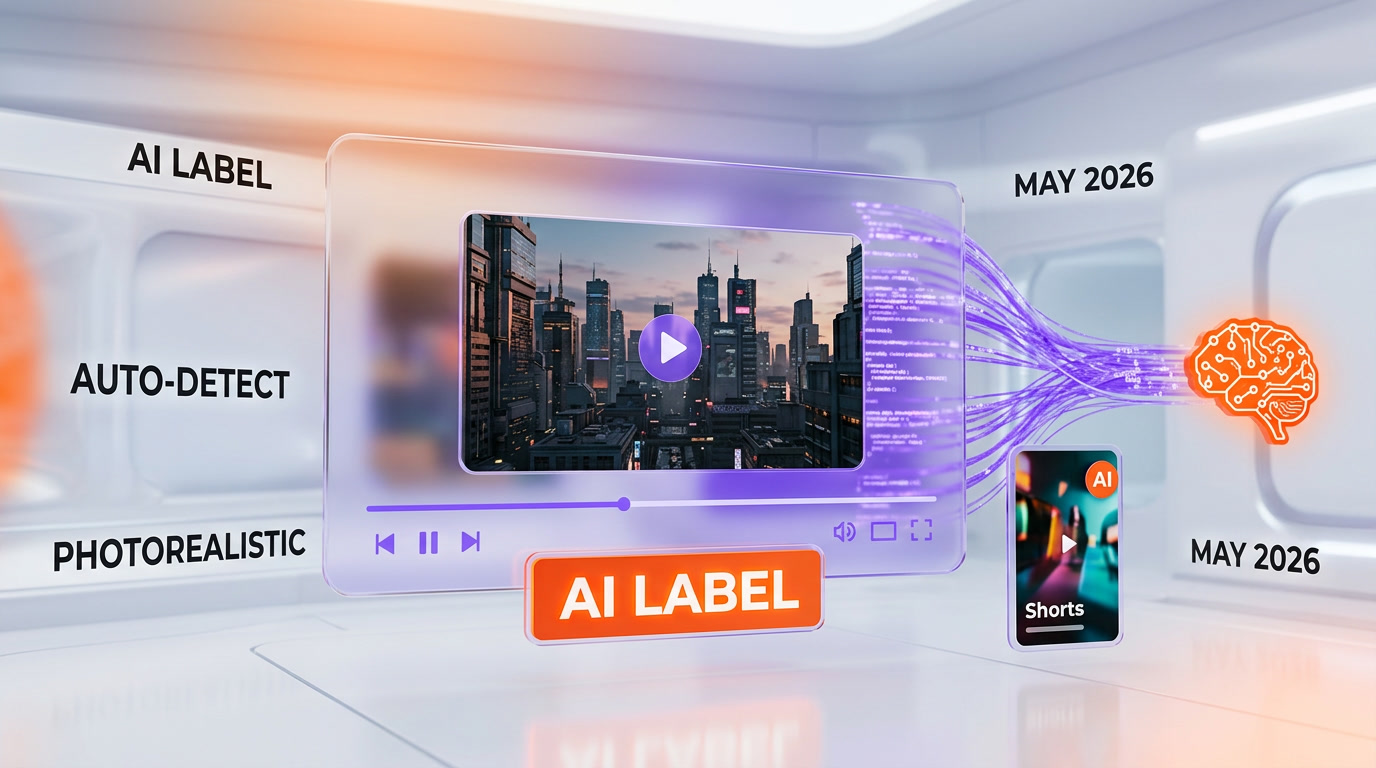
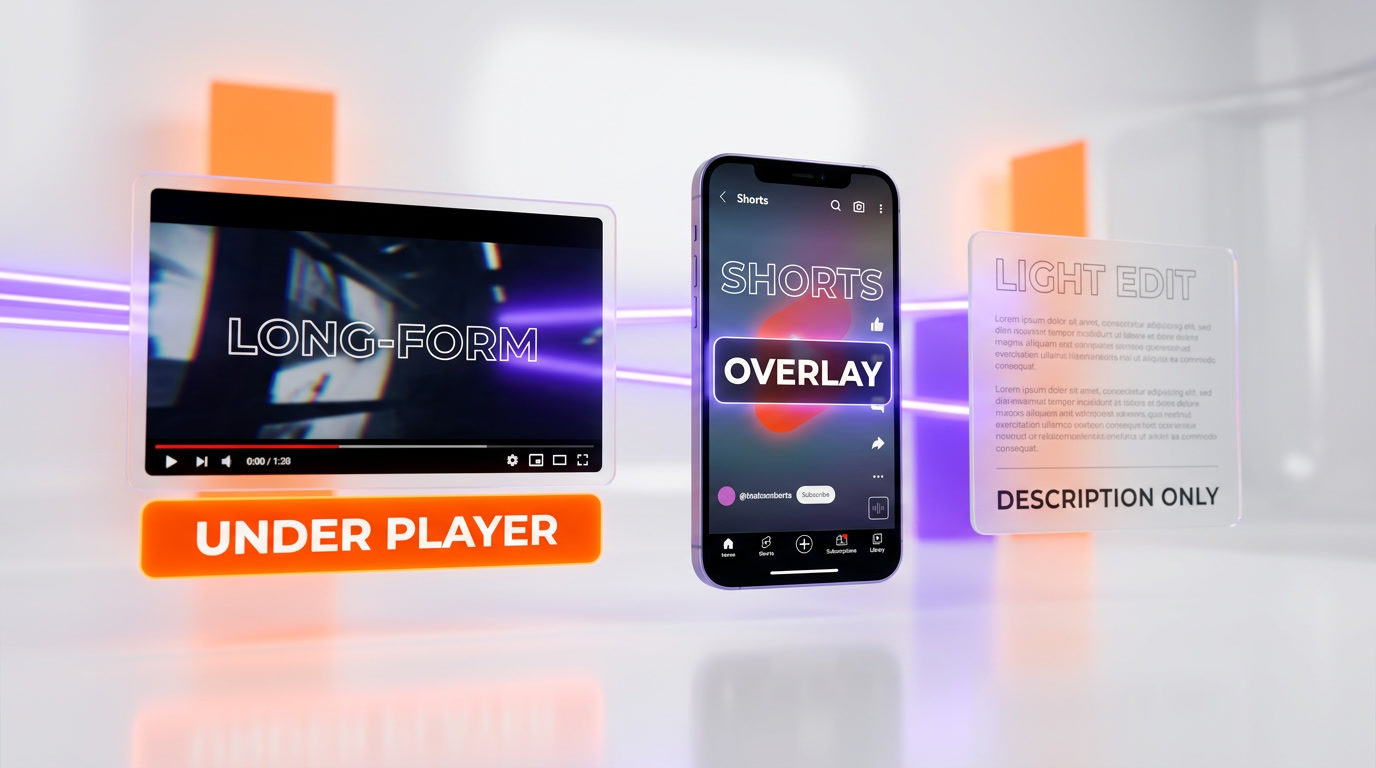
YouTube's automatic AI labels are disclosure tags that the platform applies on its own, starting in May 2026, whenever its internal systems detect significant photorealistic AI use in a video, even when the creator never declared it. The label sits directly below the player on long-form videos and as an on-video overlay on Shorts. It does not change how a video is recommended or whether it can earn money. Labels become permanent in two cases: content made with YouTube's own AI tools like Veo and Dream Screen, and content carrying C2PA provenance metadata marked as fully AI-generated.
This is a meaningful shift in how the world's largest video platform handles synthetic media. Until now, AI disclosure on YouTube ran almost entirely on the honor system: creators were asked to flag realistic or significantly altered AI content themselves, and the label appeared only when they checked the box. The May 2026 update keeps that requirement but adds a safety net underneath it. If a creator forgets, declines, or simply does not realize a clip qualifies, YouTube's own detection can now step in and apply the label automatically. For the fast-growing population of AI creators in the US and beyond, the rules of the road just changed, and understanding the nuances matters more than the headline.
What Actually Changed in May 2026
In a post on its official blog dated May 27, 2026, YouTube announced it is improving AI labels for both viewers and creators. The core change: YouTube is deploying internal signals that automatically apply an AI label when a video shows "significant photorealistic AI use," regardless of whether the uploader disclosed it. This is the first time the platform has committed to labeling synthetic content without relying solely on creator input.
The key word is photorealistic. YouTube is not trying to flag every cartoon, stylized animation, or obviously synthetic effect. The automatic system targets content that could plausibly be mistaken for a real recording of real people, places, or events. That is the category that carries the highest risk of misleading viewers, and it is exactly where a missing disclosure does the most damage. A hyper-real AI clip of a public figure saying something they never said is a very different problem from a glowing neon dreamscape, and YouTube's automatic labeling is aimed squarely at the former.
Crucially, YouTube has not published any detection accuracy figure. There is no stated precision or recall percentage, no false-positive rate, and no benchmark for how often the system gets it right. That silence is worth noting: anyone quoting a specific accuracy number for YouTube's AI detection is almost certainly inventing it. What YouTube has committed to is the behavior, not the math behind it.
Where the Label Appears
Placement depends on the format, and the difference is deliberate. For long-form videos, the label appears directly below the video player and above the description. That puts it in the viewer's line of sight without covering the content itself, the same real estate where other contextual notices already live.
For YouTube Shorts, the label shows up as an overlay directly on the video, because Shorts are consumed in a vertical, full-screen, swipe-driven feed where a description sitting below the player would never be seen. The overlay ensures the disclosure travels with the clip in the exact place a viewer is already looking.
There is one softer tier worth flagging. Content that has been only lightly modified or animated by AI, rather than substantially generated, is labeled only in the expanded description rather than with a prominent under-player tag or overlay. YouTube is calibrating the visibility of the label to the degree of synthetic involvement: the more a video could fool a viewer into thinking it is real, the more prominent the disclosure.
When the Label Becomes Permanent
Most automatic labels are not set in stone. If YouTube's system flags a video the creator believes was misidentified, the creator can correct the record. But two categories of content receive labels that cannot be removed, and both are about hard provenance rather than a probabilistic guess.
The first permanent case is content created with YouTube's own AI tools. If a video was made using Veo, Google's flagship text-to-video model now integrated across the YouTube and Shorts ecosystem, or Dream Screen, YouTube's generative background and clip feature, the platform knows with certainty that the content is AI-generated because it generated it. There is no ambiguity to dispute. For a deeper look at how Google has split Veo into multiple performance tiers, our breakdown of Veo 3.1 Lite vs Fast vs Full walks through exactly what each tier produces.
The second permanent case is content carrying C2PA metadata that indicates the file is fully generative AI. C2PA, the Coalition for Content Provenance and Authenticity, is a cross-industry standard that embeds cryptographically signed provenance data directly into a media file. When a file arrives at YouTube already declaring, through tamper-evident metadata, that it was fully AI-generated, YouTube treats that declaration as authoritative and the label stays permanent. Again, there is nothing probabilistic here: the file itself is making the claim, and the platform is honoring it.
The logic is consistent across both cases. When provenance is a matter of fact rather than inference, the label is permanent. When it rests on detection, it remains contestable.
No Penalty: Labels Are Informational, Not Punitive
This is the point AI creators most need to internalize, and the one most likely to get lost in alarmist coverage. An AI label on YouTube is not a strike, a demonetization trigger, or a ranking penalty. YouTube has stated plainly that a disclosure label alone does not change how a video is recommended or whether it is eligible to earn money.
In other words, the label is a transparency signal for viewers, not a punishment for creators. A fully AI-generated explainer can still surface in recommendations, still run ads, and still earn revenue, label and all. The platform's stance is that audiences deserve to know when they are watching synthetic media, and that giving them that context is separate from any judgment about the content's quality or eligibility.
That distinction reframes the entire update. The fear that an automatic label will quietly throttle a channel's reach or cut off its income does not match what YouTube has described. The label changes what the viewer sees, not what the algorithm does or what the creator earns.
Creators Still Have to Self-Disclose
Automatic detection is a safety net, not a replacement for the rules. YouTube is explicit that creators are still required to manually disclose when they use realistic or significantly altered AI content. The auto-labeling system supplements that obligation; it does not lift it.
Practically, that means the responsible default has not changed. If you publish a video with realistic AI-generated faces, voices, places, or events, you are expected to check the disclosure box yourself when you upload, in YouTube Studio's content settings. The automatic system exists to catch what slips through, not to give creators permission to stop disclosing. Leaning on the detector to do your disclosure for you is a bet against a system YouTube has not published accuracy numbers for, and it leaves you on the wrong side of the platform's stated requirement.
The smart posture for any serious AI creator is unchanged: disclose proactively, accurately, and at the right level of severity. Self-disclosure keeps you in control of how your content is described, rather than handing that decision to an algorithm whose verdict you would then have to contest.
How to Dispute a Label You Think Is Wrong
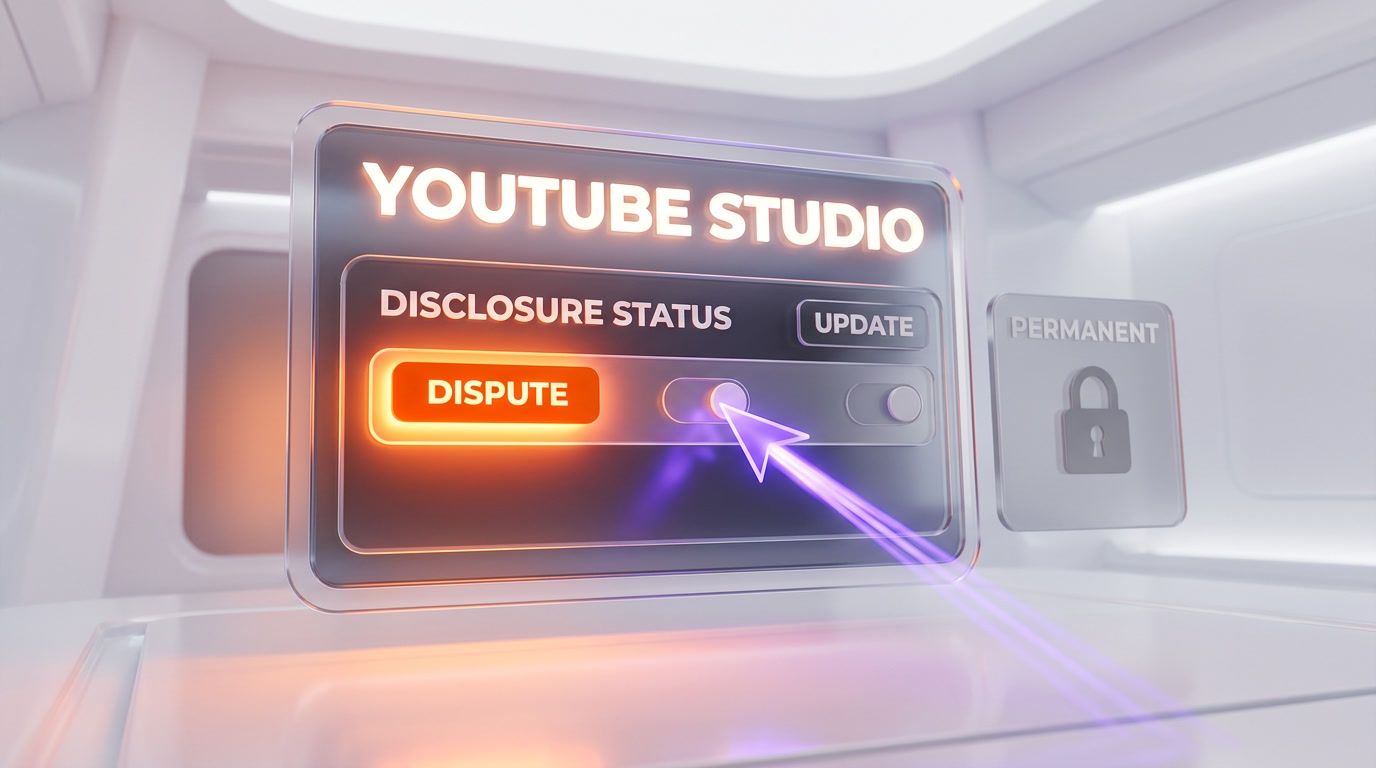
False positives are an inevitable byproduct of any automated detection system, and YouTube has built in a correction path. If a creator believes their content was incorrectly identified as AI-generated, they can update the disclosure status directly in YouTube Studio. That puts the appeal inside the same dashboard creators already use to manage uploads, metadata, and monetization, rather than routing it through a separate, opaque process.
The important caveat is the permanent-label exception. The dispute path applies to ordinary automatic labels, not to the two permanent categories. If a video was made with Veo or Dream Screen, or arrives with C2PA metadata declaring it fully AI-generated, the label is not contestable, because the provenance is established as fact rather than inferred. For everything else, the creator retains the ability to correct a misfire.
Why Provenance Is Suddenly Everyone's Problem
YouTube's move does not happen in a vacuum. It lands in the middle of an industry-wide reckoning with synthetic media, where the central question has shifted from "can AI make this" to "can anyone prove where this came from." The platform's automatic labeling is one answer to a problem that has been escalating across the entire content ecosystem.
The stakes were made brutally clear by the deepfake crises of early 2026, which turned abstract worries about synthetic media into concrete harm at scale. Our reporting on the Grok deepfake scandal documented how a single generative tool with weak guardrails could flood the internet with non-consensual and abusive imagery, drawing lawsuits and regulatory action across multiple countries. Against that backdrop, a platform-level commitment to label realistic AI content, even when the creator stays silent, reads less like an inconvenience and more like a baseline duty of care.
Provenance is also at the heart of the legal fights now reshaping the AI industry. The question of what trained a model, and whether a platform's own content was scraped to do it, sits at the center of cases like the one we covered in Sony Music v. Udio, where YouTube's vast library became the battleground. When the origin of media is contested in court, embedding verifiable provenance at the file level stops being a nice-to-have and starts being evidence.
Understanding C2PA: The Standard Behind Permanent Labels
C2PA is the technical backbone that makes YouTube's strongest labels possible, so it is worth understanding what it actually does. The Coalition for Content Provenance and Authenticity is a standards body backed by a broad coalition of technology, media, and camera companies. Its specification defines a way to attach a tamper-evident "content credential" to a media file, a cryptographically signed manifest that records how the file was created and edited.
When a generative tool writes C2PA metadata that says a video is fully AI-generated, that claim is signed and travels with the file. A downstream platform like YouTube can read it, verify the signature, and act on it with confidence. That is precisely why C2PA-tagged content earns a permanent label: the provenance is self-declared by the creating tool in a form that is hard to forge and easy to check.
The broader vision is a media ecosystem where origin is verifiable end to end, rather than guessed at after the fact. YouTube honoring C2PA at the platform level is a significant vote of confidence in that approach, and it gives AI tool makers a strong incentive to write standards-compliant provenance into their output. Tools that emit clean C2PA data make their users' disclosure automatic and authoritative, which is fast becoming a competitive feature rather than a compliance burden.
Veo and Dream Screen: Why First-Party Tools Get Special Treatment
The permanent label on content made with Veo and Dream Screen is the cleanest case in the whole policy, because YouTube is labeling output from tools it controls end to end. Veo is Google's flagship video generation model, the engine behind a wave of cinematic text-to-video that has reshaped what a solo creator can produce. Dream Screen brings generative imagery and short clips into the YouTube and Shorts creation flow directly.
Because Google built these tools and wired them into the creation pipeline, there is no detection step and no inference. The platform knows the content is synthetic the moment it is generated, so the label is applied with certainty and made permanent. This is the inverse of the photorealistic-detection path: instead of guessing whether outside content is AI, YouTube is simply recording what its own tools produced.
The competitive context matters too. Google has been aggressively pushing Veo across pricing tiers and use cases, and the integration of generation, hosting, and labeling under one roof is part of a larger play. We dug into how the latest Veo release reshaped the market in our coverage of Veo 3.1 Lite, and the labeling policy is another piece of that vertical strategy: own the model, own the platform, own the provenance signal.
How YouTube Compares to TikTok, Meta, and the Rest
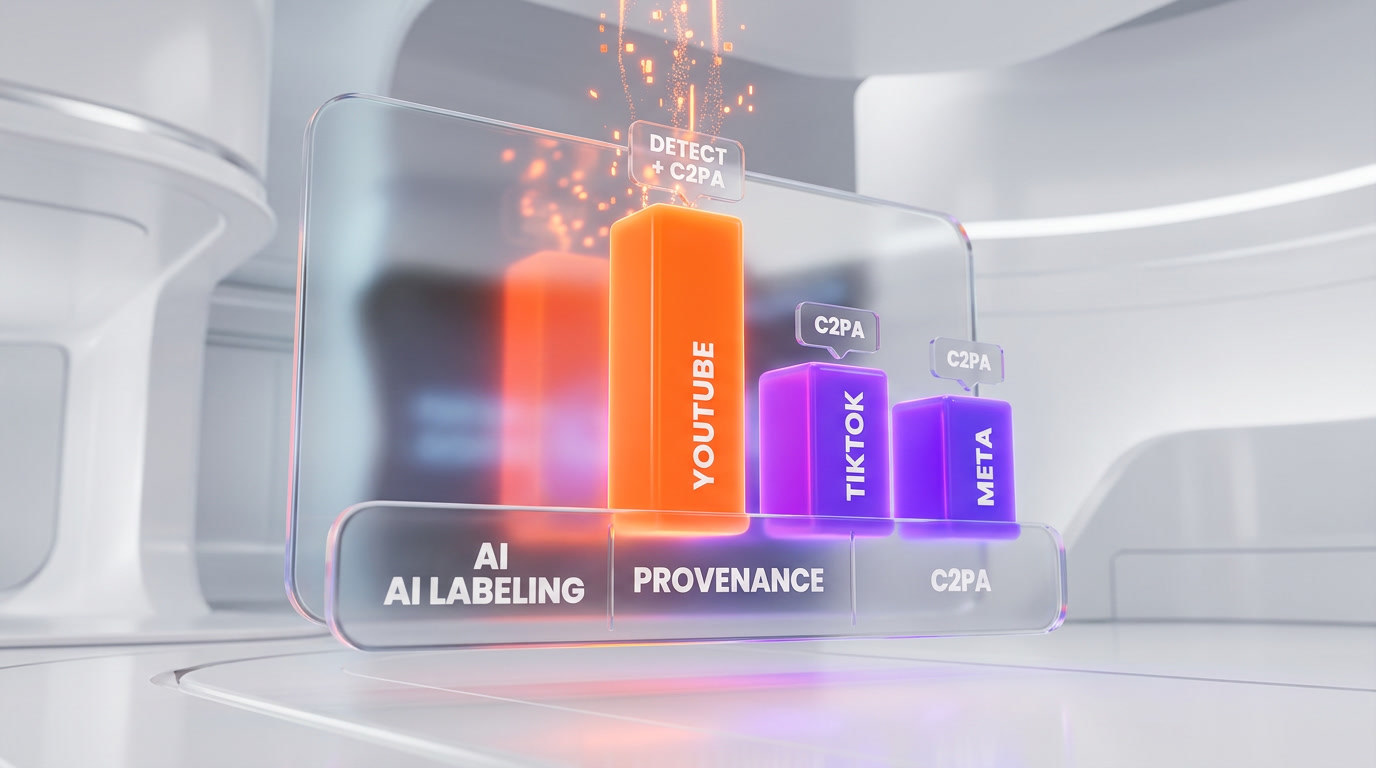
YouTube is not the first major platform to wrestle with AI disclosure, and the differences in approach are instructive. TikTok rolled out automatic labeling of AI-generated content that arrives with C2PA content credentials, leaning heavily on the same provenance standard YouTube now honors for permanent labels. Meta has applied "AI Info" labels across Facebook and Instagram, also drawing on industry metadata signals to flag synthetic media.
What sets YouTube's May 2026 update apart is the commitment to its own internal photorealism detection layered on top of metadata-based signals. Where some platforms have leaned primarily on creators self-tagging and on reading incoming provenance metadata, YouTube is explicitly adding a detection step that can apply a label when neither the creator nor the file's metadata does. That is a more assertive stance, and it reflects YouTube's scale: with the volume of uploads it handles, an honor-system-only approach was always going to leave significant gaps.
The image side of this story is moving in parallel. As photorealistic AI image generation has gone mainstream, the same provenance-and-labeling logic is spreading to still imagery. Our guide to Google's Nano Banana image models covers a family of generators producing exactly the kind of photoreal output that pushes platforms toward mandatory labeling, and the disclosure debate for images and video is rapidly converging on the same standards.
What AI Creators in the US Should Do Now
For creators building on AI in the US market, the practical takeaways are straightforward. First, keep disclosing manually. Self-disclosure remains a requirement, and doing it proactively keeps you in control of how your content is described. Second, do not fear the label. It carries no penalty to recommendations or monetization, so the cost of an accurate disclosure is essentially zero while the cost of a missed one is reputational and, increasingly, regulatory.
Third, understand which of your content will be permanently labeled. If you work in Veo or Dream Screen, or if your tools emit C2PA "fully AI-generated" metadata, accept that the label is permanent and plan your content around that reality rather than expecting to contest it. Fourth, learn the dispute path in YouTube Studio for the cases where it applies, so that if the automatic system misreads a real recording as synthetic, you can correct it quickly.
The bigger strategic point is that provenance is becoming a core competency for serious creators, not a footnote. Knowing which tools write clean metadata, how labels propagate, and where the appeal levers sit is now part of the craft. The creators who treat transparency as an asset rather than a threat will be the ones who build durable trust with audiences and stay ahead of the regulation that is clearly coming.
The Bottom Line
YouTube's automatic AI labeling is a measured, transparency-first response to a synthetic-media landscape that has outrun the honor system. Starting May 2026, the platform will apply an AI label to significant photorealistic AI content on its own, even without creator disclosure, placing it under the player on long-form videos and as an overlay on Shorts. The label is informational, not punitive: it does not touch recommendations or monetization. Creators still must self-disclose, can dispute non-permanent labels in YouTube Studio, and should expect permanent labels on Veo, Dream Screen, and C2PA-tagged fully AI-generated content. For AI creators, none of this is cause for alarm, but all of it is cause for attention. The era of guessing at where media came from is ending, and the platforms are building the infrastructure to prove it.
Frequently Asked Questions
When does YouTube start automatically labeling AI videos?
Starting in May 2026, YouTube began deploying internal systems that automatically apply an AI disclosure label when they detect significant photorealistic AI use in a video, even if the creator did not disclose it themselves.
Does an AI label hurt my video's reach or monetization on YouTube?
No. YouTube has stated that a disclosure label alone does not change how a video is recommended or whether it is eligible to earn money. The label is informational for viewers, not a penalty for creators.
What kind of content triggers an automatic AI label?
The automatic system targets significant photorealistic AI use, meaning realistic synthetic content that could be mistaken for a genuine recording of real people, places, or events. Obviously stylized or non-realistic AI content is the lower-priority case.
Where does the AI label appear on YouTube?
On long-form videos the label appears directly below the player and above the description. On YouTube Shorts it appears as an overlay on the video itself. Lightly modified or animated content is labeled only in the expanded description.
Which videos get a permanent AI label that cannot be removed?
Two cases: content created with YouTube's own AI tools such as Veo and Dream Screen, and content carrying C2PA metadata indicating it is fully generative AI. Both rest on established provenance rather than detection, so the label is permanent.
Do I still have to disclose AI content myself if YouTube can detect it?
Yes. YouTube still requires creators to manually disclose realistic or significantly altered AI content. The automatic detection is a safety net that supplements self-disclosure; it does not replace the requirement.
How do I dispute an AI label I think is wrong?
If you believe your content was incorrectly identified as AI-generated, you can update the disclosure status directly in YouTube Studio. This appeal path applies to ordinary automatic labels but not to the two permanent-label categories.
What is C2PA and why does it create a permanent label?
C2PA, the Coalition for Content Provenance and Authenticity, is a cross-industry standard for embedding tamper-evident, cryptographically signed provenance metadata in a media file. When that metadata declares a video is fully AI-generated, YouTube treats it as authoritative and applies a permanent label.
How is YouTube's approach different from TikTok and Meta?
TikTok and Meta rely heavily on reading C2PA content credentials and on creator self-tagging to label AI content. YouTube layers its own internal photorealism detection on top of those metadata signals, so it can apply a label even when neither the creator nor the file's metadata does.
Will content made with Veo or Dream Screen always be labeled?
Yes. Because Veo and Dream Screen are YouTube's own AI tools, the platform knows their output is AI-generated at the moment of creation, so that content receives a permanent label with no detection step and no dispute path.
Did YouTube publish how accurate its AI detection is?
No. YouTube has not released any detection accuracy, precision, or false-positive figures for its automatic AI labeling. Any specific accuracy percentage attributed to the system should be treated as unverified.
Does the automatic label apply to AI-generated images and audio too?
This update is about video and Shorts. However, the same provenance-and-labeling logic, built on C2PA content credentials, is spreading to photorealistic AI images and audio across the industry, so disclosure expectations for those formats are converging on the same standards.