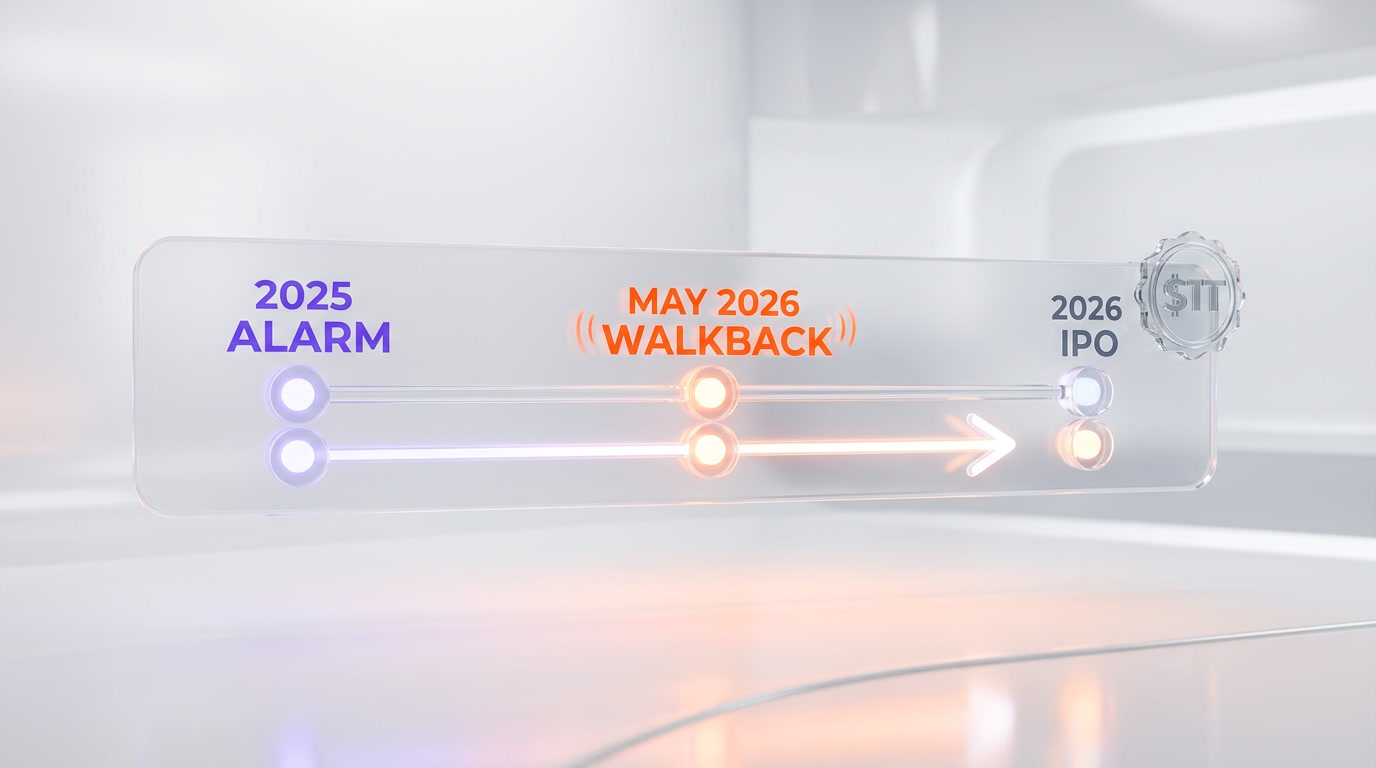
Sam Altman and Dario Amodei have both walked back their earlier warnings that AI would rapidly eliminate white-collar jobs. Altman, speaking in Sydney on May 26, 2026, said he was "pretty wrong" about the social and economic impact, adding he is "delighted to be wrong." Amodei, on stage with JPMorgan's Jamie Dimon on May 5, 2026, reframed automation as a productivity multiplier. Both reversals land while OpenAI and Anthropic are reportedly preparing 2026 IPOs each estimated near $1 trillion.
Editorial Disclosure: This is an editorial opinion piece by Anthony Martinez (CEO & Founder, ThePlanetTools.ai). ThePlanetTools.ai has no affiliation with OpenAI or Anthropic and earns nothing from this piece. There are no affiliate links here. Internal links point to our own editorial coverage. Read our full editorial policy.What actually changed in the rhetoric
I want to start with the facts, because the facts are interesting enough on their own before anyone reaches for a motive.
On May 26, 2026, Sam Altman appeared on stage at a Commonwealth Bank of Australia conference in Sydney alongside CBA chief executive Matt Comyn. According to Fortune's reporting, Altman said he had been "roughly right" about the trajectory of the technology behind ChatGPT, but "pretty wrong" about its social and economic impact. He put it plainly: "I'm delighted to be wrong about this. I thought there would have been more impact on entry-level white-collar jobs being eliminated by now than has actually happened."
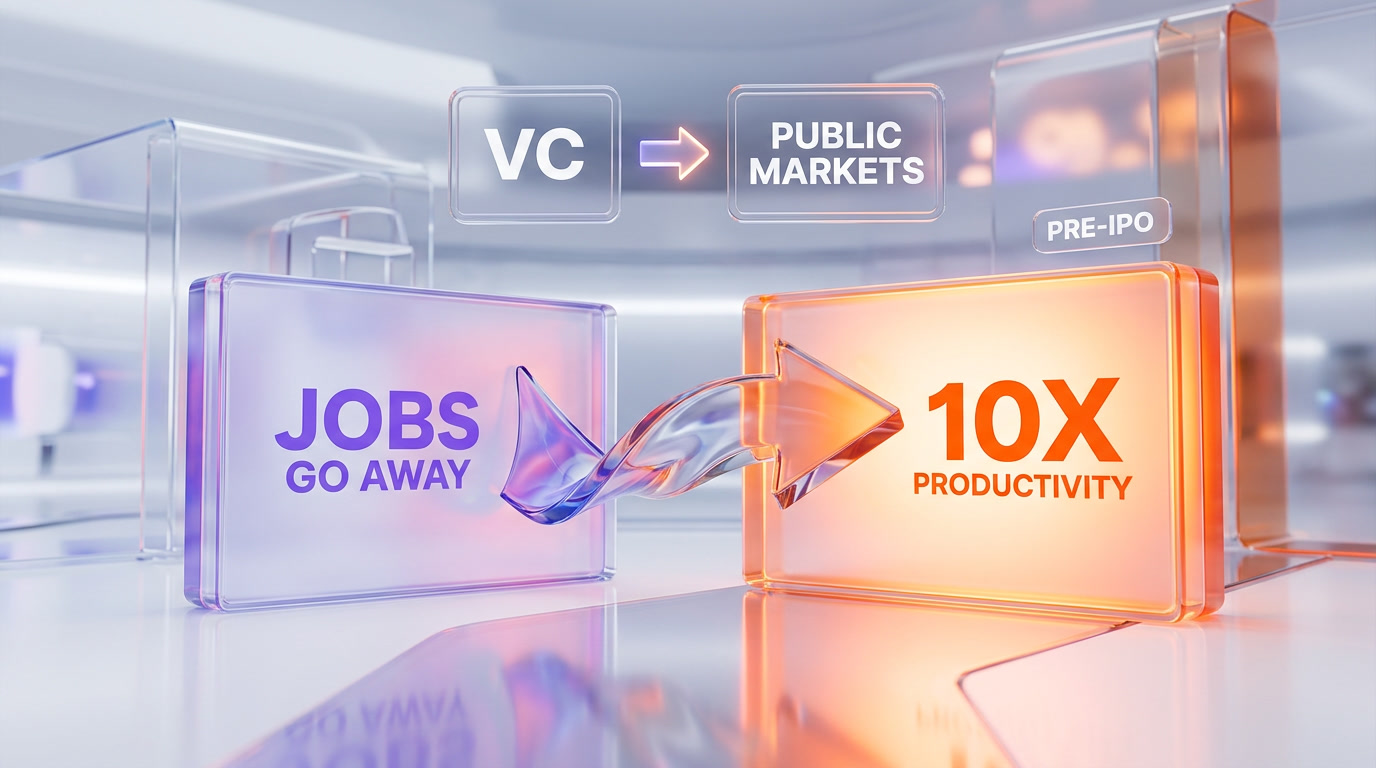
That is a meaningful softening. Back on the "Uncapped" podcast in June 2025, Altman had warned that "a lot of jobs will go away." A year later, in front of a room of bankers, the message is that the apocalypse he gestured at has not arrived on schedule — and that he is happy about it.
Dario Amodei made a parallel move three weeks earlier. On May 5, 2026, at an Anthropic financial-services briefing in Lower Manhattan, on stage with JPMorgan chief executive Jamie Dimon, Amodei reframed automation as expansion rather than elimination: "If you automate 90% of the job, then everyone does the 10% of the job, and the 10% expands to be 100%." The framing, he argued, is that workers "10x their productivity" rather than disappear. That is a softer register than his earlier warning — circulated through 2025 — that AI could wipe out as much as 50% of entry-level white-collar jobs.
So we have two of the most quoted voices in AI, within a 21-day window, both dialing down the same alarm they spent the previous year ringing. In my reading, that is the story worth sitting with — not because either man necessarily did anything wrong, but because the timing is hard to ignore.
The context: two reportedly trillion-dollar IPOs
Here is the part of the backdrop that makes the timing worth noting at all.
Both OpenAI and Anthropic are reportedly preparing public-market debuts in 2026, with each company's valuation estimated near $1 trillion. I want to be careful with that figure: these are estimates and reporting, not filed numbers. Our own coverage has tracked the early signals — from OpenAI's confidential S-1 filing pointing toward a roughly $1 trillion valuation to Anthropic targeting an $800 billion-plus IPO after beating OpenAI on revenue. Google's $40 billion investment at a $350 billion valuation has been openly framed as an IPO launchpad. The trajectory is not subtle.
And here is the friction. A founder who spends 2025 telling the world that his product will eliminate a large share of entry-level jobs is telling a story that public-market investors do not love. Mass-unemployment rhetoric is politically radioactive, invites regulatory attention, and complicates the "AI lifts everyone" narrative that sells a growth multiple. Fortune frames the two reversals as arriving in step with "blockbuster IPOs," and the analysts quoted make the obvious observation: the apocalypse pitch is not what you want in the roadshow deck.
Whether or not the timing is deliberate, the incentive structure is worth noting. That is the whole of my claim here. I am not saying anyone changed their mind to order. I am saying that when the message shifts and the incentive to shift the message peaks at the same moment, a careful reader notices.
The honest alternative reading: maybe they updated on the data
I owe the other interpretation a fair hearing, because it is genuinely plausible and I would be doing you a disservice to skip it.
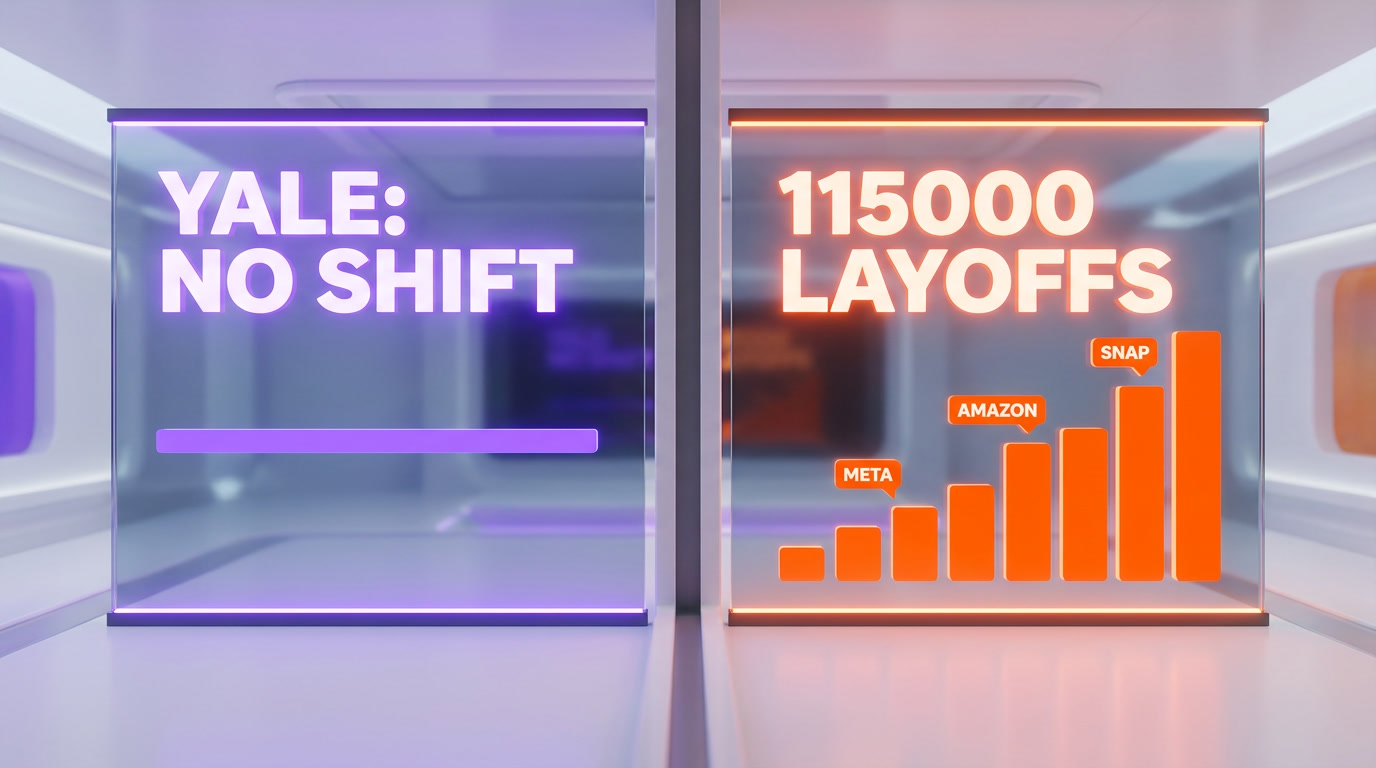
The simplest charitable explanation is that Altman and Amodei revised their estimates because the data came in, and the data did not match the forecast. The Yale Budget Lab has found no significant change in the occupational mix or in unemployment duration for jobs with high AI exposure since ChatGPT launched in late 2022. If you predicted a wave of entry-level eliminations by 2026 and the labor statistics refuse to show it, the intellectually honest move is exactly what Altman did: say you were "pretty wrong" and update.
This is, frankly, what good forecasters are supposed to do. Holding a prediction past the point where the evidence contradicts it is the failure mode, not correcting it. Altman saying he is "delighted to be wrong" is, read charitably, a model of how to handle a missed call in public. Amodei's productivity-multiplier framing is also defensible on the merits — the "automate 90%, the remaining 10% expands to 100%" argument is a real pattern in how past automation waves played out, where tools raised the ceiling on what one worker could do rather than zeroing out the role.
So the reader genuinely has two readings on the table, and both can be partly true:
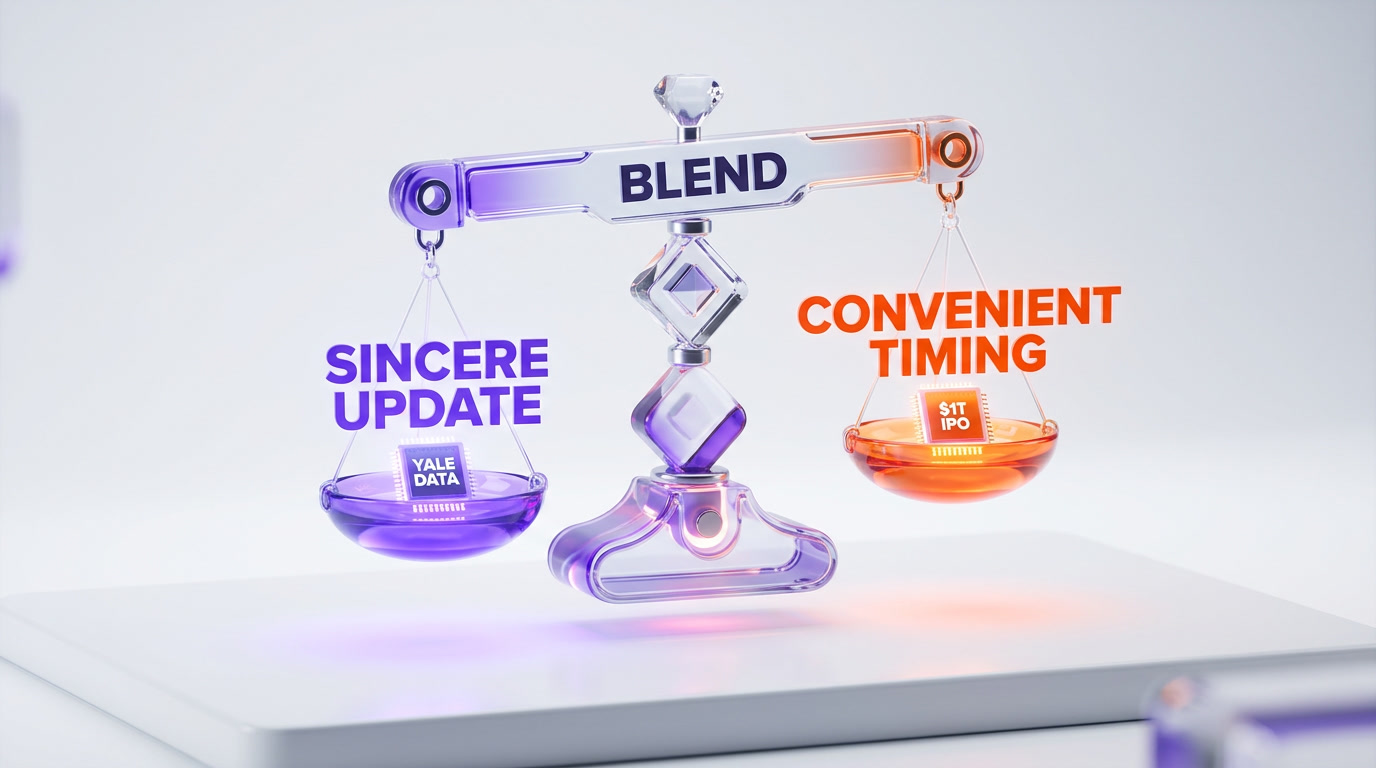
- Reading one — sincere update. The Yale data and the broader labor numbers undercut the original forecast, and both founders adjusted accordingly. The timing relative to the IPOs is coincidence, or at most a secondary convenience.
- Reading two — convenient timing. The message softened precisely as the incentive to soften it peaked, with public-market investors as the new primary audience. The data provides cover for a shift that the roadshow would have demanded anyway.
In my view, the most likely truth is a blend: the data made the walkback defensible, and the IPO window made it urgent. You can believe someone genuinely updated their estimate and still notice that the update arrived at a remarkably convenient moment. Those two things are not in conflict.
What the labor data actually says right now
Let me hold both founders to the same standard I would hold any forecaster to, which means looking at the numbers rather than the narrative.
On the "no apocalypse" side, the Yale Budget Lab finding is the strongest evidence. No significant shift in the occupational mix. No significant change in how long the AI-exposed stay unemployed. If a technology were eliminating entry-level white-collar work at the pace the 2025 warnings implied, that is precisely where it would show up first — and it has not, at least not yet, at least not at the aggregate level the labor statistics capture.
But the labor picture is not uniformly reassuring, and this is where I think the "delighted to be wrong" framing gets a little too comfortable. US tech layoffs have passed 115,000 so far in 2026, closing in on the roughly 124,000 logged across all of 2025 — with Meta, Amazon, and Snap citing AI as a factor in their cuts. We have covered the broader trend in our piece on AI becoming America's number-one cited reason for layoffs in the April 2026 Challenger data, and Andrej Karpathy's exposure mapping in his analysis of 342 jobs is worth reading alongside it.
So which is it? In my reading, both can hold at once. The aggregate occupational mix has not lurched, which is the Yale point and supports the walkback. But specific firms are running specific cuts and naming AI in the rationale, which is the part a "delighted to be wrong" line glides past. The honest summary is: the broad apocalypse did not arrive on the predicted timeline, and a narrower, firm-by-firm reshaping is underway. A forecaster can be wrong about the first and still be early on the second.
Why the narrative itself is a pre-IPO asset
This is the part I find most interesting, and I want to be precise that I am making a point about incentives, not about anyone's honesty.
For a private company, a scary AI narrative can be useful. It signals capability — "our model is so powerful it threatens jobs" doubles as a flex — and it can help with talent, urgency, and the safety-credibility that both labs have leaned on. Amodei in particular built a brand around taking the risks seriously, and the jobs warning fit that posture.
The moment a company points toward public markets, the calculus inverts. Now the audience is index funds, pension allocators, retail investors, and the regulators who watch them. To that audience, "we will eliminate half of entry-level white-collar jobs" is not a flex — it is a liability. It invites antitrust and labor scrutiny, it hands ammunition to critics, and it sits awkwardly next to a growth story that depends on enterprises adopting your product enthusiastically rather than defensively. The narrative that recruits engineers is not the narrative that prices an IPO.
So when the message moves from "jobs will go away" toward "productivity will 10x" right as the audience moves from venture investors to public markets, I do not need to allege a motive to find the alignment worth flagging. The incentive gradient points exactly one direction, and both founders moved exactly that direction at exactly the moment the gradient steepened. The timing is hard to ignore, even if the explanation turns out to be innocent.
Altman and Amodei walked back differently
It is worth separating the two reversals, because they are not the same move and the difference tells you something.
Altman's is the cleaner mea culpa. "Pretty wrong" and "delighted to be wrong" are concessions — he is conceding the call, not reframing it. That is the rhetorically safer position: admitting you overestimated a downside is almost always well received, because the audience is relieved. It also happens to be the most IPO-friendly thing he could say. In my view, the genius of "delighted to be wrong" is that it is simultaneously a sincere-sounding admission and a perfect investor-relations line. I cannot tell you which it primarily is, and I do not think anyone outside Altman's head can.
Amodei's is a reframe rather than a retraction. He did not say he was wrong; he said the math works differently than the headline implied — automation expands the remaining work rather than deleting the worker. That is more intellectually ambitious and, honestly, more interesting as an economic claim. It is also harder to falsify, which cuts both ways: it is a richer argument and a more slippery one. The productivity-multiplier story is genuinely defensible, and it is also exactly the story you would tell a room that includes Jamie Dimon if you wanted that room to feel good about the technology.
I score Altman's reversal as more candid and Amodei's as more sophisticated. Neither read requires bad faith. Both happen to be well-suited to the moment.
The regulatory and political angle no roadshow wants
There is a dimension to this that I think gets underweighted when people focus only on the investor-sentiment piece, and it sharpens why the timing is hard to ignore.
A public company that has gone on record predicting mass white-collar unemployment is handing a script to every politician, regulator, and labor advocate who wants to act. "Your own CEO said this technology would eliminate half of entry-level jobs" is a line that writes itself into a hearing, a bill, or an antitrust complaint. For a private lab, that exposure is theoretical and manageable. For a company about to be owned by pension funds and index investors, it is a standing liability that shows up in the risk-factors section of a filing whether the founder repeats it or not.
So softening the jobs message before listing does double duty. It reassures the investors who price the offering, and it removes a quotable weapon from the people who would regulate the company afterward. In my reading, that second motive is the quieter one and probably the stronger one. A founder can tolerate a soft stock for a quarter; a founder cannot easily un-say a prediction that becomes the centerpiece of a Senate hearing. The cleanest way to avoid that future is to walk the prediction back now, calmly, in front of a friendly audience — which is more or less what we watched happen in Sydney and Lower Manhattan.
None of this requires anyone to have plotted it. The incentive is structural. When you point a company at public markets, the cost of alarming rhetoric rises sharply and the cost of measured rhetoric falls to near zero. People respond to incentives like that without needing a memo, and that is exactly why I think the timing deserves to be named rather than waved away as coincidence.
What this means if you actually work for a living
Strip away the IPO chess for a second, because there is a practical reading here that matters more than the corporate theater.
If you are early in a white-collar career, the honest takeaway is not "the founders said it is fine, so relax." The aggregate data is reassuring; the firm-level data is not. The Yale finding tells you the floor has not collapsed. The 115,000-plus layoffs tell you that individual employers are absolutely using AI as a reason — or a pretext — for cuts, regardless of what the macro statistics say. Those are different risks and you should plan for both.
In my own production workflow, the productivity-multiplier story is the one I see playing out day to day. I do more in a week with AI tooling than I used to do in a month, and the work expanded to fill the new capacity rather than evaporating. That is one person's experience, not a labor-market forecast, and I am scoping it deliberately. But it is the version of Amodei's claim I can actually observe, and it makes me take the reframe more seriously than the retraction.
The thing I would not do is take either founder's current framing as settled truth. The 2025 warnings were stated with confidence and turned out to be early. The 2026 reassurances are being stated with confidence in front of investors. Confidence is not the variable to track. The data is.
What would prove me wrong
I am pointing at a timing coincidence and an incentive structure, not declaring intent. So I want to be explicit about what would dismantle my reading, because an opinion that cannot be falsified is not worth much.
- If the IPOs slip or get pulled and the softer rhetoric continues anyway. If Altman and Amodei keep walking back the jobs warnings well after any public-market timeline evaporates, that strongly favors the sincere-update reading and undercuts mine.
- If contemporaneous evidence shows the views changed before the IPO window opened. If it turns out both founders were privately revising their estimates in early 2025 — well ahead of any roadshow — on the strength of internal labor data, then the timing is coincidence and the incentive angle is noise.
- If the Yale-style data holds for years and the firm-level layoffs reverse. If the no-occupational-shift finding proves durable and the AI-cited layoffs turn out to have been ordinary restructuring rebranded, then the walkback was simply correct and there is nothing to flag.
- If the post-IPO messaging stays soft under investor pressure to overhype. Public companies usually face pressure to maximize the AI story, not minimize the disruption. If both keep the measured "productivity, not elimination" line after listing, that is evidence the reframe was a genuine belief rather than a pre-IPO convenience.
If several of those hold, I am wrong and I will say so — the same way I would expect a forecaster to.
The credibility ledger cuts both ways
One more thing I keep turning over, because it complicates the easy version of my own argument.
If the cynic's read were the whole story — that founders simply say whatever the moment rewards — then the original 2025 warnings would be just as suspect as the 2026 walkback. And there is a case for that: a scary AI narrative was useful to a private lab raising at ever-higher valuations on the premise of world-altering capability. By that logic, both the alarm and the reassurance were narrative tools, deployed when each was convenient. That symmetry is uncomfortable, and I think it is partly fair.
But it also means the founders paid a real credibility cost for the reversal, and that cost is evidence in their favor. Altman publicly conceding he was "pretty wrong" is not free; it is a quotable admission that critics will recycle for years. People who are purely managing optics tend not to volunteer "I was wrong" on the record, because it compounds. The fact that Altman did — rather than quietly letting the old warning fade — is a small mark in the sincere-update column. It does not erase the timing, but it complicates the lazy version of my own thesis, and I would rather show you that tension than hide it.
Where I net out is that the rhetoric on both ends was probably shaped by incentives without being manufactured by them. The 2025 warning was a sincerely held view that also happened to serve a private fundraising narrative. The 2026 walkback is a sincerely revised view that also happens to serve a public-market one. Humans are very good at believing the thing that is convenient to believe, and I include myself in that. None of that is the same as deception. It is just the ordinary gravity that incentives exert on conviction — which is precisely why I think the IPO context belongs in the frame.
My read
Here is where I land, stated as opinion because that is what it is.
I think the most likely explanation is the blend: the labor data genuinely undercut the original forecast, which made the walkback defensible, and the IPO window made it urgent and gave it an audience. Both founders updated toward a story that is more accurate and more saleable, and I do not think those two facts are independent. The Yale numbers did the intellectual work; the trillion-dollar listings supplied the timing.
What I am confident about is narrower and, I think, fair: when two people change the same message in the same direction within three weeks, and the change happens to align perfectly with the largest financing events of their careers, that is a coincidence worth naming out loud. Naming it is not an accusation. It is just refusing to pretend the IPO context is not in the room.
The version of this I will be watching for is simple. The day a public-company OpenAI or Anthropic is under pressure to hype disruption and instead keeps the calm "productivity, not apocalypse" line, I will update toward sincerity. Until then, the timing is hard to ignore, and I am not going to ignore it.
Frequently asked questions
Did Sam Altman walk back his AI jobs predictions?
Yes. Speaking in Sydney on May 26, 2026 alongside Commonwealth Bank of Australia CEO Matt Comyn, Sam Altman said he had been "roughly right" about the technology behind ChatGPT but "pretty wrong" about its social and economic impact. He added, "I'm delighted to be wrong about this. I thought there would have been more impact on entry-level white-collar jobs being eliminated by now than has actually happened." This softens his June 2025 "Uncapped" podcast warning that "a lot of jobs will go away."
What did Dario Amodei say about AI and jobs in May 2026?
On May 5, 2026, at an Anthropic financial-services briefing in Lower Manhattan on stage with JPMorgan CEO Jamie Dimon, Dario Amodei reframed automation as a productivity multiplier rather than job elimination: "If you automate 90% of the job, then everyone does the 10% of the job, and the 10% expands to be 100%." He argued workers would "10x their productivity." This is a softer register than his earlier warning that AI could eliminate up to 50% of entry-level white-collar jobs.
Why does the timing of the Altman and Amodei reversals matter?
Both reversals land while OpenAI and Anthropic are reportedly preparing 2026 IPOs each estimated near $1 trillion. Mass-unemployment rhetoric is unattractive to public-market investors and invites regulatory scrutiny. Fortune frames the two reversals as arriving in step with "blockbuster IPOs." Whether or not the timing is deliberate, the incentive structure is worth noting: the audience is shifting from venture investors to index funds, pension allocators, and regulators at the same moment the message softens.
Are OpenAI and Anthropic really planning trillion-dollar IPOs?
Both companies are reportedly preparing public-market debuts in 2026, with each valuation estimated near $1 trillion. These figures are estimates and reporting, not filed numbers. OpenAI's confidential S-1 has pointed toward a roughly $1 trillion valuation, Anthropic has been reported targeting an $800 billion-plus IPO after beating OpenAI on revenue, and Google's $40 billion investment at a $350 billion valuation has been framed as an IPO launchpad.
What does the Yale Budget Lab data show about AI and jobs?
The Yale Budget Lab has found no significant change in the occupational mix or in unemployment duration for jobs with high AI exposure since ChatGPT launched in late 2022. In other words, the aggregate labor statistics do not show the wave of entry-level eliminations that the 2025 warnings implied. This finding is the strongest evidence supporting the view that Altman and Amodei genuinely updated their forecasts on the data.
If there is no jobs apocalypse, why are there so many tech layoffs?
US tech layoffs have passed 115,000 so far in 2026, closing in on the roughly 124,000 logged across all of 2025, with Meta, Amazon, and Snap citing AI as a factor. Both things can be true at once: the aggregate occupational mix has not lurched (the Yale finding), but specific firms are running specific cuts and naming AI in the rationale. A broad apocalypse on the predicted timeline did not arrive, while a narrower, firm-by-firm reshaping is underway.
Did Altman and Amodei reverse their warnings in the same way?
No. Altman issued a cleaner mea culpa — "pretty wrong" and "delighted to be wrong" are concessions that admit the call rather than reframe it. Amodei offered a reframe rather than a retraction: he did not say he was wrong, he argued the math works differently, with automation expanding the remaining work rather than deleting the worker. Altman's reversal reads as more candid, Amodei's as more sophisticated. Neither read requires bad faith.
Is there an honest, non-IPO explanation for the walkback?
Yes, and it is plausible. The simplest charitable explanation is that both founders revised their estimates because the data came in and did not match the forecast. The Yale Budget Lab found no significant occupational shift, so the intellectually honest move is to concede the missed call and update — which is exactly what Altman did. The most likely truth is a blend: the data made the walkback defensible, and the IPO window made it urgent.
Why would a scary AI narrative help a private company but hurt a public one?
For a private lab, a scary narrative signals capability and aids talent, urgency, and safety credibility. The moment a company points toward public markets, the audience becomes index funds, pension allocators, retail investors, and regulators. To that audience, predicting mass white-collar job loss is a liability that invites antitrust and labor scrutiny and sits awkwardly beside a growth story. The narrative that recruits engineers is not the narrative that prices an IPO.
What should early-career white-collar workers take from this?
Not "the founders said it is fine, so relax." The aggregate data is reassuring and the firm-level data is not. The Yale finding shows the floor has not collapsed, while the 115,000-plus layoffs show individual employers are using AI as a reason — or a pretext — for cuts regardless of the macro statistics. Those are different risks and both are worth planning for. Track the data over time rather than either founder's confident framing.
What would prove the convenient-timing reading wrong?
Several things: if the IPOs slip or get pulled and the softer rhetoric continues anyway; if contemporaneous evidence shows the views changed well before the IPO window opened; if the Yale-style no-shift finding holds for years while the AI-cited layoffs reverse; or if both founders keep the measured "productivity, not elimination" line after listing, when public companies usually face pressure to overhype disruption. If several of those hold, the sincere-update reading wins.
Is ThePlanetTools.ai accusing Altman or Amodei of dishonesty?
No. This is an editorial opinion piece that points at a timing coincidence and an incentive structure, not at anyone's intent. The view here is that the labor data made the walkback defensible and the IPO window made it urgent, and that those two facts are probably not independent. Naming the alignment between the message shift and the largest financing events of both founders' careers is not an accusation — it is refusing to pretend the IPO context is not in the room.