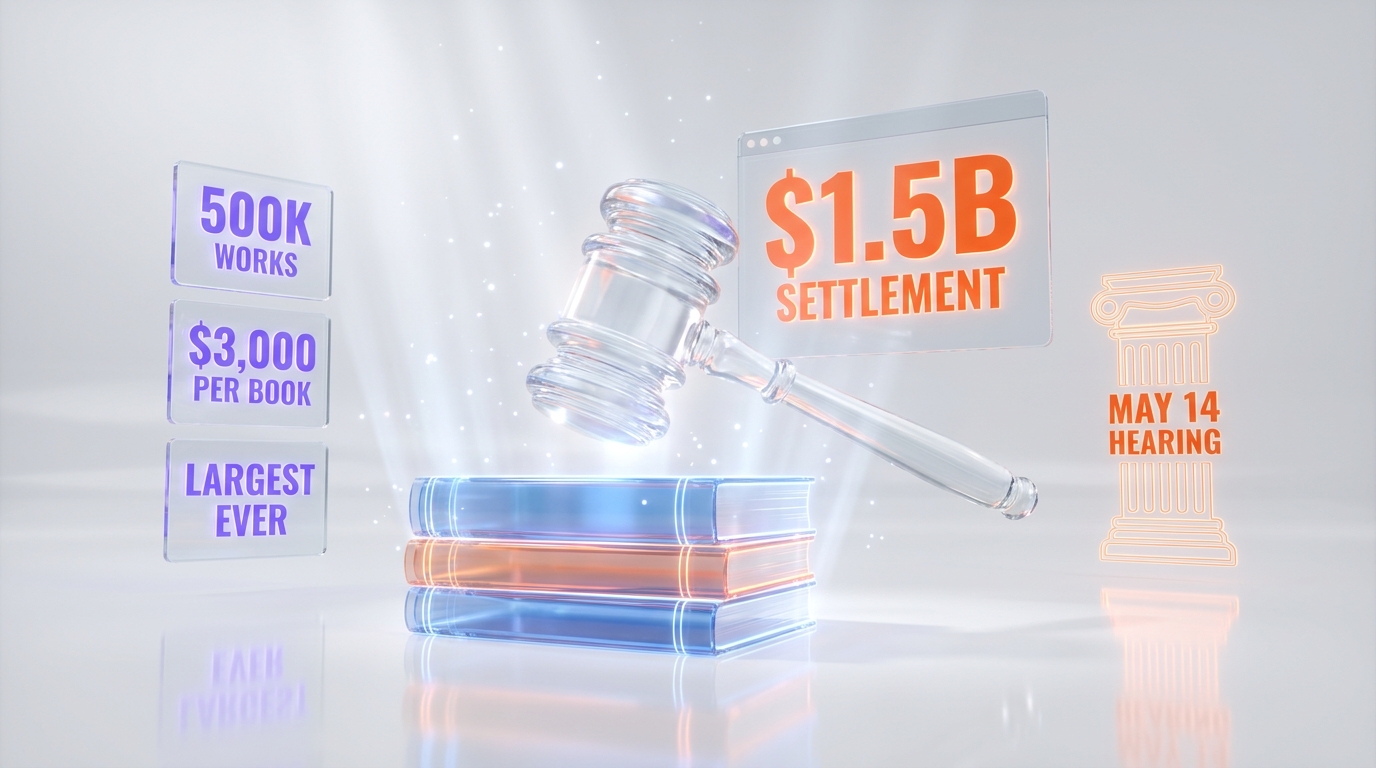
The largest copyright settlement in United States history reaches final approval tomorrow. On May 14, 2026 at 2 p.m. Pacific Time, Judge William Alsup of the Northern District of California is scheduled to rule on whether Bartz et al. v. Anthropic PBC — a $1.5 billion class action over pirated training data — clears its final hurdle. The math is concrete: $1.5 billion total, approximately $3,000 per work, roughly 500,000 books in the class. Susman Godfrey, lead counsel for the plaintiffs, calls it "the first of its kind in the AI era." We read it as the first dated reference point for how American courts price the legal risk of building frontier models on unlicensed text.
Three authors — Andrea Bartz, Charles Graeber, and Kirk Wallace Johnson — filed the original complaint in August 2024 under case number 3:24-cv-05417-WHA. The class they represented covers books downloaded from LibGen and PiLiMi (Pirate Library Mirror), two shadow libraries widely used in early AI training pipelines. Anthropic's settlement agreement, structured at roughly $3,000 per eligible title, surpasses every prior copyright recovery the publishing industry has on record. The opt-out window closed January 29, 2026. The claims deadline passed March 30, 2026. What happens tomorrow is the structural last step.
What is at stake at the May 14 hearing
Final approval hearings under Rule 23 of the Federal Rules of Civil Procedure are not rubber stamps, but they do follow a recognizable pattern. Judge Alsup — who presided over Oracle v. Google and is one of the most technically literate judges on the federal bench — has to make a single determination: is the settlement "fair, reasonable, and adequate" for the absent class members. Class counsel and Anthropic will present arguments. Class members who filed timely objections will be heard. The court will then either approve, defer, or reject the agreement.
Rejection is the rarest outcome at this stage. Class action settlements of this size, with multi-year negotiation history and counsel of Susman Godfrey's caliber, are usually approved on the recommended terms or approved with attorney-fee adjustments. The base case for tomorrow is final approval. The interesting question for the AI industry is not the outcome itself — it is the language Judge Alsup uses to describe what Anthropic was paying for.
Procedural details
- Case: Bartz et al. v. Anthropic PBC, No. 3:24-cv-05417-WHA (N.D. Cal.)
- Judge: William Alsup, Senior United States District Judge
- Lead counsel for plaintiffs: Susman Godfrey LLP (Justin Nelson, co-lead)
- Named plaintiffs: Andrea Bartz, Charles Graeber, Kirk Wallace Johnson
- Hearing time: May 14, 2026 — 2:00 p.m. Pacific Time
- Final approval threshold: Rule 23(e) — "fair, reasonable, and adequate"
The settlement math, broken down
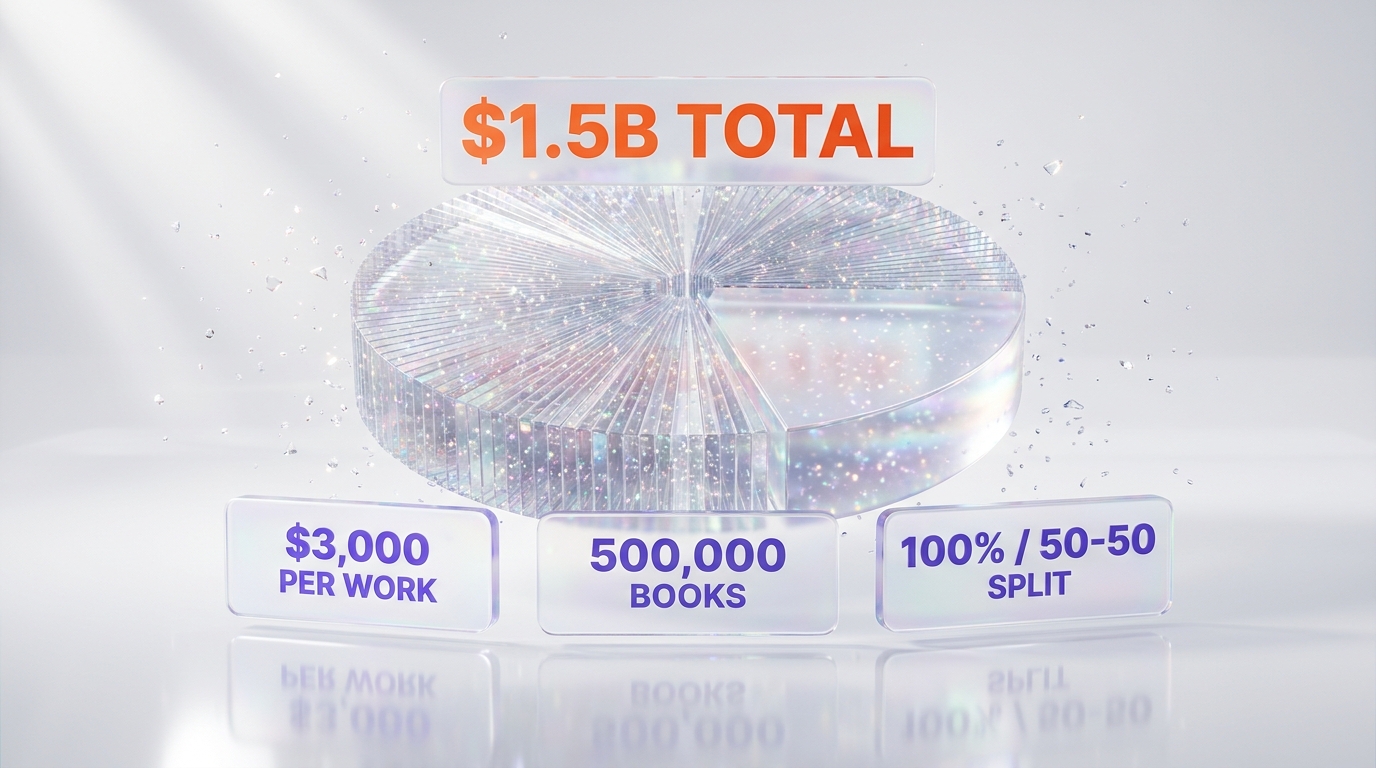
The headline number is $1.5 billion plus interest. Per the settlement website and the Susman Godfrey announcement, the structure breaks down as roughly $3,000 per eligible title across an anticipated class size of approximately 500,000 works. That per-work figure is subject to adjustment based on the final claims count; the total commitment is fixed.
Payment routing depends on contract structure. Self-published authors and sole rightsholders receive 100% of their per-title award. Trade and university press authors split awards 50/50 with publishers by default — that split tracks standard royalty allocation under most trade contracts and is a meaningful concession from the publisher side. Educational and academic texts are routed according to the specific contract terms governing the title, which means a long tail of unusual splits will be resolved case by case.
Who qualifies — and who already missed the window
Eligibility requires three things, per the Authors Guild summary and the settlement notice:
- An ISBN or ASIN identifier on the work.
- Registration with the U.S. Copyright Office within three months of publication, or within five years of publication and before August 10, 2022 (the documented LibGen / PiLiMi download date Anthropic's settlement is built around).
- The work appears on the settlement-class list of approximately 500,000 titles drawn from those shadow-library snapshots.
Two windows are already closed. The opt-out deadline was January 29, 2026; rightsholders who wanted to preserve individual claims had to file by then. The claims filing deadline was March 30, 2026; authors who did not register a claim by that date will not collect from this fund. What remains in play tomorrow is the court's approval — and the slower process of payment distribution once that approval lands.
What Anthropic is buying with $1.5 billion
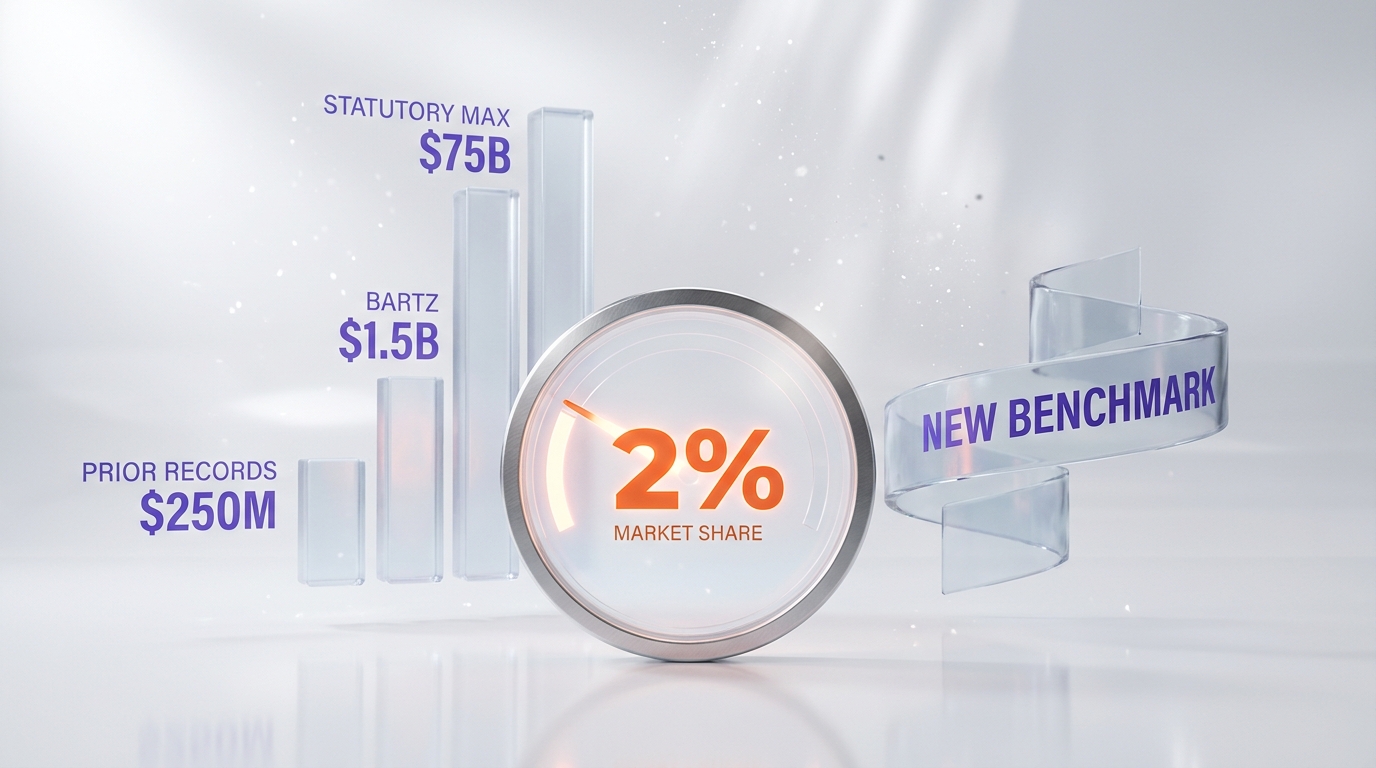
The agreement releases Anthropic from claims associated with the use of those approximately 500,000 LibGen / PiLiMi titles in model training. It is, in plain terms, a license fee paid retroactively under threat of statutory copyright damages. Under 17 U.S.C. § 504(c), willful infringement of registered works carries statutory damages up to $150,000 per work. Across 500,000 works, the maximum statutory exposure exceeds $75 billion. The $1.5 billion settlement is roughly 2% of that ceiling.
That arithmetic is the reason this settlement matters as a precedent rather than as a one-off. Plaintiffs' counsel could realistically have argued for a much higher recovery; Anthropic's lawyers could realistically have argued the works were fair use. Both sides chose a number that priced the legal risk at about 2% of statutory maximum. Every AI lab in the United States now has a defensible reference point for what unlicensed training data costs to settle, post-discovery, before trial.
Why this is the largest copyright recovery on record
The previous benchmarks in publishing-industry copyright recoveries — the Google Books settlement (initially announced at $125 million in 2008, ultimately restructured), Authors Guild v. HathiTrust, and a handful of music-industry class actions — sat comfortably under $250 million. The Anthropic settlement is approximately six times the next-largest recovery the industry has documented. Justin Nelson, Susman Godfrey's co-lead counsel, called it "the first of its kind in the AI era." Mary Rasenberger of the Authors Guild described it as "sending a strong message to the AI industry."
The settlement amount is anchored to two structural features that did not exist before frontier-model training. First, the scale of works ingested in a single training run is orders of magnitude beyond historical infringement patterns — 500,000 works in one snapshot is a class size that book publishing has never seen. Second, the provenance of the source material was unusually clean for plaintiffs' counsel: LibGen and PiLiMi are not contested grey-area corpora; they are shadow libraries with documented piracy origins. That combination — large class, clear provenance — is what gave the plaintiffs leverage to negotiate at $3,000 per work rather than the few-hundred-dollar settlements that typically resolve copyright class actions.
What the 2% ratio tells us about future AI copyright cases
The implied recovery ratio — settlement at roughly 2% of statutory maximum — is the single most useful number for forecasting future AI copyright outcomes. It suggests that when a plaintiff class can prove (a) unauthorized training-set inclusion, (b) registered works, and (c) clean provenance evidence, defendants pay somewhere around 1-3% of statutory maximum to close out the case before trial. That is a much wider negotiation band than zero, and it is much narrower than the 100% statutory ceiling lab CFOs have been modeling in worst-case scenarios.
For pending and future cases against OpenAI, Google, Meta, Microsoft, and Stability AI, the Bartz settlement gives every plaintiffs' lawyer a concrete number to anchor demand letters to. It also gives defendants' counsel a credible upper bound for early settlement discussions. That kind of anchoring effect tends to compress the negotiation timeline on subsequent cases significantly, because both sides arrive at the table with the same reference point.
Where this lands in Anthropic's bigger picture
Anthropic's 2026 looks structurally different from its 2024. The company reportedly closed a $900 billion valuation round earlier this month, and its 10 gigawatt compute commitment is now the largest contracted compute footprint in the industry. A $1.5 billion training-data settlement is roughly 0.17% of that headline valuation — financially manageable, optically meaningful. The signal it sends to the broader market is that frontier-model training is now a regulated cost center, not an unpriced externality.
That signal lands at the same time Anthropic is expanding into customer-facing surfaces. The recent Claude creative-work connectors for Photoshop, Blender, and Ableton push the company into territory where copyright provenance matters end-to-end — not just on the input side of training, but on the output side of generated work. The Bartz settlement closes the input-side liability for the corpus Anthropic actually used. It does not close the output-side question of whether generated material from those models is itself derivative.
Other AI copyright cases now in motion
The active docket against frontier-model providers is unusually crowded. The New York Times v. OpenAI and Microsoft case continues in the Southern District of New York, with depositions and discovery ongoing through 2026. Authors Guild v. OpenAI, filed in 2023, remains active. Getty Images v. Stability AI is awaiting trial in the United Kingdom. Several music-industry cases against Suno and Udio are working through pre-trial motions. The Bartz settlement is the first of these to reach a dollar figure attached to actual class certification at this scale. The other cases will now negotiate in a market where the comparable transaction is documented.
For authors: the windows already closed, and what tomorrow means anyway
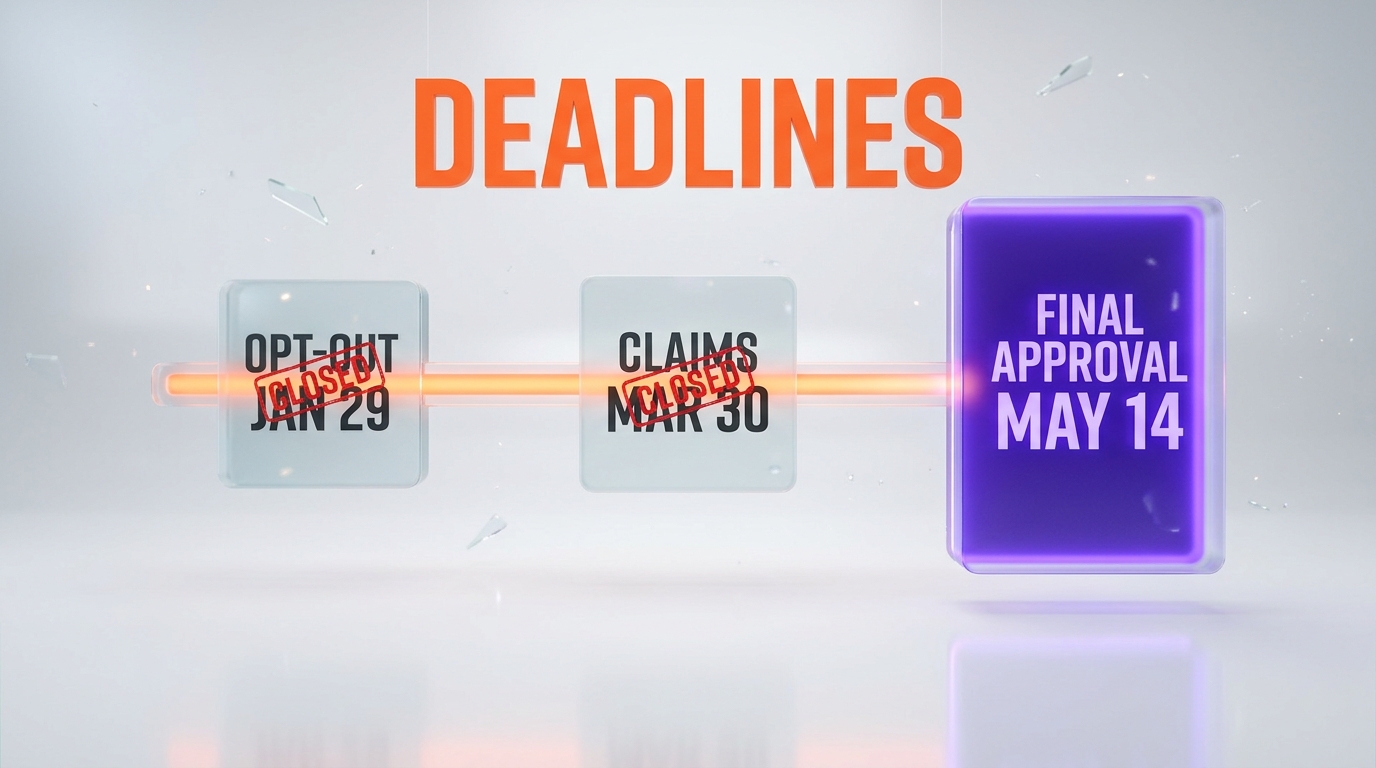
For authors who already filed claims, tomorrow's hearing is the procedural step that unlocks distribution. The settlement administrator cannot begin paying out until Judge Alsup signs the final approval order. Once that signature lands, the administrator works through eligibility verification, splits payments according to contract terms, and begins disbursement. The timeline from final approval to first checks is typically 90 to 180 days for a class this size, depending on objections, appeals, and the administrator's pace.
For authors who missed the March 30 claims deadline, the settlement no longer offers a recovery path. The opt-out window closed in January, which means non-claiming class members are bound by the release whether or not they collect. That is harsh, but it is how Rule 23 works: notice is published widely, deadlines are firm, and the class as a whole is bound. Authors who want individual claims against future AI training will need to address those claims to future cases, not this one.
What tomorrow clarifies for rightsholders generally
Even for rightsholders not in this class, the May 14 hearing produces three useful clarifications. First, the court's reasoning on adequacy will tell publishers and authors how to value training-data infringement going forward. Second, the attorney-fee award — typically 20% to 30% of the common fund — will set a market rate for plaintiffs' counsel in subsequent AI cases. Third, any objections raised at the hearing will surface specific weaknesses in the settlement structure that opposing counsel can use against Anthropic in unrelated matters. None of those are headlines, but all of them are inputs into the next round of cases.
What it means for the broader AI industry
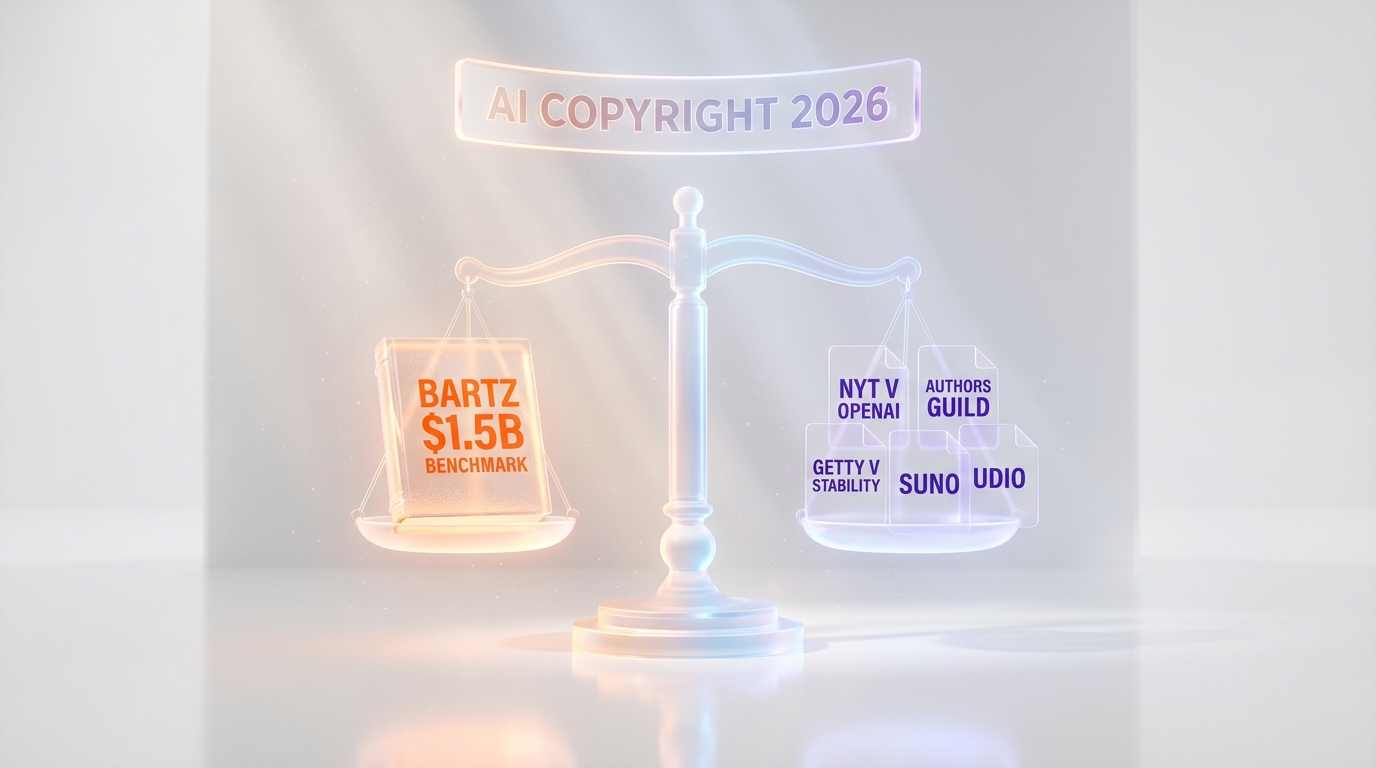
The five-year window for AI copyright was always going to produce a benchmark settlement. Bartz is that benchmark. The number every other AI lab now has to model is approximately $3,000 per registered, infringed work in their training set. Multiply by your training corpus, discount for unregistered works and works whose registration timing fails the settlement criteria, and you get a tractable exposure estimate. That math is now possible in a way it was not 90 days ago.
For labs that already have explicit licensing deals with publishers — OpenAI's News Corp partnership, Google's various licensing arrangements — the Bartz number validates the licensing strategy as financially rational. The retroactive cost of unlicensed training is now anchored at a level that makes upfront licensing look like the cheaper path, especially when administrative overhead and legal-defense costs are included.
The training-data licensing market just got a price floor
The flip side of the settlement is that publishers now have a credible threat to anchor licensing negotiations. A publisher walking into a discussion with a frontier lab can point to Bartz as the alternative outcome. The number on the table — $3,000 per work — sets a soft price floor for licensed access to the same corpus. Lab pricing teams will model this as "license at less than $3,000 per work or accept settlement exposure at $3,000 per work," and the calculation gets easier as the precedent ages.
Anthropic's other lines of business are not directly affected by the settlement, but they are affected by the precedent. The company's recent Mythos breach disclosures and the Mexico SADM water-utility incident reporting are operating in a different risk framework than the training-data question. What the Bartz settlement does is close one chapter — the training-data input chapter — cleanly enough that Anthropic's leadership can focus on the operational risk profile in front of them.
What could still go sideways at the hearing
The procedural base case is approval. The stress cases are: (a) Judge Alsup defers ruling because objections surface a structural issue with the class definition or the claims process; (b) the attorney-fee request, which typically lands in the 20-30% range of the common fund, draws judicial scrutiny that delays approval; (c) a small number of named-author objectors challenge the adequacy of the per-work payment and the court asks for supplemental briefing. None of these would kill the settlement. They would delay distribution by months.
The lower-probability outcome is rejection of the settlement on adequacy grounds. That would happen only if the court concluded the per-work payment systematically undervalues the class's claims relative to litigation outcomes. Given that Judge Alsup approved the preliminary settlement and that the class notice period has closed, a substantive rejection at final approval would be unusual. We do not expect it. But we note it because the procedural posture allows it.
Three signals to read in tomorrow's order
Whatever Judge Alsup writes, the parts of the final approval order worth reading carefully are these. First, the adequacy reasoning — specifically, how the court characterizes the $3,000-per-work figure relative to statutory damages. The framing tells future courts how to think about per-work valuation in AI cases. Second, the attorney-fee determination, including whether the court awards the requested percentage or trims it. The trim, if any, sets a precedent for plaintiffs' counsel economics in subsequent cases. Third, any language about the scope of the release — whether Anthropic is released only from claims tied to the LibGen / PiLiMi corpus, or more broadly.
These three signals matter because they are the inputs other plaintiffs' lawyers will use to draft demands in the cases against OpenAI, Meta, Google, and the others. The exact wording shapes the next 18 to 24 months of AI copyright litigation. Tomorrow at 2 p.m. Pacific, we will have the answers.
Frequently asked questions
What is Bartz v. Anthropic, and why is it the largest copyright settlement in US history?
Bartz et al. v. Anthropic PBC, No. 3:24-cv-05417-WHA, is a class action filed in August 2024 in the Northern District of California by authors Andrea Bartz, Charles Graeber, and Kirk Wallace Johnson. The class covers roughly 500,000 books downloaded from LibGen and PiLiMi shadow libraries and used in early Claude training. The $1.5 billion settlement is the largest copyright recovery on record because it combines a class size unprecedented in publishing-industry litigation with the clean provenance evidence of shadow-library origins. Susman Godfrey is lead counsel for the plaintiffs.
How much will each author receive?
Approximately $3,000 per eligible title, subject to adjustment based on the final number of claims processed by the settlement administrator. Self-published authors and sole rightsholders receive 100% of their per-title award. Trade and university press authors split 50/50 with their publisher by default, tracking standard royalty allocation under most trade contracts. Educational and academic texts are routed according to the specific contract terms governing the title.
When does the final approval hearing happen?
The final approval hearing is scheduled for May 14, 2026 at 2:00 p.m. Pacific Time before Senior United States District Judge William Alsup in the Northern District of California. Under Rule 23 of the Federal Rules of Civil Procedure, the court must determine whether the settlement is "fair, reasonable, and adequate" for absent class members before approving distribution.
Can I still file a claim?
No. The claims filing deadline was March 30, 2026, and the opt-out deadline was January 29, 2026. Both windows are closed. Class members who did not file a claim by March 30 will not collect from the settlement fund, and rightsholders who did not opt out by January 29 remain bound by the release whether or not they claim. The settlement website at anthropiccopyrightsettlement.com continues to provide information for class members on the verification and disbursement process.
Which books are covered by the settlement?
Approximately 500,000 titles drawn from snapshots of LibGen (Library Genesis) and PiLiMi (Pirate Library Mirror), two shadow libraries widely used in early AI training pipelines. To qualify, a title must have an ISBN or ASIN and must have been registered with the U.S. Copyright Office within three months of publication, or within five years of publication and before the August 10, 2022 download date Anthropic's settlement is built around. The settlement website maintains the searchable works list.
Does this settlement mean training on copyrighted books is now illegal?
No. The settlement closes the specific claims tied to Anthropic's use of LibGen and PiLiMi corpora. It does not establish a binding legal precedent on the underlying fair-use question, because settlements do not create case law the way contested rulings do. What it does establish is a market reference point: approximately $3,000 per registered, infringed work, at roughly 2% of the maximum statutory damages under 17 U.S.C. § 504(c). That ratio is now the anchoring number for every pending AI copyright case.
Who is Judge William Alsup, and why does he matter?
Senior United States District Judge William Alsup is one of the most technically literate judges on the federal bench. He presided over Oracle v. Google, the multi-year API copyright case that reached the Supreme Court, and he is known for engaging directly with technical detail in opinions. His approval of the Bartz settlement is significant because his reasoning — particularly on the adequacy of the per-work payment — will be cited by other federal judges considering AI copyright settlements over the next several years.
How does $1.5 billion compare to previous copyright settlements?
Previous benchmark recoveries in publishing-industry copyright cases — including the Google Books settlement (initially $125 million in 2008, ultimately restructured), Authors Guild v. HathiTrust, and several music-industry class actions — generally sat under $250 million. The Bartz settlement is approximately six times the next-largest recovery the publishing industry has documented. Justin Nelson of Susman Godfrey called it "the first of its kind in the AI era" in the firm's official announcement.
What does this mean for OpenAI, Google, Meta, and other AI labs?
Every AI lab in the United States now has a documented reference point — approximately $3,000 per registered, infringed work — for what unlicensed training data costs to settle post-discovery before trial. Plaintiffs' counsel in the pending New York Times v. OpenAI case, Authors Guild v. OpenAI, Getty Images v. Stability AI, and several music-industry cases against Suno and Udio will anchor demand letters to this number. Defendants' counsel will use it as a credible upper bound for early settlement discussions. The anchoring effect tends to compress negotiation timelines significantly on subsequent cases.
What is the attorney fee likely to be?
Attorney fees in common-fund class action settlements typically land in the 20% to 30% range of the total recovery. Final approval orders at this scale often address the fee request explicitly, and the court has discretion to adjust the percentage. Whatever Judge Alsup awards will set a market rate for plaintiffs' counsel in subsequent AI copyright cases, which is one reason the fee determination is one of the three signals worth reading carefully in tomorrow's order.
When will eligible authors actually receive payment?
The settlement administrator cannot begin disbursements until Judge Alsup signs the final approval order. After approval, the administrator works through eligibility verification, applies the contract-based split routing, and begins distribution. The typical timeline from final approval to first checks for a class this size is 90 to 180 days, longer if objections trigger appeals. Practically, eligible authors who filed timely claims should expect payments to begin in the third or fourth quarter of 2026.
Does this settlement change how Anthropic operates day to day?
Not in any structural way. Anthropic recently closed a reported $900 billion valuation round and committed to a 10 gigawatt compute footprint — a $1.5 billion training-data settlement is roughly 0.17% of the company's headline valuation. The operational impact is contained. The strategic impact is real: training-data sourcing for future model generations now operates inside a documented legal cost framework rather than as an unpriced externality.
Bottom line
Tomorrow at 2 p.m. Pacific, the AI industry gets its first dated price tag for unlicensed training data: approximately $3,000 per registered, infringed work, roughly 2% of the statutory damages ceiling, paid out at $1.5 billion across a class of about 500,000 books. Anthropic is the first frontier lab to write that check. It will not be the last. The Bartz settlement is the moment the legal cost of training-data choices stops being a hypothetical line in a risk register and starts being a benchmark every CFO, general counsel, and licensing team has to model against.
We will be reading Judge Alsup's order carefully when it lands. The adequacy language, the fee award, the scope of the release — those three signals shape the next 18 to 24 months of AI copyright litigation. The headline is the $1.5 billion. The structure of the order is what reshapes the industry.
Sources: Susman Godfrey LLP announcement (lead counsel for plaintiffs); Authors Guild Bartz v. Anthropic FAQ for authors. ThePlanetTools.ai is independent and not affiliated with Anthropic, Susman Godfrey, the Authors Guild, or any party to the settlement. This article is editorial analysis, not legal advice.