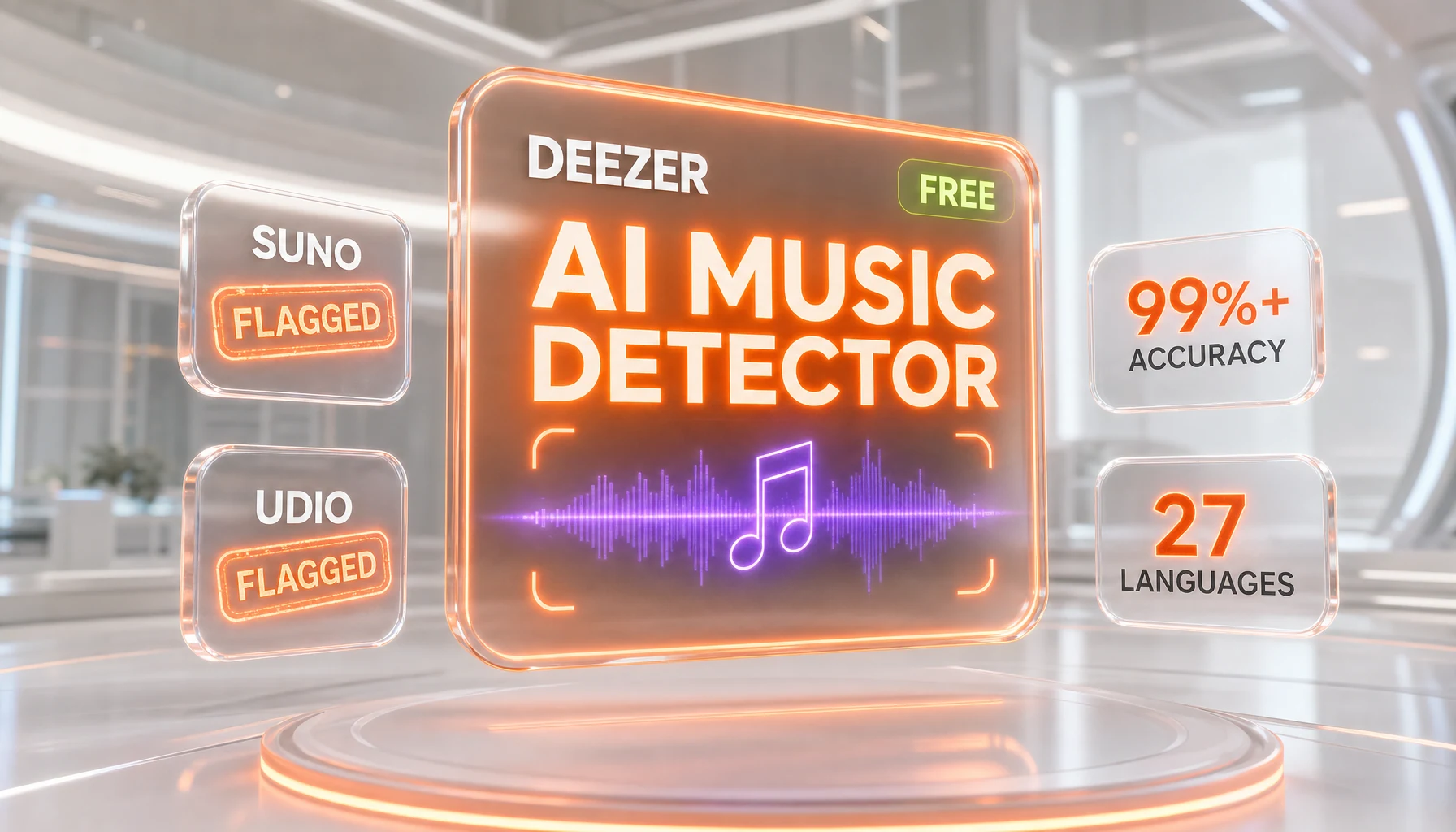
Deezer launched a free AI Music Detector on June 11, 2026 that scans playlists from Spotify, Apple Music and 20 streaming platforms in total to flag songs generated by AI tools like Suno and Udio. The web tool works across 27 languages and reuses the same in-house detection model Deezer has run on its own catalog for the past year and a half. You do not need a Deezer account or a paid plan to use it — you connect the streaming service you already use, let it scan your playlists, and it returns which tracks it believes are fully AI-generated.
What This Deezer Tool Actually Does
The Deezer AI Music Detector is a free browser-based tool that reads a playlist you already own on another service and tells you which songs were almost certainly produced by a generative-music model. It is the first time Deezer has pointed its detection technology outward, at catalogs it does not host. Until now, the company only tagged synthetic tracks inside its own app.
Three things make it worth a click for a normal listener:
- It is genuinely free — no Deezer subscription, no trial, no credit card.
- It covers the platforms you actually use — Spotify, Apple Music, YouTube Music, YouTube, Amazon Music, SoundCloud, iTunes, Pandora, Last.fm and Boomplay are among the 20 supported services.
- It names the culprits — the model is tuned to recognize output from Suno and Udio, the two generators behind most of today's AI music flood.
Deezer claims the detector identifies Suno and Udio tracks with over 99% accuracy, and that the model holds up across 27 languages rather than just English-language pop. That multilingual range matters, because a lot of AI "slop" is uploaded in non-English markets where catalog policing is thinner.
How To Use It (Step By Step)
The flow is deliberately simple — Deezer wants casual listeners, not just industry people, to run it:
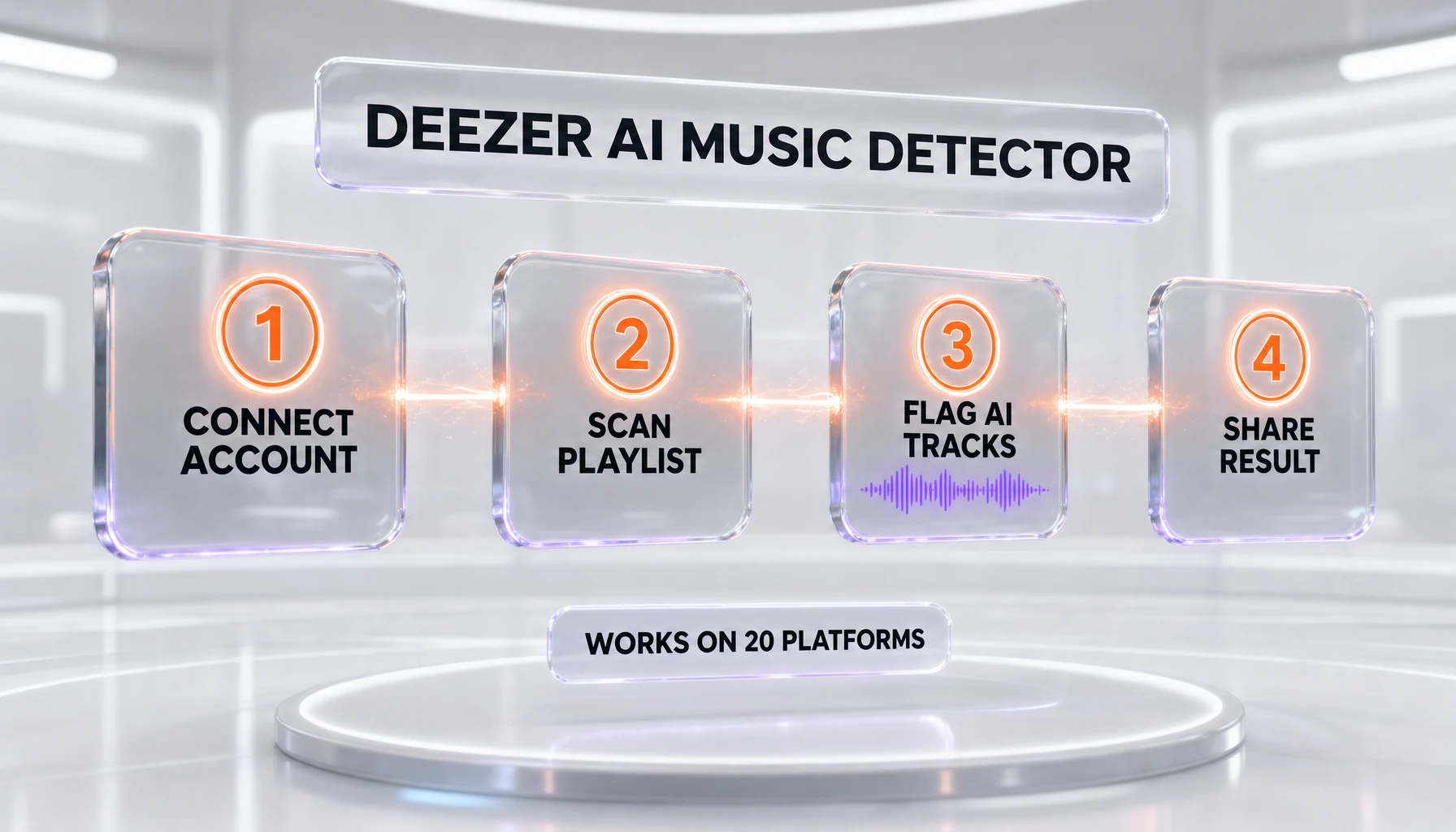
- Step 1 — Go to deezer.com/explore/ai-music-detector.
- Step 2 — Pick the streaming service your playlist lives on (Spotify, Apple Music, and so on).
- Step 3 — Connect that account and grant read access to your playlists.
- Step 4 — Let the tool scan, then read the results — flagged tracks are marked as AI-generated, and you can share the verdict.
One honest caveat: the tool needs permission to read your playlists from the service you connect, so it is an account-authorization flow, not a "paste a public link" flow. If you are privacy-cautious about granting playlist access, that is the trade-off to weigh.
Why This Matters: The AI Music Flood Is Real
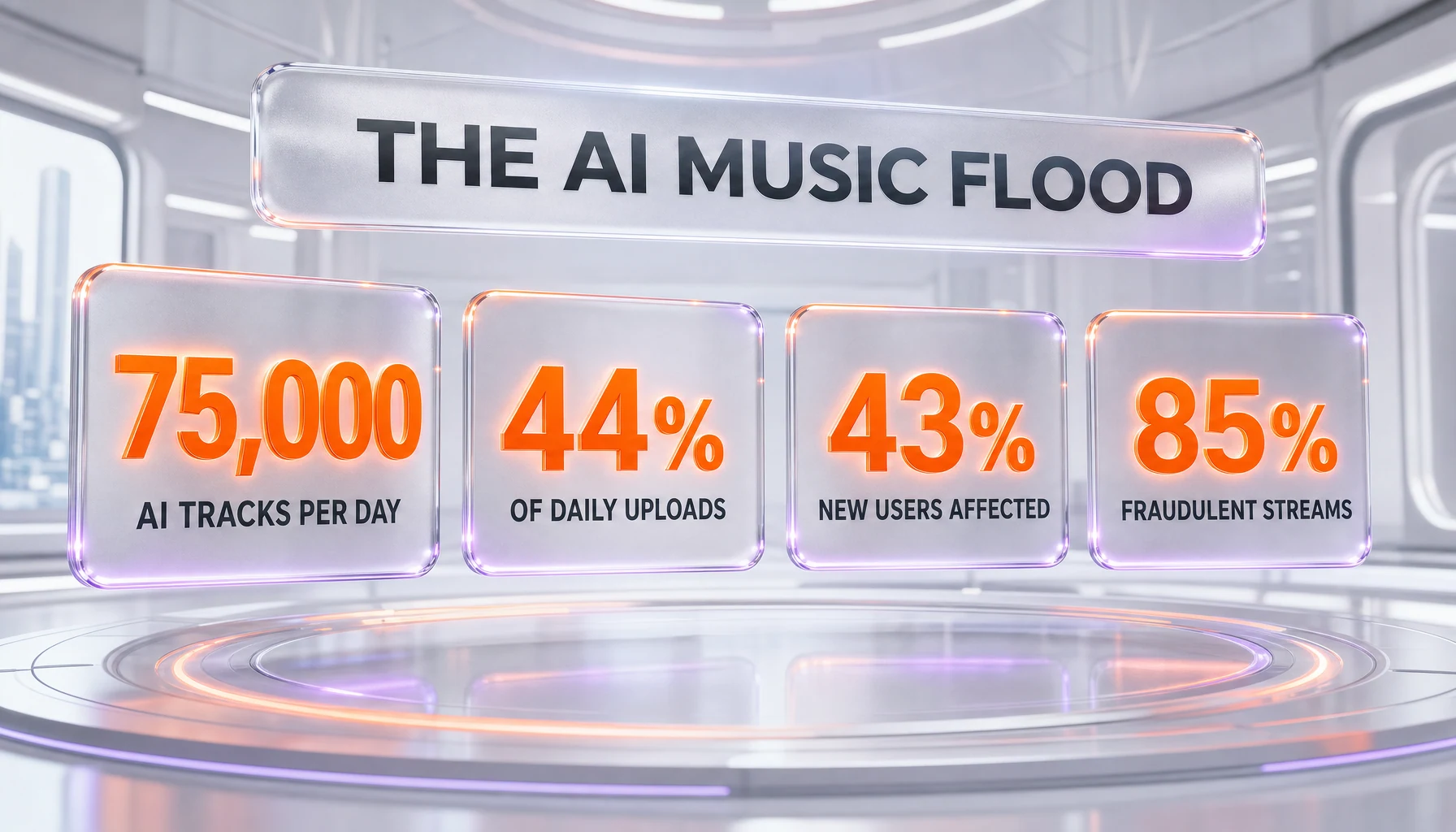
This is not a gimmick launch. The numbers Deezer published alongside the tool show why it built it. According to the company, it is now receiving nearly 75,000 fully AI-generated tracks every single day — and that volume accounts for more than 44% of its total daily music delivery. In other words, on a given day, almost half of everything newly uploaded to the platform is synthetic.
The detection problem bleeds across services, not just inside Deezer's own walls. The company says 43% of people who join Deezer from another streaming platform already have AI tracks sitting in their imported playlists — usually without knowing it. That is the exact gap this tool is meant to close: most listeners simply cannot tell, by ear, that a track was machine-made.
There is also a money angle. Deezer reported that up to 85% of the streams generated by fully AI-generated tracks were fraudulent in 2025 — bot-driven listens designed to siphon royalties away from human artists. AI music is not just an aesthetic complaint about "AI slop"; it is increasingly tangled up with streaming fraud.
The Lawsuit Context You Should Know
The detector lands in the middle of the messiest period the AI-music industry has seen. Suno raised $400 million at a $5.4 billion valuation while fighting copyright litigation from the major labels, and Udio acknowledged using YouTube training data in Sony Music v. Udio as it leans on a fair-use defense. Meanwhile, Suno is fighting to keep its Warner settlement terms hidden from Universal and Sony ahead of a summer fair-use ruling.
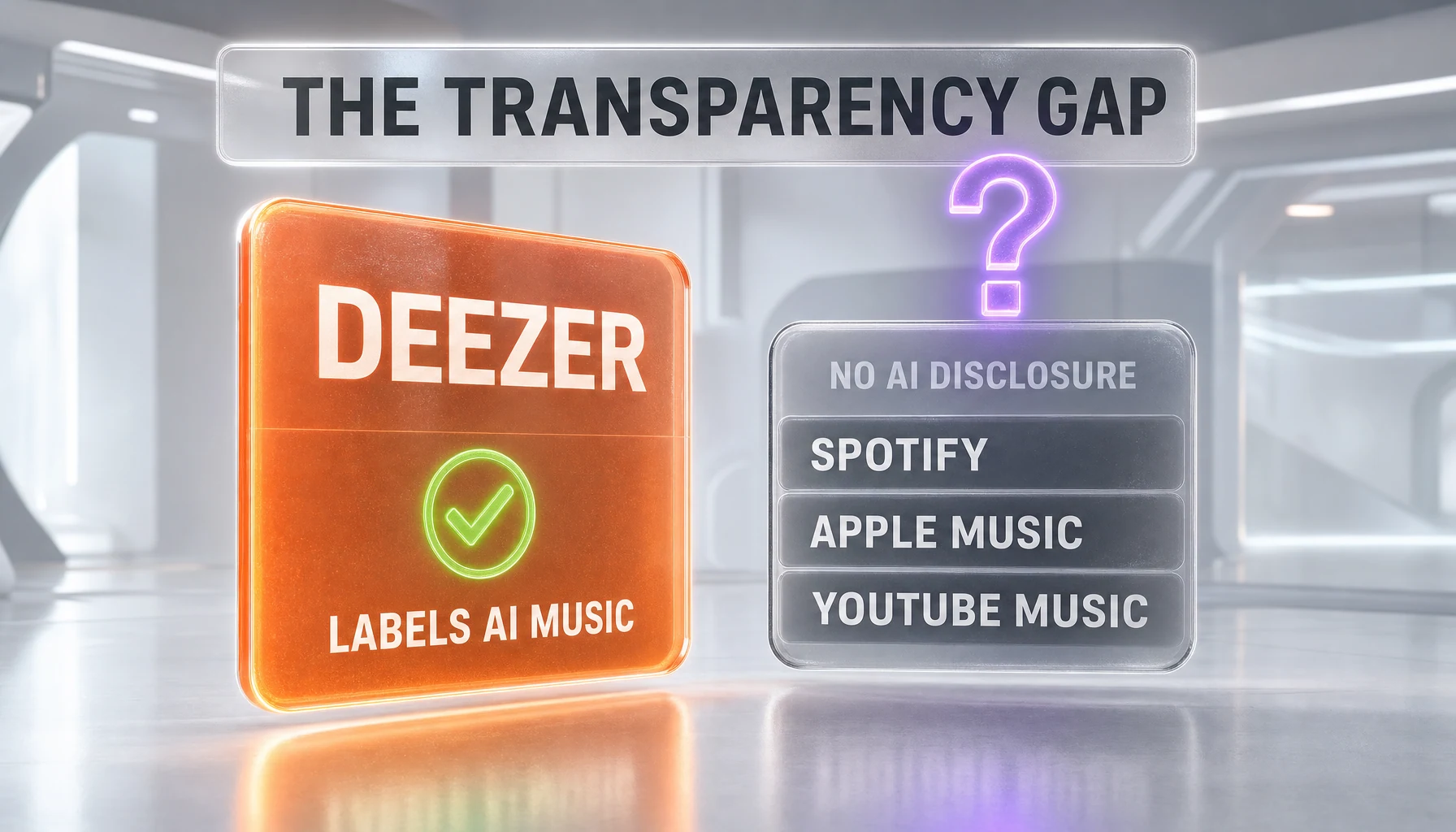
Against that backdrop, Deezer is positioning itself as the "transparency" platform — the one that labels what is synthetic instead of quietly mixing it into recommendations. It is a sharp contrast with rivals who have stayed publicly quiet about how much AI music sits in their catalogs. Even newer entrants are crowding in: ElevenLabs launched ElevenMusic to take on Suno and Udio directly, and Suno itself keeps shipping features like voice cloning in Suno v5.5. The supply of AI music is accelerating, which is precisely why a free detector is suddenly useful to ordinary listeners.
What Deezer Is Saying
Deezer CEO Alexis Lanternier framed the launch as an extension of work the company has been doing internally for over a year. "By detecting and tagging AI generated music over the past year and a half, Deezer has been at the forefront of transparency in music streaming," he said. He also pointed to the cross-platform gap as the reason for going public: "No other company has followed our lead yet, so we decided to make it possible for everyone to check if their playlists include synthetic music, no matter which streaming platform they use."
That is a pointed jab. Spotify, Apple Music and YouTube Music all carry AI-generated music, but none currently offer listeners a simple way to see how much of it is in their own libraries. Deezer is betting that "we'll tell you the truth about your playlist" is a brand advantage worth giving away for free.
Our Take
We see this as a smart, low-cost trust play more than a technical breakthrough. The detection model is not new — Deezer has run it on its own catalog since roughly late 2024. What changed is the decision to aim it at competitors' playlists and hand it to the public at no charge. That is a marketing move dressed as a consumer utility, and it works on both levels.
For listeners, the practical value is real but narrow: if you have ever wondered whether that lo-fi study playlist or background "artist" you streamed is actually a person, this answers it in a couple of clicks. The "over 99% accuracy" figure is Deezer's own claim on Suno and Udio specifically, so treat it as a strong signal rather than an independently audited benchmark — and expect it to be weaker against generators it was not trained on. Detection is also a moving target: as models get better at mimicking human production, today's tells (over-clean masters, telltale artifacts) will erode.
The bigger story is what the 44%-of-daily-uploads number says about the direction of streaming. When nearly half of new music arriving on a major platform is synthetic — and a large share of its streams are fraudulent — disclosure tools stop being optional. Deezer just made itself the reference point for that conversation.
What's Next
The obvious question is whether Spotify, Apple Music or YouTube Music respond with their own labeling — or keep letting a competitor define the transparency standard. We would also watch for Suno and Udio to push back on the accuracy claims, and for the model to be tested against AI tracks from generators other than the two it is tuned on. For now, if you want to know what is hiding in your playlists, Deezer's tool is free, fast, and the only one of its kind aimed at everyone else's catalog.
Frequently Asked Questions
Is Deezer's AI music detector free?
Yes. The Deezer AI Music Detector is completely free. You do not need a Deezer subscription, a free trial, or a credit card. You connect the streaming service you already use, grant read access to your playlists, and the tool scans them at no cost.
Which streaming platforms does the Deezer detector support?
It works with 20 streaming services in total, including Spotify, Apple Music, YouTube Music, YouTube, Amazon Music, SoundCloud, iTunes, Pandora, Last.fm and Boomplay. You select your platform, connect that account, and it scans the playlists on it.
How accurate is Deezer's AI music detector?
Deezer claims over 99% accuracy at identifying tracks made by Suno and Udio, and says the model holds up across 27 languages. That is Deezer's own figure for those two generators specifically, not an independently audited benchmark, so accuracy may be lower against AI models it was not trained on.
What AI music generators can it detect?
The tool is tuned to recognize output from Suno and Udio, the two generative-music platforms behind most of the AI music currently flooding streaming services. Tracks from other, less common generators may be detected less reliably.
How do I use the Deezer AI music detector on my Spotify playlists?
Go to deezer.com/explore/ai-music-detector, pick Spotify as your service, connect your Spotify account and grant read access to your playlists, then let the tool scan. It returns which tracks it flags as AI-generated, and you can share the results.
Why did Deezer build a tool for competitors' playlists?
Deezer says it receives nearly 75,000 fully AI-generated tracks per day — more than 44% of its total daily uploads — and that 43% of users joining from other platforms already have AI music in their imported playlists. CEO Alexis Lanternier said no other company had followed Deezer's lead on tagging AI music, so it made the check available to everyone regardless of platform.
Does AI music on streaming services involve fraud?
Often, yes. Deezer reported that up to 85% of the streams generated by fully AI-generated tracks were fraudulent in 2025 — typically bot-driven listens designed to divert royalties away from human artists. That is part of why detecting and labeling synthetic tracks has become a priority.