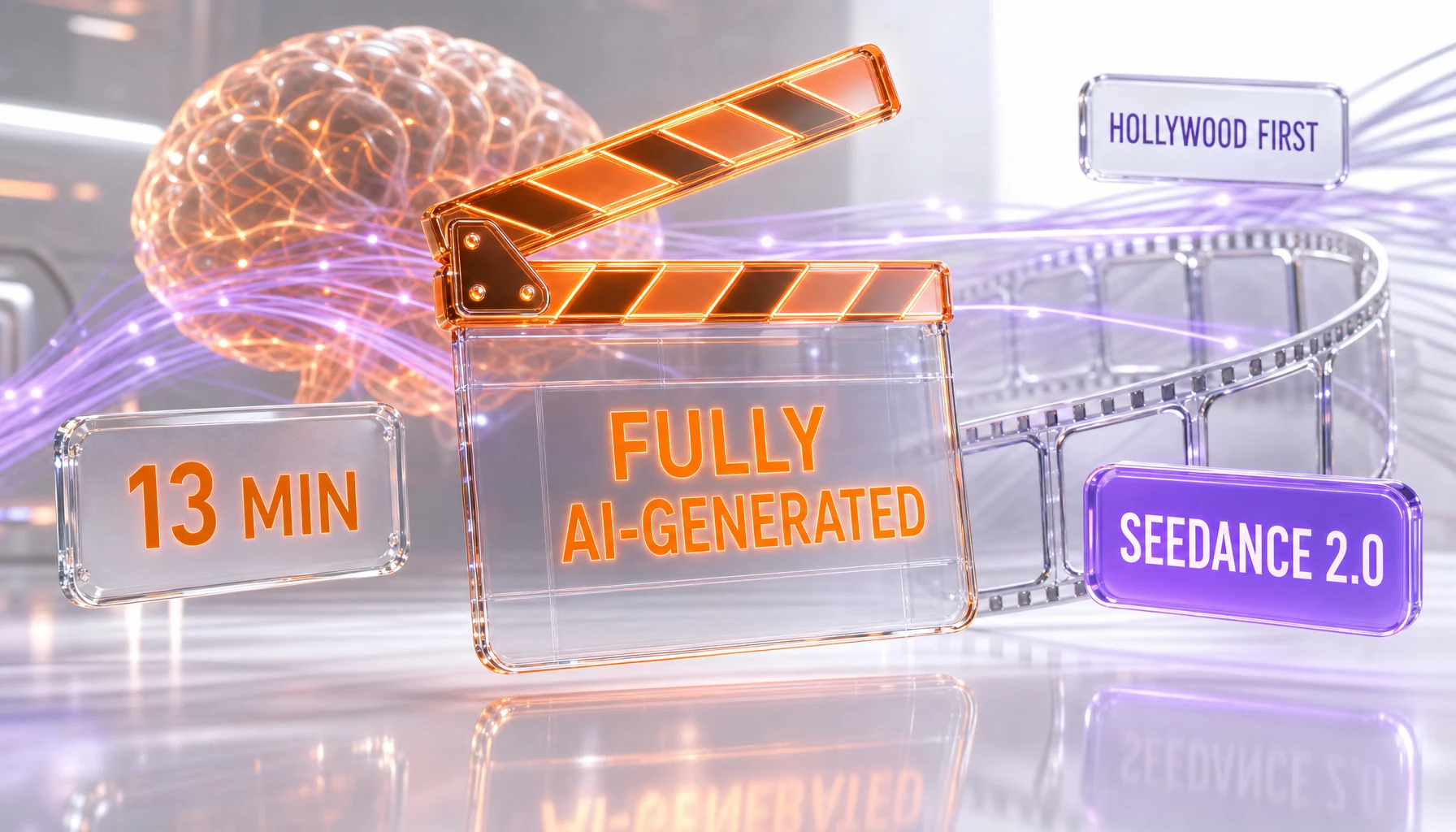
Quick Take — On July 20, 2026, District 9 director Neill Blomkamp released Nightborne, a roughly 13-minute science-fiction horror short generated end to end with ByteDance's Seedance 2.0 AI video model and posted to YouTube. It is widely reported as the first fully AI-generated film from an A-list Hollywood director. The imagery is entirely AI, but 32 real people licensed their faces and voices and human artists made the concept art. Blomkamp called it "a 13-minute test start," said he now wants to make a full AI feature, and founded Barley Studios to do it. Reaction split immediately: Kotaku called the short "creatively bankrupt," while others read it as generative video's legitimation moment.
For three years the story of AI video has been told by tech demos, viral fakes, and anonymous creators. It had not yet been told by a director with an Oscar nomination and a studio filmography. That changed with Nightborne. Blomkamp did not slip a few AI shots into a conventional edit; he built the entire thing with a generative model and put his own name on the result, then announced that a full feature is next.
That is why a 13-minute short with mixed reviews is a bigger deal than its runtime suggests. It is less a movie than a marker — the moment a mainstream filmmaker treated a text-to-video model as a primary tool rather than a novelty. Below, we lay out exactly what was released, separate the AI parts from the human parts, and give both readings of the moment: the technical breakthrough and the artistic rejection, each attributed to its source.
Key Takeaways
- A first from an A-list director. Neill Blomkamp released Nightborne, a roughly 13-minute sci-fi horror short generated end to end with ByteDance's Seedance 2.0, on YouTube on July 20, 2026 — widely reported as the first fully AI-generated film from a major Hollywood filmmaker.
- Not zero humans. The frames are AI, but 32 real people licensed their faces and voices and human concept artists designed the film, a consent-forward setup Blomkamp is using to answer the industry's likeness objections.
- A feature is the real goal. Blomkamp called Nightborne "the first full test AI film I have made" and said he now wants to "tackle a full feature in this format," founding Barley Studios as his AI successor to Oats Studios.
- The reception split hard. Kotaku called it "creatively bankrupt" and "boring" and Gizmodo said it "sucks," while supporters frame it as a legitimation moment for generative video.
- It lands inside Hollywood's AI war. The release comes months after major studios and the Motion Picture Association hit ByteDance's Seedance with cease-and-desist letters, and as platforms move to auto-label AI video.
What Blomkamp Actually Released
Nightborne is a roughly 13-minute documentary-style science-fiction horror short that Blomkamp posted to YouTube on July 20, 2026. It follows a US Army pilot officially declared dead after being shot down, tied to a secret military program that returns fallen soldiers to combat. Every frame was generated with Seedance 2.0, with Blomkamp directing through text prompts.
In his announcement post, Blomkamp was direct about the method and the intent: "NIGHTBORNE is the first full test AI film I have made. It was made using Seedance 2.0." He added that he has "been experimenting with AI for a couple of years" and that it is "now at the point where I want to tackle a full feature in this format," calling the short "a 13-minute test start." The framing matters: he is not presenting Nightborne as a polished release but as a public rehearsal for something larger.
Coverage from The Decoder and World of Reel describes a grim, grainy military-horror aesthetic delivered in a faux-documentary register. The plot, per GeekTyrant, centers on that resurrected-soldier premise — familiar Blomkamp territory of bodies, weapons, and institutions, now rendered by a model instead of a camera and a VFX house.
What "Fully AI" Actually Means Here
Nightborne is fully AI-generated at the level of pixels, not at the level of inputs. Blomkamp says every frame came out of Seedance 2.0. But the film also used the licensed faces and voices of 32 real people and concept art made by human artists. The honest description is an AI-rendered film built on human likenesses, human voices, and human design.
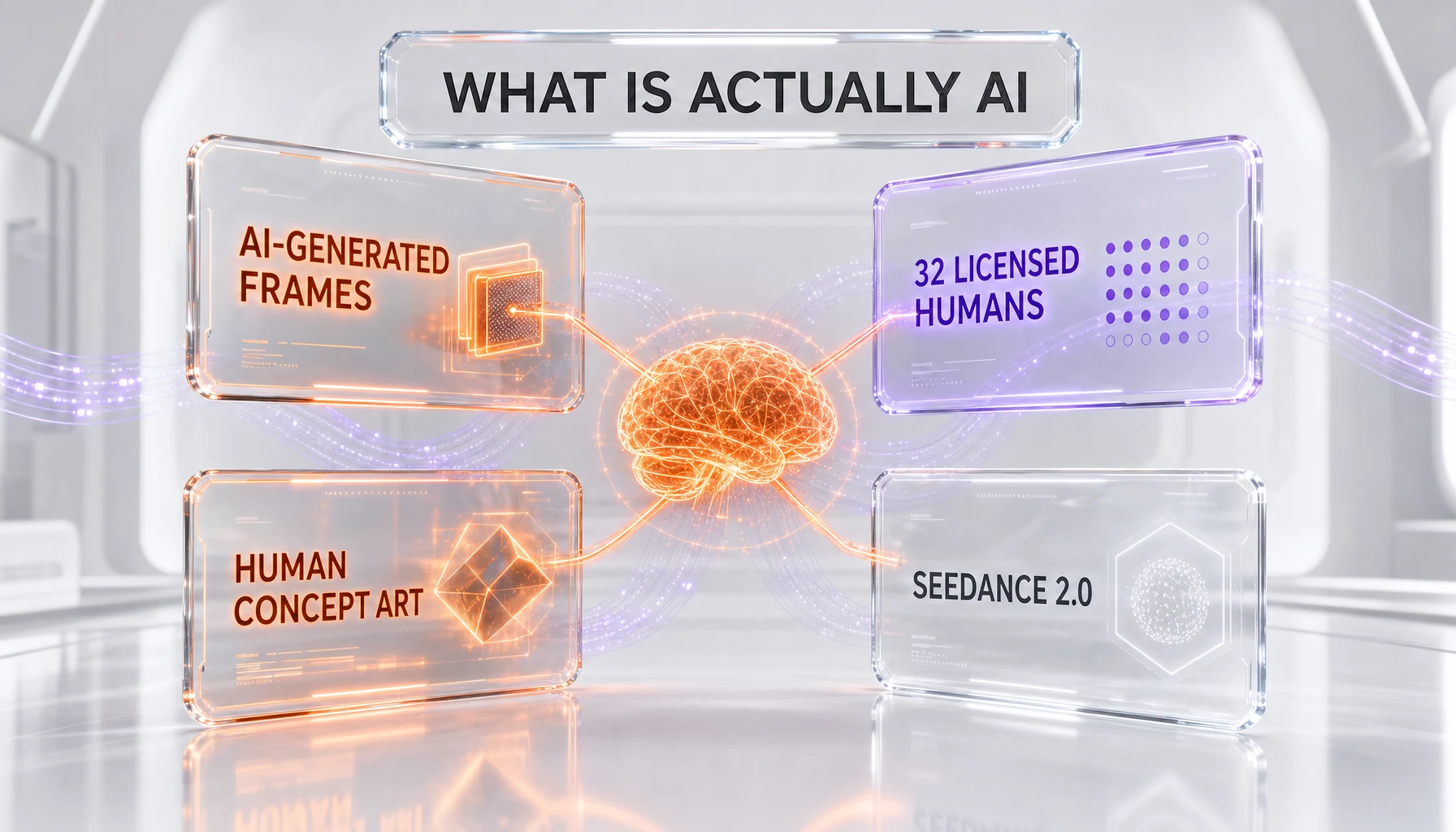
This distinction is the whole ballgame. The single loudest objection to AI video — voiced by SAG-AFTRA and by the studios in their February cease-and-desist letters — is that these tools ingest and reproduce performers without consent. Blomkamp appears to have pre-empted that specific complaint by licensing the 32 people whose faces and voices appear, and by hiring concept artists rather than prompting a blank model into a look. Both The Playlist and JoBlo stress that the human contributions were consensual and paid.
It does not resolve the deeper dispute. Seedance 2.0 itself was trained on data whose provenance is contested, which is exactly why studios accused ByteDance of copyright infringement earlier this year. Licensing the on-screen faces does nothing about the model's training set. So Nightborne answers the consent question at the surface while leaving the training-data question — the one working through the courts — wide open. It is a meaningful gesture and an incomplete one at the same time.
The Case That This Is a Legitimation Moment
The bull case is simple: a recognized director with real credits chose to make an entire film with a generative model, which moves AI video from tech demo to filmmaking tool. Supporters also note the consent-forward model of 32 licensed performers plus human concept art as a template other filmmakers could copy.
Blomkamp is an unusually apt figure for this. As World of Reel notes, several of his most ambitious projects — an Alien sequel, a District 9 follow-up, a Halo film — were shelved by studios over the years. A tool that lets a single director realize dense science-fiction worlds for a fraction of a conventional budget is, for someone with a drawer full of unmade films, less a threat than an escape hatch. That is the emotional logic behind his pivot, and it is why the "he sold out" reading undersells what is happening.
There is also a structural argument. Generative video has been improving on a steep curve; our own coverage of Kling's 2.8 billion dollar raise and Runway's world-models bet shows how much capital is chasing this space. When the tools get good enough that a director stakes his reputation on them, that is a signal the technology has crossed a threshold no benchmark can capture. Nightborne is that signal, whatever you think of the short itself.
The Case That It Is a Hollow Imitation
The bear case is just as loud: critics say the short looks and feels like AI, with jarring camerawork, visual inconsistencies, and stilted dialogue. Kotaku called it "creatively bankrupt" and "boring," Gizmodo's headline said it "sucks," and many fans see it as Blomkamp abandoning the grounded craft that defined District 9.
The reviews were not gentle. Kotaku, under the headline "I Sat Through District 9's Director's Awful AI-Generated Film," wrote that it "is a waste of your time, both because it is creatively bankrupt due to being generated by robots, and also because it is boring," adding that its plot "feels AI-generated." Gizmodo did not bother to hedge in its headline. GLITCHED characterized the online response as "swift backlash."
Strip away the tone and a consistent, substantive critique remains: current text-to-video still struggles with continuity. Faces and props drift between shots, physics wobbles, and camera moves that a human operator would never make betray the generator underneath. For a director whose signature was tactile realism — handheld cameras, weathered props, documentary grit — leaning on a tool that erodes exactly that quality strikes many fans as self-defeating. The complaint is not only philosophical; it is about the image on the screen.
Barley Studios and the Feature-Film Bet
Blomkamp founded Barley Studios as his new AI studio, positioning it as the generative successor to Oats Studios, his 2017 experimental shop behind live-action shorts like Rakka and Firebase. He says he now wants to make a full feature in this format, though no title, budget, or release date has been announced.
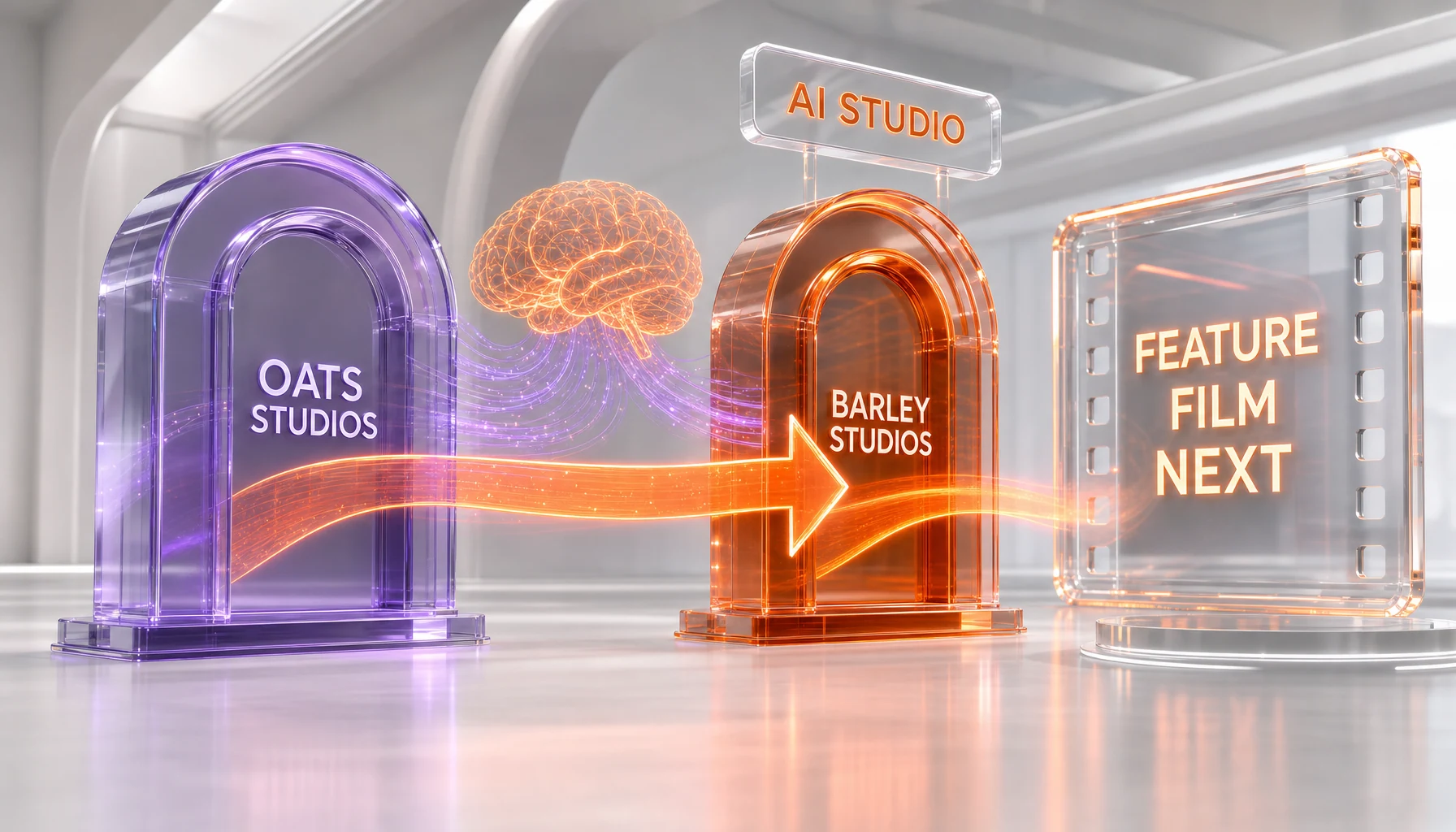
The naming is a tell. "Barley Studios will be my new AI studio for creating my own films, the way Oats Studios was for traditional film and VFX," Blomkamp wrote. Oats was his sandbox — a place to make short, strange, self-funded science fiction outside the studio system. Framing Barley as its AI counterpart signals that he sees generative video the way he once saw a small VFX crew and a RED camera: as a means to keep making films on his own terms. Nightborne, in that light, is Barley's Rakka — the proof-of-concept short that announces the studio's method.
The open question is whether a 13-minute test scales to 90 minutes. A feature demands sustained character, continuity across hundreds of shots, and an audience willing to sit with the aesthetic for an hour and a half rather than a coffee break. None of that is guaranteed by a short, and the critical reaction suggests the tolerance threshold is real. Until the feature is greenlit, budgeted, and finished, Barley is a statement of intent, not a track record.
The Tool Behind It: Seedance 2.0, and 2.5
Nightborne was made with Seedance 2.0, ByteDance's text-to-video and image-to-video model and one of the most capable generative video systems available in 2026. ByteDance has since begun rolling out Seedance 2.5, which generates longer continuous clips, but Blomkamp used 2.0.
Seedance is central to this story for reasons beyond quality. It is the same model that five major studios and the Motion Picture Association targeted with cease-and-desist letters in February 2026, alleging it reproduces copyrighted characters. It is also, according to reporting we covered, the tool Hollywood fights in public and quietly uses in private. Blomkamp choosing Seedance specifically — over Google's Veo or Runway's models — puts him on the contested side of the industry's loudest fight. You can read our full breakdown of the model on our Seedance 2.0 tool page.
The version detail is worth flagging. ByteDance unveiled Seedance 2.5 in late June, extending clip length and reference capacity, with wider API access rolling out through July. Nightborne predates most productions on 2.5, which means Blomkamp built it on the older model — a hint that even the previous generation is now good enough to carry a name-brand director's short.
The Bigger Picture: Hollywood's AI Reckoning
Nightborne arrives in the middle of an unresolved standoff. Studios and unions are fighting AI video in court and in contracts, the first big AI-Hollywood deals have stumbled, and platforms are moving to label synthetic video. A famous director shipping a fully AI film pours fuel on all of it.
The institutional picture is messy. Hollywood's first marquee AI partnership, the Lionsgate-Runway deal, stalled, cooling the idea that studios and AI labs would simply merge workflows. Meanwhile OpenAI's consumer video push collapsed, with the company shutting down Sora amid executive departures. The field is not settling into a tidy consensus; it is thrashing, and Blomkamp's release is one more variable in an already volatile equation.
Distribution adds another wrinkle. As AI video floods YouTube, the platform has said it will auto-label photorealistic AI videos even when creators stay silent. Nightborne, posted to YouTube and openly billed as AI, sidesteps the deception problem entirely — it is labeled by its own author. That transparency is a point in its favor and a preview of the disclosure norms the whole industry is being pushed toward.
Our Take
We think both readings are correct at once, and pretending otherwise is where most of the hot takes go wrong. As a piece of filmmaking, Nightborne is, by broad critical account, rough — the continuity artifacts are real and the reviews reflect them. As an event, it is genuinely significant: the first time a director of Blomkamp's stature has treated generative video as his primary medium and attached his reputation to the output. A thing can be a weak film and a strong signal simultaneously.
What we respect is the honesty of the setup. Licensing 32 performers, paying concept artists, labeling the work as AI, and calling it a "test" rather than a masterpiece is a more defensible posture than the anonymous scraped-likeness fakes that have poisoned the discourse. It does not clean up the training-data problem, but it is not pretending to. That candor is why we treat this as a serious data point rather than a stunt.
What would change our minds. If Blomkamp's promised feature never materializes, or ships and is unwatchable, Nightborne becomes a footnote — a famous name lending brief credibility to a tool that was not ready. If the feature gets made and holds an audience for 90 minutes, this short will be remembered as the moment the door opened. We are not predicting which; we are marking the test, and we will judge it by the feature it was built to justify.
What to Watch Next
Three things will tell us whether Nightborne was a turning point or a blip. First, the feature: whether Barley Studios announces a real title, budget, and timeline, or the ambition quietly evaporates. Second, the imitators: whether other established directors follow Blomkamp into fully generative production now that one of them has broken the seal. Third, the institutions: whether SAG-AFTRA, the studios, and the platforms respond to a consent-forward AI film differently than they responded to scraped fakes.
For now, the safest summary is the least dramatic one. A well-known director made a short film with an AI model, most critics did not like it, and he says a feature is coming. Everything that makes that sentence historic — or forgettable — is still ahead of us.
Frequently Asked Questions
What is Nightborne?
Nightborne is a roughly 13-minute science-fiction horror short film directed by Neill Blomkamp and released on YouTube on July 20, 2026. Every frame was generated with ByteDance's Seedance 2.0 AI video model, with Blomkamp directing frame by frame through text prompts. Told in a documentary style, it follows a US Army pilot officially declared dead after being shot down and a secret military program that returns fallen soldiers to combat.
Is Nightborne really "100 percent AI-generated"?
The imagery is. Blomkamp has said every frame was produced with Seedance 2.0 and that he directed the film through prompts. But it is not free of human input: the faces and voices of 32 real people were used under consent agreements, and human concept artists created the designs. So the pixels are AI-generated while the likenesses, voices, and visual concepts trace back to people.
What AI model did Blomkamp use to make Nightborne?
Seedance 2.0, ByteDance's text-to-video and image-to-video model. Blomkamp named it directly, saying "It was made using Seedance 2.0." ByteDance has since begun rolling out a newer version, Seedance 2.5, which generates longer continuous clips, but Nightborne was made with 2.0.
How long is Nightborne and where can I watch it?
It runs about 13 minutes and was posted to Blomkamp's YouTube channel on July 20, 2026. Blomkamp described it as "a 13-minute test start," framing the short as a proof of concept rather than a finished commercial release.
What is Barley Studios?
Barley Studios is the new AI-focused studio Blomkamp founded to make his own films. In his own words, "Barley Studios will be my new AI studio for creating my own films, the way Oats Studios was for traditional film and VFX." Oats Studios was his 2017 experimental studio behind live-action shorts such as Rakka and Firebase.
Does Blomkamp plan to make a full AI feature film?
Yes. He said Nightborne is "the first full test AI film I have made" and that generative video is "now at the point where I want to tackle a full feature in this format." He has not announced a title, budget, release date, or distributor for that feature, so it remains a stated intention rather than a greenlit production.
Why are critics and fans reacting negatively to Nightborne?
Reviewers and viewers have criticized the short's jarring camerawork, visual inconsistencies, and stilted dialogue, along with the "uncanny valley" feel of AI video. Kotaku, in a piece headlined "I Sat Through District 9's Director's Awful AI-Generated Film," called it "creatively bankrupt" and "boring." Gizmodo's headline flatly said the clip "sucks." Many fans see the move as abandoning the practical, grounded craft that made District 9 distinctive.
Why do some people see Nightborne as a milestone?
Because it is widely reported as the first time an A-list Hollywood director has released a film generated end to end with AI video, rather than a technologist or an anonymous creator. Supporters also point to the consent-forward approach, 32 licensed likenesses and voices plus human concept art, as a partial answer to the industry's biggest objection: the unauthorized use of performers.
Who is Neill Blomkamp?
Neill Blomkamp is a South African-Canadian filmmaker best known for the Oscar-nominated District 9 (2009), along with Elysium (2013) and Chappie (2015). Several of his ambitious projects, including an Alien sequel and a District 9 follow-up, were shelved by studios, which is part of why his pivot to low-cost AI production is being read as a way to make films studios would not fund.
How does Nightborne fit into Hollywood's fight over AI video?
It lands in the middle of it. In February 2026, five major studios and the Motion Picture Association sent ByteDance cease-and-desist letters over Seedance, and SAG-AFTRA condemned the tool over unauthorized likenesses. At the same time, reporting suggests studios quietly tolerate AI video in private. Blomkamp's public embrace of Seedance, using licensed performers, cuts across that debate rather than resolving it.
Is Nightborne based on a novel or an existing franchise?
Coverage describes it as an original documentary-style story about a presumed-dead military pilot and a program that sends fallen soldiers back into combat. Some outlets have linked its premise to existing science-fiction sources, but Blomkamp has not confirmed a specific literary basis, so we treat it as an original concept pending confirmation.
What does Nightborne mean for the future of filmmaking?
It signals that generative video has crossed from tech demo to something a recognized director will stake his name on, which raises the pressure on studios, unions, and platforms to settle questions of consent, copyright, and labor. Whether it becomes a real production model depends on Blomkamp's promised feature actually getting made and on whether audiences accept the look. For now it is a high-profile test, not a proven pipeline.
Sources
- Neill Blomkamp — "Nightborne" (YouTube, July 20, 2026)
- The Decoder — "District 9 director Neill Blomkamp releases first short film made entirely with AI video generation" (July 20, 2026)
- World of Reel — "Neill Blomkamp's Next Movie Could Be Fully AI-Generated" (July 20, 2026)
- The Playlist — "'Nightborne': Neill Blomkamp Shares Sci-Fi Horror Short Made Entirely With AI" (July 20, 2026)
- JoBlo — "District 9 director Neill Blomkamp announces plans to make an AI feature film after releasing 13-minute test" (July 2026)
- GeekTyrant — "District 9 Director Releases AI Generated Horror Short NIGHTBORNE" (July 2026)
- Kotaku — "I Sat Through District 9's Director's Awful AI-Generated Film" (July 2026)
- Gizmodo — "Neill Blomkamp's New Horror Clip Is Entirely AI-Generated, Sucks" (July 2026)
- GLITCHED — "District 9 Director Neill Blomkamp's AI Film Met With Swift Backlash" (July 2026)