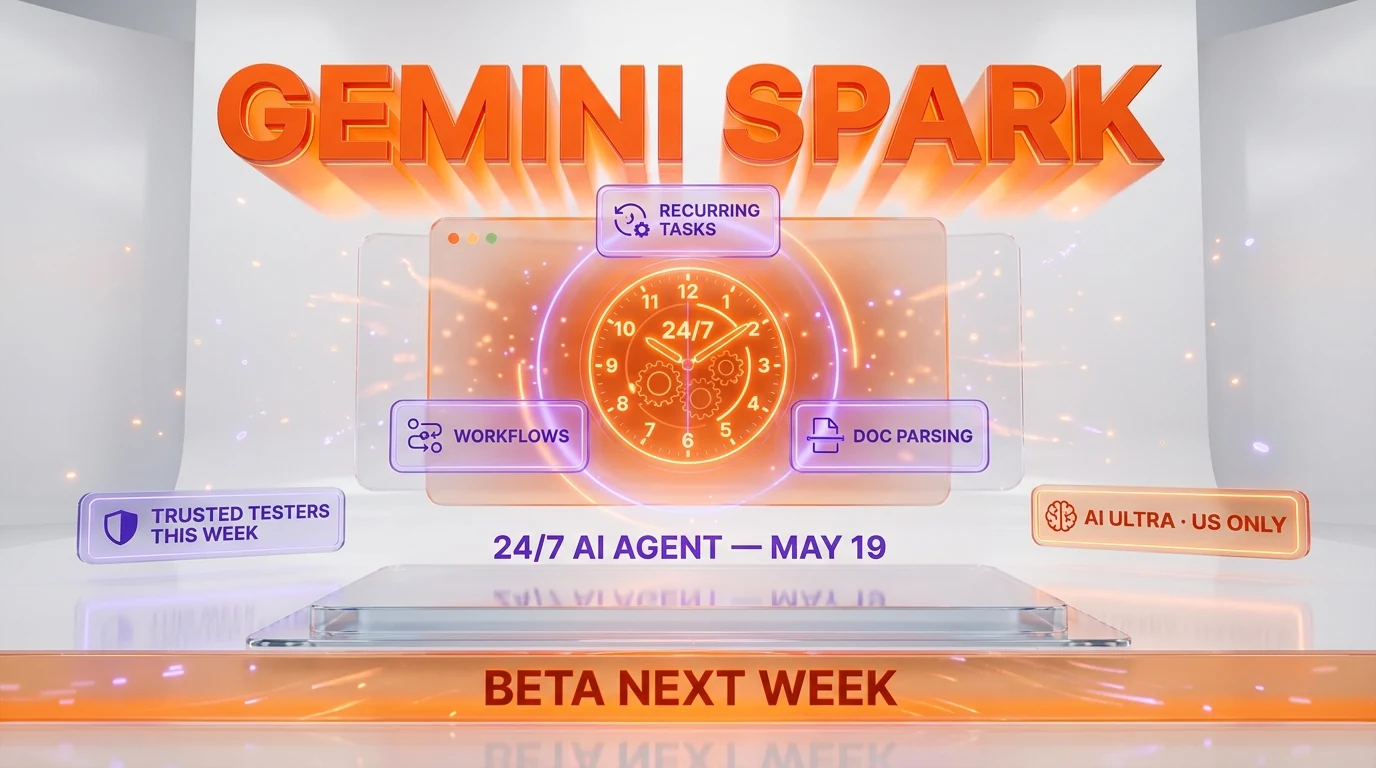
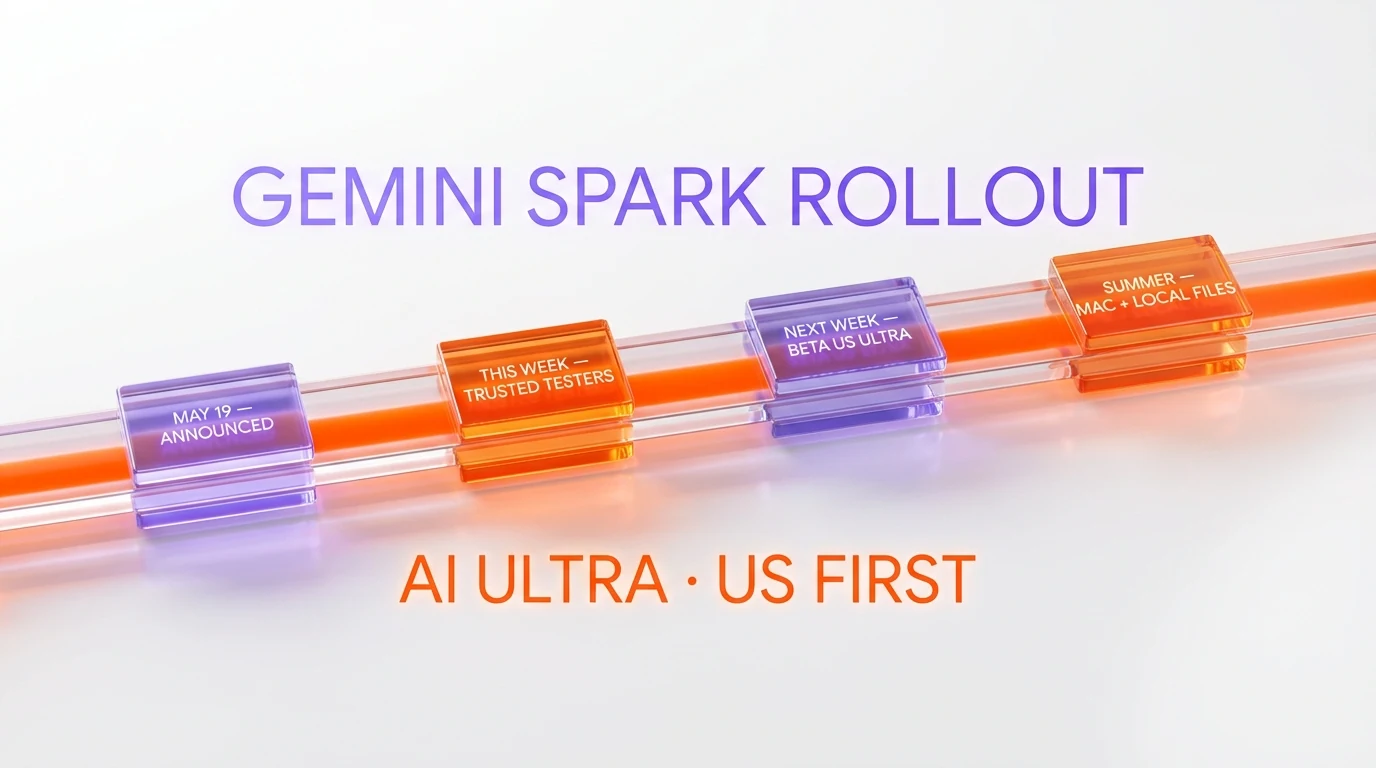
What is Gemini Spark? Google's new 24/7 autonomous AI agent, announced at Google I/O on May 19, 2026 and rolling out as Beta for U.S. Google AI Ultra subscribers next week. Google positions it as "an active partner that does real work on your behalf and under your direction", with deep integration into Gmail, Calendar, Docs and Slides, and support for recurring tasks, document parsing and complete workflows. Trusted testers get access this week.
Google waited until the I/O keynote on May 19 to make it official, and the announcement matters less for what Spark is — recurring tasks, workflows, Workspace integration — and more for who else just shipped the same idea. Anthropic's Claude Opus 4.7 already ships with cloud-agent automations. OpenAI shipped ChatGPT Pulse months earlier with a proactive AI brief. Three labs, three philosophies of what "AI working for you while you sleep" actually means. The 24/7 agent war just officially started.
What Google actually announced on May 19
According to Google's official launch post by Josh Woodward, VP of Google Labs, Gemini app and AI Studio, Gemini Spark is framed as the next evolution of the Gemini app — moving it from "an assistant that can answer your questions into an active partner that does real work on your behalf". The verbatim positioning is "a 24/7 personal AI agent that helps you navigate your digital life", direct from the Google blog post published on blog.google.
The capabilities, in Google's own words, are: "Set recurring tasks or triggers", "Teach it new skills", and "Create complete workflows". Google calls out Gmail, Calendar, Docs and Slides as deep-integration surfaces. There is also a sister product called Daily Brief — Google describes it as "an agent that gives you a personalized morning digest that's designed to be your first stop every day" — rolling out today to Google AI Plus, Pro and Ultra subscribers in the U.S.
The rollout is the headline buried in the keynote. Spark goes to trusted testers this week, then becomes a Beta for U.S. Google AI Ultra subscribers next week. Note the two filters: paid Ultra tier only, U.S. only. The MacOS version of Gemini desktop ships today, but Google says Spark itself is coming to the desktop app "this summer so it can help with tasks involving your local files and automate workflows".
One number gives the announcement its real weight. Google says "more than 900 million people across 230 countries and more than 70 languages turn to Gemini for help every month", up from roughly 400 million a year ago. Spark is not launching into a vacuum — it is launching on top of the second-largest consumer AI distribution surface on the planet, behind ChatGPT. That changes the calculation for what a Beta in the U.S. on AI Ultra means in practice.
Three philosophies of the 24/7 agent
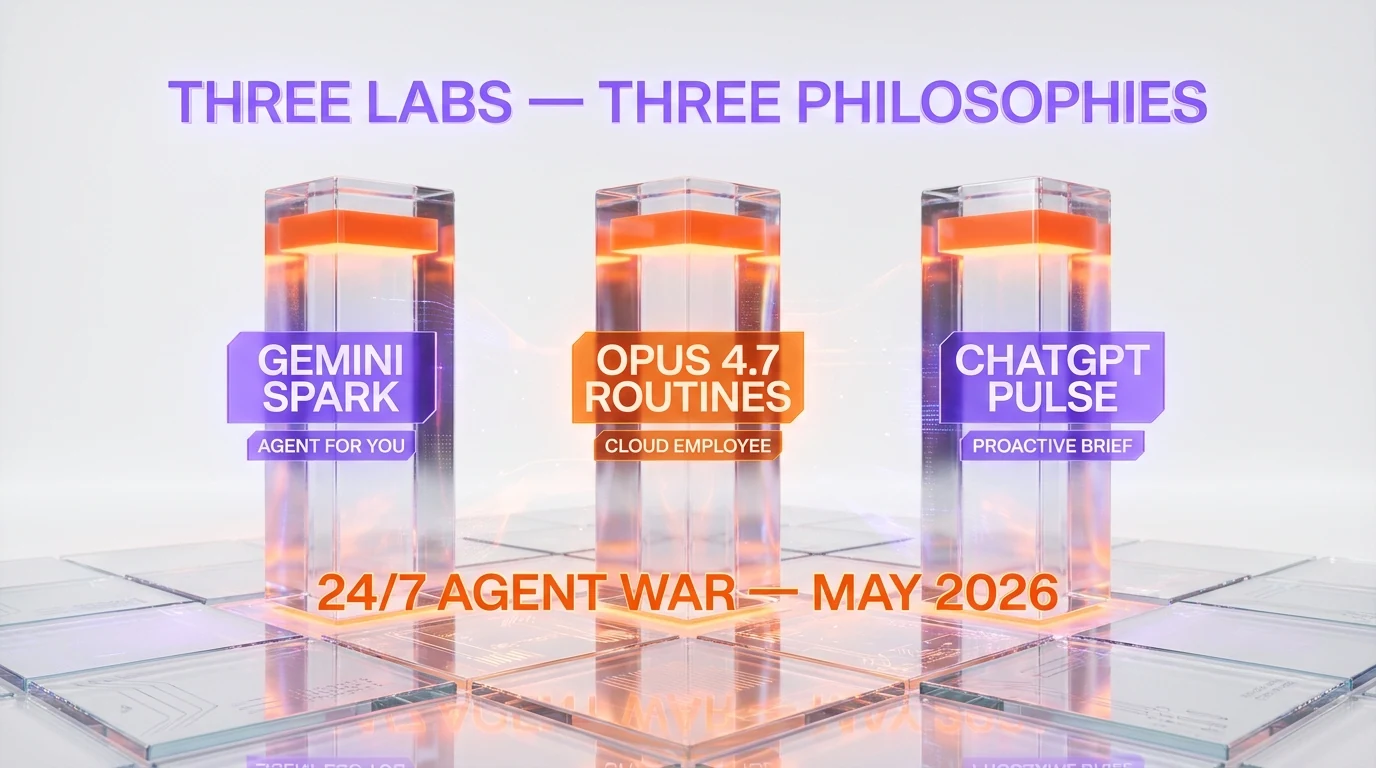
Spark is not the first 24/7 agent shipped by a frontier lab. It is the third in the current cycle. The interesting analytical question is not whether 24/7 agents are a category — they clearly are — but how the three labs differ on the mental model of what the agent is for.
Google: the personal agent
Spark's positioning, in Google's own framing, is "an active partner that does real work on your behalf and under your direction". The keyword pair is "on your behalf" and "under your direction". That is a deliberate framing — the agent is yours, the agent does what you say, the agent is glued to your life surfaces (Gmail, Calendar, Docs, Slides). It is not a worker you delegate to once. It is an extension of how you already use Google Workspace.
The capabilities map to that philosophy. "Set recurring tasks or triggers" implies the agent loops on your behalf — every morning, every Monday, every time a specific email lands. "Teach it new skills" implies long-lived configuration. "Create complete workflows" implies multi-step automation. The picture is an always-on resident inside Workspace, not a contractor you hire once for a project.
Anthropic: the cloud employee
Anthropic's framing for Claude's agent capabilities reads differently. Based on public announcements around Claude Opus 4.7 and Anthropic's broader push into automation tooling, the mental model is closer to "cloud employee" — a long-running, agentic worker that takes a brief and produces a result. The emphasis is task autonomy and the model's ability to run for hours on a single objective. The recent Anthropic Managed Agents push doubled down on this — Anthropic-hosted agents that run, schedule, and report back. The difference from Spark is the surface: Anthropic's agents are not natively glued to a consumer app called Gmail. They live in Claude.ai, the API, and partner surfaces, with deeper hooks into coding, research and enterprise workflows.
The metaphor matters because it changes what users expect. A "personal agent" inside Gmail makes you think of recurring inbox triage. A "cloud employee" inside Claude makes you think of multi-hour coding sessions and full research reports. Both are agents. They are not the same product.
OpenAI: the proactive brief
OpenAI's ChatGPT Pulse, based on public announcements from OpenAI, takes yet another angle. Pulse pushes a proactive daily digest at the user — what you should know, what's new in your areas of interest, what changed overnight. The agent is not necessarily executing tasks on your behalf in the background. It is curating what you should see when you open the app.
That is closer to a personalized news front page than an executor. The interesting tell is that Google's Daily Brief — shipping the same day as the Spark announcement — looks structurally similar to Pulse. Both are morning digests. Both are proactive. The difference is that in Google's stack, Daily Brief is the front door and Spark is the engine behind it. In OpenAI's stack today, Pulse is more or less the whole thing on the proactive side, while task execution lives in separate features (Tasks, Agents).
So the three philosophies are not "do the same thing differently." They are different products with different defaults:
- Gemini Spark — agent that does things in your apps, on your direction, on a recurring loop.
- Claude Opus 4.7 + Routines / Managed Agents — cloud worker that takes briefs and runs long-form jobs.
- ChatGPT Pulse — proactive curator that pushes what you should see before you ask.
Why the Workspace integration is the real moat
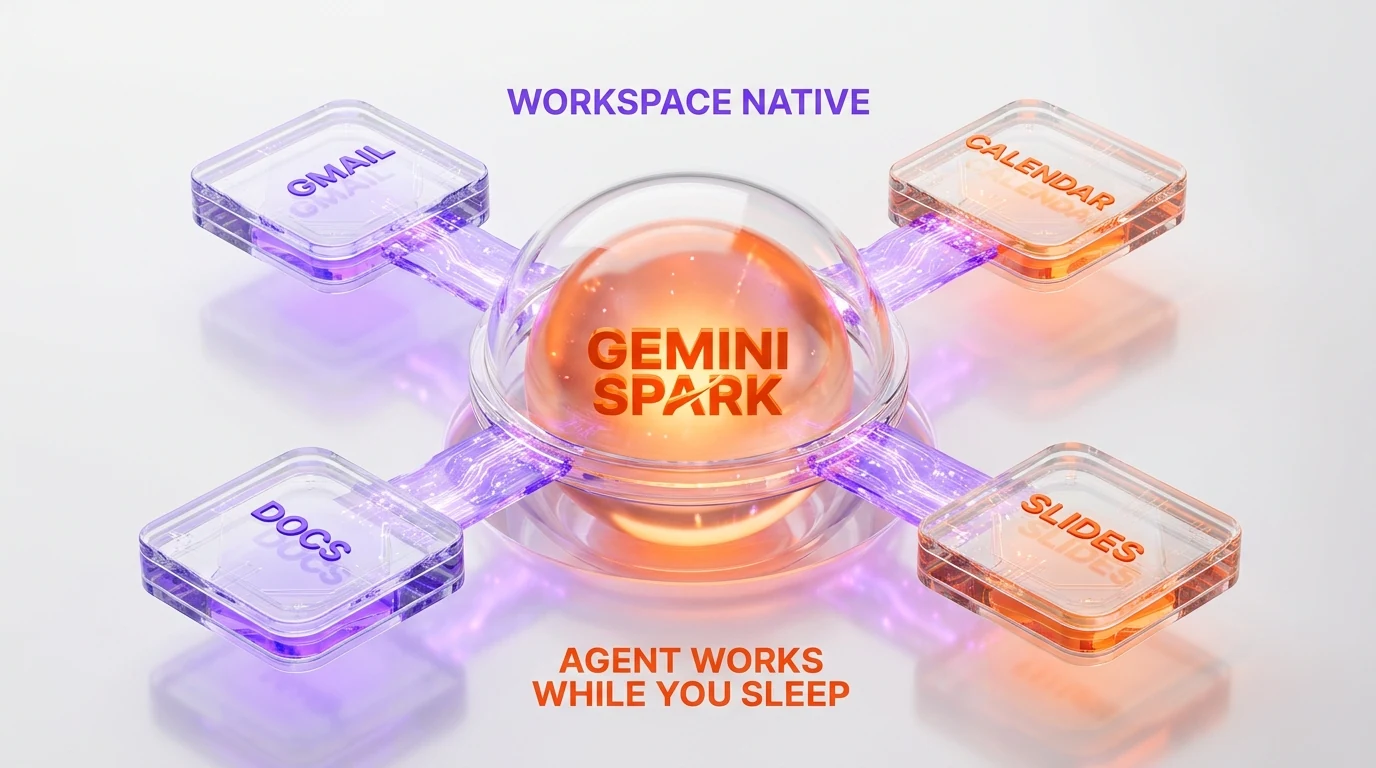
The most underrated line in Google's announcement is the integration claim. Spark integrates with Gmail, Calendar, Docs and Slides as first-class surfaces. Not as third-party API connectors that need permissions and rate limits. As the same surface the agent lives inside.
That is structurally different from what Claude or ChatGPT can do with Workspace today. Claude and ChatGPT both have Workspace connectors. Both can read Gmail, both can query Calendar. But neither owns the surface. Google does. The agent inside Spark does not need to ask permission to be in Gmail — it is in Gmail.
For the user, the practical difference is the friction floor. Setting up Claude or ChatGPT to triage your inbox every morning is a Zapier project — connectors, OAuth scopes, token refresh, error handling. Setting up Spark to triage your inbox every morning is one Gemini app instruction, because Spark and your inbox already share an authentication surface and a Google account. That is the kind of distribution edge that does not show up in benchmarks but shows up in retention.
The MacOS rollout this summer doubles down. Google explicitly said Spark is coming to the desktop app "so it can help with tasks involving your local files and automate workflows". Translation: the agent will read and write your local files. That is the exact surface Perplexity Personal Computer ships on Mac today. The OS-native consumer AI agent war is now a four-front race — Perplexity, Microsoft Copilot, Spark, and whatever Anthropic ships next.
The paywall and the geography — what the Beta means
Spark is gated. Google AI Ultra only, U.S. only, at Beta launch. That tells you something about what Google thinks this product is worth. Google AI Ultra is the top consumer tier — at U.S. pricing, it is the most expensive Gemini subscription Google sells. Spark is the headline justification for paying it.
The geography gate matters too. Releasing a Workspace-integrated 24/7 agent to U.S. users only, on the most expensive tier, signals that Google is treating this as a regulated product. Reading Gmail and executing on your behalf in the EU triggers a different review cycle than the U.S. — DSA, AI Act, GDPR data processing rules around automated decision-making, all of it. The U.S.-first Beta is not a market choice. It is a compliance choice.
That gate also means Spark is launching against ChatGPT Pulse and Claude in a smaller initial pool. Spark's first month of real-world feedback comes from a self-selected slice of Ultra subscribers in the U.S. — heavy users, willing to pay top tier, willing to put their Workspace data through a Beta. The signal-to-noise from that cohort is high, but the absolute population is modest.
The strategic move is the rollout cadence. Beta next week, then international, then Plus and Pro tiers, then eventually free Gemini app users. That is the standard Google playbook — Ultra first, then trickle down. The interesting watch is how fast that trickle happens. Six months? Twelve? The gap between announced and generally available for free Gmail users is the real competitive variable, because Pulse and Claude's agents are already broadly available.
The distribution asymmetry — 900 million reasons
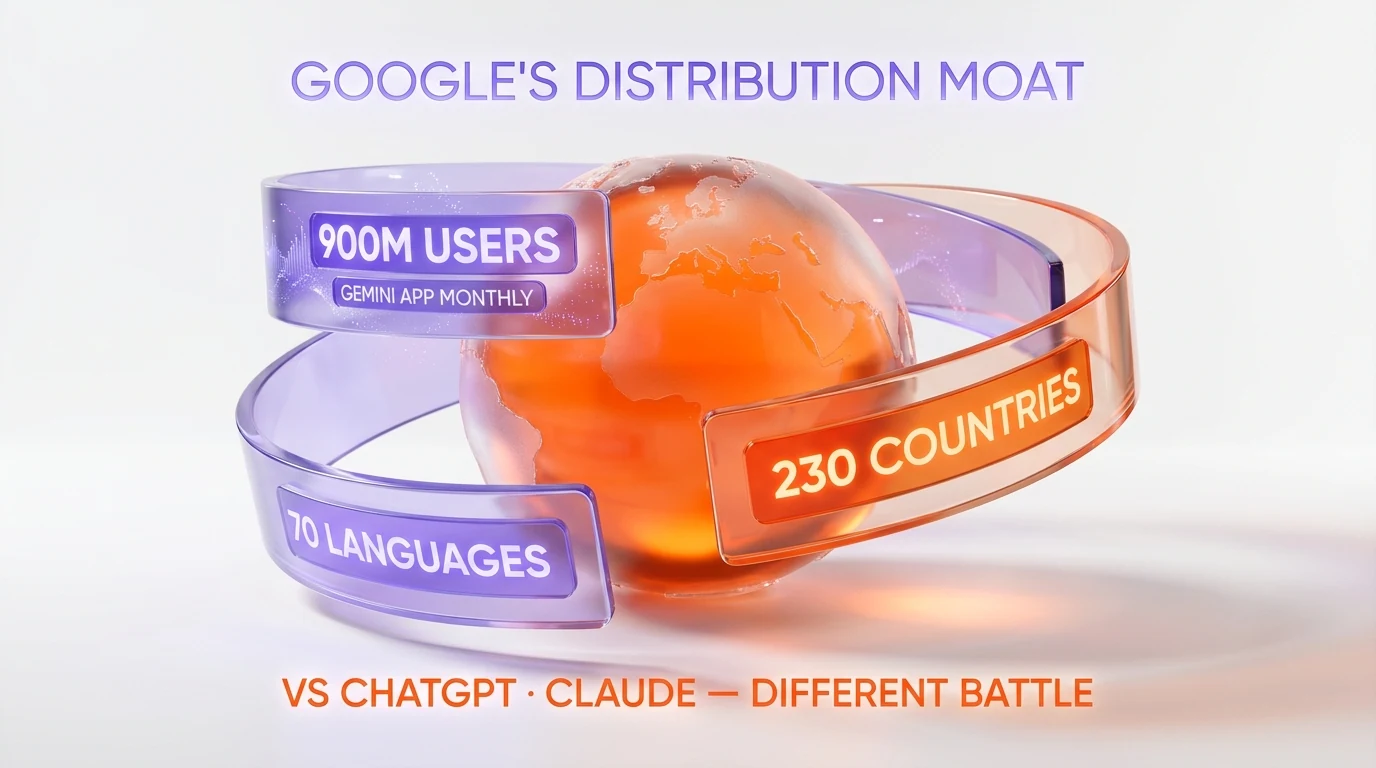
Here is the number that should worry Anthropic and OpenAI in equal measure: more than 900 million monthly Gemini app users across 230 countries and 70 languages. A year ago, Google was citing 400 million. That is a 125%+ year-over-year growth in monthly active users on the Gemini app alone, before you count Gemini inside Workspace, inside Android, inside Search.
That is the asymmetry. Anthropic and OpenAI win on developer mindshare, model quality reviews, and frontier benchmark leadership. Google wins on installed base. When Google ships a 24/7 agent gated to AI Ultra in the U.S., it is iterating in a controlled cohort. When Google rolls that agent down to the Plus tier, then to the free tier, the addressable market is an order of magnitude larger than ChatGPT's free tier, by a factor that Google does not publish but every product strategist tracking the space already estimates.
The counter is real. ChatGPT still has the brand. Claude still has the developer ecosystem. Microsoft Copilot Cowork still has Office 365. Distribution is necessary but not sufficient — Bard's launch in 2023 proved that. Spark needs to actually work to convert distribution into retention. The Beta this week will tell us if it does.
What I cannot verify yet — and where the analysis has limits
The honest disclosure: I have not used Spark. Nobody outside Google's trusted testers has used Spark as of May 20, 2026. The Beta has not started. This analysis is built on Google's official launch post on blog.google, the verbatim positioning quotes Josh Woodward published on May 19, and the public surface of Claude Opus 4.7 Routines and ChatGPT Pulse as of writing.
Specifically, I cannot verify:
- Spark's actual reliability at recurring tasks (no third-party benchmark exists).
- How Spark handles errors, race conditions, or destructive actions in Workspace (Google did not publish a safety framework with the announcement).
- Latency between trigger event and agent action (no published spec).
- The Ultra-tier pricing or whether Spark requires add-on pricing on top of Ultra (Google's footnote says "available features will vary by subscription tier and geography" without disclosing dollar amounts).
- Whether the Beta includes audit logs, undo, or rate limits — three table-stakes features for an agent with write access to your inbox.
If you build a workflow that depends on Spark before the Beta has lived through six weeks of public usage, you are absorbing those unknowns. The safer move is to wait for the first round of third-party reviews and Reddit r/Gemini bug reports before re-architecting anything.
What this means for the broader agent stack
The pattern across May 2026 is unmistakable. Microsoft Copilot Cowork shipped agentic task execution ten days ago. OpenAI Deployment Company committed $4 billion to enterprise agent deployment. Anthropic Managed Agents opened the cloud-employee model to controversy and adoption in the same week. Amdocs put telco agents live on the Gemini Enterprise marketplace. Spark is the consumer-facing edge of the same wave.
The labs are converging on the same thesis from different angles: 2026 is the year the chat box stops being the product. The chat box is a control panel for an agent that runs in the background. Google, Anthropic and OpenAI all believe this. They disagree on what the agent is, where it lives, who pays for it, and what data surface it touches first. The product disagreement is more interesting than the strategic agreement.
For users, the practical question is no longer "which model is better." Every frontier lab now has a strong model. The practical question is "which agent surface fits my actual workflow." If you live in Gmail and Docs, Spark is the obvious bet — once the Beta proves itself. If you live in Claude.ai and the API, Anthropic's Managed Agents are. If you live in ChatGPT and want push notifications about your interests, Pulse is. The new differentiator is integration depth and surface ownership, not model benchmarks.
The strategic read — where this goes next
Three predictions worth tracking over the next ninety days.
First, Spark's Beta will produce its first wave of public bug reports within two weeks of opening, because Workspace data is sensitive and any agent with write access to Gmail will surface edge cases fast. Expect at least one widely-shared "Spark sent the wrong email" or "Spark deleted the wrong calendar event" story before the end of June. Whether Google handles that gracefully will determine whether Spark gets to the Plus tier on schedule or stays gated.
Second, Anthropic and OpenAI will respond with their own Workspace-equivalent integrations within ninety days. The exact form depends on partnerships. Anthropic could deepen its Microsoft Office integration story via the Microsoft channel partnership. OpenAI could push Pulse-plus-Tasks into a single Spark-equivalent inside the ChatGPT app. The agent-in-your-life surface is now a category, and a category needs more than one product per lab.
Third, the pricing tier story will compress. Spark being Ultra-only in the U.S. is a Beta posture, not a permanent one. Google will move it down the tier ladder once the operational risk is contained. The interesting question is whether the move to Plus tier in the U.S. happens before or after the move to Ultra tier internationally. That ordering tells you what Google is most worried about — the safety surface (international rollout last) or the revenue surface (cheaper tiers last).
For now, the headline is simpler than the strategy. Google has a 24/7 agent. It works inside Workspace. It is gated. It will not stay gated forever. The 24/7 agent war is no longer a roadmap conversation. It is shipped product across three labs.
Frequently Asked Questions
What is Gemini Spark?
Gemini Spark is Google's new 24/7 autonomous AI agent, announced at Google I/O on May 19, 2026 by Josh Woodward, VP of Google Labs. Google positions it as "a 24/7 personal AI agent that helps you navigate your digital life" and as "an active partner that does real work on your behalf and under your direction." It supports recurring tasks, document parsing, complete workflows, and integrates with Gmail, Calendar, Docs and Slides.
When can I use Gemini Spark?
Google said Spark will roll out to trusted testers this week, and to U.S. Google AI Ultra subscribers as Beta next week. Other tiers and geographies have not been announced. The MacOS desktop integration that lets Spark work on local files is planned for this summer, per Google's announcement on May 19, 2026.
Which subscription tier do I need for Gemini Spark?
Google AI Ultra in the U.S., as of the May 19, 2026 announcement. Google's footnote says "available features will vary by subscription tier and geography" without disclosing exact pricing. Plus and Pro tiers were not included in the initial Beta. The companion product Daily Brief is broader — it begins rolling out to AI Plus, Pro and Ultra subscribers starting in the U.S.
How is Gemini Spark different from Claude Opus 4.7 Routines?
The two products target similar ground but use different mental models. Spark is framed as a personal agent natively glued to Gmail, Calendar, Docs and Slides, doing recurring tasks "on your behalf and under your direction" inside Workspace. Claude Opus 4.7, paired with Anthropic's Managed Agents push, leans toward the "cloud employee" model — long-running agentic workers that take a brief and produce results, primarily in Claude.ai and the API, with deeper hooks into coding and enterprise workflows.
How is Gemini Spark different from ChatGPT Pulse?
Based on public announcements from OpenAI, ChatGPT Pulse is a proactive daily digest — it pushes what you should know about your interests when you open the app. Spark is more of an executor — it does tasks in your Workspace apps on a recurring loop. Google's separate product Daily Brief is the structural equivalent of Pulse inside Google's stack, while Spark is the engine behind it.
What Workspace apps does Gemini Spark integrate with?
Google explicitly names Gmail, Calendar, Docs and Slides in the launch post. Because Gemini and Workspace share the same Google account authentication surface, the integration is native rather than API-connector based — Spark and your inbox already share an authentication surface and a Google account, which lowers the setup friction floor compared to third-party agents using Workspace connectors.
Will Gemini Spark be available outside the U.S.?
Not at Beta launch. Google's announcement on May 19, 2026 specifies the Beta is for "U.S. Google AI Ultra subscribers" next week. International rollout was not given a timeline. The U.S.-first launch is consistent with how regulated AI products are typically rolled out — reading Gmail and executing on your behalf in the EU triggers different compliance reviews than the U.S., including DSA, AI Act and GDPR rules on automated decision-making.
What is Daily Brief and how is it different from Spark?
Daily Brief is a separate product Google announced the same day. Google calls it "an agent that gives you a personalized morning digest that's designed to be your first stop every day." It begins rolling out on May 19 to AI Plus, Pro and Ultra subscribers in the U.S. Daily Brief is closer to Gmail inbox + Calendar morning summary. Spark is the broader 24/7 task executor. Both are agents, but Daily Brief is curatorial and Spark is operational.
How many people use the Gemini app?
Google's May 19, 2026 announcement states "more than 900 million people across 230 countries and more than 70 languages turn to Gemini for help every month." That is up from roughly 400 million one year earlier — more than doubling year-over-year. The distribution scale is one of the structural reasons Spark's eventual rollout to free tiers matters competitively.
Can Gemini Spark access my local Mac files?
Not on May 20, 2026. The MacOS Gemini desktop app is available for download today, but Google said Spark itself is "coming to the Gemini desktop app this summer so it can help with tasks involving your local files and automate workflows." Local file access is therefore a future capability, not a launch-day one. The exact summer date was not announced.
Should I build production workflows on Gemini Spark today?
No, not on May 20, 2026. The Beta has not opened, no third-party reliability data exists, Google has not published a safety or error-handling framework, audit logs and undo are unconfirmed, and the pricing model for Spark on top of AI Ultra is not disclosed. The honest engineering posture is to wait for the first six weeks of public Beta usage and the first wave of third-party reviews before re-architecting any workflow around Spark.
How does Gemini Spark fit into the broader 2026 AI agent war?
Spark is the consumer-facing edge of a wave that includes Microsoft Copilot Cowork, OpenAI's Deployment Company $4B enterprise push, Anthropic Managed Agents, and the Amdocs telco agent deployment on Gemini Enterprise. The convergent thesis across labs in May 2026 is that the chat box stops being the product — it becomes a control panel for agents that run in the background. The three labs disagree on what the agent is, where it lives, who pays for it and what data surface it touches first, but they all agree the agent is the new shape of the product.