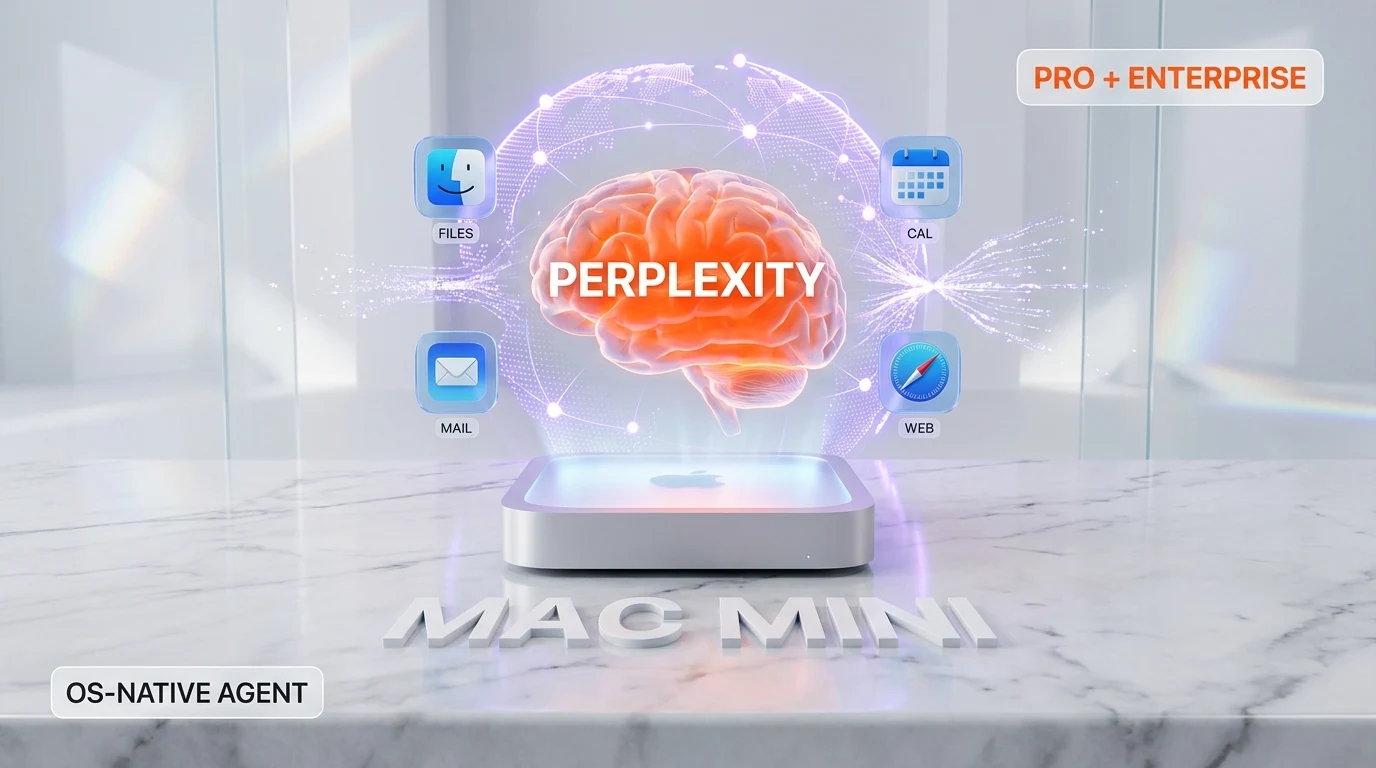
Per Perplexity's May 7, 2026 announcement, Perplexity Personal Computer — the company's OS-native AI agent for Mac — opened to Pro and Enterprise subscribers, ending the Max-only exclusivity that had locked the feature inside Perplexity's $200-per-month top tier. The agent runs locally on macOS 14 and later, reads and writes inside the user's filesystem, drives native macOS apps (Finder, Mail, Calendar, Safari, and others), and browses the open web from inside a sandboxed environment where every action is auditable and reversible. Perplexity is openly recommending a dedicated Mac mini as an always-on "AI employee box," a positioning we have not seen from a frontier lab before. With this move, Perplexity has shipped what is — in our reading — the first true OS-native consumer AI agent widely available at the prosumer tier, while Anthropic Claude's Computer Use sits at research preview, Microsoft Copilot Cowork remains Frontier-program gated, and Apple's iOS 27 Extensions is a leaked WWDC announcement, not a shipping product.
What Shipped on May 7, 2026
Perplexity Personal Computer first arrived in beta on March 2026, locked to the company's Max subscribers — a $200-per-month tier introduced in late 2025 for power users of Perplexity's Comet browser and research stack. On May 7, 2026, Perplexity expanded the feature into the Pro tier ($20 per month) and the Enterprise tier (custom pricing, contract-only), per the company's announcement post and confirmed by TechCrunch, 9to5Mac, and MacRumors the same day.
Three things changed in the tier shift
Three concrete changes shipped on May 7, and each one reframes how Perplexity is positioning the agent against the rest of the agentic-OS pack:
- Tier opened from Max to Pro + Enterprise. The price of admission dropped from $200 per month to $20 per month for individuals, and Enterprise customers can now provision Personal Computer access alongside the rest of Perplexity for Teams. Max remains the top tier, but it is no longer the only entry point.
- Native macOS experience refined. Per 9to5Mac, the Mac app received a redesigned native experience for Personal Computer specifically — moving the agent panel out of a sidecar pane and into a first-class macOS surface with proper menu-bar integration, native window controls, and macOS-style notifications when long-running tasks complete.
- Always-on Mac mini positioning surfaced. Perplexity's announcement explicitly recommends a dedicated Mac mini as an always-on agent box — the strategic framing we want to dig into below, because it is the part of the announcement most outlets glossed over.
None of this changes the platform requirement: macOS 14 (Sonoma) or later, Apple Silicon recommended, and a Perplexity Pro, Max, or Enterprise subscription. There is no Windows version. There is no Linux version. There is no iOS version. The Mac monopoly is intentional, and the strategic reason — covered in the agentic-OS race section below — is that the Mac is the only consumer platform where Perplexity could ship a sandboxed-but-deeply-integrated agent without going through Apple Intelligence approval gates.
What Perplexity Personal Computer Actually Is
Personal Computer is not Perplexity's chat product. It is not the Comet browser. It is a separate execution surface — an autonomous agent that lives on the user's Mac, observes context, plans actions, and executes them by driving the operating system the same way a human would: clicking, typing, selecting, opening files, sending emails. The closest mental model is what Anthropic shipped as Claude Computer Use in late 2024, except Perplexity has wrapped it in a productized macOS surface and shipped it to paying consumers, while Anthropic's version remains a developer-facing API preview.
Capability matrix — what the agent can actually do
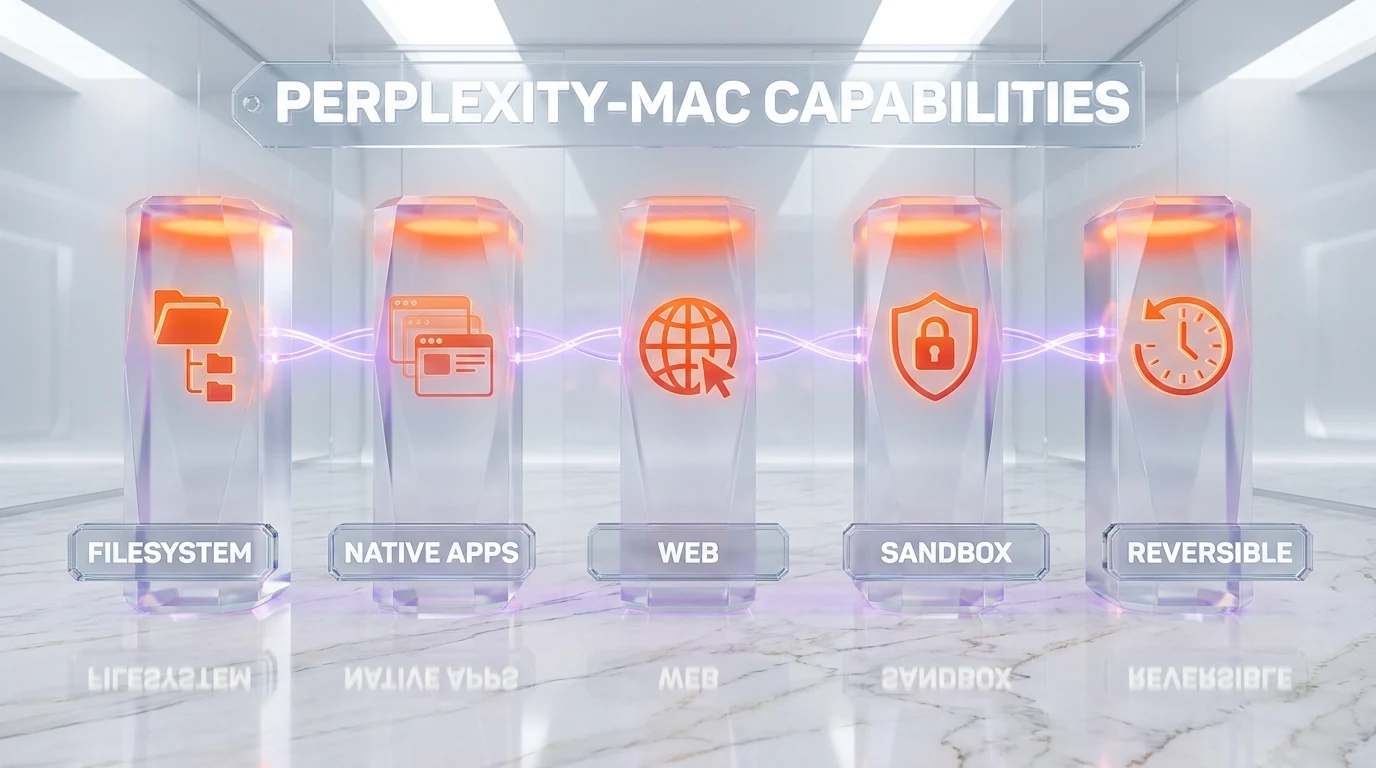
From Perplexity's documentation and the May 7 announcement, the agent has five capabilities that matter:
- Filesystem access. Personal Computer can read and write inside the user's macOS filesystem — open documents, save outputs, move files between folders, rename in bulk. Scope is permissioned at first invocation per Perplexity's announcement.
- Native macOS apps. The agent drives Finder, Mail, Calendar, Safari, Numbers, Pages, and any AppleScript-addressable application. It does not run a separate browser stack — it uses Safari for web browsing, which means cookies and logged-in sessions are reused from the user's normal browsing.
- Web browsing. Because Personal Computer drives Safari, the agent has access to whatever the user is logged into — Gmail, Notion, LinkedIn, internal company tools. This is the agentic-OS killer feature: the agent inherits the user's web identity without OAuth dance.
- Sandbox isolation. Per Perplexity's announcement, actions run inside a sandbox boundary. The agent cannot, for example, modify system files, install software, or read files outside its permitted scope. The sandbox is recommended (not required) to be configured at the macOS level using built-in macOS app sandboxing primitives.
- Auditable and reversible. Every action the agent performs is logged in an action history, and Perplexity says the major destructive actions (file move, email send, calendar event creation) can be reverted from the action history pane. Reversibility is the safety mechanism Perplexity is leaning on to justify autonomous execution at the consumer tier.
The reversibility claim is the one we want to watch most closely. "Reversible" in software almost always means "reversible if the agent labels its action correctly and if the downstream system supports reversal." An email send is not reversible. A calendar invite sent to an external party is not reversible. Perplexity's announcement is careful with the wording — "auditable and reversible" is bundled together, and the audit log is the substrate, not the reversal itself. Builders should read this as "every action is logged; some actions can be undone; expect the same blast-radius nuances as any agent." We will be probing this hands-on this week.
The Tier Strategy — Why Open From Max to Pro + Enterprise Now
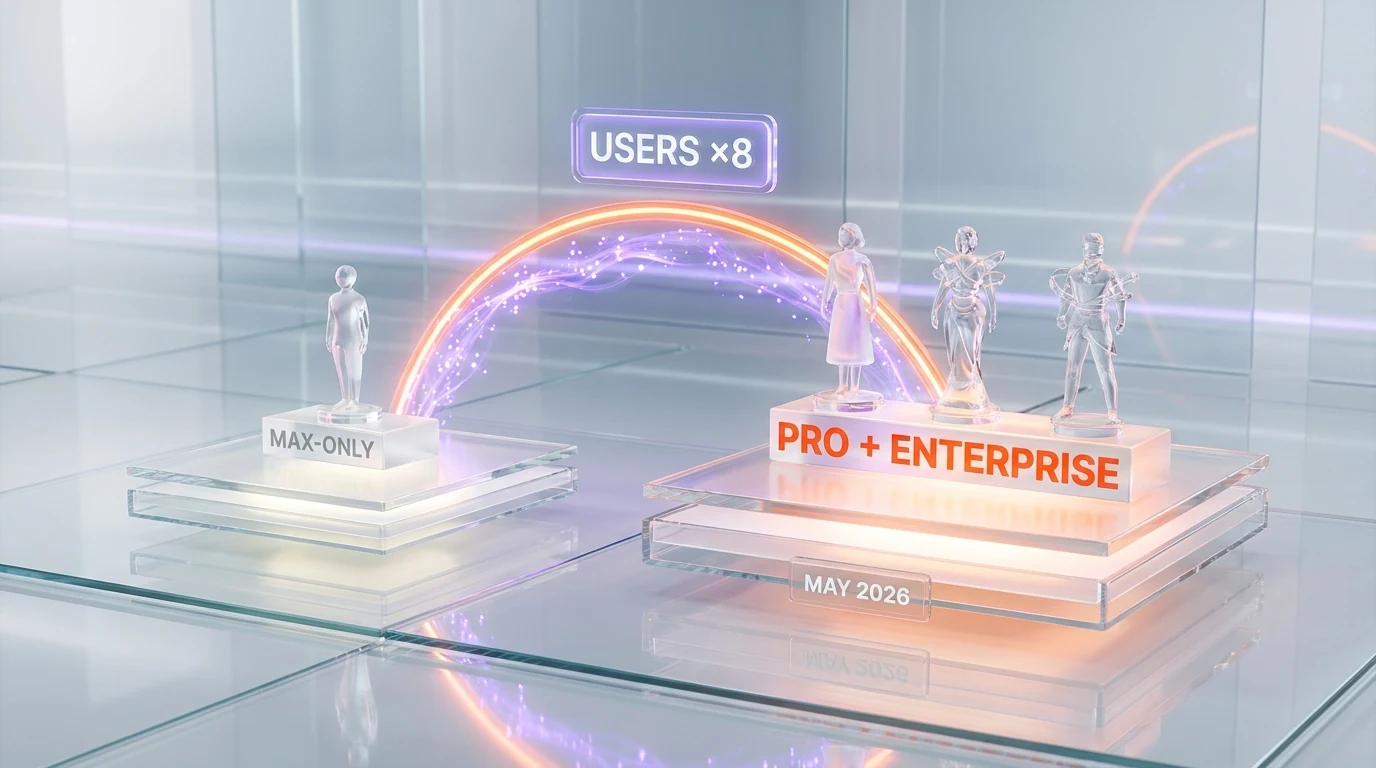
Perplexity does not open features cheaply by accident. The company spent the back half of 2025 building a tier ladder explicitly designed to monetize power users at the top: Free → Pro ($20 per month) → Max ($200 per month) → Enterprise (contract). When Personal Computer launched in March 2026, it landed inside Max — a deliberate positioning that did three things at once:
- It justified the Max tier's $200 price tag with a flagship capability nobody else had.
- It gave Perplexity a controlled cohort to iterate against — Max subscribers are roughly the top 1 to 3 percent of paying customers, technically literate, tolerant of bugs.
- It created scarcity and demand pull, which is the playbook ChatGPT used with Operator in early 2025 (Pro-only at $200 per month for the first six months).
Two months later, on May 7, Perplexity widened the gate. The reading we trust: Personal Computer hardened fast enough inside the Max cohort that the volume play now beats the premium positioning. Pro at $20 per month has roughly 10x to 50x the active subscriber base of Max in most consumer SaaS shapes (Perplexity has not disclosed exact splits). Opening Personal Computer to Pro multiplies the data feedback loop, accelerates capability training, and — critically — converts the agent from a Max-justification feature into a Pro-conversion feature.
Enterprise opening at the same time matters for different reasons. Personal Computer on enterprise Macs means agents running on managed corporate devices, inside the IT department's sandbox stack, audited by the company's security and compliance posture. That puts Perplexity in direct competition with Microsoft Copilot Cowork for the enterprise-agent dollar, except Perplexity gets there on the Mac surface that Cowork does not currently support natively.
Where the price actually lands versus alternatives
The tier-shift math is what tightens this. Personal Computer at $20 per month sits roughly at parity with ChatGPT Plus and Claude Pro on individual pricing — but those products do not currently ship a consumer OS-native agent. Anthropic's Computer Use is API-only and the per-action compute cost is closer to $0.05 to $0.20 per task on Claude Opus 4.7 pricing, before margin. ChatGPT Operator was $200 per month at Pro tier through most of 2025; OpenAI has since folded Operator into ChatGPT Plus, but the agent is browser-bound and not OS-native. Perplexity is the only consumer AI provider at the $20 per month tier shipping a true OS-native agent today.
The Mac Mini As An AI Employee Box
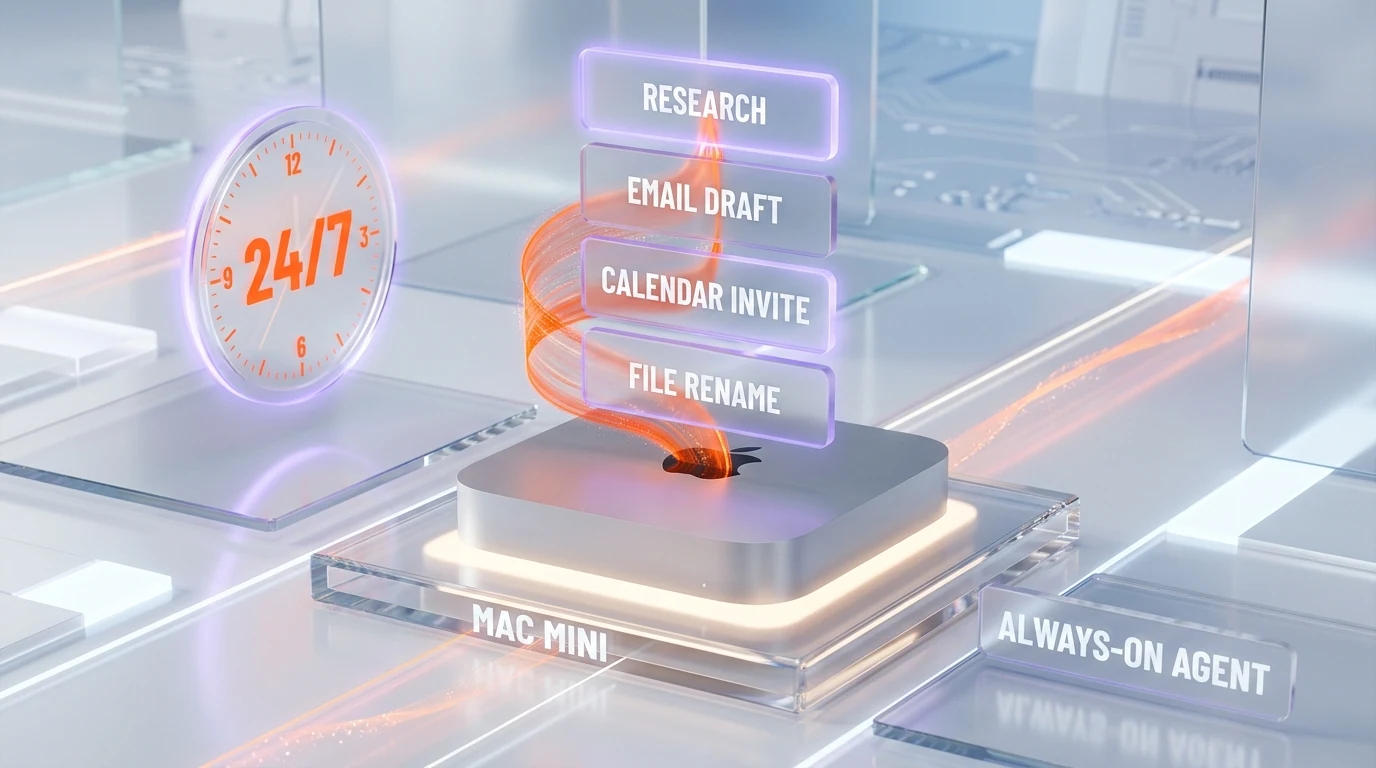
The most original framing in the May 7 announcement — and the one most outlets buried in a closing paragraph — is Perplexity's recommendation that users dedicate a Mac mini to running Personal Computer always on, as a kind of "AI employee box" parked next to a router. We have been waiting for a frontier lab to draw this picture concretely. Perplexity drew it first.
Why this framing works on the hardware level
A current-generation Mac mini with the M4 chip starts at $599 for the 16 GB / 256 GB SKU and tops out around $1,599 for the M4 Pro configurations. Twelve months of Perplexity Pro is $240. Combine the two and the cost of running a dedicated AI agent box for a year — hardware amortized over three years plus subscription — comes to roughly $440 per year. That is below the annual cost of a single ChatGPT Pro seat at $200 per month, before any agent layer.
The mental model Perplexity is selling is the same one MSPs sold for the first wave of always-on Plex media servers and the first wave of Home Assistant boxes: buy a cheap, quiet, low-power Mac mini, leave it on, let the agent work in the background, check the action log in the morning the way you would check your inbox. The hardware is the boring part. The behavioral shift — letting a machine do work overnight without supervision — is the interesting part.
What the Mac mini actually does overnight
From the use cases Perplexity highlighted in the May 7 demo and the ones we have seen Max subscribers post on X and Reddit over the past two months, the always-on pattern works for jobs like:
- Overnight research dossiers — kick off a multi-source web research task before sleep, wake up to a synthesized brief in a Notion or Apple Notes doc.
- Bulk file operations — rename, organize, OCR, tag, and move 10,000 photos or PDFs while you are not at the desk.
- Calendar and email triage — agent processes the morning inbox, drafts reply candidates, queues calendar holds, leaves everything for human approval.
- Repeating cron-like task patterns — the Personal Computer agent can be primed with a recurring brief (e.g., "every weekday at 7am, check these five sources for AI lab announcements and write a 200-word summary") and run autonomously.
None of these are individually new. What is new is bundling them into a single $440-per-year consumer-grade box with sandbox safety as the default. That is a recipe a normal prosumer can actually adopt, which is why we think the Mac mini framing — not the tier opening itself — is the part of this announcement that will age best.
The Agentic OS-Native Race Map
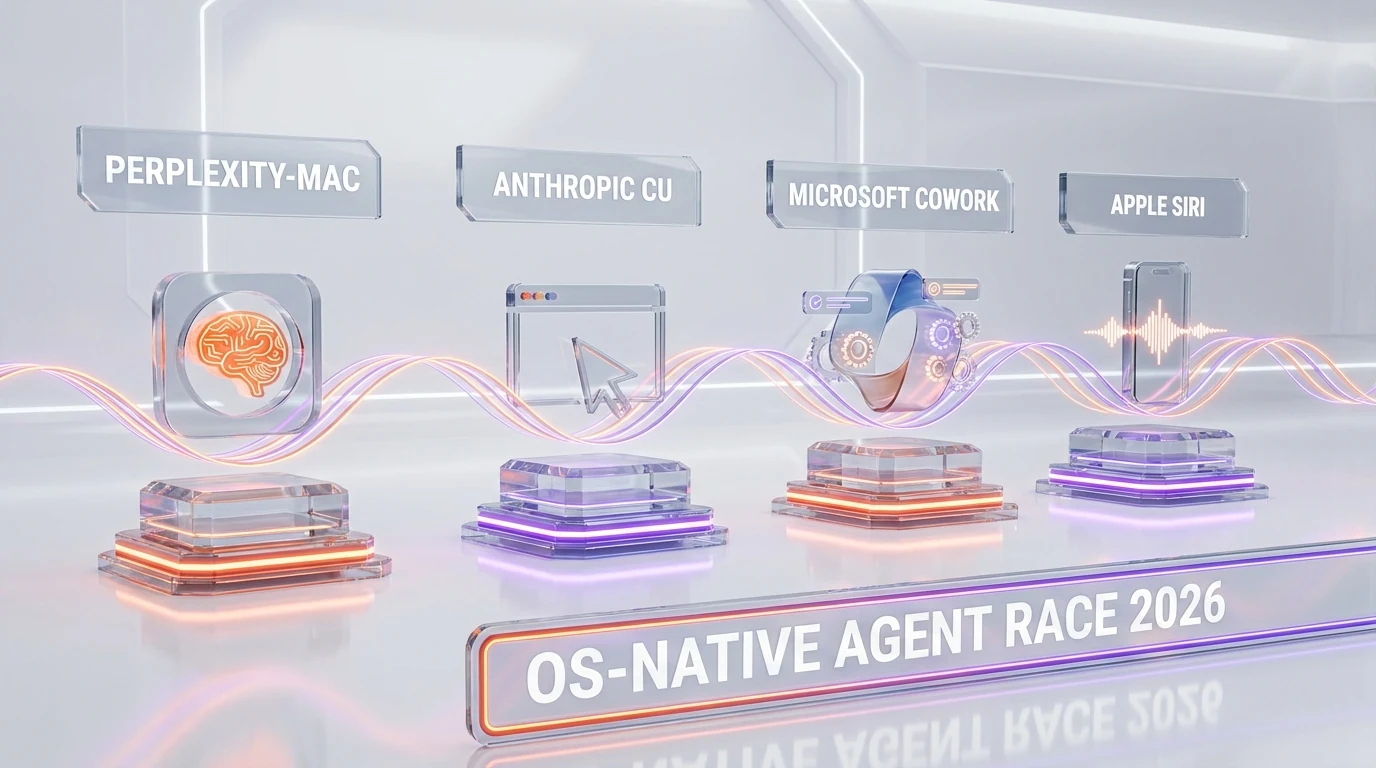
Personal Computer's May 7 expansion does not happen in isolation. The agentic-OS pack has been forming through 2025 and 2026, and the four labs to watch all approached the surface from different angles. Mapping where each lab is today — not where they want to be — sharpens what Perplexity actually pulled off this week.
Perplexity Mac versus Anthropic Computer Use
Anthropic shipped Computer Use as a Claude 3.5 Sonnet capability in October 2024 and updated it through 2025 and 2026 with Claude Sonnet 4.7 and Opus 4.7. Computer Use is the closest technical analogue to Personal Computer — same architecture, same plan-execute-report loop, same emphasis on screenshot-based UI interaction. But Anthropic kept Computer Use in API preview the entire time. There is no Claude.app for Mac that ships Computer Use as a productized consumer feature. Builders integrate Computer Use into their own apps. Perplexity has now done the productization work Anthropic skipped — and is charging $20 per month for it.
Perplexity Mac versus Microsoft Copilot Cowork
Microsoft's Copilot Cowork shipped its Frontier-program expansion on May 5, 2026 — two days before Perplexity's announcement, which we read as not coincidental timing. Cowork is graph-native to Microsoft 365: it lives inside Outlook, Word, Excel, Teams, Dynamics 365. It is preview-only, Frontier-gated, and pricing is undisclosed. Perplexity Personal Computer is OS-native to macOS, generally available at the Pro tier, and priced at $20 per month. The lanes only overlap if you are a Mac-using knowledge worker — which, given Mac's share of enterprise prosumer workflows, is a meaningful slice.
Perplexity Mac versus Apple iOS 27 Extensions
Apple's iOS 27 Extensions framework, per Bloomberg's Mark Gurman leak on May 5, would let iPhone users route Siri queries to Claude, Gemini, Grok, Perplexity, or Le Chat. That is a different beast — a routing layer for question-answer queries, not an OS-native agent execution surface. Extensions would not let an external AI drive your iPhone's Mail app or move files inside your iCloud Drive autonomously. Personal Computer on Mac does exactly that. The two products are complementary, not competitive, but they do confirm that the surface — consumer OS-AI integration — is the year-2026 battlefield.
Perplexity Mac versus ChatGPT Operator and Devin
OpenAI's Operator, the agentic mode inside ChatGPT, runs browser-bound — it spawns a remote browser, drives it, and reports back. It does not touch the user's local filesystem or local apps. Cognition's Devin is engineering-focused (and worth comparing against Claude Code on the developer-agent axis), runs server-side, and targets developer workflows. Perplexity Personal Computer is the only one of this pack that runs locally on the user's machine, accesses the local filesystem, and drives native apps. That is the architectural difference that gives it the "first true OS-native consumer AI agent" framing.
What Would Prove This Overhyped
We are bullish on the framing but cautious on the rollout. Three signals will tell us in the next 60 days whether Personal Computer survives contact with the prosumer Pro tier or whether it gets dragged back into a Max-only positioning.
Sandbox break frequency
Perplexity's safety claim — that actions run inside a sandbox and are auditable plus reversible — only holds if the sandbox holds. The first 60 days at Pro scale will include curious users intentionally trying to make the agent do destructive things, and the public reports of those failures (or the absence of those reports) will reset the safety narrative. If we see more than a handful of "Personal Computer deleted my files" or "Personal Computer leaked my passwords" stories trending on Hacker News or X by July 7, 2026, the sandbox claim is in trouble.
Daily-active agent usage versus chat
The big unknown is whether prosumers will actually delegate work to an autonomous agent overnight or whether the agent becomes a one-time novelty that gets opened, demoed, and abandoned. Perplexity has not committed to publishing daily-active-agent metrics, but if Q3 2026 earnings or investor disclosures emerge showing Personal Computer used by less than 10 percent of Pro subscribers monthly, the always-on Mac mini framing collapses into a marketing story rather than a product reality.
Tier claw-back risk
If Personal Computer's compute cost runs above Perplexity's Pro economics — and an always-on agent box could consume tens of thousands of model tokens per day per user — Perplexity could be forced to walk the feature back to Max-only within 6 to 12 months, the same way ChatGPT walked Advanced Voice back to Plus only after rate-limiting incidents in Q1 2025. Watch for rate-limit clamps, "Pro fair-use" emails, or a quiet Max-only re-tiering by Q4 2026.
How To Evaluate Personal Computer If You Are Already On Pro
For Pro subscribers and prospective Pro subscribers running macOS 14 or later, the path to evaluating Personal Computer is straightforward but worth doing methodically. Skip the wow-demo phase and run it against three concrete tasks that match real workflows you have.
Task 1 — Bulk file ops on a folder you would not cry over
Point Personal Computer at a folder of test files (downloads, screenshots, sample documents) and ask it to organize the folder by type and rename the files with a consistent convention. This tests the filesystem-access pillar, the sandbox boundary, and the audit-log reversibility. Time it. Compare to how long you would spend doing the same task in Finder.
Task 2 — Multi-source overnight research dossier
Brief the agent before sleep with a research task that requires reading five or more web sources and writing a 300 to 500-word brief. This tests the web-browsing pillar and the always-on positioning. Compare the output to what you would have written manually, and to what Perplexity Pro chat (the non-agent product) would have produced for the same prompt.
Task 3 — Drafted-not-sent email and calendar workflow
Have the agent triage 20 emails, draft replies, and propose calendar holds — without sending or accepting anything autonomously. This tests the native-apps pillar and, crucially, the agent's ability to stop short of irreversible actions. The right behavior is for the agent to stage everything in drafts and let you approve before any external party sees an action.
Run all three. If two out of three work cleanly and the third is recoverable from the audit log, Personal Computer is real. If two out of three need supervision and only one runs unattended, it is a Max-tier toy at a Pro-tier price.
Our Strategic Read
The tier opening matters, but the framing matters more. By recommending a dedicated Mac mini as an always-on AI employee box, Perplexity has done something none of the other labs have managed: it has shipped a concrete consumer-hardware mental model for what life with an autonomous agent looks like. Anthropic talks about agents in abstract terms. Microsoft talks about agents in enterprise terms. Apple talks about Apple Intelligence as a vague horizon. Perplexity walked into the Apple Store and said: that $599 box, plus $20 a month, equals your new employee.
Whether the product lives up to the framing is the question of the next 60 days. The sandbox claim has to hold. The reversibility claim has to hold. The Pro-tier economics have to hold. If they all hold, Personal Computer is the most consequential consumer AI shipping moment of Q2 2026 — bigger than Microsoft Cowork's Frontier expansion, bigger than the Apple Extensions leak, and arguably bigger than the GPT-5.5 launch in April. If any one of them breaks, we are right back to Max-only by Q4. We are watching the audit-log threads on X every morning.
Frequently Asked Questions
What is Perplexity Personal Computer?
Per Perplexity's announcement, Personal Computer is an OS-native AI agent for Mac that reads and writes inside the user's filesystem, drives native macOS applications (Finder, Mail, Calendar, Safari, and others), browses the open web, and executes autonomous tasks inside a sandboxed environment where every action is auditable and reversible. It is separate from Perplexity's chat product and from the Comet browser.
Who can use Personal Computer as of May 7, 2026?
As of May 7, 2026, Personal Computer is available to Perplexity Pro, Max, and Enterprise subscribers. Previously it was Max-only since the March 2026 beta. The Pro tier costs $20 per month, Max is $200 per month, and Enterprise is contract-only with custom pricing.
What platforms does Personal Computer support?
Personal Computer is Mac-only. It requires macOS 14 (Sonoma) or later, with Apple Silicon recommended. There is no Windows version, no Linux version, and no iOS version as of May 7, 2026. Perplexity has not publicly committed to a Windows or Linux release timeline.
How is Personal Computer different from Perplexity Comet?
Comet is Perplexity's browser product — a Chromium-based browser with AI features built into the search bar and a sidebar. Personal Computer is a separate agent surface that runs at the operating-system level, drives Finder and Mail and other native apps, and executes autonomous tasks. Comet handles in-browser AI; Personal Computer handles whole-Mac AI.
How does Personal Computer compare to Anthropic Claude Computer Use?
Both products use a screenshot-driven, plan-execute-report agent loop to drive a computer. The difference is productization: Anthropic ships Computer Use as a developer API preview integrated into Claude Opus 4.7 and Sonnet 4.7, not as a consumer Mac app. Perplexity ships Personal Computer as a productized consumer feature inside the Perplexity Mac app, available at $20 per month for Pro subscribers. Anthropic does not currently sell a consumer Computer Use surface.
Is Personal Computer safe to run unattended on my Mac?
Per Perplexity's announcement, every action is logged in an audit trail and many actions can be reverted from the action history pane. The sandbox claim depends on Perplexity correctly scoping permissions and on the macOS sandboxing primitives being configured properly. Reversibility holds for filesystem operations and most local actions, but irreversible actions (sent emails, calendar invites delivered to external parties, third-party API calls) cannot be undone. Treat the agent like a junior employee — supervise the first weeks, narrow the permission scope, never let it touch production systems unattended.
Why does Perplexity recommend a dedicated Mac mini for Personal Computer?
Per Perplexity's May 7 announcement, the recommendation is to dedicate a Mac mini as an always-on "AI employee box" — a low-cost, quiet, low-power Mac sitting next to a router or in a cabinet, running Personal Computer 24/7 so the agent can handle overnight tasks (research dossiers, file ops, email triage drafts) without tying up the user's primary Mac. A current Mac mini M4 starts at $599, and a year of Perplexity Pro is $240, putting the total at roughly $440 per year for an always-on agent setup.
What can Personal Computer actually do on my Mac?
Personal Computer can read and write files in your filesystem, organize and rename files in bulk, draft and stage email replies in Apple Mail, create and modify calendar events, run multi-source web research and synthesize a brief, drive Numbers and Pages for document creation, and queue recurring task patterns. It does not install software, modify system files, or operate outside its permitted scope.
Is Personal Computer competing with Microsoft Copilot Cowork?
Indirectly. Microsoft Copilot Cowork is graph-native to Microsoft 365 (Outlook, Word, Excel, Teams) and is preview-only via the Frontier program with undisclosed pricing. Personal Computer is OS-native to macOS, generally available at the Pro tier, priced at $20 per month. The lanes overlap for Mac-using knowledge workers, but Cowork targets enterprise productivity inside Microsoft 365 while Personal Computer targets prosumer autonomous tasks across the whole Mac.
Will Personal Computer come to iPhone or iPad?
Perplexity has not announced an iOS or iPadOS version. The Mac-only positioning is intentional, partly because Apple's iOS sandboxing rules and Apple Intelligence approval gates make a true OS-native agent harder to ship on iPhone without going through Apple's framework. Apple's leaked iOS 27 Extensions framework (per Bloomberg's Mark Gurman, May 2026) would change the routing layer but would not enable the kind of filesystem-and-apps access Personal Computer relies on.
What happens if Personal Computer makes a mistake?
Every action is logged. Filesystem operations, local app interactions, and many other actions can be reverted from the action history pane per Perplexity's documentation. Irreversible actions — sent emails, calendar invites delivered to external parties, third-party API calls executed against external services — cannot be undone, only flagged in the log. The right operational posture is to keep the agent in supervised mode for the first weeks, especially for any workflow that touches external parties or production data.
Is this the first OS-native consumer AI agent at scale?
In our reading, yes. Anthropic Claude Computer Use is API-only and developer-facing. Microsoft Copilot Cowork is Frontier-preview and Microsoft 365-graph native, not OS-native. Apple iOS 27 Extensions is leaked and unannounced. ChatGPT Operator is browser-bound, not OS-native. Cognition Devin is server-side. Perplexity Personal Computer is the only consumer-tier product as of May 7, 2026 that runs locally on a user's Mac, drives native apps, and executes autonomous tasks at a $20-per-month price point. That makes it the first true OS-native consumer AI agent widely available at the prosumer tier.