Microsoft expanded Copilot Cowork on May 5, 2026, pivoting its flagship AI assistant from chat to autonomous task execution. Cowork is currently in preview through the Frontier program — limited early-access tier, not generally available, and pricing is not disclosed. The May 5 update added iOS and Android mobile, reusable Skills (built-in plus custom), and broader plugin integrations with LSEG, Miro, monday.com, and S&P Global Energy in the coming weeks. Cowork is built on what Microsoft calls "Work IQ," an intelligence layer that ingests a user's data, tools, and organizational processes so the agent can act, not just answer. That positions Microsoft directly against agentic-execution platforms like Claude Code, Cursor, and Devin — a shift our coverage has tracked across Sierra, ServiceNow + Accenture, and Anthropic Managed Agents.
What Changed on May 5, 2026
The first version of Copilot Cowork landed in March 2026 as a Frontier-program preview. We watched it ship as a controlled rollout — the kind Microsoft reserves for capabilities it does not yet trust at billion-user scale. Two months later, on May 5, 2026, the Microsoft 365 team published an expansion post titled "Copilot Cowork: from conversation to action across Skills, integrations, and devices." Charles Lamanna, corporate vice president for Microsoft's business apps, summarized the strategy in one line: "The next step is helping people take actions."
Three concrete additions
Three things changed on May 5, and each maps to a real customer complaint we have seen across enterprise AI deployments:
- Mobile (iOS + Android). The first March preview was desktop-bound. As of May 5, Cowork can run on phones — meaning a sales lead can delegate a deal-prep task on the way to a meeting and get the artifacts back in Outlook before they land.
- Reusable Skills. Microsoft now ships built-in Skills for document creation, meeting coordination, and research, plus a Skill builder so teams can package a recurring workflow once and run it forever.
- Expanded plugin surface. Native integrations with Fabric IQ + Power BI and Dynamics 365 (sales, customer service, ERP) shipped first. Third-party connectors for LSEG (London Stock Exchange Group), Miro, monday.com, and S&P Global Energy are listed as "coming weeks." Custom plugin support is available now.
None of these features changes Cowork's distribution: it remains a preview, gated by Frontier access, and Microsoft has not disclosed pricing for either the preview or the eventual general-availability tier.
The Frontier Program: What Tier This Actually Is
Frontier is Microsoft's structured early-access band, sitting one notch below general availability and one notch above an internal alpha. It is not a free preview. It is not a public beta. It is invitation-and-allowlist gated, and historically it has been the channel Microsoft uses to push pre-release Copilot capabilities into roughly the top 5% of its enterprise customers — the accounts large enough to absorb breakage and connected enough to give product feedback that closes the loop fast.
Frontier versus standard Microsoft 365
If you are on a standard Microsoft 365 E3 or E5 subscription, you do not have Cowork today. You have Microsoft 365 Copilot — the chat-style assistant inside Word, Excel, Outlook, and Teams. Cowork sits above that line, requiring Frontier admission, and Microsoft has not announced a date when Cowork features will roll into the standard tier. Internally, we read the May 5 announcement as Microsoft hardening Cowork before opening the gates: more devices, more Skills, more integrations equal more surface area to harden against agent failures.
Why a tier strategy at all
Tiered rollouts protect Microsoft's installed base. Copilot reached 20 million paid users on a $37B ARR run rate by April 2026 — numbers that make any agent failure expensive. An autonomous agent that books a meeting in the wrong calendar, sends a draft email to the wrong recipient, or pulls a number from the wrong Power BI dataset is a direct hit to Copilot's reliability narrative. Frontier lets Microsoft take the hits in a controlled blast radius before pushing Cowork into the long tail of customers who just want their AI to work.
From Chat to Cowork: The Architectural Pivot
Until May 5, the dominant interaction with Copilot was a question-and-answer loop. The user typed, the model responded, the user copy-pasted the result into a real document. Cowork breaks that loop. The agent now reads context, decides on a plan, executes tool calls, and reports back — closer to how a junior employee handles a task than how a chatbot handles a prompt.
What Cowork actually does, step by step
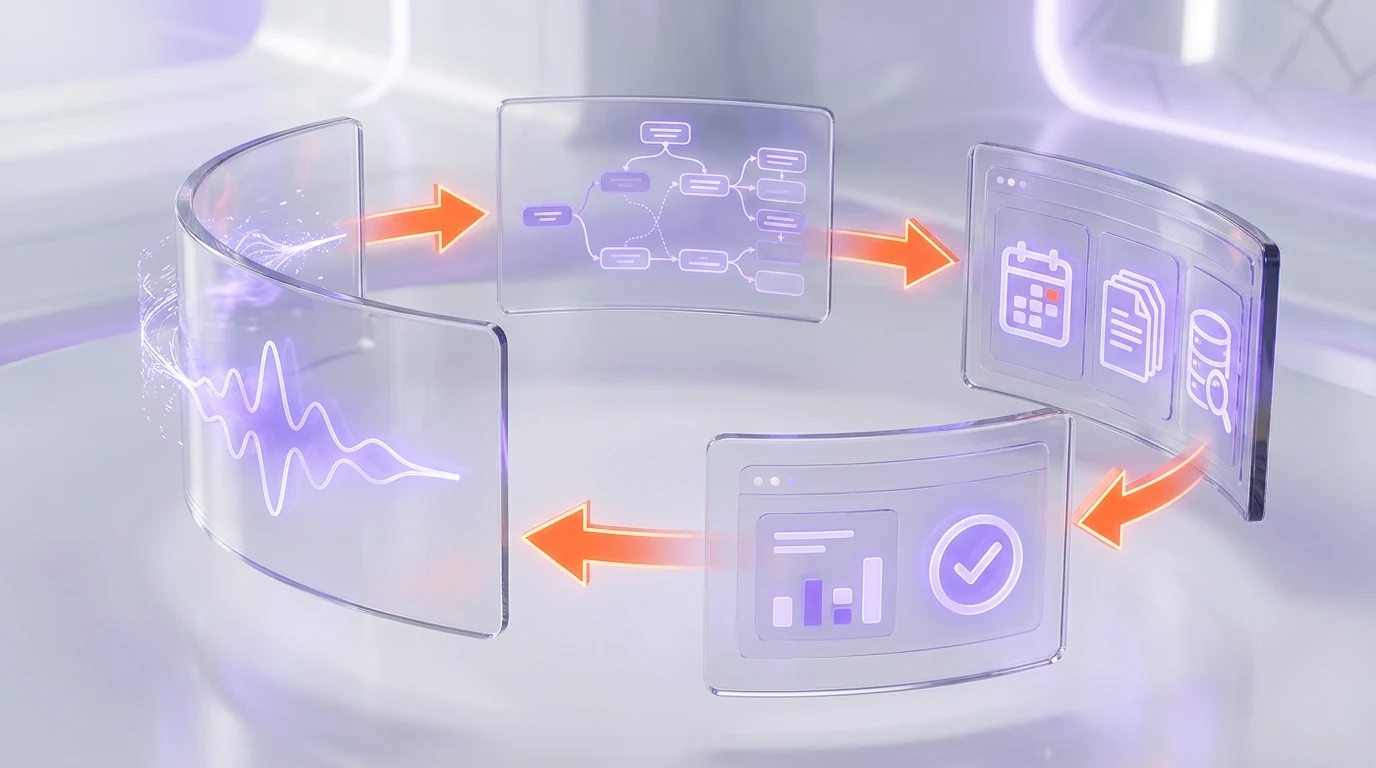
From the Microsoft 365 blog post and adjacent product pages, Cowork's execution loop has four phases:
- Intake. A user delegates a task in natural language ("draft the Q2 partner brief and schedule the readout") via desktop, mobile, or a Skill trigger.
- Plan. Cowork uses Work IQ to ground the request in the user's calendar, files, recent collaborators, and active Dynamics 365 records.
- Execute. The agent calls plugins (Fabric IQ for the data, Outlook for the calendar invite, Word for the brief draft) and writes back to source systems.
- Report. The user sees a single summary card with what was done, what is pending, and what needs human approval before it ships.
This is the same execution-loop pattern we have observed in Claude Code for software engineering tasks and in Cursor's agent mode for codebase modifications — the architectural difference is the surface. Cowork's surface is the Microsoft 365 graph; Claude Code's surface is your repository.
Work IQ: What It Means for Enterprise Data Sensitivity
Microsoft describes Work IQ as the intelligence layer that "understands your data, your tools, and your organization." That phrase is doing a lot of work, and enterprise security teams should read it carefully.
What Work IQ ingests
For Cowork to plan and act, Work IQ needs to read across the customer's Microsoft Graph: SharePoint files, OneDrive content, Outlook mail, Teams chats, calendar items, Dynamics 365 records, and — when integrations are wired up — Fabric and Power BI datasets. None of this is new exposure on the storage side; the data already lived in Microsoft's tenants. What is new is the agent's ability to traverse those silos in a single session and act on what it finds.
Three questions enterprise buyers should ask before opting in
Based on what we observed in the Microsoft 365 documentation and what we have seen tear down on similar agent platforms, three questions are worth asking before flipping Cowork on for a tenant:
- Tenant boundary. Does Cowork's planning loop stay within the customer's tenant, or does any portion of the plan-to-action context cross into shared inference infrastructure? Microsoft's documentation suggests tenant isolation, but specific data flow diagrams have not been published.
- Skill blast radius. A custom Skill that wires Outlook + Excel + Dynamics 365 together is also a custom Skill that can mis-fire across all three. What admin controls limit which users can publish Skills, and which Skills can write versus just read?
- Plugin trust model. When LSEG, Miro, monday.com, or S&P Global Energy plugins ship, what is the auth surface? OAuth-per-user, tenant-wide service principal, or something hybrid? The auth model determines the audit trail.
None of these are accusations. They are the same questions any enterprise buyer should ask of any agentic platform, including the ones we have written about in our Anthropic Managed Agents coverage.

Microsoft Cowork vs Claude Code, Cursor, and Devin
The agentic-execution lane is now a four-horse race in the enterprise: Microsoft Cowork for knowledge work, Claude Code for software engineering, Cursor's agent mode for IDE-native coding, and Cognition's Devin for autonomous developer agents. Each is racing to convert "AI assistant" into "AI coworker," but the surface area is different, and that matters more than the headline.
Surface area, side by side
| Platform | Primary surface | Status | Distribution |
|---|---|---|---|
| Microsoft Copilot Cowork | Microsoft 365 graph (Outlook, Word, Excel, Dynamics, Fabric) | Frontier preview (May 5, 2026) | Gated, pricing not disclosed |
| Claude Code | Software repos, terminal, IDE | Generally available | Anthropic API + Pro/Max plans |
| Cursor (agent mode) | Codebase, editor | Generally available | Cursor Pro/Business — see $50B valuation coverage |
| Cognition Devin | Browser-driven dev environment | GA (waitlist behavior reported) | Cognition direct + enterprise deals |
Who wins which lane
Our read after observing all four platforms in 2026: Microsoft is not trying to win the developer-agent lane. Cowork's surface is the Microsoft 365 graph — the place where 400+ million enterprise seats already live. The bet is distribution, not technical lead. Claude Code, Cursor, and Devin will keep winning the developer agent lane because they are repository-native and toolchain-native in ways Cowork is not. The interesting test is the boundary: a plugin that lets Cowork open a pull request through GitHub or Azure DevOps would put Microsoft in direct contact with what Anthropic's 10-gigawatt compute push is built to defend.

The Industry Shift: Chat is Dead, Agents are the Product
If you read the Cowork announcement in isolation, it looks like a feature update. Read alongside the rest of the 2026 enterprise AI news cycle, it looks like the inflection point a lot of analysts have been calling for since 2025.
The signals are converging
In a 90-day window, we have logged the following moves:
- Sierra hit a $15.8B valuation selling AI agents to Fortune 50 customer-service teams.
- ServiceNow and Accenture announced a forward-deployed engineering model with AI agents at the center.
- Anthropic shipped Managed Agents as a first-party agent runtime, alongside controversy about openness.
- Cursor reached a $50B valuation while building its own model layer to back its agent mode.
- Microsoft pivoted its flagship Copilot from chat to Cowork.
The pattern is unambiguous: in 2026, the product being sold to enterprises is not a chat box; it is an agent that completes a work item. Cowork is Microsoft's entry, distributed through the most embedded enterprise software footprint on the planet.
What this means for buyers
If you are a CIO or a CTO looking at agent platforms in 2026, the practical reality is that you are probably going to run more than one. Cowork for the Microsoft 365 surface, a developer-agent platform like Claude Code or Cursor for engineering, and a vertical agent like Sierra for high-volume customer interactions. The question is no longer "which agent wins?" — it is "which agents are good enough for which surfaces, and how do you govern them as a portfolio?"

Skills: The Reusable Workflow Layer
Skills are arguably the most important addition in the May 5 update, and the most under-explained in the announcement. A Skill is a reusable instruction set — Microsoft's term for what amounts to a parameterized agent template that a team can package once and trigger many times.
Built-in Skills shipping with the May 5 preview
Microsoft listed three categories of built-in Skills:
- Document creation. Templated drafts that pull from SharePoint precedents and adapt tone to the requesting user's history.
- Meeting coordination. Multi-person scheduling, agenda generation, and pre-read distribution that runs across Outlook and Teams.
- Research. Internal-document and web-search synthesis with citation tracking.
Custom Skills
The Skill builder is the more interesting half. Teams can author a Skill once — say, "weekly customer health digest" — and ship it to a Skills library where any authorized colleague can run it. We see two adoption patterns emerging early: (1) RevOps teams packaging account-research Skills, and (2) HR teams packaging onboarding Skills. Both are workflows that already eat hours per week and have clear, bounded inputs.
Governance is the hard part
Skills introduce a governance problem Microsoft has not fully addressed in the May 5 documentation: who can publish a Skill that writes back to Dynamics, who reviews it before it goes broad, and how is Skill lineage tracked when the underlying integrations change. Until Microsoft publishes a Skills admin center with versioning and approval flows, expect early-adopter customers to wrap Cowork in their own change-management process.

Integrations Coming in the "Coming Weeks"
Four third-party integrations were named in the May 5 post as "coming weeks":
- LSEG (London Stock Exchange Group). Capital-markets data and Workspace integration. Likely target: financial analyst Skills that pull market data into briefs.
- Miro. Whiteboarding and visual collaboration. Likely target: meeting Skills that ship a Miro board into a Teams readout.
- monday.com. Work management. Likely target: project Skills that read status across monday.com boards and write summaries into Outlook.
- S&P Global Energy. Energy-sector data. Likely target: vertical Skills for energy and commodities desks.
The integration roster reads like a strategic survey of where Microsoft sees workflow leakage today: market data, design surfaces, project management, vertical data. Each plugin is a beachhead Microsoft does not have to build itself.
Competitive Implications: What Cowork Forces Other Vendors To Do
Google Workspace
Google has shipped Gemini-powered features inside Docs, Gmail, and Meet, but as of this writing there is no equivalent agentic-execution layer that spans Workspace the way Cowork spans Microsoft 365. Expect Google to accelerate either an agent layer in Workspace or a deeper integration with Vertex AI agents.
Salesforce
Salesforce's Agentforce is the closest enterprise analog to Cowork on the CRM surface. Cowork's Dynamics 365 integration directly contests Agentforce's territory inside accounts where Microsoft is the dominant productivity stack. Watch for Salesforce to invest harder in cross-app agent orchestration.
Anthropic and OpenAI
Both are positioned as model layers behind agent platforms rather than agent platforms themselves at the enterprise-productivity surface. Cowork validates the agent-platform thesis without using either company's models as the sole engine — Microsoft's mixed-model strategy across in-house MAI and OpenAI continues to play out in the background.
What We Watched For (And What's Still Unclear)
We approached the May 5 announcement with five questions. After reading the Microsoft 365 blog post, the embedded product pages, and the surrounding press coverage, here is where we landed:
- Pricing. Not disclosed. Cowork is not yet a SKU.
- GA date. Not announced. Frontier-only for now.
- Model engine. Not specified in the announcement, consistent with Microsoft's recent pattern of decoupling Copilot from any single model vendor.
- Audit trails. Mentioned at a conceptual level via Work IQ; concrete admin tooling is not detailed.
- Geographic availability. Frontier scope only; the announcement does not enumerate countries.
We will be tracking the next product update for clarity on each of these. The shape of the GA SKU — whether Cowork is a new tier above Microsoft 365 Copilot or a feature included in existing Copilot subscriptions — will be the single biggest signal about how aggressively Microsoft expects the market to absorb agentic execution.
Bottom Line
Microsoft Copilot Cowork in its May 5, 2026 form is the clearest statement yet that the company is treating "AI coworker" as the next default for the Microsoft 365 graph. Status remains preview-only through the Frontier program — pricing is not disclosed, general availability is not announced, and the third-party integrations with LSEG, Miro, monday.com, and S&P Global Energy are still listed as coming. What is real today is the architectural pivot: chat is no longer the product, execution is. That puts Microsoft in the same lane as Claude Code, Cursor, Devin, Sierra, and the agent-runtime moves we have covered from Anthropic, Sierra, and ServiceNow + Accenture. Cowork's distribution advantage — the existing Microsoft 365 base — is the variable that makes this race genuinely different from the developer-agent fight.
Frequently Asked Questions
Is Microsoft Copilot Cowork generally available?
No. As of May 5, 2026, Cowork is in preview through Microsoft's Frontier program, which is an early-access tier with allowlist gating. It is not available to all Microsoft 365 customers, and Microsoft has not announced a general-availability date.
How much does Copilot Cowork cost?
Pricing is not disclosed. Microsoft has not published a SKU for Cowork or stated whether it will be a separate tier above Microsoft 365 Copilot or included in existing Copilot subscriptions when it reaches general availability.
What is the difference between Microsoft 365 Copilot and Copilot Cowork?
Microsoft 365 Copilot is the chat-style assistant available in Word, Excel, Outlook, and Teams under standard E3 and E5 subscriptions. Copilot Cowork is an autonomous agent layer that plans, executes tool calls, and reports back. Cowork is preview-only via the Frontier program; standard Copilot is generally available.
What are Skills in Copilot Cowork?
Skills are reusable instruction sets — parameterized agent templates that teams can package once and trigger many times. Microsoft ships built-in Skills for document creation, meeting coordination, and research, plus a Skill builder for custom workflows. They were added in the May 5, 2026 update.
Which third-party integrations are coming to Copilot Cowork?
Microsoft listed four third-party integrations as "coming weeks" on May 5, 2026: LSEG (London Stock Exchange Group), Miro, monday.com, and S&P Global Energy. Native integrations with Fabric IQ + Power BI and Dynamics 365 are already available, and a custom plugin path is open.
How does Copilot Cowork compare to Claude Code?
Claude Code is repository-native and toolchain-native, focused on software engineering tasks inside terminals and IDEs. Copilot Cowork is graph-native to Microsoft 365 — Outlook, Word, Excel, Dynamics 365, Fabric. They target different surfaces: developer agent versus knowledge-work agent. Both follow a plan-execute-report loop architecturally.
What is "Work IQ" in Copilot Cowork?
Work IQ is Microsoft's term for the intelligence layer that grounds Cowork in a customer's data, tools, and organizational processes. It traverses the Microsoft Graph — SharePoint, OneDrive, Outlook, Teams, calendar, Dynamics 365 — so the agent can plan and act on real context rather than a generic prompt.
Does Copilot Cowork work on mobile?
Yes, as of the May 5, 2026 update. iOS and Android support shipped with the Frontier preview expansion. Before May 5, Cowork was desktop-bound. Mobile access lets users delegate tasks away from their desk and receive completed artifacts in standard Microsoft 365 surfaces.
Is Microsoft Cowork a competitor to Cursor and Devin?
Indirectly. Cursor and Devin compete in the developer-agent lane, where Cowork does not currently operate. Cowork competes in the knowledge-work lane against tools like Salesforce Agentforce. The lanes will overlap if Microsoft ships GitHub or Azure DevOps Skills that let Cowork open pull requests.
What enterprise security questions should buyers ask about Copilot Cowork?
Three are most pressing: tenant boundary (does the planning loop stay inside the customer's tenant), Skill blast radius (which Skills can write to which systems and who approves them), and plugin trust model (OAuth-per-user versus tenant-wide service principal). Microsoft's documentation addresses these conceptually but full admin tooling is not yet detailed.
How does Cowork fit into Microsoft's broader AI agent strategy?
Cowork is the productivity-graph entry in a portfolio that also includes Dynamics 365 agents, Power Platform agents, and the Azure AI Foundry stack. Microsoft is positioning Cowork as the daily-driver agent for knowledge workers while keeping its model layer flexible across in-house MAI models and OpenAI partnerships.
When will Copilot Cowork reach general availability?
Microsoft has not announced a date. The May 5, 2026 expansion stayed within the Frontier program. Historically, Microsoft has used Frontier as a hardening tier before broader Microsoft 365 rollouts, but no public timeline has been published for Cowork's transition out of preview.