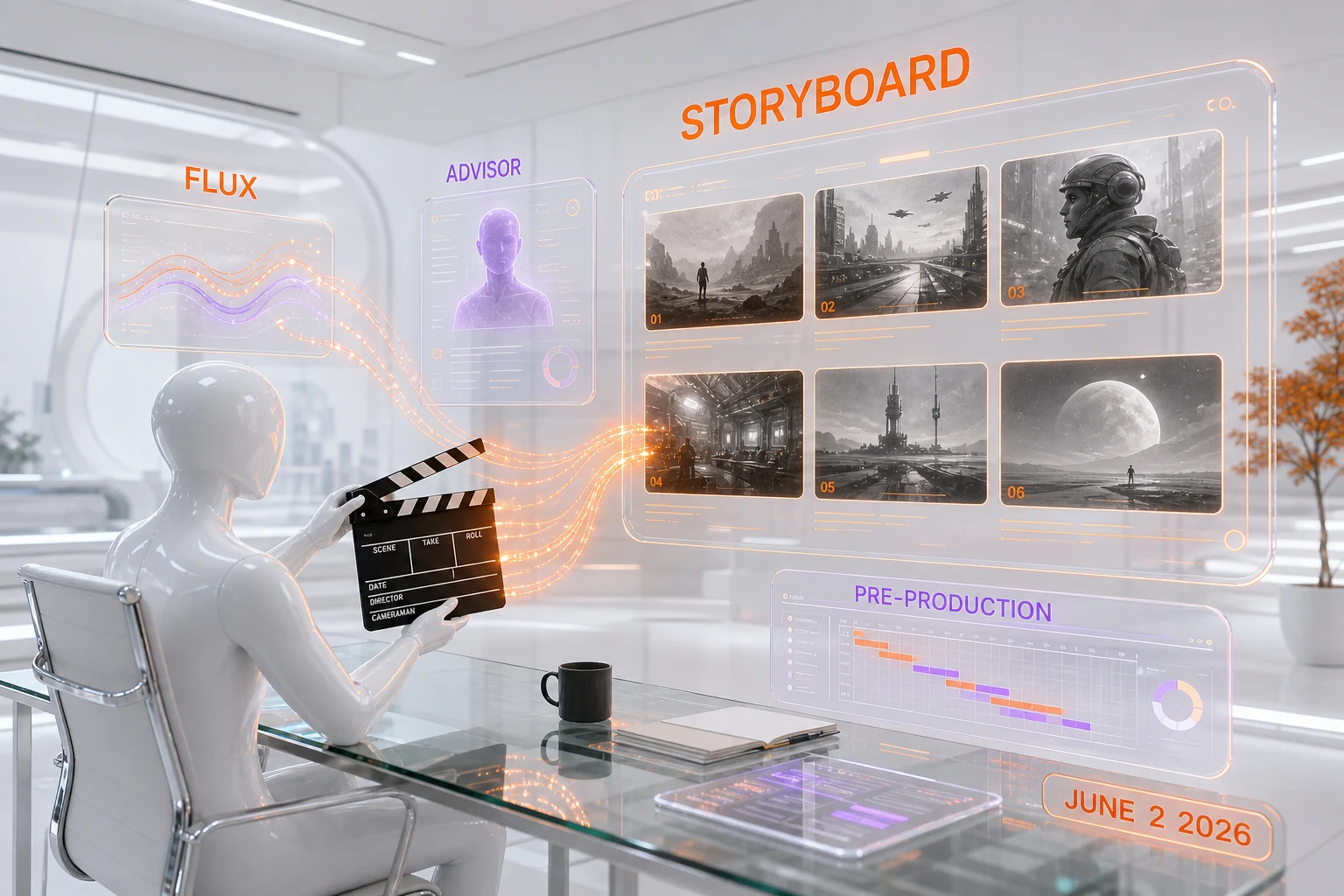
On June 2, 2026, Martin Scorsese became an advisor to Black Forest Labs, the Freiburg, Germany text-to-image lab behind the FLUX model, and said he had used FLUX to storyboard a scene for an upcoming film. In Black Forest Labs’ words, "Now, he’s helping us shape visual intelligence as an advisor." Scorsese’s own description was specific and bounded: "I recently tested this out on a scene and the ability to visualize and immediately share the storyboard was creatively freeing." The key fact to hold onto is the use case. This is storyboarding and previsualization in pre-production, shared with his production designer, art designer, and cinematographer. It is not AI generating the movie. A director with 70 years of craft adopting a generative image model as a pre-production instrument is a real legitimacy signal for AI image tools as professional creative software, and it is also a flashpoint for the storyboard and concept artists who do this work for pay.
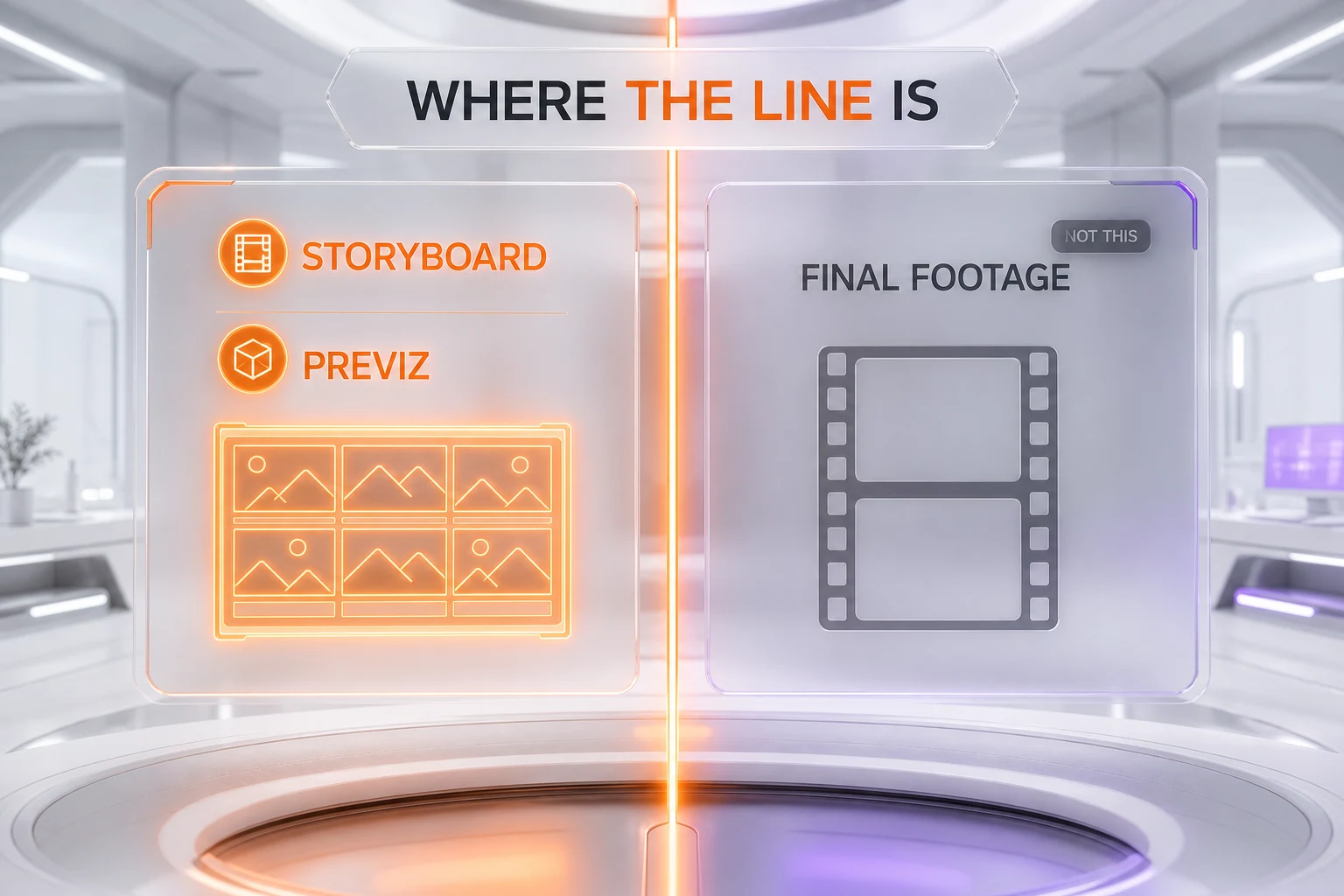
Disclosure: ThePlanetTools.ai has no affiliate or commercial relationship with Black Forest Labs, Martin Scorsese, or any company named in this article. We earn nothing if you click any link here. This is an editorial analysis written from primary sources — Black Forest Labs’ own announcement page — and named outlets including Variety, The Hollywood Reporter, and Rolling Stone. Quotes are attributed. We keep one distinction explicit throughout: FLUX is being used for storyboarding and previz, not to generate final footage.
What actually happened
Black Forest Labs announced on June 2, 2026 that Martin Scorsese is joining the company as an advisor, and published a short video filmed at his New York office in which he uses the firm’s FLUX image model to storyboard a scene. The company’s framing is that Scorsese is "helping us shape visual intelligence as an advisor." Scorsese’s framing is narrower and, for our purposes, more important: he tested FLUX on a single scene during pre-production and found that being able to visualize an idea and immediately share that storyboard frame with his team was, in his word, "freeing."
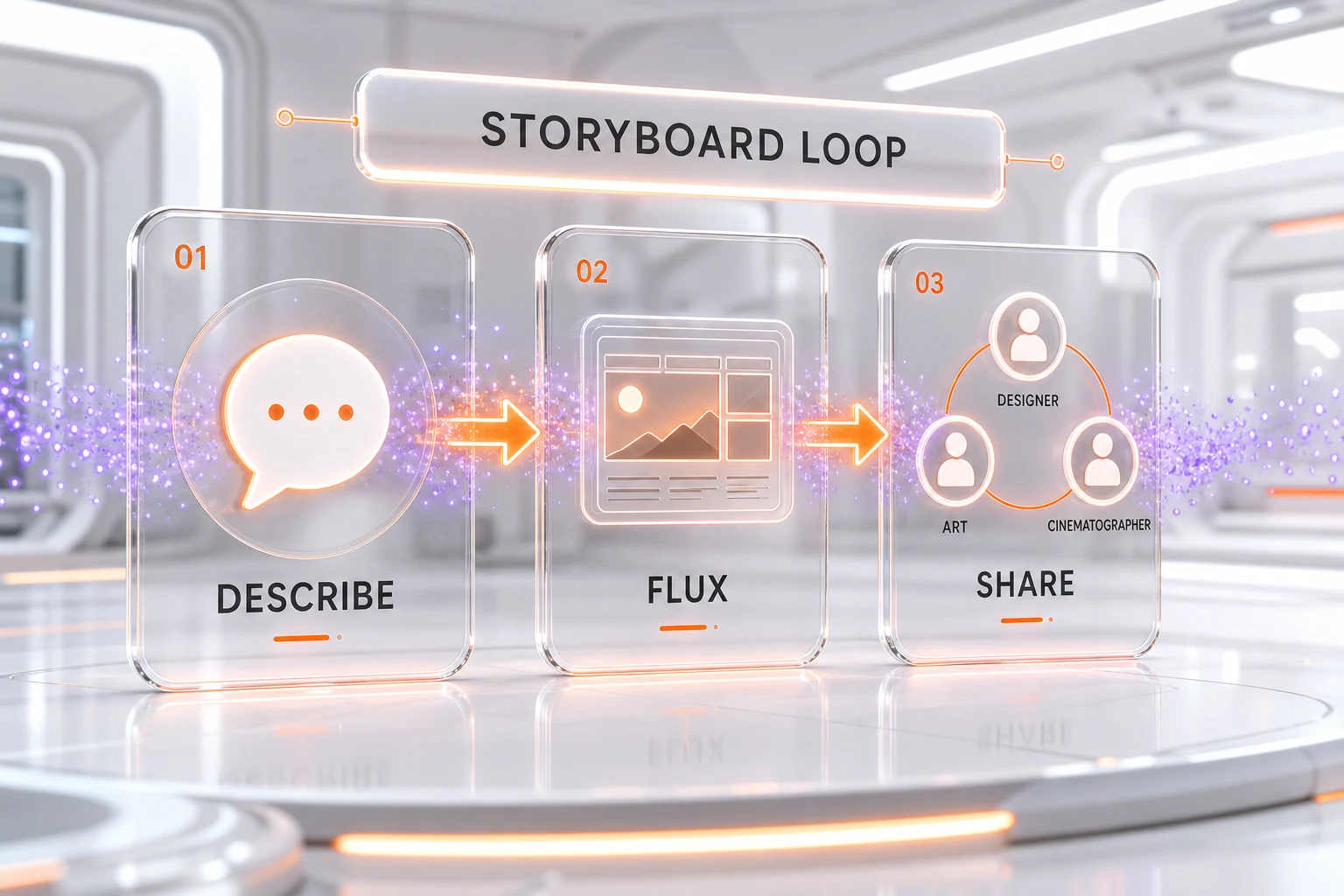
He was explicit about who he shares those frames with. "Now, with this tool, I can share what I’m visualizing more clearly and efficiently to my creative team," he said, naming "the production designer, art designer, and cinematographer." That sentence is the entire mechanism. The output is a storyboard image, the audience is his department heads, and the moment is pre-production. Nothing in the announcement describes FLUX rendering shots that end up in the finished film.
The trade press tied the test to Scorsese’s next project. Several outlets reported the film as a drama starring Leonardo DiCaprio and Jennifer Lawrence. We flag that link as reported rather than confirmed: the primary announcement does not name a title, and the connection between FLUX and any specific picture is secondary to the only thing every source agrees on, which is the storyboarding use case. For a sense of how studio-AI alliances tend to run into walls when the ambition expands beyond previz, our analysis of the stalled Lionsgate-Runway deal is the relevant companion piece.
Storyboarding, not footage — why the distinction is the story
The most common way to misread this announcement is to collapse "Scorsese uses AI" into "Scorsese’s film is AI-generated." Those are different claims, and only the first is supported. Storyboarding is the practice of sketching a sequence of frames to plan camera, blocking, and editing before a single foot of film is shot. It is communication, not production. What FLUX changes for a director is the speed and fidelity of that communication: instead of describing a shot in words, or waiting on a hand-drawn board, he can generate a frame that approximates what he sees and hand it to the people who have to build it.
Scorsese said as much in plainer terms, describing how the tool lets him "figure it out much, much quicker" and "save production time." Saving pre-production time by previsualizing faster is a categorically different thing from replacing the shoot. The footage is still filmed. The actors still act. The cinematographer still lights and shoots. The storyboard is the map, and FLUX draws the map faster. Keeping that line bright is the only honest way to cover this, because both the hype and the backlash depend on blurring it.
The specific creative gap it closes
Every director works with a gap between what they see in their head and what their crew understands from a description. Storyboards exist to close that gap, which is why Scorsese has drawn his own for decades. His claim is that a model which can render and instantly share a frame compresses that loop. The value is not artistic novelty in the output; storyboard frames are disposable planning artifacts. The value is bandwidth between a director and his department heads at the exact moment when alignment is cheapest to fix.
Who Black Forest Labs is, and why FLUX is the model in the frame
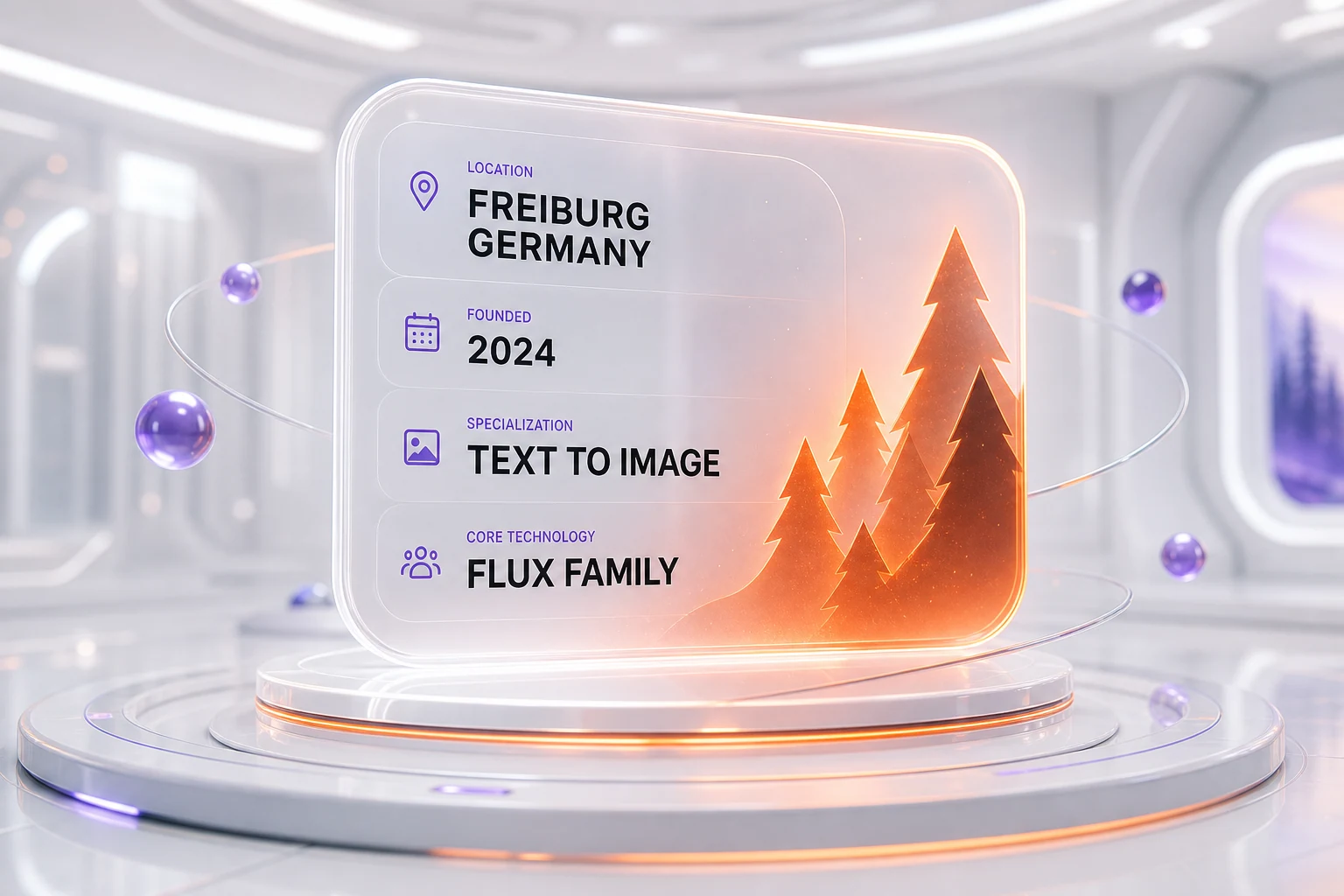
Black Forest Labs is a text-to-image research lab based in Freiburg, Germany, founded in 2024 by Robin Rombach, an alum of Stability AI and a name attached to the Stable Diffusion lineage. Its product is the FLUX family of generative image models, an open-weights flagship line that has become one of the default reference points in 2026 image generation. The advisor announcement is the company’s most visible bid yet to position FLUX not just as a strong model on benchmarks, but as a tool serious creative professionals reach for.
That positioning matters because the open-weights angle is part of why a workflow like storyboarding fits FLUX specifically. A storyboard loop rewards fast, controllable, repeatable iteration on a director’s own terms, and an open-weights base is well suited to that kind of hands-on, self-directed use. We keep a full breakdown of the model in our FLUX 2 review, including where it sits against the frontier proprietary and creative-suite tiers.
How FLUX fits the 2026 image-model landscape
FLUX is not the only model a filmmaker could point at this problem, and the comparison is worth drawing because it explains the choice. The 2026 image-generation field splits roughly into tiers. The frontier proprietary tier includes OpenAI’s GPT Image 2 and Google’s Nano Banana family; the open-weights flagship tier is where FLUX lives; the creative-suite tier covers tools like Adobe Firefly and Midjourney built around end-user creation rather than raw model access.
For a previz workflow, the relevant axes are control, iteration speed, and how cleanly the tool slots into a director’s own process rather than a consumer app. That is the lane FLUX competes hardest in. If you want the proprietary side of the picture, our pieces on ChatGPT Images 2.0 and the Google Nano Banana models cover the frontier tier, and our look at Krea 2 versus GPT Image 2 traces how the aggregator-to-foundation shift is reshaping pricing pressure across the field. None of those tools changes the storyboarding story; they are the menu a director chooses from when deciding which model to make part of pre-production.
The labor and training-data backlash is real, and it is specific
An A-list endorsement does not make the controversy go away; it sharpens it. The objection has two parts, and both are concrete. The first is displacement: storyboard and concept artists are paid to do exactly what FLUX is now doing for Scorsese, and a famous director publicly preferring the model is a signal that worries them. Concept artist Karla Ortiz argued the move "throws every single storyboard artist he’s ever worked with under the bus."
The second is training data. Critics point out that image models are trained on enormous corpora of existing art, often including the work of the same storyboard and concept artists the tool may displace. Animator Sam Deats put it directly: "there is absolutely no reason to need [AI] built on the stolen work of millions of artists to storyboard your vision." Whatever one thinks of the strength of those claims, they are not vague anxieties; they are specific allegations about whose labor trained the model and whose paid work it now substitutes for. A fair account of this announcement has to carry them, not wave them off.

Why it matters, in proportion
The reason this is worth covering is also the reason it is easy to over-claim. Scorsese is not a tech evangelist; he is a director with a documented, decades-long interest in where technology meets storytelling. He used 3D capture in Hugo and digital de-aging in The Irishman, and he framed FLUX in that same lineage: "For 70 years, I’ve been creating my own storyboards," and "Cinema is a young medium, only around 125 years old, so we have to be open to how it can evolve." When someone with that resume treats an image model as a normal pre-production tool, it nudges the entire category from "novelty" toward "instrument."
But the proportion has to be right. This is one filmmaker, using one model, for one stage of the process, on one reported scene. It is a strong legitimacy signal, not proof that generative image tools have been universally accepted by the craft. The same announcement that validates FLUX as professional previz software also drew named, pointed criticism from working artists. Both things are true at once, and the honest version of this story holds them together rather than picking the convenient half.
What would change this read
This is a directional read with stated limits, not a verdict. A few things would weaken or break it. If it emerged that FLUX output was used beyond storyboarding — in actual footage, composites, or final frames — the "previz only" framing would collapse and the labor objections would land much harder. If the advisor role turned out to be primarily a marketing arrangement rather than genuine creative use, the legitimacy signal would deflate. And if a wave of other A-list directors quietly declined to follow, this would read as a one-off endorsement rather than an industry shift. Until then, the defensible reading is narrow and specific: a legendary director adopted an open-weights image model as a pre-production storyboarding tool, that adoption is a meaningful credibility marker for AI image software, and it arrives attached to a real, unresolved fight over the artists whose work the model both displaces and was trained on.
Frequently asked questions
Did Martin Scorsese use AI to generate his movie?
No. Scorsese used Black Forest Labs’ FLUX image model to storyboard a scene during pre-production, not to generate final footage. He said the ability to visualize and immediately share the storyboard was "creatively freeing." The reporting describes previsualization and faster pre-production, not AI-generated film. The distinction is the whole story: a previz tool for a director, not a replacement for shooting.
What is Black Forest Labs and who founded it?
Black Forest Labs is a text-to-image research lab based in Freiburg, Germany, founded in 2024 by Robin Rombach, an alum of Stability AI and the Stable Diffusion lineage. It builds the FLUX family of generative image models, including FLUX.2. The company announced on June 2, 2026 that Scorsese is now an advisor.
What exactly did Scorsese say about FLUX?
Scorsese said, "I recently tested this out on a scene and the ability to visualize and immediately share the storyboard was creatively freeing." He added that the tool let him "share what I’m visualizing more clearly and efficiently to my creative team — the production designer, art designer, and cinematographer." Black Forest Labs said, "Now, he’s helping us shape visual intelligence as an advisor."
Which film is Scorsese using FLUX for?
Press reports tie the storyboarding test to his next film, reportedly a drama starring Leonardo DiCaprio and Jennifer Lawrence. The primary announcement does not name a specific title, so we treat the film-to-FLUX link as secondary and reported, not confirmed. What is confirmed is the use case: storyboarding a scene in pre-production.
Is FLUX generating the actual footage for the film?
No. Every primary and secondary source frames the use as storyboarding and previz only. Scorsese described saving production time during pre-production, not producing shots. There is no claim that FLUX renders the final movie. The model outputs storyboard frames a director shares with collaborators before anything is shot.
Why does a Scorsese endorsement matter for AI image tools?
It is a strong E-E-A-T and legitimacy signal. When a director with seven decades of craft adopts a generative image model as a real pre-production instrument, it reframes the tools from novelty to professional previz. It will not settle the artistic or ethical debate, but it does move "AI image model" closer to "standard pre-production tool" in industry perception.
How does FLUX compare to other AI image models in 2026?
FLUX is the open-weights flagship lineage, competing with frontier proprietary models like GPT Image 2 and Google’s Nano Banana, and with creative-suite tools like Adobe Firefly and Midjourney. Each occupies a different tier; FLUX’s draw for a workflow like storyboarding is fast iteration and a controllable, self-hostable open-weights base. See our FLUX 2 breakdown for the model details.
What are storyboard and concept artists saying about this?
Some are critical. Concept artist Karla Ortiz argued the move "throws every single storyboard artist he’s ever worked with under the bus," using models "trained on those storyboard artists’ same works." Animator Sam Deats said "there is absolutely no reason to need [AI] built on the stolen work of millions of artists to storyboard your vision." The displacement and training-data objections are central to the backlash.
Has Scorsese embraced new technology before?
Yes. He framed this as part of a long pattern, saying, "For 70 years, I’ve been creating my own storyboards" and "I’m interested in the intersection of technology and storytelling." Reporting noted his earlier use of 3D in Hugo and de-aging in The Irishman. He also said, "Cinema is a young medium, only around 125 years old, so we have to be open to how it can evolve."
Does this mean AI is replacing filmmakers?
No, and that is not the claim being made. The specific, reported use is one director using an image model to communicate his vision to his crew faster. That is augmentation of pre-production, not replacement of directing, acting, cinematography, or shooting. The honest read is narrow: a previz adoption by an A-list filmmaker, with a real labor and training-data debate attached.
Is this article affiliated with Black Forest Labs or Scorsese?
No. ThePlanetTools.ai has no affiliate or commercial relationship with Black Forest Labs, Martin Scorsese, or any company named here, and earns nothing from any link in this article. This is an independent editorial analysis built from primary sources and named outlets, with quotes attributed and the storyboarding-versus-footage distinction kept explicit throughout.
Editorial note & disclosure (repeated): No affiliate or commercial relationship exists between ThePlanetTools.ai and Black Forest Labs, Martin Scorsese, or any company named here. We earn nothing from any link in this article. Quotes are drawn from Black Forest Labs’ announcement and from reporting by Variety, The Hollywood Reporter, and Rolling Stone, and are attributed in the text. The film-to-FLUX connection is reported, not confirmed by the primary source, and is treated as secondary. Throughout, we keep the storyboarding-and-previz use distinct from final footage generation, because the entire meaning of the story depends on that line.