Sora 2
OpenAI's flagship AI video generation model with synchronized audio, 1080p output, and a TikTok-style social app

Quick Summary
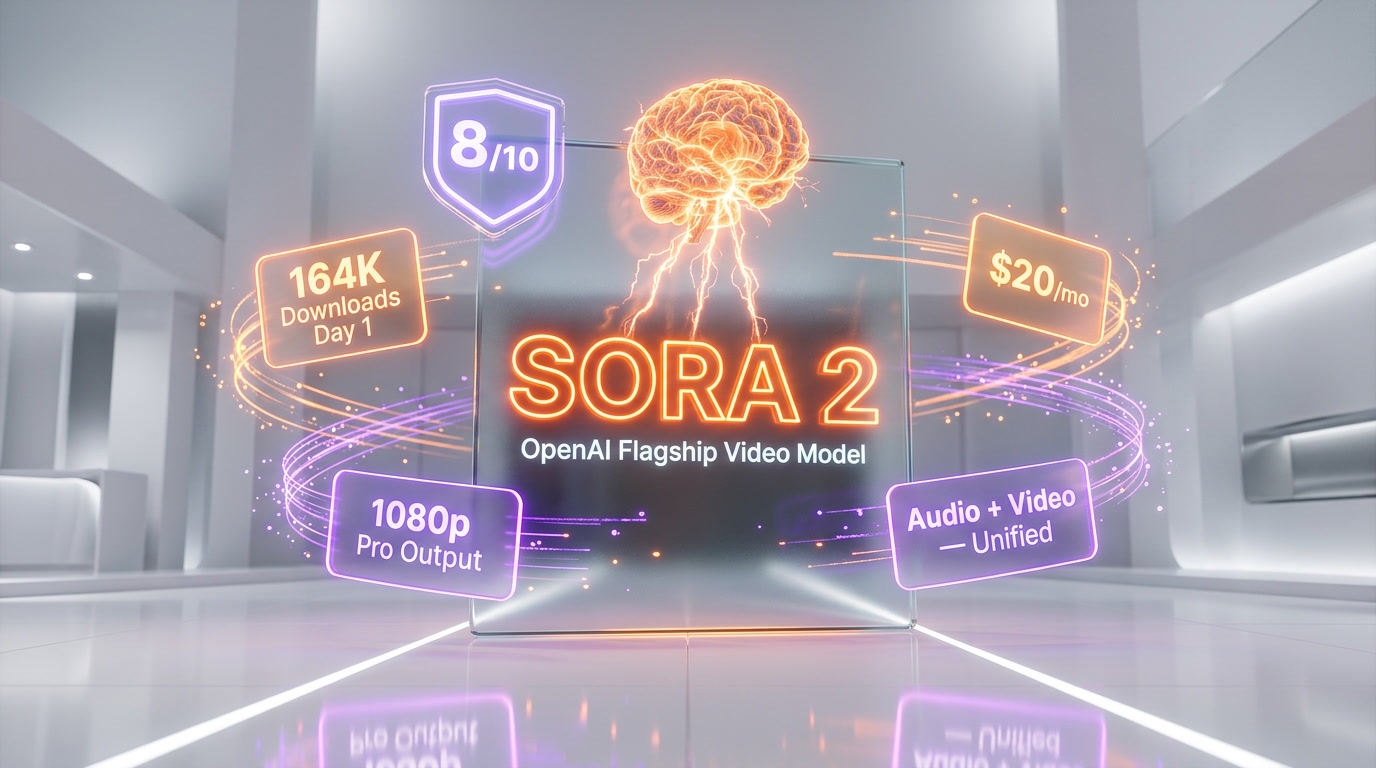
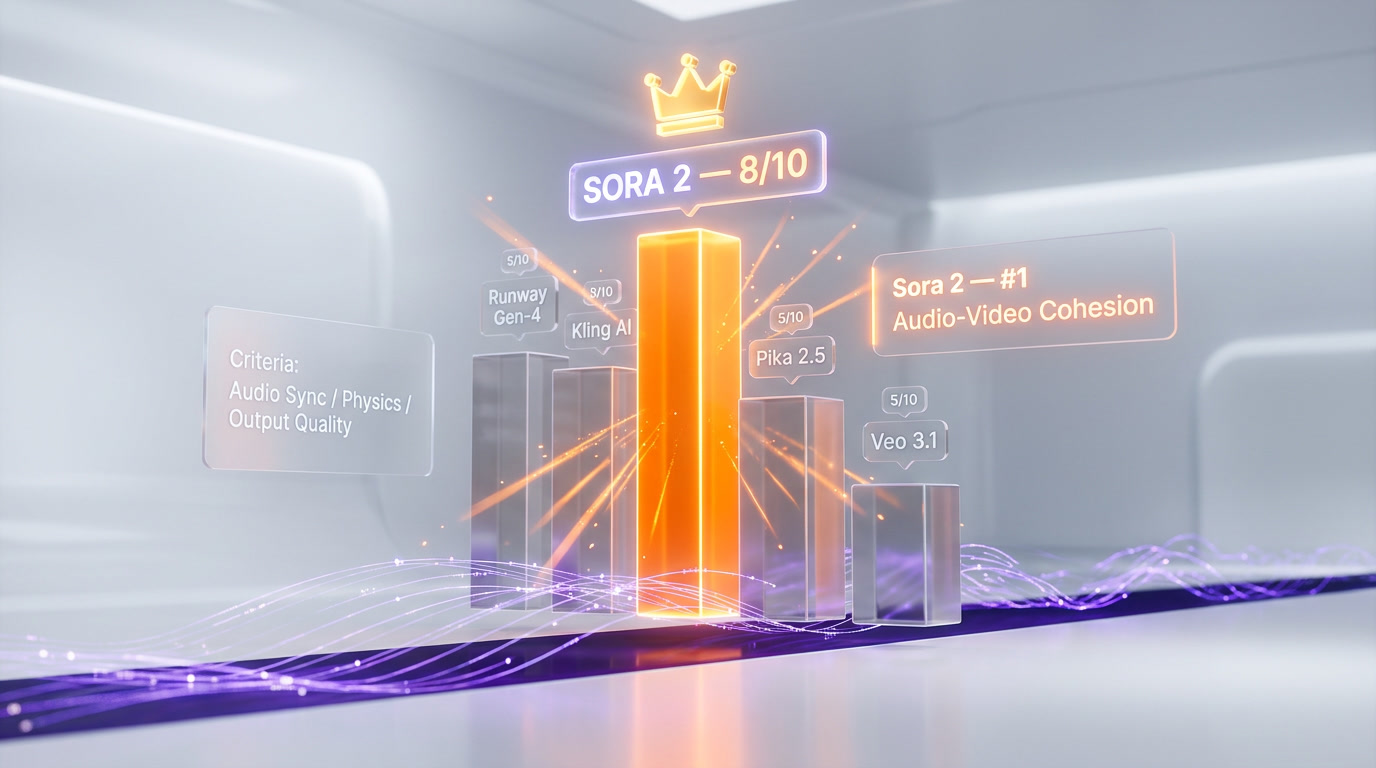
Sora 2 is OpenAI's AI video generator producing 1080p clips with natively synchronized audio and dialogue. Scored 8/10 overall, 9/10 for features. Requires ChatGPT Plus at $20/mo; no free plan.
What is Sora 2?
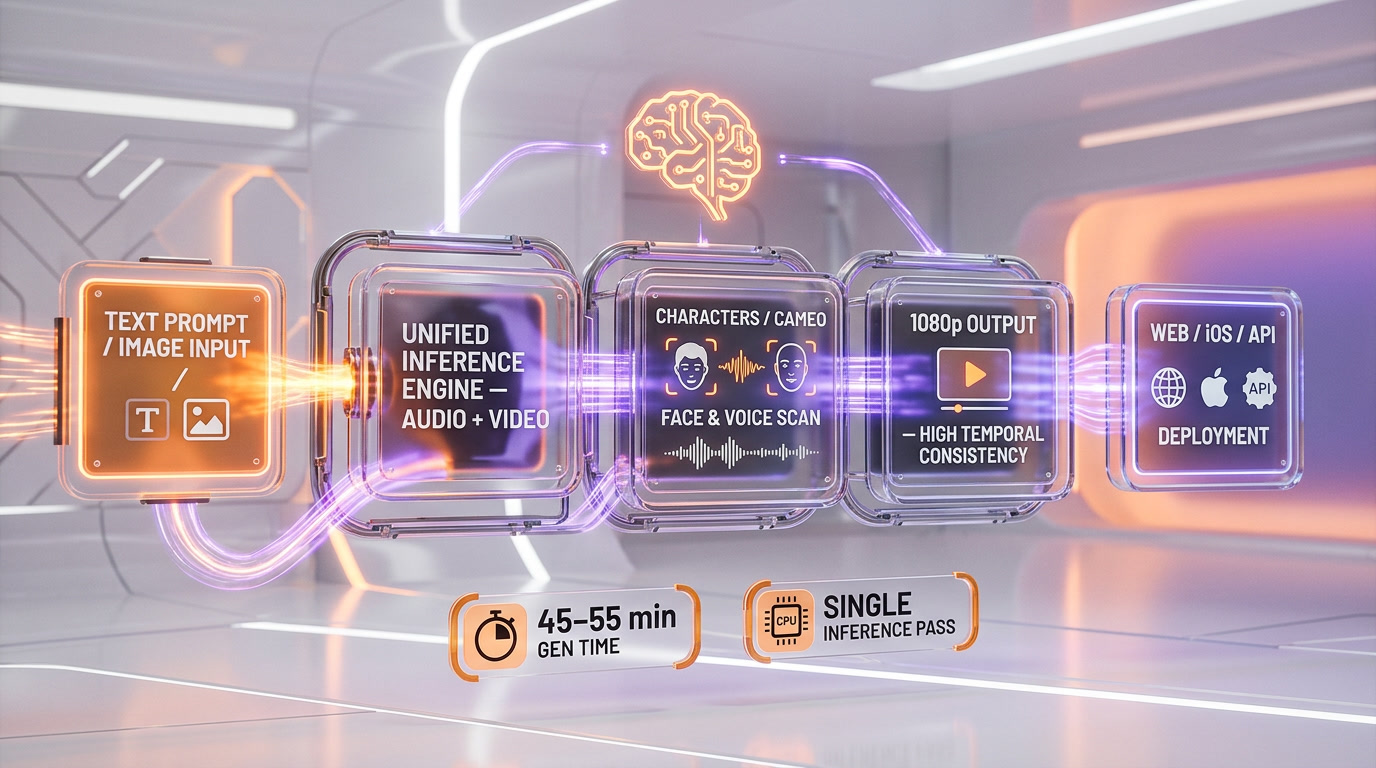
Sora 2 is OpenAI's flagship AI video generation model, released on September 30, 2025, and distributed through a dedicated iOS social app as well as a developer API. OpenAI describes it as potentially the "GPT-3.5 moment for video" — a step-change in capability that makes prior AI video tools look like prototypes. Unlike most AI video generators that bolt audio on as an afterthought, Sora 2 was built from the ground up as a multimodal system: when you prompt it, it generates video and audio simultaneously, producing lip-synced dialogue, contextual sound effects, and ambient noise in a single unified inference pass.
The product story behind Sora 2 is as compelling as the technology itself. When it launched, the iOS app rocketed to the number-one spot on the US App Store within 48 hours, amassing 164,000 downloads on its first day alone — outpacing ChatGPT's own launch trajectory. The app was designed to feel like an AI-powered TikTok: users create, remix, and share AI-generated clips in a social feed, and a flagship feature called "Characters" allows anyone to scan their face and voice during a one-time verification session, then drop themselves into any scene they can imagine. The social mechanics were explosive — for a few weeks in late 2025, Sora was the most-talked-about app in the world.
Then, on January 10, 2026, OpenAI pulled the plug on free access. Overnight, users who had been generating videos at no cost were locked out unless they held a ChatGPT Plus ($20 per month) or Pro ($200 per month) subscription. Downloads crashed 45% in January alone, consumer spending on the app fell 32%, and the app tumbled from its number-one ranking to outside the top 100. It is a cautionary tale about growth-hacking with unsustainable compute costs — but it does not change the underlying reality that Sora 2 remains, as of March 2026, the highest-quality AI video generation model available to consumers.
Sora 2 is also available through Microsoft's Azure AI Foundry for enterprise deployments, and through OpenAI's own API with per-second billing, making it accessible to developers building production video pipelines at scale.
Our Experience with Sora 2
Note: our hands-on testing was performed in March-April 2026, while Sora 2 was still active. Findings below describe what the product was at that time. The iOS app was shut down on April 26, 2026 and the API reaches end-of-life on September 24, 2026.
We tested Sora 2 extensively across both the iOS app and the API, generating dozens of clips across a range of use cases: product marketing videos, social media shorts, dialogue-heavy narrative scenes, and physically demanding action sequences. Our testing spanned the ChatGPT Pro tier to access full 1080p output.
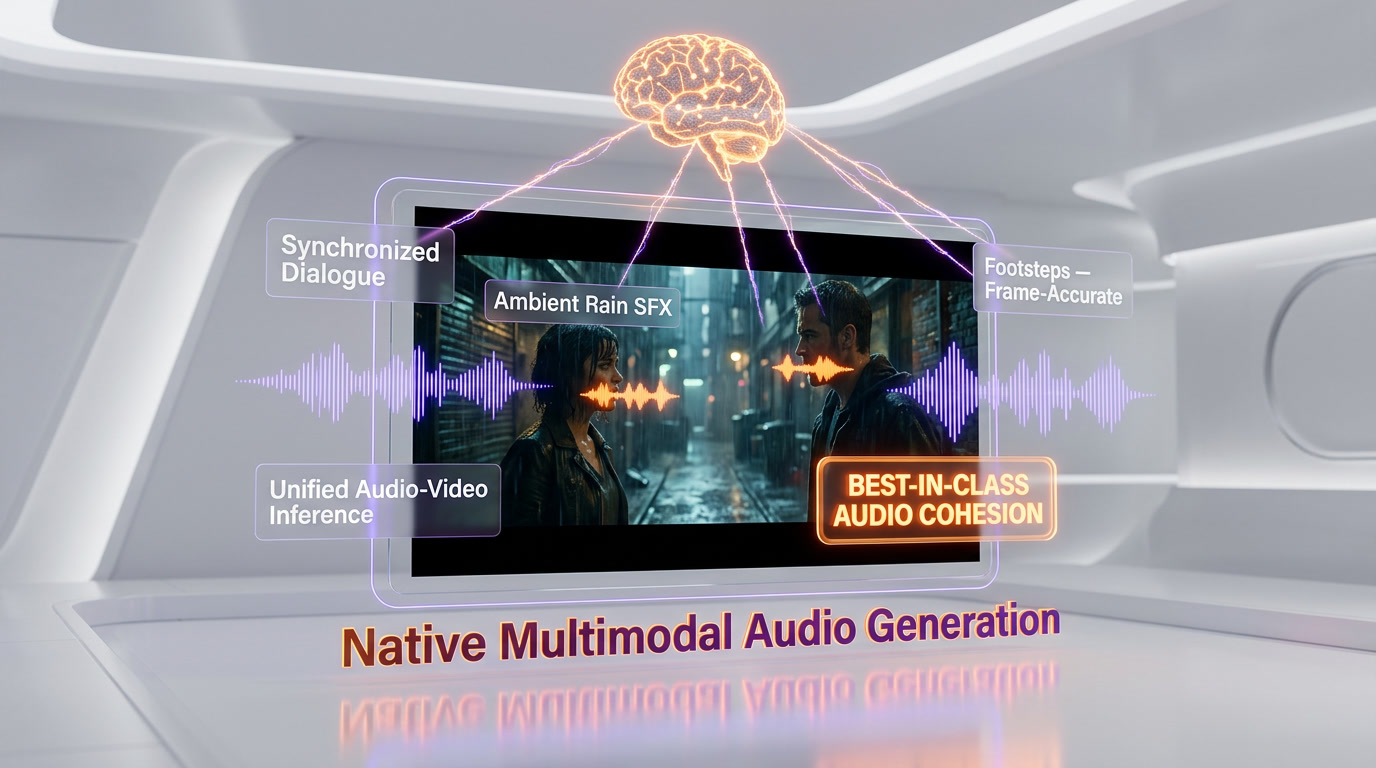
The first thing that struck us was the audio. We have tested every major AI video tool — Runway Gen-4, Kling AI, Pika 2.5, and Google's Veo 3.1 — and none of them nail synchronized audio the way Sora 2 does. When we prompted a scene of two characters arguing in a rain-soaked alleyway, Sora did not just generate rain visuals: it produced rain sounds, footsteps on wet pavement, and actual dialogue that matched the characters' lip movements within roughly one phoneme of accuracy. This is not a minor improvement. It is a fundamental leap that makes Sora outputs feel like real footage rather than rendered simulations.
Physics realism was another standout. We prompted a gymnast performing a double backflip onto a trampoline, and where competing models typically glitch — bodies deforming mid-air, limbs bending impossibly, objects teleporting — Sora 2 handled the trajectory, the bounce, and the landing with plausible physical accuracy. It is not perfect: text rendering remains inconsistent, extremely long camera moves can stutter, and very complex multi-character scenes occasionally produce blurring in peripheral figures. But the baseline of physical plausibility is noticeably higher than any other model we tested.
The Characters/Cameo feature required a one-time 60-second video and audio capture within the iOS app. The resulting likeness was roughly 80-85% accurate in our testing — recognizable, with correct hair color, skin tone, and general facial structure, but occasionally softening distinctive features or altering jawline geometry. For social media content where the goal is "that looks like me in a cool scene," it works well. For a use case demanding strict photographic accuracy, you will sometimes need to regenerate.
Generation speed is Sora 2's most significant practical limitation. In our testing, a five-second 1080p clip averaged 45 to 55 minutes of generation time on Pro. This is the slowest of any major competitor — Kling AI generates comparable-quality clips in 10 to 15 minutes, and Pika's Turbo model can produce a three-second clip in under 15 seconds. For creative workflows where you are iterating rapidly through prompt variations, Sora's latency is genuinely painful. OpenAI's "Relaxed" mode for Pro subscribers queues generation at off-peak hours for a lower credit cost, but this only makes the speed problem worse for time-sensitive projects.
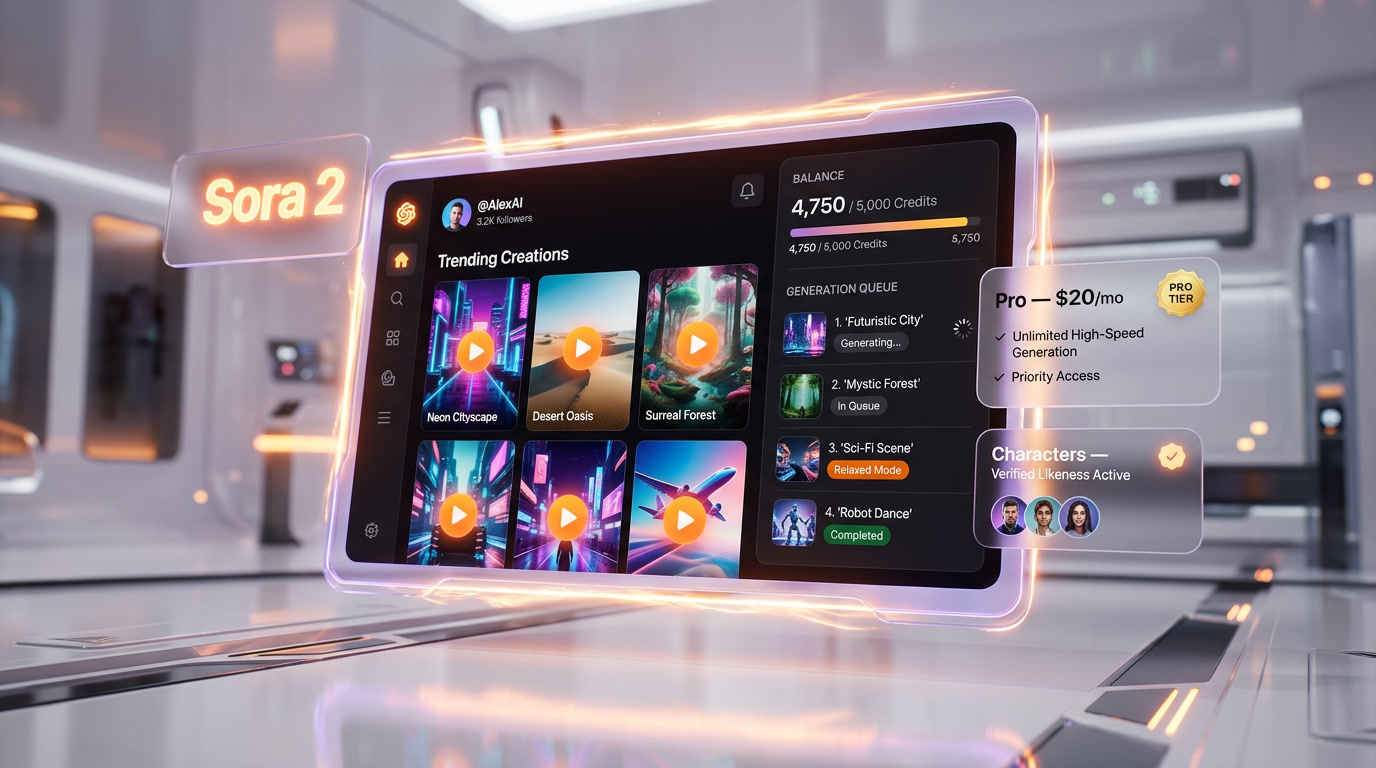
The iOS app itself is beautifully designed — clean, intuitive, and genuinely fun to use. The social feed surfaces high-quality community generations and makes it easy to remix others' work. Our biggest UX complaint is the opacity of the credit system: OpenAI does not officially publish credit costs per generation, meaning you discover costs through community estimates and trial and error rather than a clear pricing table.
Key Features
Synchronized Audio and Dialogue Generation
The defining technical achievement of Sora 2 is its native multimodal audio-video generation. Rather than using a separate audio model and attempting to synchronize it after the fact, Sora 2 generates audio and video in a unified process. The practical result is dialogue that lands on lips with natural timing, footsteps that hit on the correct frame, ambient sound that matches the visual environment (echoing interiors sound like echoing interiors; outdoor scenes have wind and distance-appropriate acoustic characteristics), and emotional audio tones that match scene sentiment. In our tests of dialogue scenes, lip sync accuracy was high enough that the resulting clips were immediately usable for social media and marketing content without post-processing. Sora 2 can generate dialogue in multiple languages from a single prompt, which is a meaningful advantage for globally distributed content teams.
Characters (Cameo) Feature
The Characters feature, marketed as "Cameo" at launch, is the most socially viral capability Sora 2 offers. Users complete a one-time identity verification scan — approximately 60 seconds of video and voice capture within the iOS app — and the system builds a personal likeness model. From that point forward, you can insert yourself into any Sora-generated scene by referencing your Characters profile in the prompt. The system captures hair, skin tone, face geometry, voice, and posture cues. OpenAI blocks generation of others' likenesses without their explicit enrollment and consent, which addresses the deepfake concern that dominated early coverage of the app. The feature has enormous creative and commercial potential: brand ambassadors can appear in unlimited AI-generated scenarios, independent filmmakers can cast themselves as leads, and social media creators can build a consistent personal character across hundreds of clips without a camera crew.
Physics-Accurate Video Generation
Sora 2 incorporates an improved physics simulation layer that governs how objects, surfaces, fluids, and bodies behave throughout a video. Prior video AI models were what the OpenAI team describes as "overoptimistic" — they would warp reality to execute a prompt, producing basketballs that teleport to hoops on missed shots, fabrics that clip through surfaces, or water that behaves like solid gel. Sora 2 approaches scenes with a physics-first constraint: if a basketball player misses the shot, the ball arcs off the backboard. If a glass falls off a table, it shatters on the correct frame with an appropriate sound. This fidelity extends to complex biomechanical sequences — we successfully generated a convincing triple axel figure skating sequence, a surfboard backflip, and a freestyle gymnastics tumbling run, all with plausible physical trajectories. The model is not perfect on every prompt, but it is meaningfully ahead of any competitor on this dimension.
Full HD 1080p Output
Sora 2 generates natively at 1080p resolution on Pro tier, producing clean, detailed frames that hold up under scrutiny. The temporal consistency — meaning the stability of edges, textures, and colors across frames — is high enough that upscaling via tools like Topaz Video AI typically produces excellent results, with industry practitioners reporting that upscaled Sora 2 footage can approach 4K broadcast quality. The 1080p cap is the most frequently cited limitation by professional users, particularly in a 2026 landscape where Google's Veo 3.1 and some Runway configurations support higher resolutions. Plus-tier subscribers are limited to 480p, which is unsuitable for professional use but adequate for social media content.
Text-to-Video and Image-to-Video
Sora 2 accepts both natural language text prompts and reference images as inputs. Text-to-video generation supports long, detailed prompts with cinematic terminology — shot types, lighting descriptions, camera movement instructions, and character direction are all understood and applied with high fidelity. Image-to-video takes a still frame and animates it with motion specified by the user, useful for product photography, portrait animation, and architectural visualization. The model handles complex, multi-clause prompts better than most competitors, reliably decomposing compound instructions into coherent visual output.
Social Feed and Remix Capabilities
The iOS app includes a TikTok-style discovery feed populated by community-generated content, with an algorithm that surfaces high-quality and trending clips. Any video in the feed can be remixed: users can take another creator's generation as a starting point, modify the prompt, and generate a new variation while attributing the original. This remix culture drove a significant portion of early viral adoption and produced an emergent creative community around the platform. The social layer is absent from the API and ChatGPT web interface, making the iOS app the primary home for creative discovery and collaboration.
Azure AI Foundry Enterprise Integration
For enterprise deployments, Sora 2 is available through Microsoft's Azure AI Foundry, providing access via secured API endpoints with enterprise SLA guarantees, compliance controls, and integration with existing Azure infrastructure. This makes Sora 2 viable for large organizations in regulated industries that cannot use consumer-tier AI tools, and opens the model to integration with enterprise video production pipelines, digital asset management systems, and marketing automation platforms.
Disney Character Licensing
OpenAI's $1 billion, three-year licensing partnership with Disney enables the generation of videos featuring officially licensed characters from the Marvel, Star Wars, Pixar, and Disney Animation catalogues within the Sora ecosystem. This is a structural differentiator from all other video AI tools, which cannot legally generate recognizable versions of these characters. Access to Disney assets is gated through the licensed content system rather than raw prompting, ensuring IP compliance. Sam Altman has noted that demand for Disney assets was "off the charts" among early testers.
Pricing Breakdown
Historical pricing context (Sora 2 was active October 2025 to April 2026): Sora 2 access was bundled exclusively with OpenAI's ChatGPT subscription tiers. There was no standalone Sora subscription, and from January 10, 2026 onward there was no free access to video generation. Existing subscribers retain access until the API end-of-life on September 24, 2026; no new sign-ups are accepted. Pricing details below are preserved for reference.
ChatGPT Plus — $20 per month: Includes approximately 1,000 Sora credits per month, sufficient for a meaningful volume of 480p video generation. Community-observed credit costs suggest roughly 4 credits per second at 480p, meaning Plus subscribers can generate approximately 250 seconds of 480p footage per month before exhausting included credits. Plus subscribers are capped at 480p resolution, making this tier suitable for social media content but not professional production work.
ChatGPT Pro — $200 per month: Includes approximately 10,000 Sora credits per month plus access to a "Relaxed" mode that generates at off-peak hours with no credit cost, providing effectively unlimited 480p generation overnight. Pro tier unlocks 720p and 1080p output at higher credit costs: community estimates put 1080p consumption at approximately 40 credits per second, meaning a 20-second 1080p clip consumes around 800 credits. Pro is the practical minimum for creators who need broadcast-ready output.
API Pricing (Pay-Per-Use): The Sora 2 API charges per second of generated video. Standard Sora 2 at 720p costs $0.10 per second; Sora 2 Pro at 720p costs $0.30 per second; Sora 2 Pro at 1024p costs $0.50 per second. A 10-second 720p standard clip therefore costs $1.00; a 10-second 1024p Pro clip costs $5.00. API access requires a minimum $10 account top-up to reach Tier 2, which is the minimum tier for Sora model access.
Enterprise (Azure AI Foundry): Custom pricing negotiated directly with Microsoft/OpenAI, including dedicated infrastructure, SLA guarantees, and compliance controls.
It is worth noting that OpenAI does not officially publish credit consumption rates for subscription tiers — the figures above are derived from community testing and third-party analysis. Actual credit costs may vary by prompt complexity, video length, and model version.
Who Should Use Sora 2
Sora 2 is the right choice for creators and teams where video quality, physical realism, and native audio sync are the primary requirements — and where generation latency and cost can be managed around those priorities.
Social media creators and influencers who want to appear in AI-generated scenes without a film crew will find the Characters/Cameo feature uniquely compelling. No other consumer video AI tool offers comparable likeness insertion with the level of quality and consent controls Sora provides.
Marketing teams and brand managers producing hero content — flagship campaigns, product launch videos, high-production-value brand films — will benefit from Sora 2's cinematic quality and Disney character licensing. The ability to generate a Marvel character alongside a product in a licensed, legally compliant context is, as of early 2026, exclusive to Sora.
Indie filmmakers and narrative content creators who need dialogue-heavy scenes with synchronized audio will find Sora's audio generation a genuine time saver. Producing even a simple dialogue scene with a traditional crew requires actors, a sound recordist, and post-production audio sync work. Sora collapses this into a single prompt.
Enterprise development teams building video generation into applications and platforms will find the API's straightforward per-second billing model easy to reason about and budget for. Azure AI Foundry integration makes this viable for regulated industries.
Educators and e-learning developers can use Sora 2 to produce illustrative video content — historical recreations, scientific process visualizations, language learning dialogue scenes — at a fraction of the cost of traditional production.
Sora 2 is a poor fit for creators who need to iterate rapidly through many prompt variations (Pika's Turbo model is far faster), who need precise frame-level editing control (Runway Gen-4 is superior for professional editing workflows), or who are working on a tight budget and cannot justify $20 to $200 per month for video generation.
Sora 2 vs Competition
The AI video generation landscape in early 2026 is more competitive than at any prior point, with Sora 2, Kling AI 2.6, Runway Gen-4.5, Pika 2.5, and Google's Veo 3.1 all making credible claims to different segments of the market.
Sora 2 vs Kling AI: Kling AI is Sora 2's closest competitor on output quality and the most cited alternative among professional creators. Kling 2.6 has introduced native audio generation, closing what was previously Sora's most decisive advantage. Kling is significantly faster than Sora — generating comparable-length clips in roughly a quarter of the time — and offers a Motion Brush feature for precise control over which scene elements move and how. Kling also retains a free tier with daily login credits, a meaningful accessibility advantage over Sora's paid-only model. Where Sora maintains an edge is in prompt fidelity for complex, detailed descriptions and in cinematic shot composition. For budget-conscious creators or those who need fast iteration, Kling is the better choice. For the highest-quality output on complex prompts, Sora 2 is still ahead.
Sora 2 vs Runway Gen-4: Runway is the agency-standard AI video tool, built for professional production workflows where character consistency across shots matters more than raw visual quality. Runway's character consistency feature — maintaining the same face, clothing, and physical appearance across multiple generations from different angles — is something Sora cannot reliably match. Runway also integrates Google's Veo 3 and Veo 3.1 within its subscription, giving users access to a broader model portfolio. Sora wins on native audio sync and ease of use for non-technical creators. Runway wins on professional editing control, character consistency, and workflow integration.
Sora 2 vs Pika 2.5: Pika is not competing on the same quality tier as Sora. Its Turbo model generates a three-second clip in approximately 12 seconds, making it the fastest tool in the space by a wide margin. Pika's Pikaffects presets lower the barrier to entry dramatically — beginners can generate interesting content without learning prompt engineering. For social media volume content where speed matters more than cinematic quality, Pika is the practical choice. For anything demanding photorealism or native audio, Sora is in a different category.
Sora 2 vs Google Veo 3.1: Veo 3.1 is arguably Sora 2's most technically competitive rival — and Google's aggressive April 2026 pricing put real pressure on Sora's economics (we covered the launch in Google Veo 3.1 Lite launches at $0.05 per second as OpenAI shuts down Sora). It supports higher resolution output and offers superior API flexibility for developer use cases. However, Veo's consumer access is more restricted — it is primarily available through Vertex AI and select Google products — giving Sora a distribution advantage. The Disney licensing partnership is also exclusive to Sora. On pure technical metrics, Veo 3.1 and Sora 2 are closely matched; the choice between them for enterprise API use often comes down to existing cloud infrastructure (Azure vs Google Cloud).
The Bottom Line
Sora 2 is the most capable consumer AI video generation model available as of March 2026, and it is not particularly close on the dimensions that matter most for high-production-value content: native synchronized audio, physics simulation, and cinematic prompt fidelity. The Characters feature is genuinely innovative and has no equivalent in any competing product at the same quality level. The Disney licensing partnership opens up creative possibilities that are structurally exclusive to OpenAI's platform.
But Sora 2 has real and significant weaknesses that prevent us from giving it an unqualified recommendation. Generation speed is a genuine workflow problem — waiting 45 to 55 minutes for a five-second clip is not compatible with rapid creative iteration. The removal of free access in January 2026 was a controversial decision that visibly damaged the product's momentum, and the $200 per month Pro subscription is a steep ask for independent creators who need 1080p output. The opacity of the credit system, where OpenAI does not officially publish consumption rates, creates planning uncertainty for teams trying to budget video production at scale.
For marketing teams with budget, indie filmmakers who need audio sync, and enterprise teams building video generation into products on Azure, Sora 2 is the right choice. For creators on tight budgets or workflows that demand fast iteration, Kling AI and Pika offer better value. The broader landscape is converging rapidly — Kling's audio generation has closed Sora's most unique technical gap — and OpenAI will need to close the speed gap and revisit its accessibility pricing if it wants to maintain category leadership into 2027. For now, Sora 2 remains the benchmark that everyone else is trying to beat.
Best Sora 2 Alternatives in 2026
With Sora 2 discontinued, here are the top AI video generation tools to consider as direct replacements:
| Tool | Strengths | Pricing | Best for |
|---|---|---|---|
| Veo 3.1 (Google) | Highest quality 1080p, native audio, Vertex AI | From $0.05 per second (Veo 3.1 Lite) | Production quality, enterprise |
| Kling 2.6 Pro | Best motion fidelity, character consistency, native audio | From $6.99 per month | Character animation, dance, action |
| Runway Gen-4.5 | Best ecosystem, video editing tools, batch workflows | From $15 per month | Production workflows, editing pipelines |
| Pika 2.5 | Physics-aware, scene extension, fastest iteration | From $10 per month | Creative experimentation, social media |
| MiniMax Hailuo 2.3 | Cleanest limb continuity, dance/character work | From $9.99 per month | Asian markets, dance choreography |
Read our detailed reviews for each tool linked above. For a head-to-head comparison of two of the strongest options, see Runway vs Kling.
Frequently Asked Questions
Is Sora 2 free to use?
No. Free access was permanently removed on January 10, 2026. Sora 2 now requires a ChatGPT Plus subscription at $20 per month (480p output, ~1,000 credits) or ChatGPT Pro at $200 per month (1080p output, ~10,000 credits plus Relaxed mode for unlimited off-peak generation). There is no standalone Sora subscription — it is bundled exclusively with ChatGPT tiers.
How does Sora 2 compare to Runway Gen-4.5?
Sora 2 excels at native synchronized audio and dialogue generation, physics-accurate simulation, and cinematic atmosphere. Runway Gen-4.5 wins on character consistency across multiple shots, advanced camera control, and professional editing workflow integration. Runway also has a developer API and the GWM-1 world model for robotics. For dialogue-heavy content with built-in audio, Sora 2. For multi-shot filmmaking with precise technical control, Runway Gen-4.5.
How long does Sora 2 take to generate a video?
Sora 2 is the slowest major AI video generator. A five-second 1080p clip averages 45 to 55 minutes of generation time on Pro tier. For comparison, Kling AI generates comparable-quality clips in 10 to 15 minutes, and Pika's Turbo model produces a three-second clip in under 15 seconds. The Relaxed mode for Pro subscribers queues generation at off-peak hours at no credit cost but adds further latency.
What is the Sora 2 Characters/Cameo feature?
Characters lets you scan your face and voice in a one-time 60-second verification session within the iOS app, building a personal likeness model. You can then insert yourself into any Sora-generated scene by referencing your Characters profile in the prompt. Likeness accuracy is roughly 80-85%. OpenAI blocks generation of others' likenesses without their explicit enrollment and consent to prevent deepfake misuse.
Can Sora 2 generate Disney and Marvel characters?
Yes. OpenAI has a $1 billion, three-year licensing partnership with Disney enabling officially licensed character generation from the Marvel, Star Wars, Pixar, and Disney Animation catalogues within the Sora ecosystem. This is a structural differentiator — no other AI video tool can legally generate these characters. Access is gated through the licensed content system rather than raw prompting.
What resolution does Sora 2 output?
ChatGPT Plus subscribers are limited to 480p, which is adequate for social media but not professional production. ChatGPT Pro subscribers can generate at 720p and 1080p. The 1080p cap is a frequently cited limitation in 2026, as competitors like Google Veo 3.1 and some Runway configurations support higher resolutions. Upscaling via tools like Topaz Video AI can approach 4K broadcast quality from 1080p Sora footage.
Key Features
Pros & Cons
Pros
- Natively synchronized audio, dialogue, and sound effects — the best in class for audio-video cohesion
- Characters/Cameo feature enables consent-verified personal likeness insertion into any AI scene
- Physics-accurate video generation handles complex motion, fluids, and biomechanics better than competitors
- Full HD 1080p output (Pro tier) with high temporal consistency suitable for professional post-production
- Exclusive Disney, Marvel, and Star Wars character licensing via $1B OpenAI-Disney partnership
- Intuitive TikTok-style iOS app with social feed, remix culture, and strong community content
- Enterprise-grade access via Azure AI Foundry with compliance controls and SLA guarantees
Cons
- Slowest generation speed among major competitors — 45 to 55 minutes for a 5-second 1080p clip
- Free access permanently removed January 10, 2026 — requires $20/month minimum for any video generation
- Credit consumption rates are not officially published, making cost planning opaque and unpredictable
- 1080p resolution cap lags behind competitors offering 4K output in 2026
- Limited granular camera and motion control compared to Runway Gen-4's professional editing tools
Best Use Cases
Platforms & Integrations
Available On
Integrations

We're developers and SaaS builders who use these tools daily in production. Every review comes from hands-on experience building real products — DealPropFirm, ThePlanetIndicator, PropFirmsCodes, and many more. We don't just review tools — we build and ship with them every day.
Written and tested by developers who build with these tools daily.
Frequently Asked Questions
What is Sora 2?
OpenAI's flagship AI video generation model with synchronized audio, 1080p output, and a TikTok-style social app
How much does Sora 2 cost?
Sora 2 costs $20/month.
Is Sora 2 free?
No, Sora 2 starts at $20/month.
What are the best alternatives to Sora 2?
Top-rated alternatives to Sora 2 include Veo 3.1 (9.4/10), Google Flow (9.2/10), Seedance 2.0 (9.1/10), Descript (9.1/10) — all reviewed with detailed scoring on ThePlanetTools.ai.
Is Sora 2 good for beginners?
Sora 2 is rated 7.5/10 for ease of use.
What platforms does Sora 2 support?
Sora 2 is available on Web, iOS, API.
Does Sora 2 offer a free trial?
No, Sora 2 does not offer a free trial.
Is Sora 2 worth the price?
Sora 2 scores 6.5/10 for value. Value depends on your specific needs.
Who should use Sora 2?
Sora 2 is ideal for: Social media video content with personal likeness via Cameo, High-production-value brand and marketing campaigns, Indie filmmaking with synchronized dialogue scenes, Product visualization and animated product marketing, E-learning and educational video illustration, Enterprise video generation pipelines via Azure AI Foundry, Licensed character content for entertainment and gaming brands, Narrative short films and concept trailers.
What are the main limitations of Sora 2?
Some limitations of Sora 2 include: Slowest generation speed among major competitors — 45 to 55 minutes for a 5-second 1080p clip; Free access permanently removed January 10, 2026 — requires $20/month minimum for any video generation; Credit consumption rates are not officially published, making cost planning opaque and unpredictable; 1080p resolution cap lags behind competitors offering 4K output in 2026; Limited granular camera and motion control compared to Runway Gen-4's professional editing tools.
Best Alternatives to Sora 2
Ready to try Sora 2?
Get started today
Try Sora 2 Now →