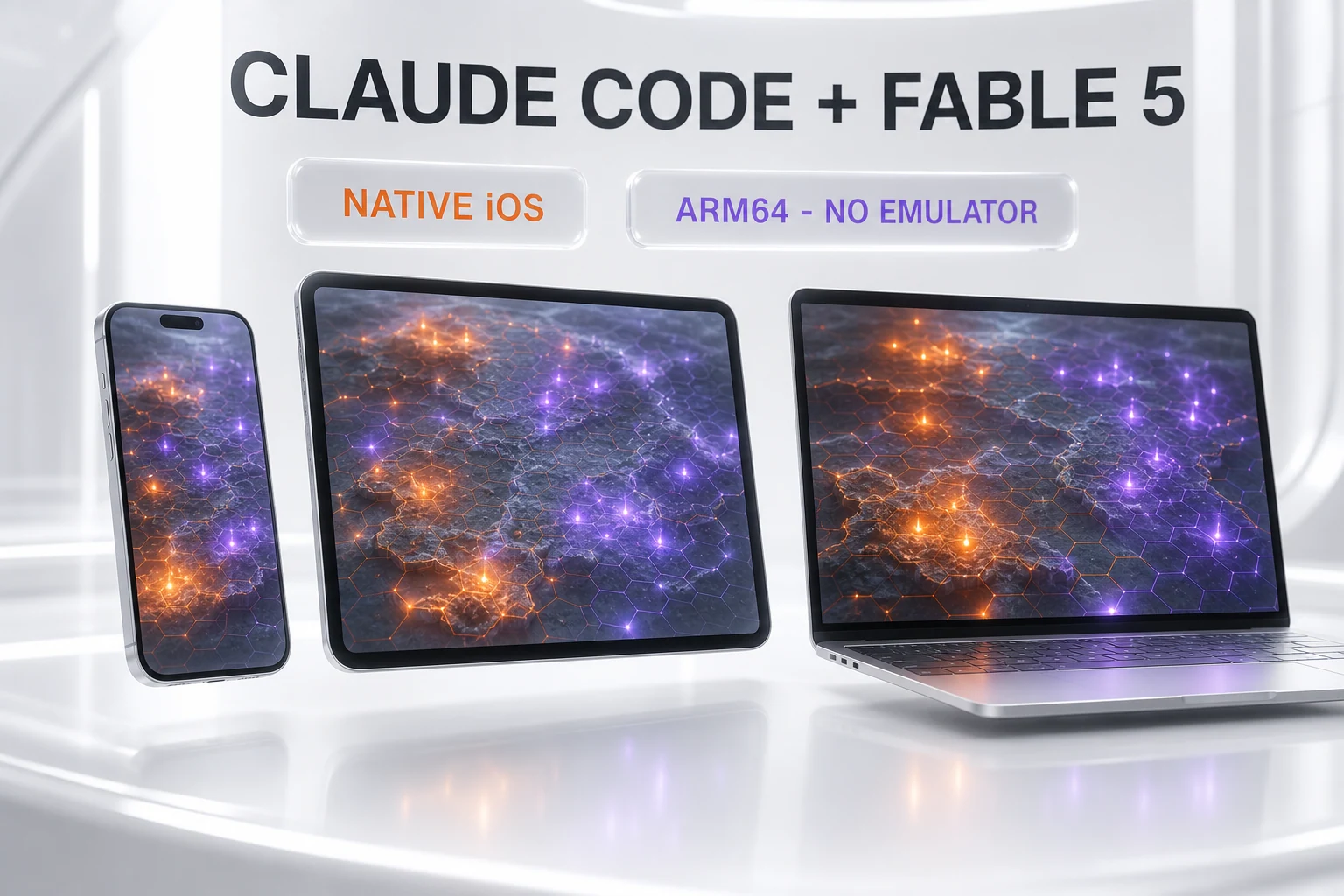
Quick Take: On July 5, 2026, Ammaar Reshi — a Lead Product and Design executive for Google AI Studio — used Anthropic's Claude Code with the Fable 5 model to compile the 2003 strategy game Command & Conquer: Generals — Zero Hour so it runs natively on iPhone, iPad, and Apple Silicon Mac, with no emulator. He open-sourced it, reporting a first build in about 40 minutes and roughly two days of total work. The real story is narrower and more interesting than the headline: the AI adapted a mature open-source engine under close human direction, not a game written from scratch.
Key Takeaways
- A Google AI Studio lead, Ammaar Reshi, used Claude Code and the Fable 5 model to port Command & Conquer: Generals — Zero Hour to native iOS, iPadOS, and macOS on Apple Silicon.
- It runs the actual 2003 engine compiled for ARM64 with no emulator, translating DirectX 8 graphics through DXVK, Vulkan, MoltenVK, and finally Apple's Metal.
- The work reused a mature open-source engine chain (EA's GPL v3 source, TheSuperHackers, and the GeneralsX macOS and Linux fork) — it was not written from scratch.
- Reshi self-reported a first build in about 40 minutes and roughly two days of total effort that used up his Claude Max quota; those numbers are not independently verified.
- No game assets ship with the port — you need your own copy (about $5 on Steam), which keeps it a hobby project, not an official EA or Anthropic release.
What Happened
Over the weekend of July 5, 2026, a port of Command & Conquer: Generals — Zero Hour — the 2003 real-time strategy game — started circulating because it runs natively on an iPhone. The person behind it is Ammaar Reshi, who leads product and design for Google AI Studio, part of Google DeepMind. The twist that made it spread: he built it by directing Anthropic's Claude Code agent running the Fable 5 model — tools from one of Google's most direct AI rivals.
According to Reshi's posts on X and coverage from outlets including The Decoder and Digital Trends, the port compiles the real 2003 engine for ARM64 and runs on iPhone, iPad, and Apple Silicon Mac. Campaign, Skirmish, and the Generals Challenge mode all work, wrapped in a touch control scheme — tap to select, drag a box to group units, pinch to zoom, long-press for context actions — rebuilt for a genre designed around a mouse and keyboard.
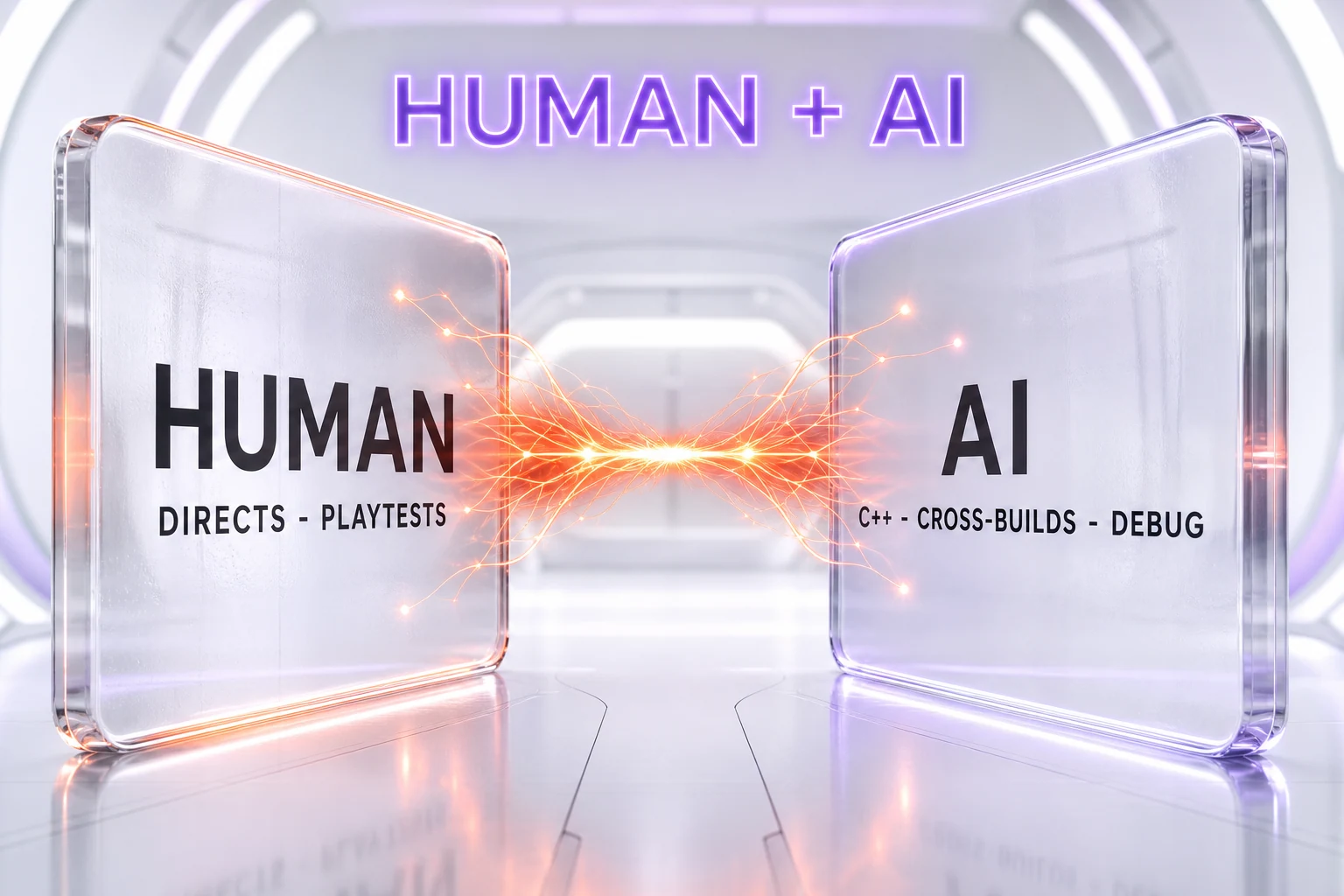
Reshi open-sourced the project on GitHub, where the README says plainly that this was "a human + AI collaboration," with "the C++, the cross-builds, the device debugging" done by Claude Code and the model, "directed and playtested by a human." That framing matters, and we return to it below. It is worth noting up front that Fable 5 is Anthropic's high-end model aimed at exactly this kind of long, complex engineering task.
How the Port Actually Works
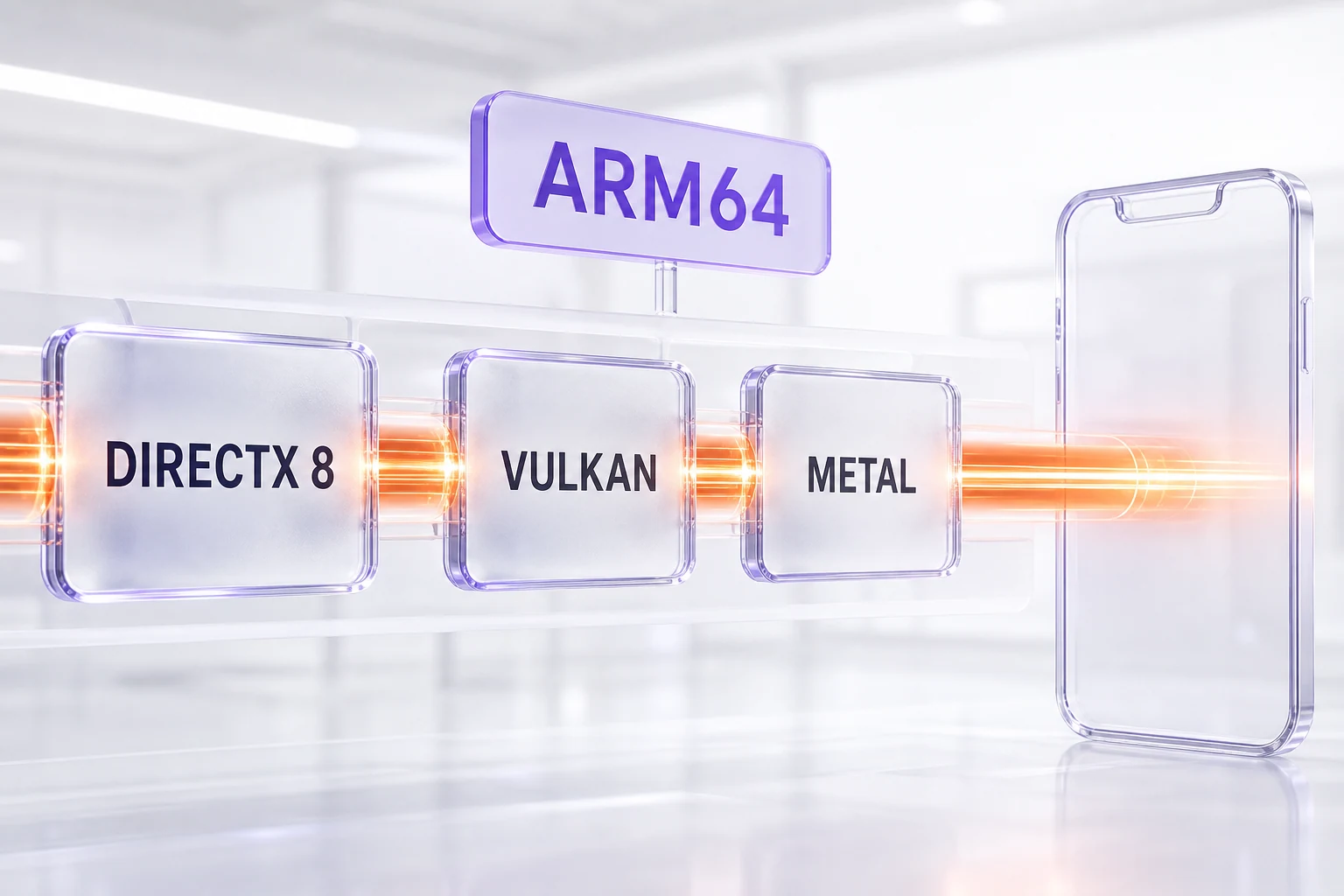
The single most important detail — and the one most headlines skip — is that this is not an emulator. The README describes it as "the real 2003 engine compiled for ARM64," with the original game's DirectX 8 graphics calls translated step by step through DXVK, Vulkan, and MoltenVK until they land on Apple's Metal API. In plain terms, the game speaks to modern Apple GPUs natively instead of pretending to be a Windows PC, which is why it can run smoothly on a phone.
It also did not appear from nothing. The port sits on top of years of community engineering: EA released the Generals source under the GPL v3 license, the TheSuperHackers GeneralsGameCode project modernized it, and the fbraz3 GeneralsX fork carried it to macOS and Linux. Reshi's contribution adapts that lineage to Apple Silicon and adds the touch layer. The engine code stays GPL v3; the game's art, audio, and mission data do not ship with it.
That last point is the practical catch. As the README puts it, "no game assets are included or distributed" — you need your own copy of the game, which sells for about $5 on Steam during sales, and you build or side-load the engine yourself. There is no App Store download, no EA blessing, and no bundled content. This is a build-it-yourself artifact, not a product.
The "40 Minutes," in Context

The number that traveled fastest was "40 minutes." It is real, but narrower than it sounds. Reshi reported that the first working build took roughly 40 minutes; he then spent "a few hours" debugging, and the whole effort stretched across about two days — long enough, he said, to burn through his entire Claude Max quota. As The Decoder noted, these figures come from Reshi's own posts on X, not from independent verification.
So the honest version is this: a skilled engineer got a first build standing in under an hour, and a playable-feeling result in a couple of focused days, with an AI agent doing the heavy lifting. That is genuinely fast for a cross-platform native port of a twenty-year-old C++ codebase. It is not the same claim as "an AI made a game in 40 minutes," which is how the story tends to get compressed as it spreads. The distance between those two sentences is where most of the misunderstanding lives.
Why It Matters for Agentic Coding
Porting is exactly the kind of work that used to resist automation. It is low-level, unglamorous, and full of platform-specific traps: build systems, linker errors, graphics API mismatches, input handling, memory layout on a new architecture. A chatbot that only answers questions cannot do it. An agentic coding model that can read a whole codebase, run builds, read the errors, and try again can — and that loop is what Claude Code automates.
The division of labor here is the real story. The human set direction, made product calls, and playtested on the device; the model wrote C++, ran cross-builds, and chased device bugs. That is a concrete picture of how AI agents are starting to slot into serious engineering — not replacing the engineer, but collapsing the distance between an idea and a running artifact. For anyone who wants to try the workflow, our beginner's guide to Claude Code walks through the basics.
It is also a pointed data point because of who did it. Reshi leads product and design for Google AI Studio. When a senior figure at a direct competitor reaches for Claude Code and Fable 5 for a hard task — and says so publicly — it reads as third-party validation that marketing budgets cannot buy. Coverage from PC Gamer and Wccftech made the same point in gaming circles.
What This Doesn't Prove
It is worth being clear-eyed, because the framing around demos like this tends to run ahead of reality.
It does not prove a game can be built from scratch by prompting. Most of the difficult engine work — the reverse-engineering, the modernization, the macOS and Linux groundwork — already existed as open source, the product of years of volunteer effort. The AI adapted a mature codebase; it did not invent one.
It does not prove reproducibility for non-experts. Reshi is a capable engineer who directed and playtested every step. The README's own words — "directed and playtested by a human" — read as a deliberate pushback on the "vibe coding" label that outlets like PC Gamer reached for. Someone without his judgment would likely not get the same result from the same prompts.
And it does not settle any "which model is best" debate. Claims about how different models handled the task are anecdotal, single-run, and unverified. This is one impressive anecdote from one skilled person over two days — not a benchmark. None of that diminishes the achievement; it just means the right takeaway is "agentic tools can now do real systems work under human direction," not "software is now free."
The Bigger Picture
Community ports of classic games are not new. What is new is the speed, and the identity of the porter. A product lead — not a systems programmer — stood up a native ARM64 build of a 2003 RTS in a weekend by directing an agent. That compresses a project that might once have been a multi-week specialist effort into something a motivated generalist can attempt over a couple of evenings.
It also lands in the middle of an increasingly crowded agentic coding race, where tools are now judged less on autocomplete quality and more on whether they can carry a genuinely hard task from start to finish. Reshi's port — a competitor's executive, a beloved old game, a two-day turnaround — is the kind of concrete, checkable example that shifts how developers think about what is possible. Expect more of them, and expect the honest write-ups to keep the caveats attached. For the wider context on where this sits, Digital Trends and Fingerlakes1 both tracked the reaction as it spread.
Frequently Asked Questions
What did Ammaar Reshi actually do?
Ammaar Reshi, a Lead Product and Design executive for Google AI Studio, used Anthropic's Claude Code with the Fable 5 model to compile the 2003 real-time strategy game Command & Conquer: Generals — Zero Hour to run natively on iPhone, iPad, and Apple Silicon Mac. He open-sourced the port on GitHub on July 5, 2026.
Did Claude Code build the game from scratch?
No. The port builds on years of open-source work: EA's GPL v3 engine source release, the TheSuperHackers GeneralsGameCode project, and the fbraz3 GeneralsX macOS and Linux fork. Claude Code and Fable 5 adapted that existing engine chain to Apple Silicon and added touch controls; they did not write a new game engine.
Is this an official EA or Anthropic product?
No. It is an independent hobby project by one engineer. EA's involvement is limited to the GPL v3 source release the community builds on, and Anthropic did not commission or ship it even though it runs on Anthropic's tools.
How long did the port take?
Reshi self-reported that the first build took about 40 minutes, followed by a few hours of debugging, with the overall project spanning roughly two days and consuming his entire Claude Max quota. Those figures come from Reshi's own posts on X and have not been independently verified.
Does it use an emulator?
No. According to the project's README, this is the real 2003 engine compiled for ARM64, with graphics translated from DirectX 8 through DXVK, Vulkan, MoltenVK, and finally Apple's Metal API. There is no PC emulation layer.
Which game modes work?
Reshi reports that the Campaign, Skirmish, and Generals Challenge modes all run, wrapped in a touch control scheme built for a real-time strategy game — including tap to select, drag-box selection, pinch to zoom, and long-press actions.
Do I need to own the game to play it?
Yes. No game assets are included or distributed with the port. You need your own copy of Command & Conquer: Generals — Zero Hour, which sells for about $5 on Steam during sales, and you build or side-load the engine yourself.
What is Claude Code?
Claude Code is Anthropic's agentic coding tool that runs in the terminal and can plan, write, run, and debug code across a real codebase rather than just answering questions. In this project it handled the C++ work, the cross-platform builds, and on-device debugging.
What is the Fable 5 model?
Fable 5 is a high-end Anthropic model positioned above the Opus tier for complex, long-horizon coding work. Reshi credits Fable 5, running inside Claude Code, with completing the systems-level porting task.
What does this prove about agentic coding?
It shows that agentic tools can now handle unglamorous, low-level systems programming — cross-compiling a two-decade-old C++ codebase, wiring up a graphics translation layer, and targeting three Apple platforms — with a human acting as director and playtester rather than typing every line.
What does this not prove?
It does not prove that anyone can type one prompt and get a finished game. A skilled engineer directed and playtested the whole process, most of the hard engine work already existed as open source, and the headline 40-minute figure refers only to the first build, not a polished, distributable release.
Why is it notable that a Google executive used Claude?
Reshi leads product and design for Google AI Studio, part of a direct competitor to Anthropic. A rival's own executive publicly choosing Anthropic's Claude Code and Fable 5 for a demanding task is a strong third-party signal about where agentic coding tools stand in mid-2026.
Sources
- GitHub: ammaarreshi/Generals-Mac-iOS-iPad — the project repository and README (primary source)
- Ammaar Reshi on X — the original announcement and self-reported timeline
- The Decoder — Claude Code and Fable 5 ported Command & Conquer to native iOS
- Digital Trends — Google executive ports Command & Conquer to iPhone and Mac using Claude
- PC Gamer — Google's AI Studio lead vibe coded a Command & Conquer port
- Wccftech — AI helped bring native Generals Zero Hour to iPhone and iPad
- TheSuperHackers GeneralsGameCode and fbraz3 GeneralsX — the upstream open-source engine work