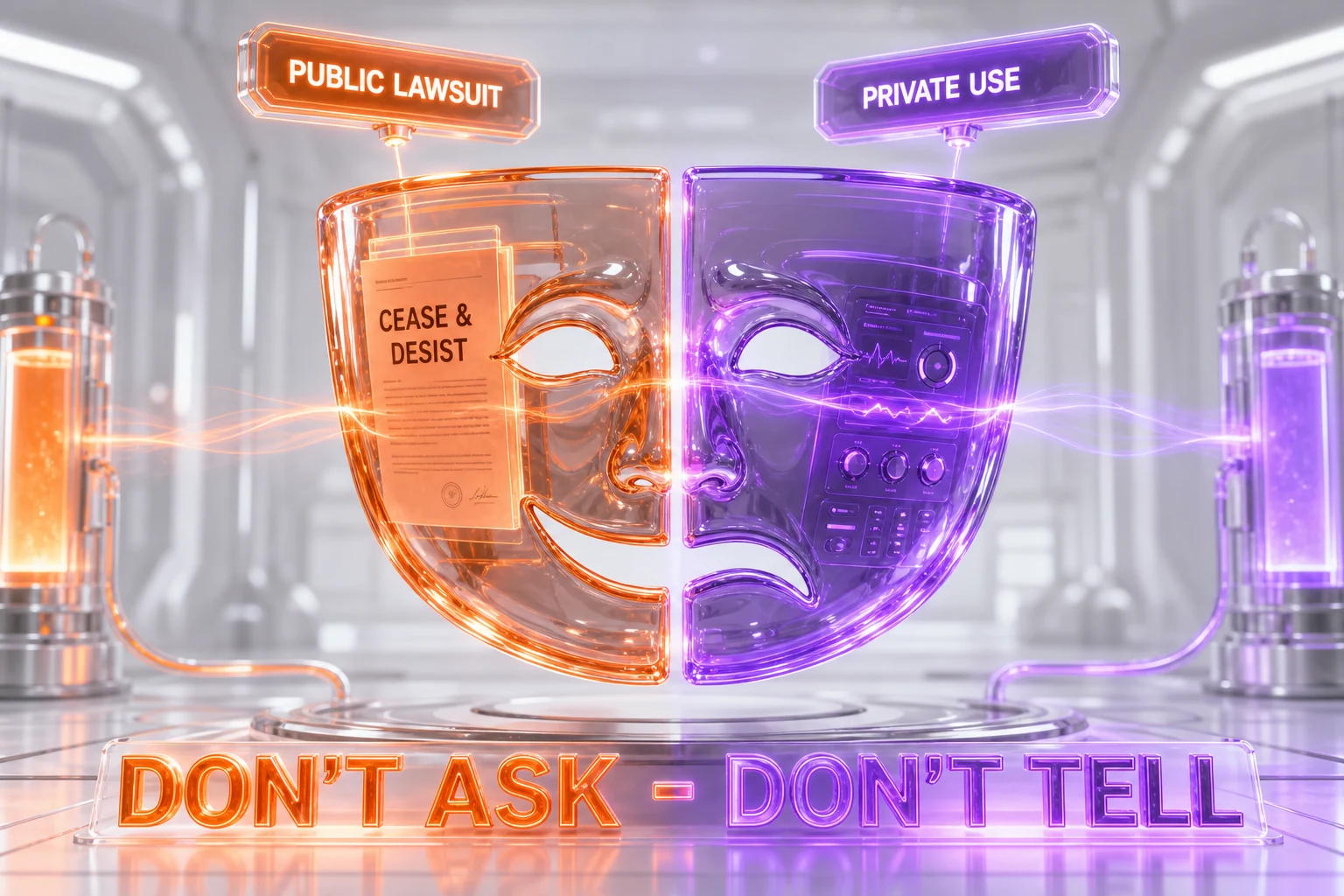
Quick Take — Yes, at least informally. An early-July 2026 Los Angeles Times investigation by reporter Nilesh Christopher reports that even after five major studios and the Motion Picture Association sent ByteDance cease-and-desist letters over Seedance in February, many studios now tolerate the tool's use by staff on what animation producer Joel Kuwahara calls a "don't ask, don't tell" basis. No studio has publicly authorized Seedance, and this piece treats that tolerance as reported behavior — not proof that any specific studio uses it in finished productions. The timing is pointed: ByteDance is rolling out Seedance 2.5 the same week.
For two years, Hollywood's relationship with generative video has been a public performance of resistance. Studios sued, unions marched, and the Motion Picture Association fired off its first-ever cease-and-desist to an AI company. Behind the curtain, according to new reporting, a different play has been running — one where the same tool the industry is fighting in court quietly shows up on artists' machines.
The contradiction is not a rumor floated by ByteDance's marketing team. It comes from an on-the-record source inside the animation business and from a detailed Los Angeles Times investigation, and it lands in the same week ByteDance ships its most capable model yet. Below, we lay out what is actually verified, attribute each claim to its source, and separate reported behavior from proven fact — because on a story this charged, the difference matters.
Key Takeaways
- Public fight, private use. An early-July 2026 Los Angeles Times investigation (Nilesh Christopher) reports studios quietly tolerate Seedance despite opposing it publicly; producer Joel Kuwahara calls it "don't ask, don't tell."
- The February backlash was real. Disney, Warner Bros., Paramount, Netflix and Sony sent cease-and-desist letters, and the MPA called Seedance 2.0 a machine for "systemic infringement."
- The union is personally exposed. SAG-AFTRA condemned "blatant infringement"; per Variety, its president, actor Sean Astin, was himself depicted without consent in a Seedance clip as Samwise Gamgee.
- The timing is deliberate. Seedance 2.5 — up to 30-second clips and 50 references — was unveiled June 23 and began rolling out in early July via Dreamina and Jimeng, with CapCut and a Volcano Engine API to follow.
- The theme is industry-wide. Separately, Midjourney is trying to force Disney, Universal and Warner Bros. to disclose their own AI use, sharpening the same public-versus-private tension.
What the LA Times Investigation Actually Found
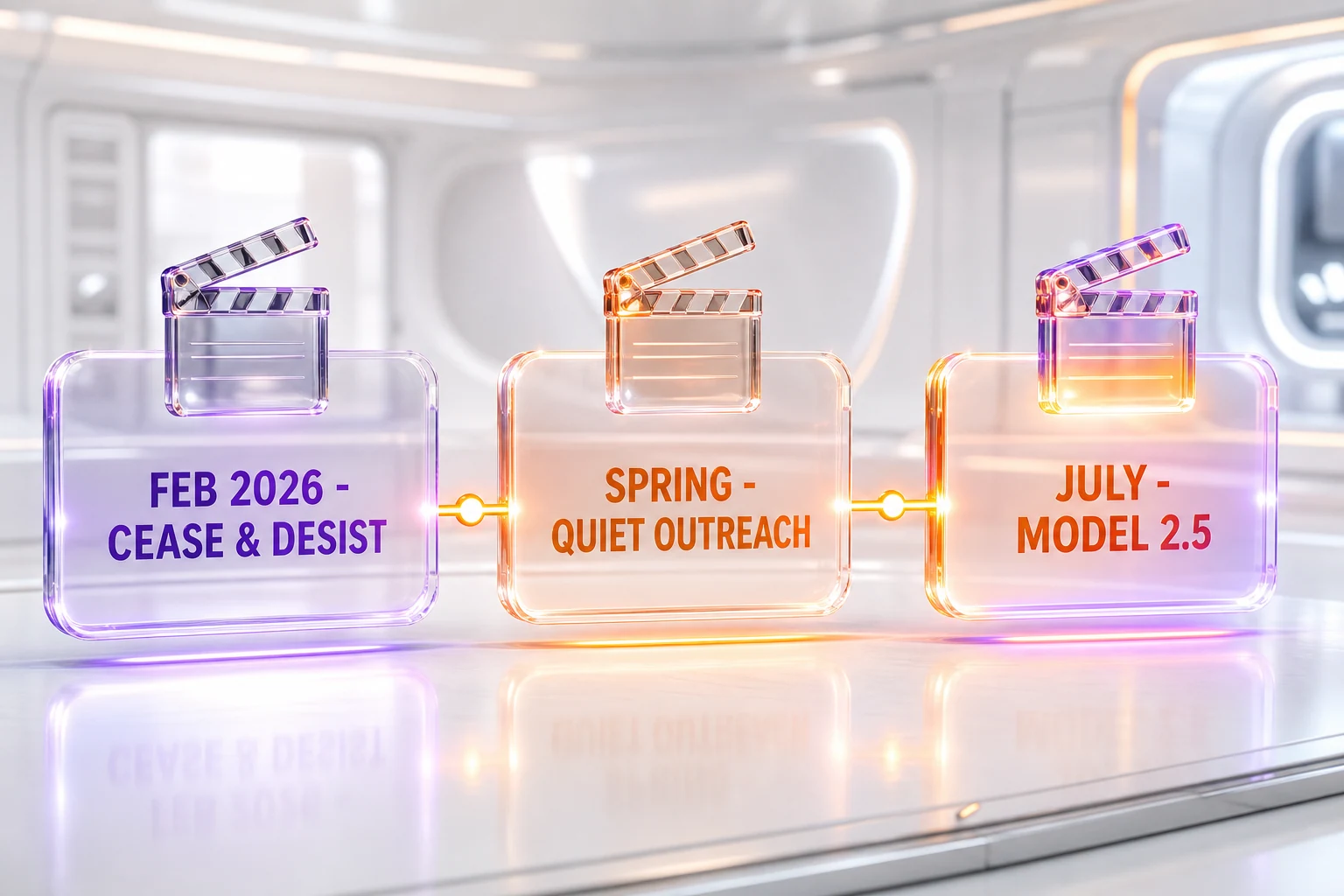
The Los Angeles Times reported in early July 2026 that ByteDance's Seedance has quietly penetrated Hollywood's working infrastructure despite the industry's public opposition. Reporter Nilesh Christopher documented a months-long courtship — a Santa Monica launch event, a Cannes party, hiring for roughly 100 roles, and panels at Amazon MGM Studios' "AI on the Lot" conference — that continued well after every major studio sent cease-and-desist letters.
The centerpiece of the reporting is a quote from Joel Kuwahara, a veteran animation producer who worked on early seasons of "The Simpsons." He told the Los Angeles Times that "a lot of studios haven't approved Seedance, but yet with a wink and a nod, they're allowing Seedance to be used," adding that it is "kind of like a 'don't ask, don't tell' kind of a thing." That single on-record line is what turns an abstract worry into a documented pattern.
The reporting, extended by TechTimes on July 7, frames the split cleanly: a public legal campaign on one track, a private adoption curve on another. ByteDance, for its part, has kept courting filmmakers, independent artists and executives — the outreach that made the "AI on the Lot" panels and the spring Santa Monica showcase possible. This is a very different story from the one the studios' press releases tell, and it is the reason the "don't ask, don't tell" framing has traveled so fast.
The Public Fight: Cease-and-Desists and "Blatant Infringement"
In February 2026, Hollywood's response to Seedance 2.0 was unambiguous. Disney, Warner Bros. Discovery, Paramount Skydance, Netflix and Sony Pictures each sent cease-and-desist letters alleging copyright infringement, and the Motion Picture Association followed with a formal letter on behalf of its member studios — the first cease-and-desist the MPA had ever sent to a major AI firm.
Disney's letter described Seedance as a "virtual smash-and-grab" of its intellectual property, and Netflix specifically warned ByteDance over clips featuring "Stranger Things," according to Deadline and TechRadar. The trigger was a wave of viral clips — most notoriously a 15-second, hyper-real scene of Tom Cruise and Brad Pitt brawling, generated from a short prompt — that showed named actors and recognizable franchise worlds reproduced almost shot for shot.
The MPA did not mince words. It called Seedance 2.0 a system built for "systemic infringement" and said ByteDance "reproduced and distributed content that blatantly infringes the MPA Member Studios' copyrights," per The Decoder and The Hollywood Reporter. ByteDance responded by promising additional safeguards, a concession first reported by CNBC.
The performers' union escalated too. SAG-AFTRA condemned the videos as "blatant infringement" involving "the unauthorized use of our members' voices and likenesses" and a disregard for "law, ethics, industry standards and basic principles of consent." The condemnation is personal at the top: Variety reported that the union's own president, actor Sean Astin, appeared without consent in a Seedance clip in the role of Samwise Gamgee. When the person leading the fight is also one of its victims, the public opposition is not for show.
The Private Reality: A "Wink and a Nod"
The gap between that public posture and private practice is the whole story. The Los Angeles Times reporting describes studios that never formally approved Seedance but tolerate staff using it anyway — unofficial adoption that the industry's legal filings do not acknowledge and, by design, would rather not have to.
Why would a studio that just signed a cease-and-desist look the other way? The honest answer is economics and capability, which we detail in the next section. But the mechanism matters: tolerance is not authorization. There is no signed license, no enterprise contract, no legal sign-off — just a decision not to look too hard at which tool produced a given shot. That is precisely what makes "don't ask, don't tell" both an accurate description and a liability, because it leaves the use undocumented and unmanaged.
It is worth stating plainly what this reporting does and does not establish. It establishes, on the record, that a knowledgeable industry source describes widespread informal tolerance, and that a major newspaper corroborated the broader pattern, as TechTimes and the Los Angeles Times lay out. It does not establish that any specific named studio has used Seedance in a released film or series. We are careful to hold that line, and readers should too.
Why the Timing Stings: Seedance 2.5 Lands the Same Week
Seedance 2.5, unveiled June 23, 2026 at ByteDance's Volcano Engine FORCE conference, is the reason this story broke now. It generates up to 30 seconds of continuous video from a single call and accepts up to 50 multimodal references — roughly four times Seedance 2.0's input count — and it began rolling out in early July through ByteDance's Dreamina and Jimeng apps, with CapCut and a Volcano Engine API to follow.
The jump straight from 2.0 to 2.5 was meant to signal a generational leap, and on the specs it is a real one. The native 30-second clip length removes the stitching that plagued earlier tools, and the expanded reference system gives filmmakers far more control over characters and continuity, per TechTimes. ByteDance has not published official pricing for 2.5, but the model's predecessor already undercut Western rivals sharply, which is central to its pull.
So the same week that the industry's quiet tolerance became front-page reporting, ByteDance handed those same tolerant users a markedly more powerful tool — one that carries what TechTimes aptly called a "copyright cloud." We covered ByteDance's broader model offensive in our analysis of its June multimodal blitz, and the competitive backdrop in our look at China's video-generation funding war. The upgrade cycle is not slowing down to wait for the lawsuits.
The Part Nobody Signed Off On: Data and the China Question
Beyond copyright, the reporting surfaces a quieter risk: data sovereignty. The Los Angeles Times noted that material sent to Seedance — proprietary scripts, brand assets and production footage — travels through an API that falls under China's National Intelligence Law, which can compel Chinese companies to assist state intelligence work. Analysts frame this as an exposure, not evidence of any specific breach.
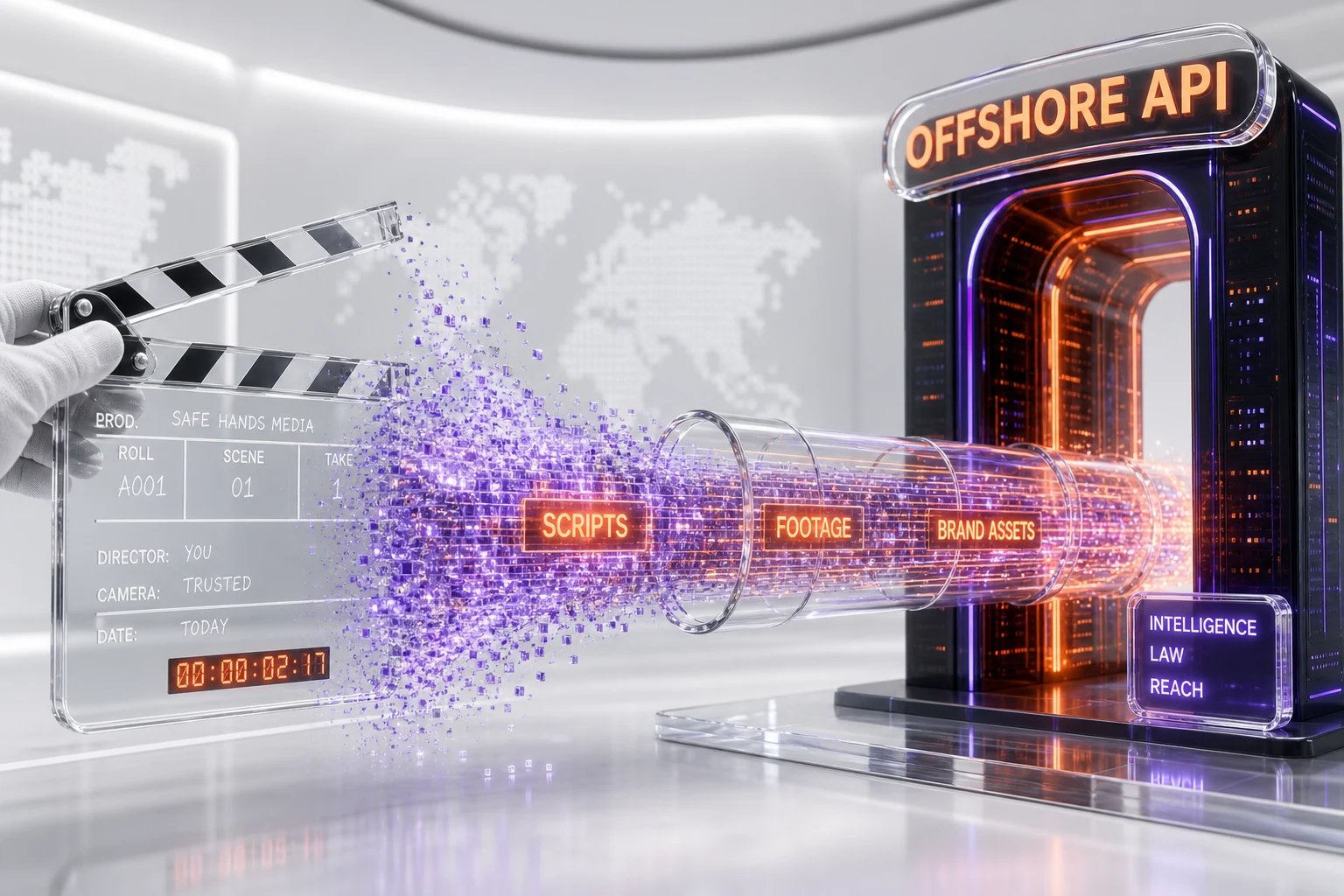
This is where informal use turns into a governance problem. When a tool is officially banned, a legal team can wrap its use in contracts, region-locking and data-handling clauses. When a tool is merely tolerated, none of that happens — sensitive pre-release material can flow offshore with no one accountable for it. The concern is not that ByteDance is doing anything with that data; it is that a "don't ask, don't tell" posture, as described by the Los Angeles Times and amplified by TechTimes, structurally prevents the very controls that would manage the risk.
It is the same tension the industry is grappling with on the labeling and provenance front, where platforms are moving to flag synthetic media whether or not creators disclose it — a shift we covered when YouTube began auto-labeling photorealistic AI video. Provenance is becoming everyone's problem, and undocumented tool use makes it harder to solve.
The Hypocrisy Mirror: Midjourney Wants Studios to Show Their Own AI
The Seedance contradiction is not isolated. In early July 2026, Midjourney filed a motion asking a federal court to compel Disney, Universal and Warner Bros. — the studios suing it over copyright since 2025 — to disclose their own AI practices, including training datasets, model weights and internal AI development. Midjourney's defense leans on "fair use" and an "unclean hands" argument: if the plaintiffs use AI the same way, that cuts against their case.
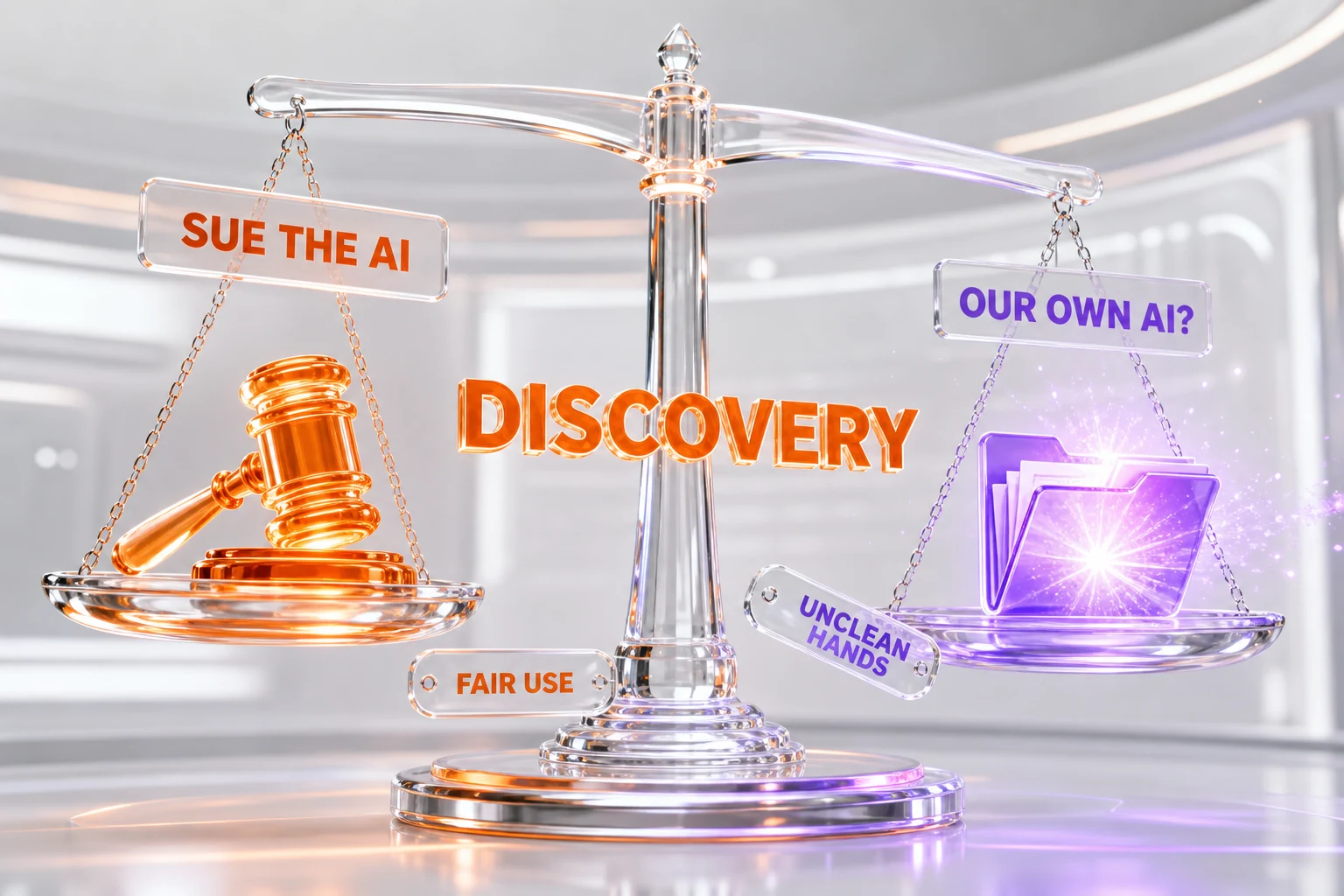
Per TechCrunch and Variety, Midjourney wants to pierce a June ruling that limited discovery to "consumer-facing" AI applications, arguing the studios' internal use of AI for storyboarding and ideation is directly relevant. The studios' lead attorney, David Singer, dismissed the effort as a "fishing expedition," as Gizmodo reported. Whatever the court decides, the motion drags the industry's own AI use into the open.
Put the two stories side by side and a pattern emerges: studios are fighting AI in public while, by different accounts, using or tolerating it in private. This is the same fault line we traced when Hollywood's first big AI deal with Runway stalled, and it rhymes with the broader legal reckoning captured in the largest AI copyright settlement in US history. Even Midjourney itself has diversified beyond the fight, recently pivoting part of its business into medical imaging.
What Would Change This Picture
The reported gap between public opposition and private use is not permanent. A handful of concrete developments would change it: a formal, enforced ban communicated to staff; an enterprise deployment that keeps data on-shore with contractual protections; a public licensing deal between ByteDance and rights holders; a decisive ruling in the Midjourney discovery fight; or new SAG-AFTRA contract language on AI.
Any one of those would replace ambiguity with a rule. A licensing deal would convert infringement claims into a revenue stream, much as the music industry has begun testing with AI — a dynamic visible when Suno raised hundreds of millions mid-lawsuit. A discovery ruling that forces studios to reveal their own AI use, as Variety describes, could reset the negotiating leverage overnight. And contract language remains the union's strongest lever, given that SAG-AFTRA built its 2023 strike around "consent and compensation" for AI likeness use.
Absent one of those, expect the status quo to hold: loud opposition, quiet adoption, and a widening space between what studios say and what their artists actually do. The pressure that finally closes that gap is more likely to come from a courtroom or a bargaining table than from a press release.
Our Take
We have been tracking Hollywood's AI whiplash in recent months, and this is the clearest example yet of a strategy at war with itself. Our reading is that the public-versus-private split is not simple hypocrisy so much as an unresolved bet: the studios are litigating to preserve leverage and licensing value while their production teams quietly chase the cost and speed advantages that make Seedance, per the Los Angeles Times, roughly $9 per minute with audio against about $24 per minute for Google's Veo. Both instincts are rational. Together, they are incoherent.
The strategic risk is that incoherence has a cost. A "don't ask, don't tell" posture undercuts the studios' own legal narrative — it is hard to argue a tool is an existential threat while tolerating its use in the building — and it hands defendants like Midjourney exactly the "unclean hands" argument they are now pressing in court, as TechCrunch details. It also leaves a real data-governance hole unplugged. None of this requires assuming bad faith; it only requires noticing that fighting a tool in public and tolerating it in private cannot both be the plan. Our view is that the industry will have to pick one, and the reporting this week makes clear the clock is running.
Frequently Asked Questions
What did the Los Angeles Times report about Hollywood and Seedance?
In an investigation published in early July 2026, Los Angeles Times reporter Nilesh Christopher documented that ByteDance's Seedance AI video model has made deep inroads into Hollywood despite the industry's public opposition. The reporting describes studios quietly tolerating the tool's use by staff even after major studios sent cease-and-desist letters in February 2026, alongside ByteDance outreach that included a Santa Monica launch event, a Cannes party, and panels at Amazon MGM Studios' "AI on the Lot" event.
What does "don't ask, don't tell" mean in the context of studios using Seedance?
It means the tool is used unofficially without formal approval. Animation producer Joel Kuwahara told the Los Angeles Times that "a lot of studios haven't approved Seedance, but yet with a wink and a nod, they're allowing Seedance to be used," calling it "kind of like a 'don't ask, don't tell' kind of a thing." It describes reported tolerance of employee use, not a public authorization or a signed licensing deal.
Who is Joel Kuwahara and what did he say?
Joel Kuwahara is a veteran animation producer who worked on early seasons of "The Simpsons." He told the Los Angeles Times that many studios have not formally approved Seedance yet allow its use "with a wink and a nod," describing the arrangement as "don't ask, don't tell." His comments are the on-record basis for the reporting that studios tolerate the tool privately while opposing it publicly.
Which studios sent cease-and-desist letters to ByteDance over Seedance?
In February 2026, Disney, Warner Bros. Discovery, Paramount Skydance, Netflix and Sony Pictures each sent cease-and-desist letters to ByteDance over Seedance 2.0, alleging copyright infringement. Disney's letter called the tool a "virtual smash-and-grab" of its intellectual property, per Deadline and TechRadar. In late February the Motion Picture Association sent a formal letter on behalf of its member studios.
What did the Motion Picture Association say about Seedance 2.0?
The Motion Picture Association called Seedance 2.0 a machine built for "systemic infringement" and said ByteDance "reproduced and distributed content that blatantly infringes the MPA Member Studios' copyrights," according to The Decoder and The Hollywood Reporter. It was the first time the MPA, which represents the major Hollywood studios, sent a cease-and-desist letter to a major AI firm.
Did SAG-AFTRA respond, and is Sean Astin involved?
Yes. SAG-AFTRA condemned the Seedance videos as "blatant infringement" that "includes the unauthorized use of our members' voices and likenesses," saying the tool disregards "law, ethics, industry standards and basic principles of consent," per Variety. Variety reported that the union's president, actor Sean Astin, was himself depicted without consent in a Seedance clip in the role of Samwise Gamgee from "The Lord of the Rings."
What is Seedance 2.5 and when does it launch?
Seedance 2.5 is ByteDance's newest AI video model, unveiled June 23, 2026 at the Volcano Engine FORCE conference. It generates up to 30 seconds of continuous video from a single call and accepts up to 50 multimodal references, roughly four times Seedance 2.0's input count. Public access began rolling out in early July 2026 through ByteDance's Dreamina (international) and Jimeng (China) apps, with CapCut integration and a Volcano Engine API expected to follow. ByteDance has not published official pricing for 2.5.
Why is Seedance attractive to filmmakers despite the legal fight?
Cost and realism. According to the Los Angeles Times, Seedance runs about $9 per minute of video with audio, against roughly $24 per minute for Google's Veo, while producing strikingly lifelike results and offering timeline-based prompting that lets filmmakers select and modify specific moments. For budget-conscious productions, that combination is hard to ignore, which is a large part of why use has spread faster than the public legal posture would suggest.
What is the data-security concern with Seedance's API and China?
The Los Angeles Times reported that material sent to Seedance, including proprietary scripts, brand assets and production footage, travels through an API that falls under China's National Intelligence Law, which can compel Chinese companies to assist state intelligence work. Security and legal analysts frame this as a data-sovereignty exposure rather than evidence of any specific breach. The concern is that informal, unapproved use routes sensitive material offshore without a studio's legal team signing off.
Is Midjourney really forcing Disney, Universal and Warner Bros. to reveal their own AI use?
Midjourney filed a motion in early July 2026 asking a federal court to compel Disney, Universal and Warner Bros., which sued Midjourney over copyright in 2025, to disclose their own AI practices, including training datasets, model weights and internal AI development. Midjourney invokes "fair use" and an "unclean hands" argument. The studios' attorney David Singer called it a "fishing expedition." The motion is a separate case from the Seedance dispute but sharpens the same public-versus-private theme.
Are Hollywood studios officially allowed to use Seedance?
No studio has publicly authorized Seedance, and the major studios are on record opposing it through cease-and-desist letters and the MPA. The Los Angeles Times reporting describes informal tolerance of employee use, not official approval or a licensing agreement. This article treats that tolerance as reported behavior and does not assert that any specific studio uses Seedance in finished productions.
What would it take to resolve the public-versus-private contradiction?
A few things would change the picture: a formal, enforced ban communicated to staff; an enterprise deployment that keeps data on-shore or region-locked with contractual protections; a public licensing deal between ByteDance and rights holders; a court ruling in the Midjourney discovery fight that clarifies studios' own AI use; or new SAG-AFTRA contract language on AI. Absent one of those, the reported gap between public opposition and private use is likely to persist.
Sources
- Los Angeles Times — Nilesh Christopher, "China-backed AI tool behind fake Brad Pitt fight making Hollywood inroads" (early July 2026, via syndication)
- TechTimes — "Hollywood Fights ByteDance in Public, Uses Seedance in Private as 2.5 Launches" (July 7, 2026)
- TechTimes — "ByteDance Seedance 2.5 Launches This Week: 30-Second AI Video Carries Copyright Cloud" (July 3, 2026)
- TechTimes — "ByteDance Seedance 2.5: Native 30-Second AI Video, No Stitching Required" (June 24, 2026)
- The Decoder — MPA calls Seedance 2.0 a machine built for "systemic infringement"
- The Hollywood Reporter — MPA sends cease-and-desist letter to ByteDance over Seedance 2.0
- Deadline — Netflix warns ByteDance to cease "Stranger Things" Seedance 2.0 videos
- TechRadar — Netflix, Disney and Warner Bros. threaten legal action over Seedance 2.0
- CNBC — ByteDance says it will add safeguards to Seedance following Hollywood backlash
- Variety — SAG-AFTRA slams "blatant infringement" in Seedance AI videos
- TechCrunch — Midjourney wants Hollywood studios to reveal the details of their AI usage (July 4, 2026)
- Variety — Midjourney seeks to reveal studios' use of AI in copyright battle