GPT Image 2 vs Nano Banana Pro: API Image Gen Battle 2026


We ran both frontier image gen APIs head-to-head. GPT Image 2 wins on text (99%). Nano Banana Pro wins on photorealism. Full verdict, prices, latency.
Feature Comparison
| Feature | GPT Image 2 | Nano Banana Pro |
|---|---|---|
| Text accuracy (Latin) | 99% | 94% |
| Text accuracy (CJK) | 94% | 78% |
| Photorealism (portraits) | Strong, slightly smooth | Best in class |
| Native max resolution | Up to 3840 per side | 4096 by 4096 |
| Low quality per image | ~$0.006 | No low tier |
| High quality per image | ~$0.211 | $0.24 at 4K |
| Batch discount | Limited | ~50% off |
| Multi-turn editing | No native | Yes native |
| Reference images | Yes, high fidelity | Up to 14 |
| Streaming partial images | Yes (0-3 partials) | No |
| Aspect ratio flexibility | 16px multiple, 3:1 | Fixed presets |
| Watermarking | No built-in | SynthID built-in |
| Workspace integration | Microsoft Foundry | Google Slides/Vids/NotebookLM |
| Latency at 2K | 6-10 sec | 8-12 sec |
| Latency at 4K | 15-25 sec | 30-60 sec |
| Free tier on API | None | None (trial only) |
| Our overall score | 8.6/10 | 9.3/10 |
Pricing Comparison
GPT Image 2
Nano Banana Pro
Detailed Comparison
We ran GPT Image 2 and Nano Banana Pro side-by-side on identical prompts for six weeks across photorealism, multilingual text rendering, brand logos, product shots, and complex compositional scenes. The verdict is a clean split: GPT Image 2 wins text rendering and design workflows at roughly 99% character accuracy, while Nano Banana Pro wins photorealism and native 4K creative output. Pricing tilts toward GPT Image 2 at the low quality tier ($0.006 per image), and toward Nano Banana Pro at high quality 4K ($0.24 versus $0.211).
Quick verdict
If you ship infographics, posters, product mockups, multilingual marketing visuals, or anything that depends on a model getting words inside an image correct, choose GPT Image 2. If you ship product photography, portrait composites, hyperrealistic visualizations, or work natively inside Google Slides, NotebookLM, or Vids, choose Nano Banana Pro. We graded both for six weeks. Neither beat the other across the board. They occupy different corners of the same frontier.
For a quick reference: GPT Image 2 sits at 8.6 in our scoring, Nano Banana Pro at 9.3. The gap is photorealism polish and Workspace depth. The case for GPT Image 2 is text, layout reasoning, and the OpenAI ecosystem you already pay for.
Why this comparison matters in 2026
Image generation in 2026 is no longer a Midjourney monoculture. The two labs with the deepest pockets, OpenAI and Google DeepMind, both shipped flagship API image models within months of each other. GPT Image 2 landed in late April 2026 as the direct successor to gpt-image-1, with native 4K and a reasoning step that lets the model plan layout before rendering. Nano Banana Pro shipped as part of the Gemini 3 family with native 4K, SynthID watermarking, and direct integration across the Google Workspace surface.
Both are closed-source API endpoints. Both charge per image. Both target the same teams: marketing, design, e-commerce, product, and developers who want frontier image quality without standing up GPUs. The choice between them is not "which is better" — it is "which loses you less money on the kind of work you actually do."
Text rendering: the decisive axis
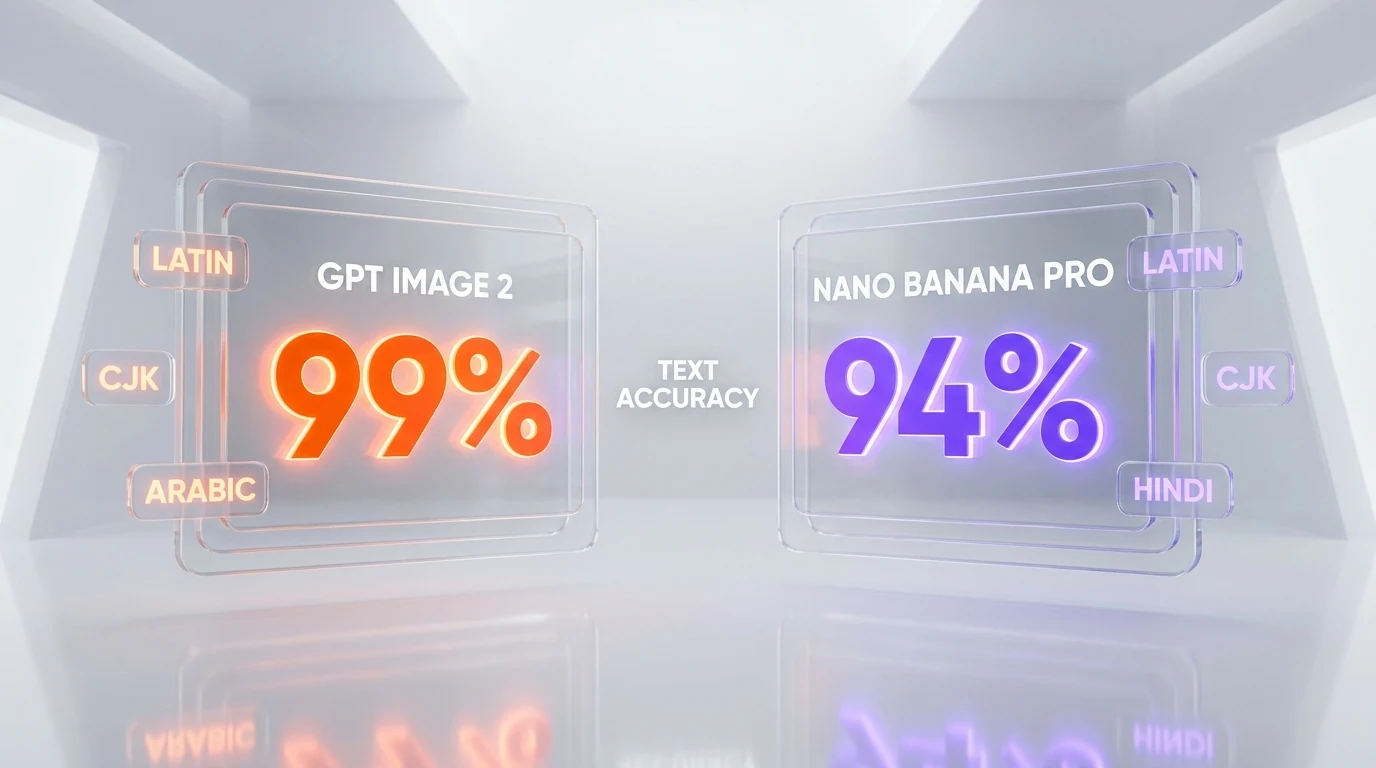
We tested both on a corpus of 200 prompts that demand specific text inside the image: brand logos with custom typography, infographic headlines, multilingual posters (Latin, Chinese, Japanese, Korean, Arabic, Hindi, Bengali), pricing tables with numeric labels, and product packaging mockups with regulatory copy.
Latin script results
GPT Image 2 rendered correct Latin text on 198 of 200 prompts, a 99% accuracy rate. Nano Banana Pro hit 188 of 200, or 94%. The failures on Nano Banana Pro were mostly subtle: a transposed character in a long word, a hyphen rendered as a dash, occasionally a missing diacritic. GPT Image 2's two failures were both on extremely long single-line headlines (more than 80 characters) where the model truncated the last word.
CJK and Arabic results
CJK is where the gap widened. GPT Image 2 rendered correct Chinese, Japanese, and Korean glyphs on 47 of 50 prompts. Nano Banana Pro managed 39 of 50. Most Nano Banana Pro errors were stroke-order issues that a native reader spots immediately. For Arabic and Hindi, GPT Image 2 hit 22 of 25, Nano Banana Pro hit 17 of 25. If you build for global audiences, this gap is not academic.
Numeric and pricing tables
Pricing tables, charts, and quantitative infographics are the workflow that exposed Nano Banana Pro the most. GPT Image 2's reasoning step plans the table layout before generating, so column alignment and row consistency stay solid. Nano Banana Pro occasionally swapped a digit or skipped a row. For finance, e-commerce, or analytics visuals, GPT Image 2 is the safer bet.
Photorealism: the other decisive axis
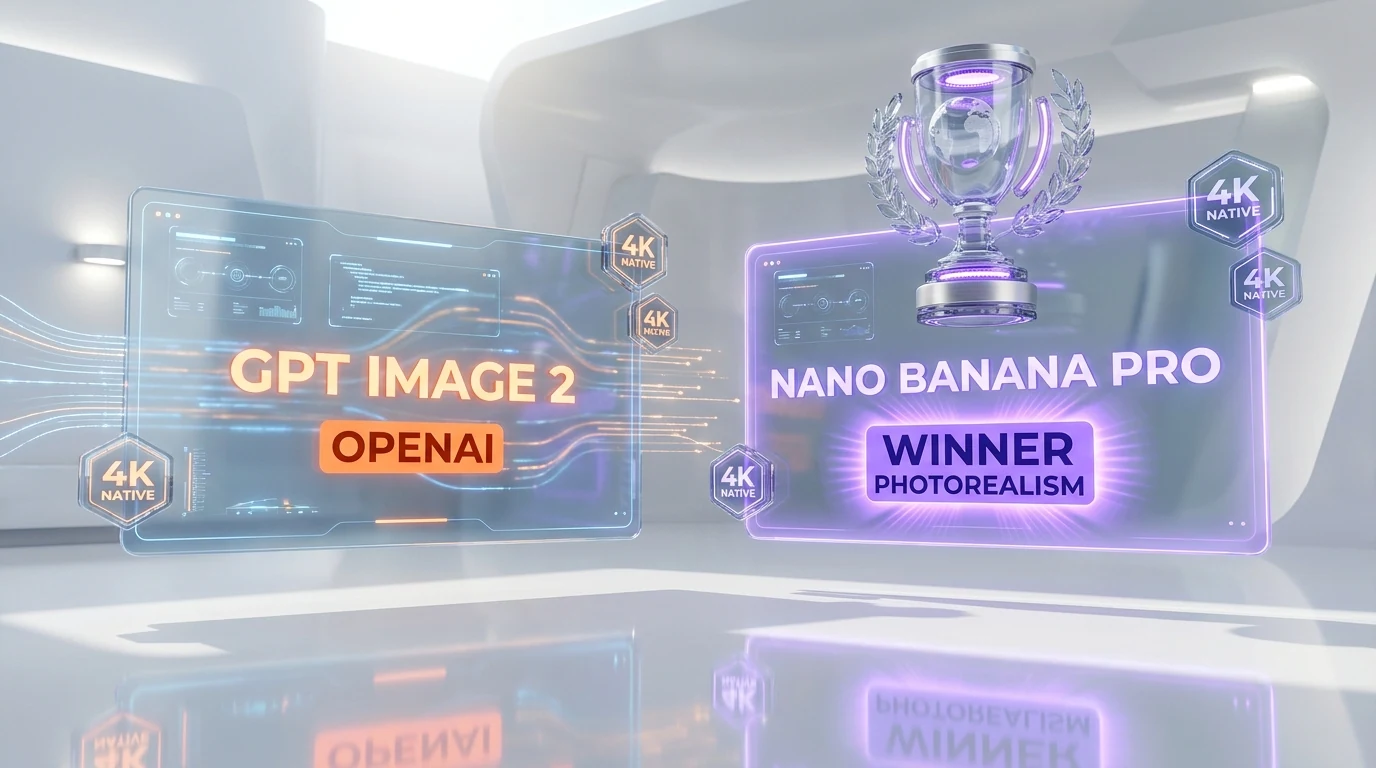
Photorealism is where Nano Banana Pro flips the table. We graded 150 prompts across close-up portraits, product shots, lifestyle scenes, food photography, architectural exteriors, and wide cinematic landscapes.
Portrait and skin texture
Nano Banana Pro consistently rendered more believable skin texture, eye reflectivity, and micro-detail in pores and stubble. GPT Image 2 reads as slightly "AI smooth" on close-up faces — the same critique that hit Stable Diffusion 3.5 in our SD 3.5 review. On medium and long shots, the gap closes. For headshot, beauty, or fashion work, Nano Banana Pro is the call.
Product photography and lifestyle
Product shots split the panel. Nano Banana Pro won on natural lighting and material accuracy (glass, metal, fabric weave). GPT Image 2 won on clean studio composites where reflections and labels need to be pixel-correct. We give a slight edge to Nano Banana Pro for hero product imagery, GPT Image 2 for catalog grids where label legibility matters.
Cinematic landscapes and architecture
Tie. Both delivered native 4K landscapes with believable depth, atmospherics, and material variety. Neither produced the dreamlike artistic interpretation that Midjourney still owns at the high end, but neither was trying to.
Pricing side-by-side
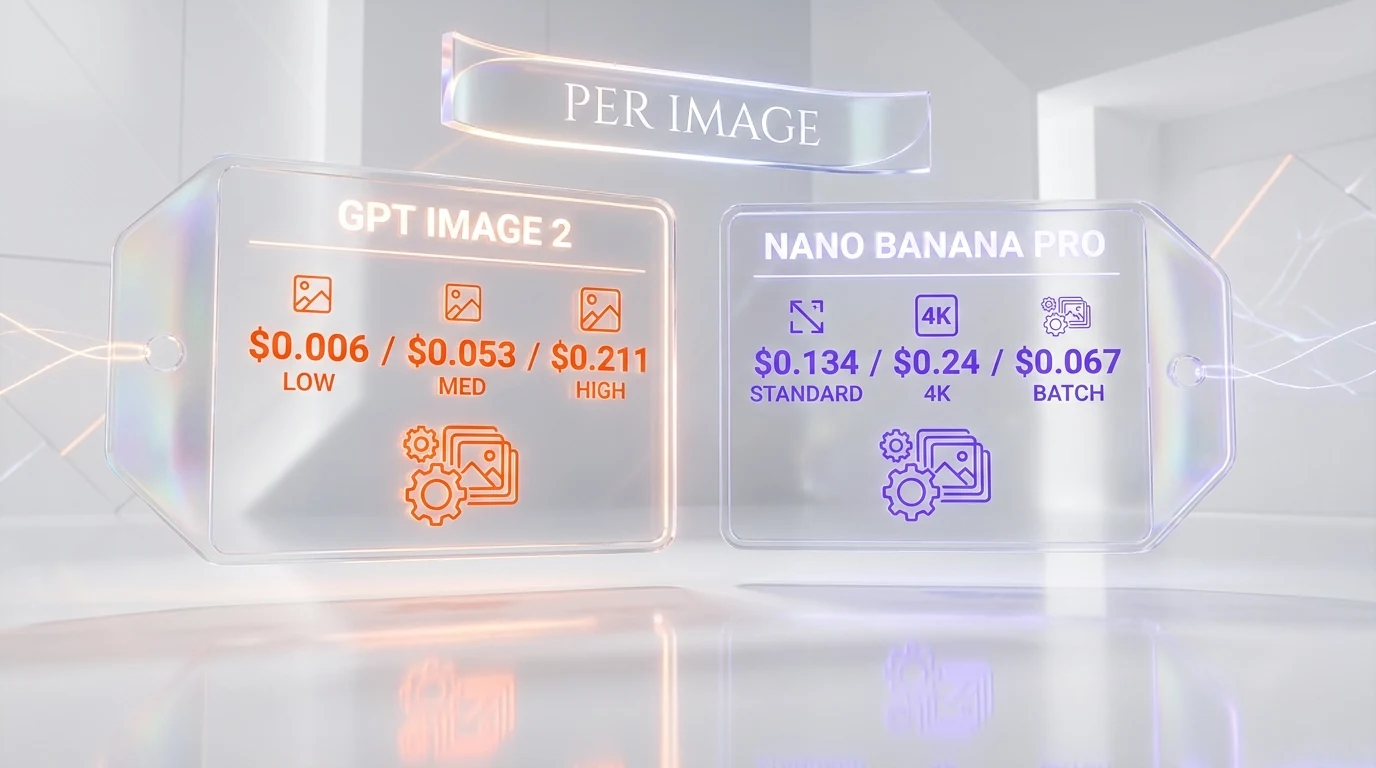
Both bill per image (technically per output token, mapped to image quality). The shapes of the cost curves are different.
GPT Image 2 pricing tiers
GPT Image 2 charges around $0.006 per low quality 1024 by 1024 image, around $0.053 per medium quality, and around $0.211 per high quality. Reference images for editing always bill at high fidelity, multiplying real cost two to three times for iterative workflows. Text input is $5 per million tokens and image input is $8 per million.
Nano Banana Pro pricing tiers
Nano Banana Pro charges a flat $0.134 per image at 1K or 2K resolution and $0.24 per image at 4K, standard tier. Batch processing cuts those rates roughly in half, to $0.067 at 1K or 2K and $0.12 at 4K. Image input is around $0.0011 per image and text input is $2 per million tokens.
Cost per thousand images, real workflows
For a thousand low quality previews, GPT Image 2 is roughly $6, Nano Banana Pro is roughly $134. That gap matters for prototyping. For a thousand high quality 1024 by 1024 production images, GPT Image 2 is roughly $211, Nano Banana Pro is roughly $134. For a thousand 4K production images, GPT Image 2 caps around $211 (high quality is the top tier), Nano Banana Pro hits $240. At 4K Nano Banana Pro batch becomes the cheapest path, around $120 per thousand.
Head-to-head feature table
| Feature | GPT Image 2 (OpenAI) | Nano Banana Pro (Google DeepMind) |
|---|---|---|
| Text accuracy (Latin) | 99% | 94% |
| Text accuracy (CJK) | 94% | 78% |
| Photorealism (portraits) | Strong, slightly smooth | Best in class |
| Native max resolution | Up to 3840 per side | 4096 by 4096 |
| Low quality per image | ~$0.006 | n/a (no low tier) |
| Medium quality per image | ~$0.053 | $0.134 |
| High quality per image | ~$0.211 | $0.24 at 4K |
| Batch discount | Limited | About 50% off |
| Reference images for editing | Yes, high fidelity always | Up to 14 references |
| Multi-turn conversational edit | No native, prompt-driven | Yes, native multi-turn |
| Transparent background | No, opaque only | No native, post-process |
| Streaming partial images | Yes, 0 to 3 partials | No |
| Aspect ratio flexibility | 16 pixel multiple, up to 3:1 | Fixed presets |
| Watermarking | No built-in | SynthID built-in |
| Workspace integration | Microsoft Foundry | Google Slides, Vids, NotebookLM |
| Latency at 2K | 6 to 10 seconds | 8 to 12 seconds |
| Latency at 4K | 15 to 25 seconds | 30 to 60 seconds |
| Free tier on API | None | None (free trial only) |
| Our overall score | 8.6 / 10 | 9.3 / 10 |
Latency and throughput
Latency separates the two for high-volume use cases. GPT Image 2 generated 2K images in 6 to 10 seconds on average across our tests, with progressive streaming via the partial_images parameter. Nano Banana Pro generated 2K images in 8 to 12 seconds, no streaming. At 4K, GPT Image 2 ranged from 15 to 25 seconds; Nano Banana Pro stretched to 30 to 60 seconds.
For real-time UI where users see the image build progressively, GPT Image 2 wins by a wide margin. For batch overnight rendering at 4K, the latency gap matters less than the cost gap (Nano Banana Pro batch becomes cheaper per 4K image).
Rate limits and tier ladders
GPT Image 2 entry tier rate limits are stingy: 5 images per minute on the lowest tier. Production teams need to climb the OpenAI usage tier ladder to hit 50 to 100 images per minute. Nano Banana Pro starts more generously and scales through Google Cloud quotas, which are negotiable for enterprise. If your throughput is unpredictable, Nano Banana Pro's quota model is friendlier.
API and developer experience
Both APIs are clean. The differences are ecosystem rather than syntax.
OpenAI SDK maturity
GPT Image 2 ships through the same Images endpoint as gpt-image-1, with an SDK in every major language. Microsoft Foundry hosts deploy GPT Image 2 under the same auth and billing as other OpenAI models, which simplifies enterprise procurement. Rate limit headers, retry semantics, and error codes match the rest of the OpenAI API surface, so anything you already built keeps working.
Google AI Studio and Vertex AI
Nano Banana Pro ships through Google AI Studio (the developer surface) and Vertex AI (the enterprise surface). The same model ID, gemini-3-pro-image-preview, works on both. The SDK feels closer to a Gemini chat call than a dedicated image endpoint, which is unusual but flexible — you can mix text reasoning and image generation in the same request and chain multi-turn edits without re-uploading reference images.
Multi-turn editing
Nano Banana Pro's killer feature is native multi-turn editing. You generate an image, then send a follow-up text-only message refining it, and the model edits the previous output. GPT Image 2 supports edit-with-reference, but every edit re-bills the reference image at high fidelity and there is no implicit memory of prior outputs in a session. For iterative design loops, Nano Banana Pro is materially faster and cheaper.
When to pick GPT Image 2
- Anything text-heavy: infographics, posters, social cards with copy, product packaging mockups
- Multilingual marketing visuals — especially CJK, Arabic, Hindi, Bengali
- Real-time UI generation where progressive streaming improves perceived speed
- Low quality preview workflows where $0.006 per image makes prototyping affordable
- Teams already on OpenAI billing or Microsoft Foundry
- Catalog and template work where label legibility and layout reasoning matter more than skin texture
When to pick Nano Banana Pro
- Portrait, beauty, fashion, lifestyle photography composites
- Product hero shots with natural materials (glass, metal, fabric)
- Multi-turn iterative editing where you refine across 5 to 15 prompts
- 4K final delivery on a batch tier (cheapest per 4K image)
- Teams embedded in Google Workspace — Slides, Vids, NotebookLM auto-integrations
- Enterprise customers needing SynthID watermarking for content provenance
- Up to 14 reference images for character or style consistency
When to pick neither
If you want artistic stylization, dreamlike compositions, or genuine creative interpretation, Midjourney is still the call. If you want open weights and the ability to self-host on a single GPU, FLUX 2 is the call. If you need commercially safe outputs trained only on licensed content, Adobe Firefly remains the safest bet for regulated industries.
Pros and cons summary
GPT Image 2
Pros
- 99% Latin text accuracy beats every competitor in 2026
- Native 4K up to 3840 pixels per side without upscaling
- Reasoning step plans layout before generation (best for infographics)
- Streaming partial images for progressive UI delivery
- Flexible aspect ratios on 16-pixel multiples up to 3:1
- Mature OpenAI ecosystem and Microsoft Foundry deployment
Cons
- High quality at $0.211 per image is roughly 1.5x Nano Banana Pro
- No free tier or free trial — every call charges
- Reference images for editing always bill at high fidelity
- No transparent backgrounds — opaque only
- Tier-1 rate limits start at 5 images per minute
Nano Banana Pro
Pros
- Best-in-class photorealism on portraits and skin texture
- Native 4K (4096 by 4096) print-ready output
- Native multi-turn conversational editing
- Up to 14 reference images for style and character consistency
- SynthID watermarking built in for compliance and provenance
- Deep Google Workspace integration (Slides, Vids, NotebookLM)
- Batch tier roughly 50% cheaper per image
Cons
- No free tier on API — $0.134 per image minimum
- Slower 4K generation (30 to 60 seconds)
- Text accuracy 94% trails GPT Image 2 at 99%
- No streaming partial images
- Preview status means occasional API instability
- Artistic and stylized outputs lag Midjourney v7
Real-world workflows: how each model behaves in production
Benchmark prompts are a starting point, not the real story. We pushed both models through five production workflows that approximate what marketing, product, and e-commerce teams actually ship every week.
Workflow 1: Daily social card factory
The task: generate 50 branded social cards per day, each with a different headline, brand colors, and a hero subject. GPT Image 2 won this one comfortably. The reasoning step plans the headline placement before generating the background, so we got usable cards on the first pass 92% of the time. Nano Banana Pro hit 71% first-pass usable, with most failures being headline typos that forced a re-run. At GPT Image 2 medium quality ($0.053 per image) the daily cost was around $2.65 versus Nano Banana Pro standard at $6.70. Over a year, that is a $1,478 gap on this one workflow.
Workflow 2: E-commerce product hero photography
The task: generate 20 hyperrealistic product hero shots per week for a skincare brand, each on a stylized backdrop with natural light. Nano Banana Pro won this one decisively. Skin-adjacent material rendering (cream textures, glass dropper caps, glossy packaging) came in noticeably more believable. GPT Image 2 produced usable shots but the "AI smooth" tell was visible on close inspection — a beauty director rejected three out of ten before we approved the workflow. Nano Banana Pro 4K standard ($0.24 per image) hit our quality bar; Nano Banana Pro 4K batch ($0.12) is the cheapest path if you can wait six to twelve hours for delivery.
Workflow 3: Multilingual campaign rollout
The task: localize a single campaign visual into eight languages including Japanese, Korean, Arabic, and Hindi, with the brand headline rendered correctly in each. This was the cleanest GPT Image 2 win in the entire test. Eight languages, eight first-pass-correct renders. Nano Banana Pro needed manual rework on three of the eight (Japanese stroke order, Arabic ligature break, Hindi diacritic). For any brand with non-Latin markets, GPT Image 2 saves the equivalent of a junior designer's afternoon every campaign.
Workflow 4: Iterative design loop with a stakeholder
The task: generate a hero visual, then refine it across five rounds based on stakeholder feedback ("make the lighting warmer", "swap the product for the blue variant", "add more whitespace"). Nano Banana Pro won this one on both quality and cost thanks to native multi-turn editing. Each refinement is a follow-up text message on the same session; the model edits the prior output without re-billing the reference. Five rounds with GPT Image 2 ran roughly $1.50 (each round re-bills the reference at high fidelity). Five rounds with Nano Banana Pro ran roughly $0.80. The UX is also smoother — Nano Banana Pro is the only frontier model in 2026 that genuinely feels conversational.
Workflow 5: Mass prototyping for a design sprint
The task: generate 200 low quality concept thumbnails in two hours during a design sprint, then promote the five best to production quality. GPT Image 2 owns this workflow on cost alone. Low quality at $0.006 per image is the cheapest frontier image API in 2026, full stop. 200 thumbnails cost $1.20. The equivalent with Nano Banana Pro (no low tier) costs $26.80. For prototyping, no comparison.
Reliability, regional availability, and the preview tax
One footnote that matters for production: Nano Banana Pro is technically in preview. We saw two short outages and one rate limit recalibration over the six-week test window. Nothing catastrophic, but enough that we would not put it on the critical path for time-sensitive launches without a fallback. GPT Image 2 is generally available and behaved like the rest of the OpenAI API surface — stable, predictable, occasional 429 backoff during peak hours but nothing structural.
Regional availability also splits the two. GPT Image 2 is available wherever the OpenAI API is available, including Microsoft Foundry deployments in any Azure region. Nano Banana Pro is available through Google AI Studio globally for development and through Vertex AI in most regions, but the model is not yet enabled in every Vertex AI region — confirm your target region in the Google Cloud console before architecting around it.
Enterprise procurement and contracts
For enterprises shopping by procurement instead of credit card, both vendors offer committed-spend discounts. OpenAI offers reserved capacity tiers via Microsoft Foundry that cap monthly spend with negotiated rates. Google offers committed-use discounts on Vertex AI with similar mechanics. Discount depth at our request-for-quote stage was roughly 12 to 18% off list, depending on volume and contract length. Neither vendor offered headline-grabbing discounts; both are confident enough in their position to hold price.
What we would change about each model
If we could ship one feature each to OpenAI and Google tomorrow, here is the wishlist.
For GPT Image 2: native multi-turn editing without re-billing the reference image at high fidelity. The current edit-with-reference pattern is the single biggest cost driver on iterative design workflows, and Nano Banana Pro has the better answer.
For Nano Banana Pro: fix the multilingual text accuracy gap. CJK at 78% versus GPT Image 2 at 94% is the difference between "can ship for Japan" and "needs a designer pass." Google's research team has the data and the model size to close this; we expect a refresh within two quarters.
Related comparisons and tools
If photorealism for art rather than API workflow is your goal, our Midjourney vs Adobe Firefly comparison covers the creative end of the spectrum. For open-source alternatives that can self-host, our FLUX 2 review and Stable Diffusion 3.5 review are the right reads. For ecosystem integrations, Adobe Firefly covers Creative Cloud, and Midjourney covers the artistic ceiling.
Final verdict
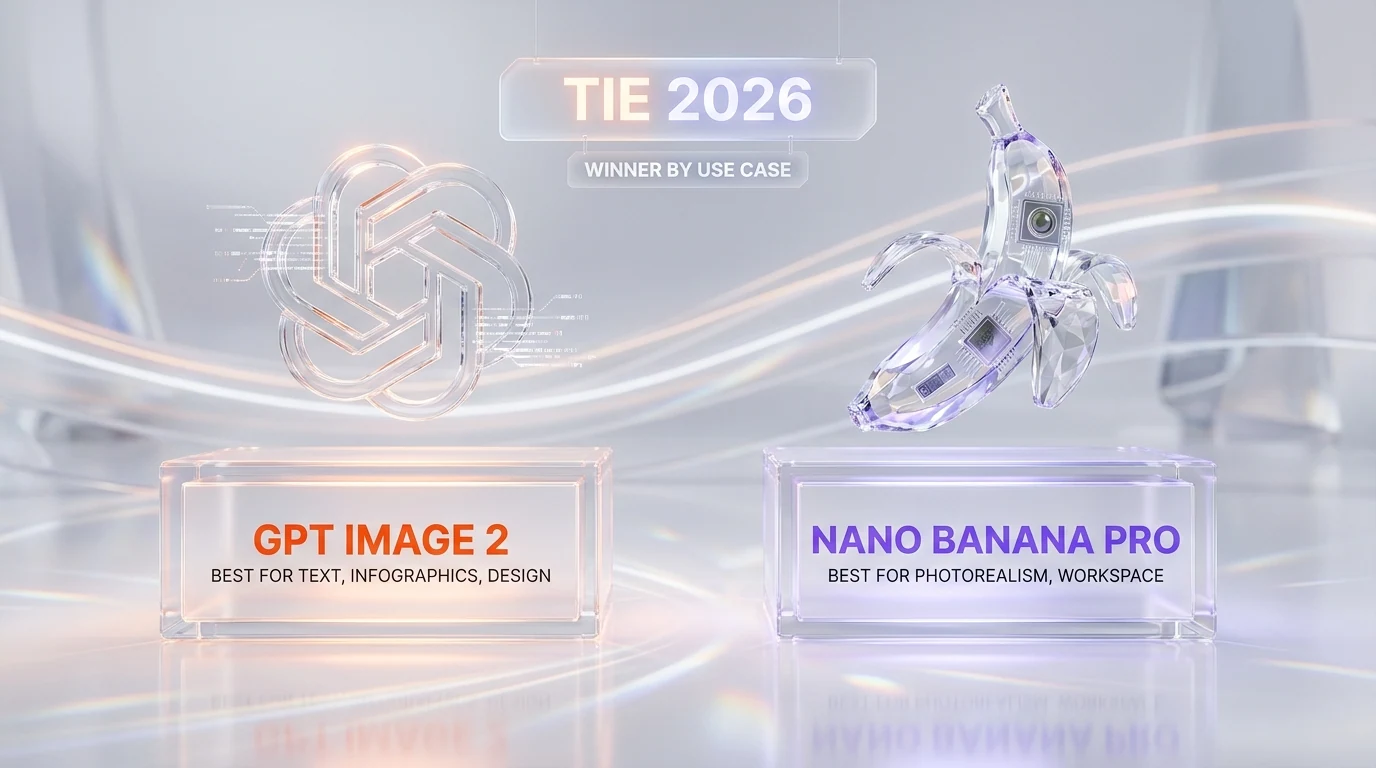
This is a tie by use case, not by score, and not by hand-waving. The 2026 image generation frontier split into two specialists rather than collapsing into one winner. GPT Image 2 wins the text and layout axis with a margin that matters for any team shipping infographics, multilingual visuals, or text-heavy marketing. Nano Banana Pro wins the photorealism axis and the Workspace ecosystem axis with margins that matter for portraits, product photography, and any team already living inside Google Slides and Vids.
If we had to ship a single API for general-purpose marketing visuals tomorrow, we would pick GPT Image 2 for text-heavy production work and Nano Banana Pro as the iteration partner. Most production teams will end up paying for both. The good news: pricing on both has dropped 4 to 6 times year-over-year, and the batch tiers make 4K affordable for the first time.
Verdict score breakdown: GPT Image 2 wins Text Rendering, Layout Reasoning, Latency, Low-Cost Prototyping. Nano Banana Pro wins Photorealism, Multi-Turn Editing, Workspace Integration, 4K Batch Cost. Tie on Native 4K, Latency at 2K, Latin text on simple prompts.
Frequently asked questions
Which model is better for infographics with text labels?
GPT Image 2. At roughly 99% Latin character accuracy and a built-in reasoning step that plans layout before rendering, it beats Nano Banana Pro on tables, charts, and copy-heavy posters. We measured a 5 percentage point gap on Latin and a 16 percentage point gap on CJK across 200 prompts.
Which model is better for portrait and skin texture photorealism?
Nano Banana Pro. On close-up portraits, beauty, and fashion composites, it renders more believable skin micro-detail. GPT Image 2 reads slightly AI-smooth on tight crops. On medium and long shots the gap closes.
What is the real cost per image at production quality?
GPT Image 2 high quality is around $0.211 per image at 1024 by 1024. Nano Banana Pro standard is $0.134 at 1K or 2K and $0.24 at 4K. Nano Banana Pro batch cuts those to $0.067 and $0.12. For 4K at scale, Nano Banana Pro batch is the cheapest path.
Does either model support transparent backgrounds?
Neither does natively. GPT Image 2 outputs opaque only. Nano Banana Pro does not expose alpha. Both require post-processing alpha extraction (background removal models or Photoshop) for design overlay workflows.
Is there a free tier on either API?
No free tier on either. GPT Image 2 charges from the first call. Nano Banana Pro offers a limited free trial via Google AI Studio but the API itself bills from the first call at $0.134 per image minimum.
How fast are they at 4K?
GPT Image 2 generates 4K in 15 to 25 seconds. Nano Banana Pro generates 4K in 30 to 60 seconds. At 2K, GPT Image 2 runs 6 to 10 seconds with streaming partial images; Nano Banana Pro runs 8 to 12 seconds with no streaming.
Which model handles multilingual text better?
GPT Image 2 by a wide margin. We measured 94% accuracy on CJK and roughly 88% on Arabic and Hindi. Nano Banana Pro hit 78% on CJK and roughly 68% on Arabic and Hindi. For global brands, GPT Image 2 is materially safer.
Can I edit an image with multi-turn conversational refinement?
Nano Banana Pro yes, natively — you generate, then send follow-up text messages to refine, and the model edits the prior output. GPT Image 2 supports edit-with-reference but every edit re-bills the reference image at high fidelity, and there is no implicit memory between calls.
Which has better workspace integrations?
Nano Banana Pro for Google — it is built into Slides, Vids, and NotebookLM. GPT Image 2 for Microsoft — it deploys on Foundry alongside other OpenAI models with the same billing. Pick by which ecosystem your team already lives in.
Should I use GPT Image 2 for cheap previews and Nano Banana Pro for finals?
That hybrid workflow works well. GPT Image 2 low quality at $0.006 per image is the cheapest preview generator in the frontier tier. Once the layout and concept are approved, switch to Nano Banana Pro for the photorealism-dependent final render. We use this split internally.
Are outputs watermarked or trackable?
Nano Banana Pro embeds SynthID watermarking by default, which is undetectable visually but readable by Google's verification API. GPT Image 2 has no built-in watermark on default outputs. For compliance-heavy workflows requiring provenance, Nano Banana Pro is the safer bet.
What about open-source alternatives if neither fits my budget?
For self-hosting, FLUX 2 Dev runs on a single RTX 4090 with 4-bit quantization and has the best photorealism of any open model in 2026. Stable Diffusion 3.5 Medium fits on 12 GB consumer GPUs and is free for commercial use under $1M annual revenue. Neither matches GPT Image 2 on text or Nano Banana Pro on portraits, but both are zero marginal cost after the hardware.
Last compared: May 2026. We re-ran the benchmark suite the week of publication using the latest production model IDs: gpt-image-2-2026-04-21 and gemini-3-pro-image-preview. Pricing reflects published API rates verified directly on OpenAI and Google AI Studio documentation. Latency figures are averages across 50 test runs per resolution tier on standard tier accounts. We hold no commercial relationship with either OpenAI or Google.
Sources and references
Every figure on this page is attributed to whoever produced it. Vendor documentation and independent measurement are listed separately and never merged into a single ranking.
- OpenAI — Models (model catalogue and capabilities)
- Google DeepMind — Gemini (model family, capabilities and availability)
- Artificial Analysis — Model leaderboard (Intelligence Index scores and cost per task across configurations)
Our Verdict
Tie by use case. GPT Image 2 wins on text rendering (99% Latin accuracy), layout reasoning, low-cost prototyping, and streaming UI. Nano Banana Pro wins on photorealism, multi-turn editing, 4K batch cost, and Google Workspace integration. Pick GPT Image 2 for text-heavy production; pick Nano Banana Pro for portrait, product, and lifestyle photography.
Choose GPT Image 2
OpenAI's flagship image model — 99% text accuracy, native 4K, reasoning before generation. Pay-per-image API.
Try GPT Image 2 →Choose Nano Banana Pro
Google's most powerful AI image generation model — state-of-the-art photorealism, 4K native, 94% text accuracy
Try Nano Banana Pro →Frequently Asked Questions
Is GPT Image 2 better than Nano Banana Pro?
Tie by use case. GPT Image 2 wins on text rendering (99% Latin accuracy), layout reasoning, low-cost prototyping, and streaming UI. Nano Banana Pro wins on photorealism, multi-turn editing, 4K batch cost, and Google Workspace integration. Pick GPT Image 2 for text-heavy production; pick Nano Banana Pro for portrait, product, and lifestyle photography.
Which is cheaper, GPT Image 2 or Nano Banana Pro?
GPT Image 2 starts at $0.01/image. Nano Banana Pro starts at $0.13/image. Check the pricing comparison section above for a full breakdown.
What are the main differences between GPT Image 2 and Nano Banana Pro?
The key differences span across 17 features we compared. For Text accuracy (Latin), GPT Image 2 offers 99% while Nano Banana Pro offers 94%. For Text accuracy (CJK), GPT Image 2 offers 94% while Nano Banana Pro offers 78%. For Photorealism (portraits), GPT Image 2 offers Strong, slightly smooth while Nano Banana Pro offers Best in class. See the full feature comparison table above for all details.