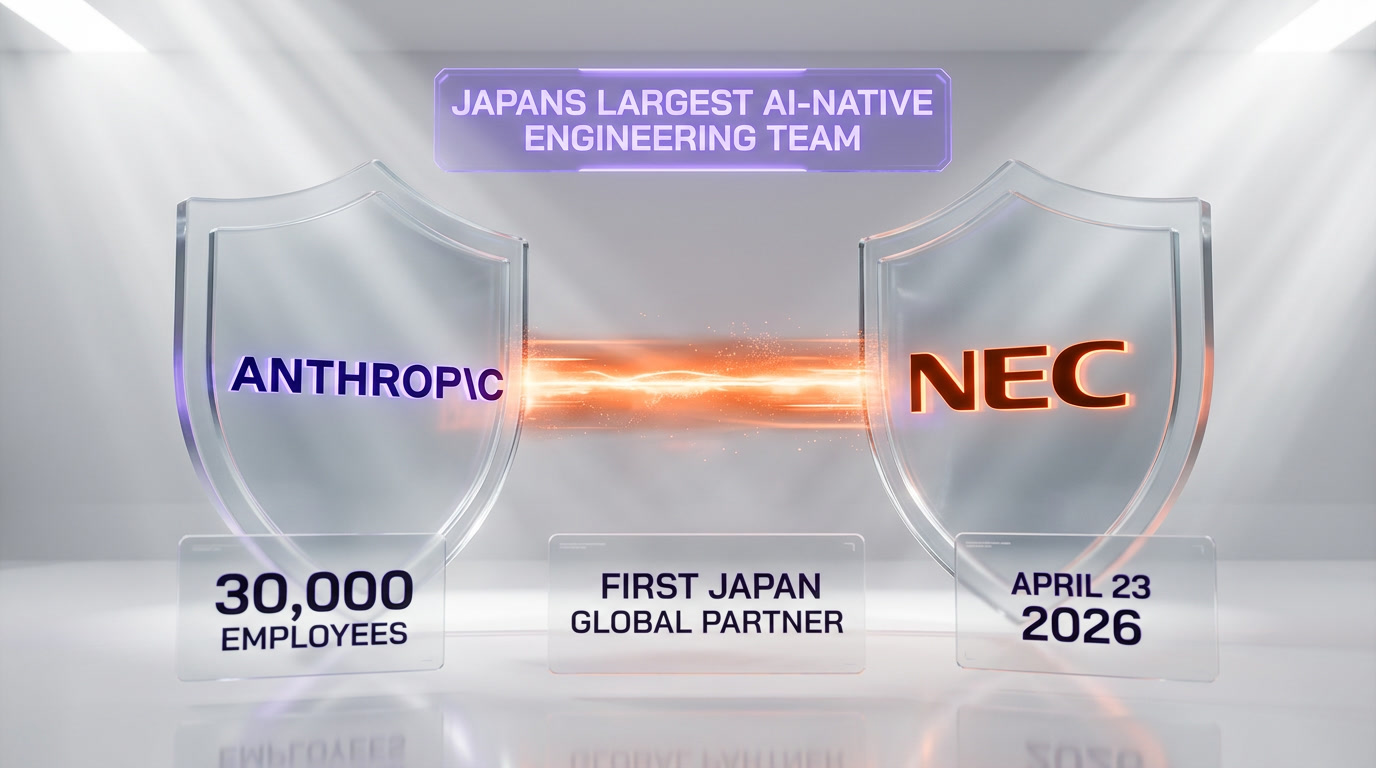
On April 23, 2026, Anthropic and NEC Corporation announced a strategic collaboration that deploys Claude across 30,000 NEC Group employees globally, making NEC the first Japan-based company to join Anthropic's Global Partner Program. The goal: build one of Japan's largest AI-native engineering teams, powered by Claude Code and Claude Cowork, with a dedicated NEC Center of Excellence training AI professionals across finance, manufacturing, and local government sectors. The deal lands the same week Google committed $40 billion to Anthropic and three weeks after Anthropic's IPO filing targeting an $800B valuation — a coordinated offensive to lock in enterprise territory before competitors respond.
The deal in detail: what Anthropic and NEC actually signed
NEC's April 23 press release lays out five concrete commitments, not marketing fluff. This is the most structured enterprise AI partnership Anthropic has disclosed to date, and the numbers tell you why it matters.
30,000 employees, globally, on Claude
NEC is rolling out Claude to 30,000 NEC Group employees worldwide — not a pilot, not a department, the full group. For context, that's roughly the size of Anthropic's entire paid user base in Japan combined with Germany according to public disclosures from the IPO filing. A single deal doubles Anthropic's enterprise seat count in APAC overnight.
The deployment isn't uniform knowledge-worker Claude access. NEC is splitting it into two tiers:
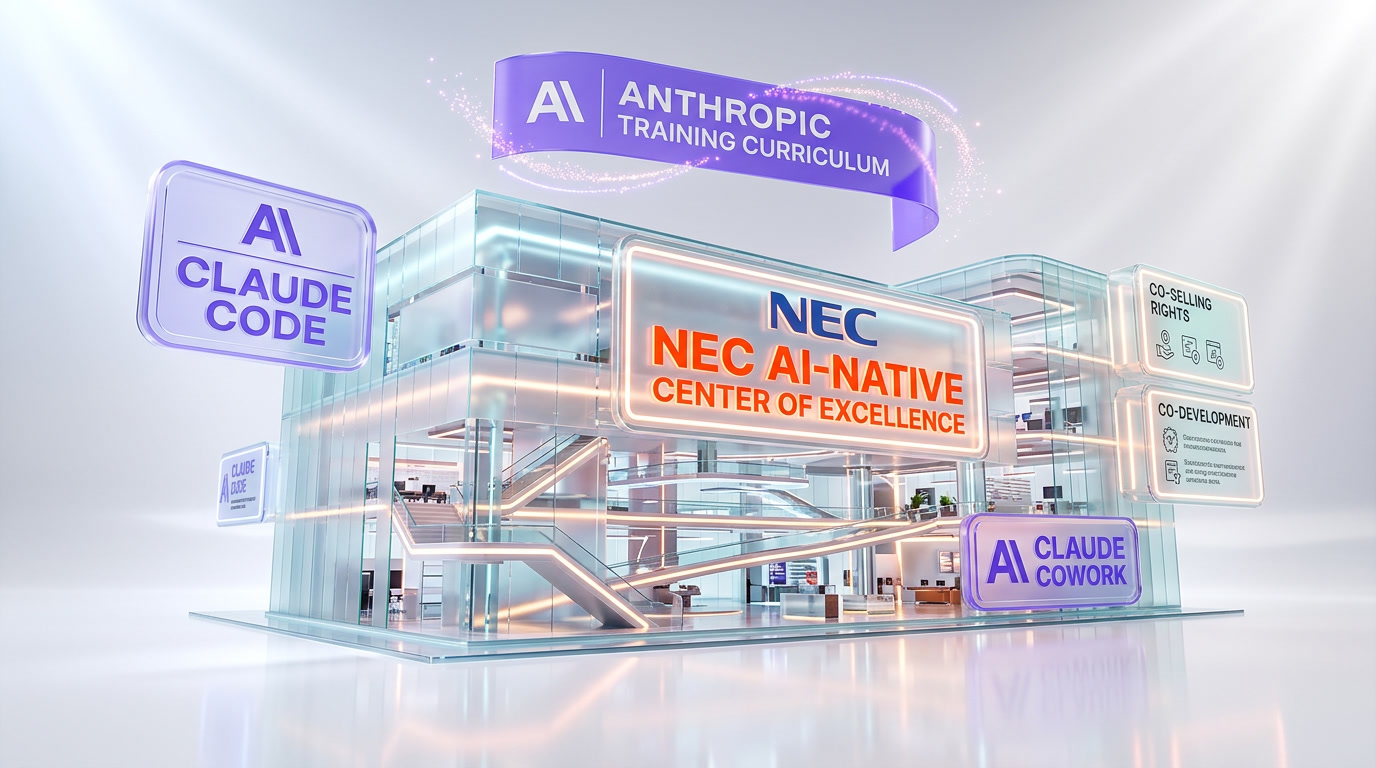
- Claude Code — deployed to NEC's engineering organization, targeted as the core tool for what NEC explicitly calls "one of the largest AI-native engineering teams in Japan."
- Claude Cowork — Anthropic's desktop AI agent, deployed across NEC's industry solutions teams for finance, manufacturing, and public-sector clients.
First Japan-based Global Partner: an exclusive status
NEC is the first Japan-headquartered company admitted to Anthropic's Global Partner Program. Before this, the program included NVIDIA, Palantir, Accenture, Deloitte, KPMG, and BCG — all US or US-adjacent firms. No Japanese, no Korean, no Indian partner. NEC just got the keys to APAC's most populous knowledge economy.
Global Partner status matters for three reasons:
- Co-selling rights — NEC sales teams can bundle Claude into enterprise deals with their own margin structure.
- Priority access to new Anthropic releases (Mythos, Opus 4.7 variants, Managed Agents).
- Technical co-development — NEC engineers work directly with Anthropic's solutions teams on Japanese-language optimization and industry-specific fine-tuning.
NEC's AI-Native Center of Excellence
NEC is funding an internal Center of Excellence to train employees in Claude-native workflows. Anthropic provides the training curriculum, technical support, and direct access to solutions engineers. NEC provides the physical infrastructure, HR pipeline, and integration with its existing IT operations.
This is the same playbook Anthropic ran with Accenture (90,000 consultants trained on Claude in 2025) and Deloitte (470,000-seat deal announced September 2025) — but this time the partner owns the execution in a single country. It's tighter, deeper, and harder for competitors to dislodge.
Why Japan matters: the $5 trillion economy that missed AI
Japan is the #4 global economy with a GDP of roughly $4.9 trillion, yet it has conspicuously underperformed on enterprise AI adoption compared to the US and China. METI (Japan's Ministry of Economy, Trade, and Industry) published a 2025 report noting that only 14% of Japanese enterprises had deployed generative AI in production — versus 47% in the US and 61% in China.
The AI enterprise deployment gap
The gap has three drivers, all of which favor an Anthropic-NEC partnership:
- Language — Japanese is a low-resource language in most frontier LLM training corpora. GPT and Gemini ship "multilingual" support, but accuracy on specialized Japanese business terminology (legal, financial, manufacturing) lags English by measurable margins. Claude's recent Japanese benchmarks have closed most of that gap.
- Trust and compliance — Japanese enterprises prefer long-term partnerships with aligned-incentive vendors. Anthropic's safety-first branding maps well onto Japanese corporate risk aversion.
- Integration — Japanese IT is heterogeneous, on-prem-heavy, and built around system integrators. NEC is the largest of those integrators. A direct line from Anthropic's models to NEC's deployment pipeline bypasses the usual 18-month procurement cycle.
Japan as APAC gateway
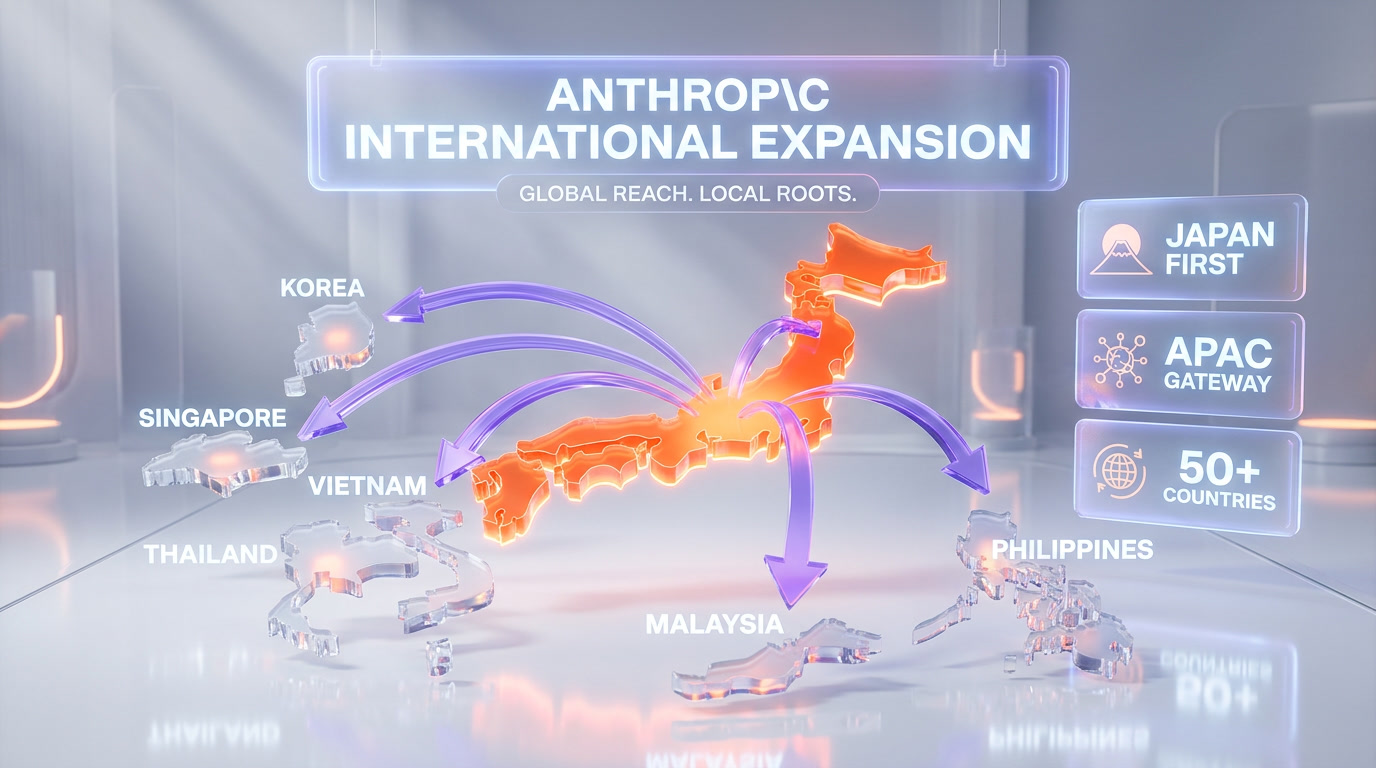
Anthropic's Tokyo office opened in 2024 with a small team focused on enterprise sales. The NEC deal transforms that beachhead into a launchpad. NEC operates in 50+ countries through its subsidiaries and has deep customer relationships in Singapore, Vietnam, Thailand, Malaysia, and the Philippines — markets where Anthropic currently has no direct presence. Through NEC's channel, Claude can reach Southeast Asian enterprises without Anthropic having to build 20 country teams.
Claude Code at 30,000 engineers: one of the largest deployments ever
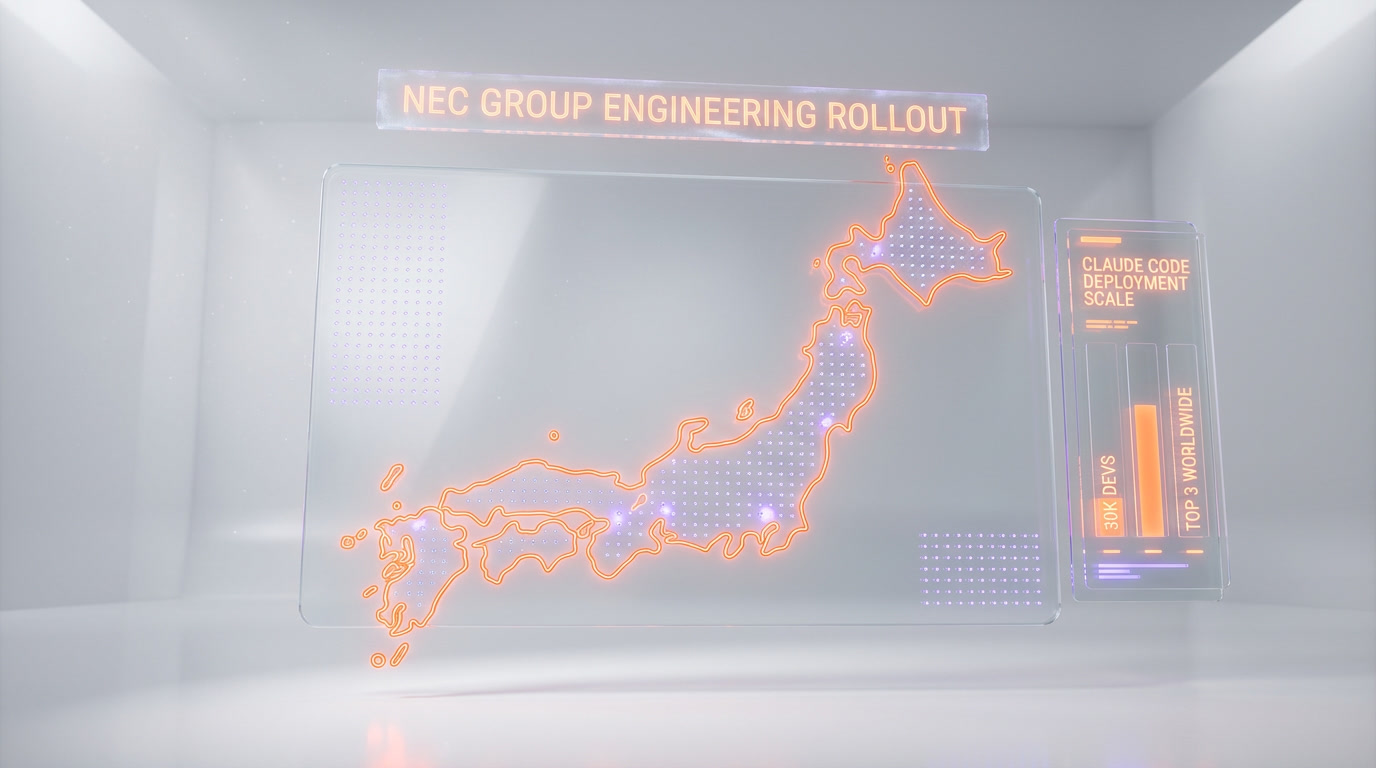
The engineering side of this deal is what makes it historically significant. 30,000 engineers on Claude Code puts NEC in the top three largest Claude Code deployments disclosed publicly, ranked alongside Shopify's rollout (reported ~15,000 engineers) and the Accenture engineering practice (~8,000-10,000 seats).
What "AI-native engineering team" actually means
NEC's statement doesn't use "AI-augmented" or "AI-assisted" — terms that typically describe existing engineers who occasionally use Copilot. The language is AI-native, which in Anthropic's vocabulary implies:
- Engineers whose default workflow is Claude Code in agent mode, not a chat sidebar.
- Code reviews, spec writing, and planning performed through multi-file agent sessions.
- Heavy use of Claude Code's subagent architecture (the coordinator/swarm pattern surfaced in the April leak) for long-running tasks.
- Tooling built on top of the Claude Agent SDK, not Copilot's completion API.
This is the same stack we've used internally to ship ThePlanetTools, and the productivity multiplier is real when engineers actually embrace agent-first workflows. NEC's 30K headcount makes it the biggest real-world test of that thesis.
Why Claude Code and not Cursor or Antigravity
Cursor 3 and Google's Antigravity both compete for enterprise AI-native engineering budgets. NEC evaluated all three (per industry sources cited in Cybernews and IT Brief Asia's coverage) and selected Claude Code for three reasons documented in the deal structure:
- Enterprise governance — Claude Code supports SSO, audit logs, and data residency controls that Cursor didn't ship at scale until late 2025. For NEC's defense and government clients, these aren't optional.
- Model quality — Opus 4.7 remains the top-scoring model for long-context code refactoring, which matters for Japanese legacy COBOL/Java systems that NEC maintains.
- Partnership depth — Cursor is a startup with minimal enterprise support staff. NEC needed a Global Partner relationship, and only Anthropic offered it.
For context on how Claude Code fits into this competitive landscape, see our 3-way comparison of Cursor 3, Google Antigravity, and Claude Code.
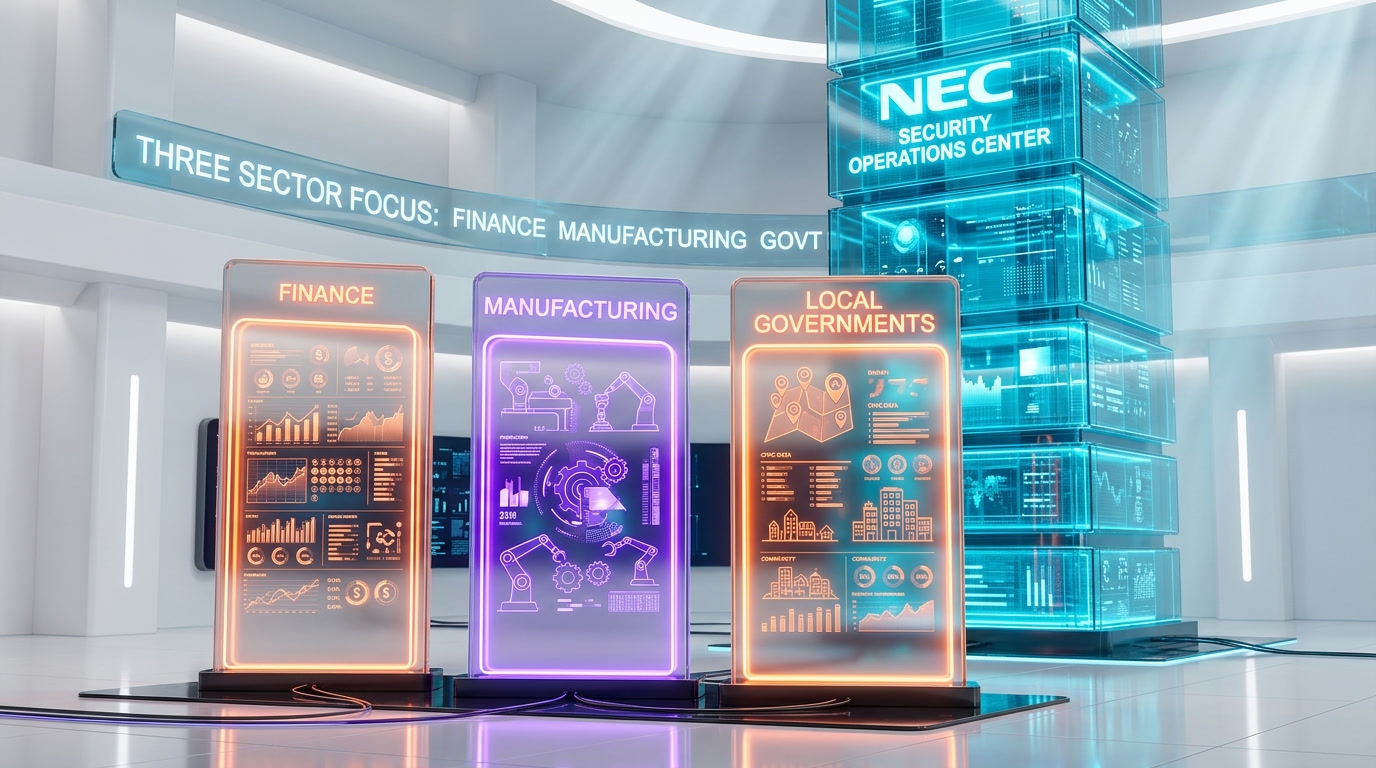
Three sectors: finance, manufacturing, local governments
The Claude Cowork portion of the deal targets three specific industries where NEC already holds dominant market share in Japan. This isn't random — each sector represents a different go-to-market motion with different revenue profiles.
Finance
NEC has deep relationships with Japanese megabanks (MUFG, Mizuho, SMBC) and regional banks. Claude Cowork targets back-office automation: compliance screening, transaction reconciliation, KYC document processing. Japanese banking has exceptionally high documentation requirements (bureaucratic legacy from the 1990s financial crisis regulations), which makes every task 3-5x more document-intensive than US equivalents — a perfect fit for an agent that can read 500K tokens of context.
Manufacturing
NEC supplies enterprise software to Toyota, Honda, Panasonic, Mitsubishi Heavy Industries. Claude Cowork deploys into R&D departments for technical documentation, patent prior-art searches, and supplier-contract analysis. Japanese manufacturing generates enormous volumes of semi-structured text (technical drawings annotations, quality reports, ISO compliance logs) that currently consume massive engineering hours.
Local governments and cybersecurity
NEC is a primary vendor to Japan's national and prefectural governments and operates the NEC Security Operations Center (SOC), one of the largest cybersecurity facilities in East Asia. The deal explicitly calls out integration of Claude into the SOC for next-gen cybersecurity defense — a direction that mirrors Anthropic's earlier work with the US Department of Defense and its Palantir partnership.
This is the most strategically loaded piece of the deal. Japan's Self-Defense Force and METI have been expanding cybersecurity budgets in response to North Korean and Chinese state-actor threats. A Claude-powered SOC inside NEC gives Anthropic a reference customer for sovereign AI defense applications without having to build its own government sales organization.
The NEC profile: who Anthropic just married
NEC Corporation isn't a household name in the US the way Sony or Toyota is, but inside Japan it's one of the top five tech conglomerates. Understanding NEC's scope explains why this deal is more significant than most Anthropic partnerships.
NEC's five business pillars
- IT services — Japan's #1 systems integrator, managing IT operations for roughly 40% of the Nikkei 225.
- Telecommunications — legacy strength in optical networking and 5G infrastructure (NEC is a major supplier to NTT Docomo and international carriers).
- Cybersecurity — the SOC, managed detection and response services, government contracts.
- Defense and aerospace — NEC is a tier-1 supplier to the Japan Self-Defense Force, with radar, satellite, and C4ISR systems.
- Public safety — biometrics (NEC's facial recognition is deployed in airports globally), emergency response systems, smart-city platforms.
Leadership: Takayuki Morita
NEC's CEO Takayuki Morita took over in 2021 with an explicit mandate to pivot NEC toward AI, cybersecurity, and biometrics as the growth engines replacing legacy hardware. Morita has spent the last five years consolidating NEC's global footprint and cutting unprofitable business units. The Anthropic deal is the clearest public signal yet that Morita intends to make AI the centerpiece of NEC's next five-year plan — not a side initiative.
Anthropic's international expansion playbook
The NEC deal isn't a one-off. It fits a pattern Anthropic has been executing since mid-2025, and the pattern tells you what comes next.
The three-step playbook
- Anchor a global partner in each major region (NVIDIA, Accenture, Deloitte, now NEC).
- Deploy to their employees first to create reference case studies (90K at Accenture, 470K at Deloitte, 30K at NEC).
- Use the partner's customer base to sell the next wave of enterprise deals.
Anthropic is deliberately skipping the direct-to-enterprise sales motion that OpenAI has pursued. Building a country-by-country direct sales organization takes 3-5 years; partnering with existing giants compresses it to 6-12 months. The tradeoff is margin (partners take a cut), but the revenue velocity is higher.
What's next: Korea, India, Europe
Based on the playbook, the next logical Global Partner announcements should target Samsung SDS (Korea), Tata Consultancy Services or Infosys (India), and a European equivalent likely from the Accenture or IBM Germany orbit. None of these are confirmed, but the NEC precedent establishes the template, and Anthropic's IPO filing references "expansion of strategic enterprise partnerships across APAC and EMEA" as a use of IPO proceeds.
Competitive landscape: Gemini, OpenAI, and the Japan battlefield
Anthropic isn't entering Japan first. Google and OpenAI have been moving for 18 months, and NEC represents the first major Japanese conglomerate to pick a clear winner.
Google Gemini's Japan play
Google has deployed Gemini through its existing Google Cloud relationships in Japan, with notable enterprise wins at Rakuten and SoftBank. Google's advantage is Workspace integration (Japanese businesses use Gmail/Docs heavily) and pricing (Gemini consumer is aggressively priced in JPY). Google's disadvantage is its relationship with local integrators — Google Cloud Japan is thin compared to NEC's 30,000-person IT services footprint.
OpenAI in Japan
OpenAI opened its Tokyo office in 2024 and has signed partnerships with Rakuten, KDDI, and the Japanese government (specifically for public-sector chatbot deployments). OpenAI's go-to-market in Japan has been direct-enterprise sales plus a consumer push through ChatGPT subscriptions. The OpenAI approach competes on brand recognition and model breadth; it loses on integration depth.
Notably, OpenAI does not have a named Japanese Global Partner equivalent to NEC. The Rakuten relationship is commercial, not co-development. This is a gap Anthropic just monetized.
Open-weight models: the third front
Japanese enterprises increasingly deploy on-prem Llama, Mistral, and Qwen derivatives for data-residency reasons. NEC's own AI division has historically favored open models for defense work. The Anthropic deal doesn't eliminate that — NEC will almost certainly run hybrid deployments — but it locks in Claude as the default for white-collar productivity and the premium engineering work, which is where the margins live.
The broader timing: why this week matters
April 2026 is shaping up as Anthropic's most consequential month. Three major events landed within 12 days of each other, and they're not coincidence.
The three-event convergence
- April 11, 2026 — Anthropic files for IPO at a targeted $800B valuation (see our Anthropic IPO breakdown).
- April 21, 2026 — Google announces a $40B investment in Anthropic at a $350B pre-IPO round, locking in the cloud/compute narrative.
- April 23, 2026 — The NEC deal is announced.
Read together, this is a coordinated offensive. The IPO filing establishes the financial narrative. The Google investment establishes the cloud/compute narrative. The NEC deal establishes the enterprise-revenue narrative. Each event amplifies the others, and each is timed to strengthen Anthropic's positioning in the weeks before the roadshow.
The OpenAI memo counterpoint
Two weeks earlier, a leaked OpenAI internal memo accused Anthropic of inflating revenue by $8B. The NEC deal is the clearest possible rebuttal: a public, auditable, 30,000-seat contract with a Nikkei 225 company is exactly the kind of enterprise traction that's hard to fake. Whether or not the OpenAI accusation had merit, the NEC announcement makes it a lot harder to land.
Risks and open questions
Not everything about this deal is upside. Three risks deserve calling out.
Single-partner dependence
Anthropic now has ~600K combined seats across Accenture, Deloitte, and NEC. If any of these partnerships sour, the revenue hit is non-trivial. Enterprise concentration risk is a standard IPO diligence topic and will feature prominently in Anthropic's S-1.
Japanese-language model quality
Claude's Japanese benchmarks have improved dramatically, but they still trail English on specialized domains. NEC will stress-test Claude on Japanese legal documents, government RFPs, and technical patents. Public failures in these use cases would damage the partnership narrative.
Regulatory exposure
Japan's Personal Information Protection Commission (PPC) and the ministry overseeing defense exports have oversight over AI deployments to sensitive sectors. NEC's defense and government integrations require compliance work that could slow deployments. Neither Anthropic nor NEC has disclosed full details of the sovereign-AI infrastructure arrangement, and that's probably the hardest part of the deal to execute.
Our analysis: what to take away
Three takeaways frame why this deal matters beyond the immediate headlines.
One. Anthropic has decisively committed to an enterprise-first revenue model. The consumer Claude product still exists, but the revenue engine is large partnership deals like NEC. Expect the IPO narrative to lean heavily on this.
Two. Japan is the first test of Anthropic's international playbook. If the NEC deal executes cleanly, expect Korea, India, and Southeast Asia announcements in Q3 2026. If it stumbles, Anthropic's international expansion timeline gets pushed into 2027.
Three. The Claude Code + Global Partner combination is Anthropic's most defensible moat. OpenAI can match model quality, Google can match compute, but neither has replicated the deep integrator partnerships that put Claude inside 600K enterprise workflows. That stickiness is what justifies a $350B pre-IPO valuation, and NEC just added another 30K seats to the argument.
For broader context on Anthropic's next-generation model pipeline, see our Mythos preview coverage and the Altman vs Anthropic framing debate. The tools Anthropic will deploy next to the NEC engineering team are built on Claude Code and Claude directly.
Frequently asked questions
What did Anthropic and NEC actually announce on April 23, 2026?
Anthropic and NEC Corporation announced a strategic collaboration that deploys Claude to 30,000 NEC Group employees globally, establishes an NEC Center of Excellence for AI training, and targets three industry sectors (finance, manufacturing, local governments). NEC becomes the first Japan-based company admitted to Anthropic's Global Partner Program.
How many employees will use Claude at NEC?
30,000 NEC Group employees worldwide will receive Claude access. The deployment splits between Claude Code for NEC's engineering organization (targeting "one of the largest AI-native engineering teams in Japan") and Claude Cowork for industry solutions teams serving finance, manufacturing, and government clients.
What is the NEC Center of Excellence?
The NEC AI-Native Center of Excellence is an internal training program jointly developed with Anthropic. Anthropic provides the training curriculum, technical support, and solutions-engineering access. NEC provides infrastructure, HR pipeline, and integration with existing IT operations. It follows the playbook Anthropic used with Accenture (90,000 consultants trained) and Deloitte (470,000-seat deal from September 2025).
What does "first Japan-based Global Partner" mean for Anthropic?
Before NEC, Anthropic's Global Partner Program included NVIDIA, Palantir, Accenture, Deloitte, KPMG, and BCG — all US or US-adjacent firms. NEC is the first Japan-headquartered company in the program, with co-selling rights, priority access to new Anthropic releases, and technical co-development privileges. It gives Anthropic a direct channel into Japan's #4 global economy and an APAC gateway.
Which sectors does the Anthropic-NEC deal target?
Three sectors: finance (Japanese megabanks MUFG, Mizuho, SMBC and regional banks), manufacturing (Toyota, Honda, Panasonic, Mitsubishi Heavy Industries), and local governments (national and prefectural). The deal also explicitly integrates Claude into NEC's Security Operations Center for next-generation cybersecurity defense.
Why did NEC choose Claude Code over Cursor 3 or Google Antigravity?
Three reasons surfaced in industry sources: enterprise governance (Claude Code shipped SSO, audit logs, and data residency at scale before Cursor), model quality (Opus 4.7 leads on long-context refactoring, critical for NEC's legacy system maintenance), and partnership depth (only Anthropic offered Global Partner status with co-development rights). Cursor is a startup without equivalent enterprise infrastructure.
How does this deal fit with Google's $40 billion Anthropic investment?
Both landed the same week (April 21 and April 23, 2026) as part of a coordinated offensive before Anthropic's IPO roadshow. The Google investment establishes Anthropic's cloud and compute narrative ($350B pre-IPO round). The NEC deal establishes the enterprise-revenue narrative. Together with the April 11 IPO filing at an $800B target, they form a three-event convergence designed to strengthen Anthropic's positioning.
Why has Japan lagged on enterprise AI adoption?
METI's 2025 report found that only 14 percent of Japanese enterprises had deployed generative AI in production, versus 47 percent in the US and 61 percent in China. The gap has three drivers: language (Japanese is low-resource in most frontier LLM training corpora), trust and compliance (Japanese corporate risk aversion), and integration (heterogeneous on-prem IT managed by system integrators). The Anthropic-NEC partnership directly addresses all three.
What is Claude Cowork and how is it different from Claude Code?
Claude Cowork is Anthropic's desktop AI agent for knowledge workers — not engineers. It runs on the employee's machine, integrates with business applications, and handles tasks like compliance screening, document processing, and contract analysis. Claude Code is the engineering-specific agent for software development. NEC deploys both: Claude Code to its engineering team, Claude Cowork to its finance, manufacturing, and government industry solutions teams.
Who is NEC CEO Takayuki Morita and why does he matter?
Takayuki Morita became NEC CEO in 2021 with an explicit mandate to pivot the company toward AI, cybersecurity, and biometrics as growth engines replacing legacy hardware. He has spent five years consolidating NEC's global footprint and cutting unprofitable business units. The Anthropic partnership is the clearest public signal that Morita intends to make AI the centerpiece of NEC's next five-year plan.
How does this compare to other large Claude deployments?
NEC's 30,000-seat deployment ranks in the top three disclosed Claude Code rollouts alongside Shopify (approximately 15,000 engineers) and Accenture (approximately 8,000 to 10,000 engineering seats). Deloitte's 470,000-seat September 2025 deal is larger in total headcount but broader in scope (consulting and knowledge work, not engineering-focused). NEC is the biggest pure AI-native engineering deployment announced to date.
What could go wrong with this partnership?
Three risks: single-partner concentration (Anthropic now has approximately 600,000 combined seats across Accenture, Deloitte, and NEC, creating revenue dependence), Japanese-language model quality in specialized domains (legal, patents, government RFPs) where Claude still trails English, and regulatory exposure (Japan's Personal Information Protection Commission and defense export oversight could slow sovereign-AI deployments to sensitive sectors).