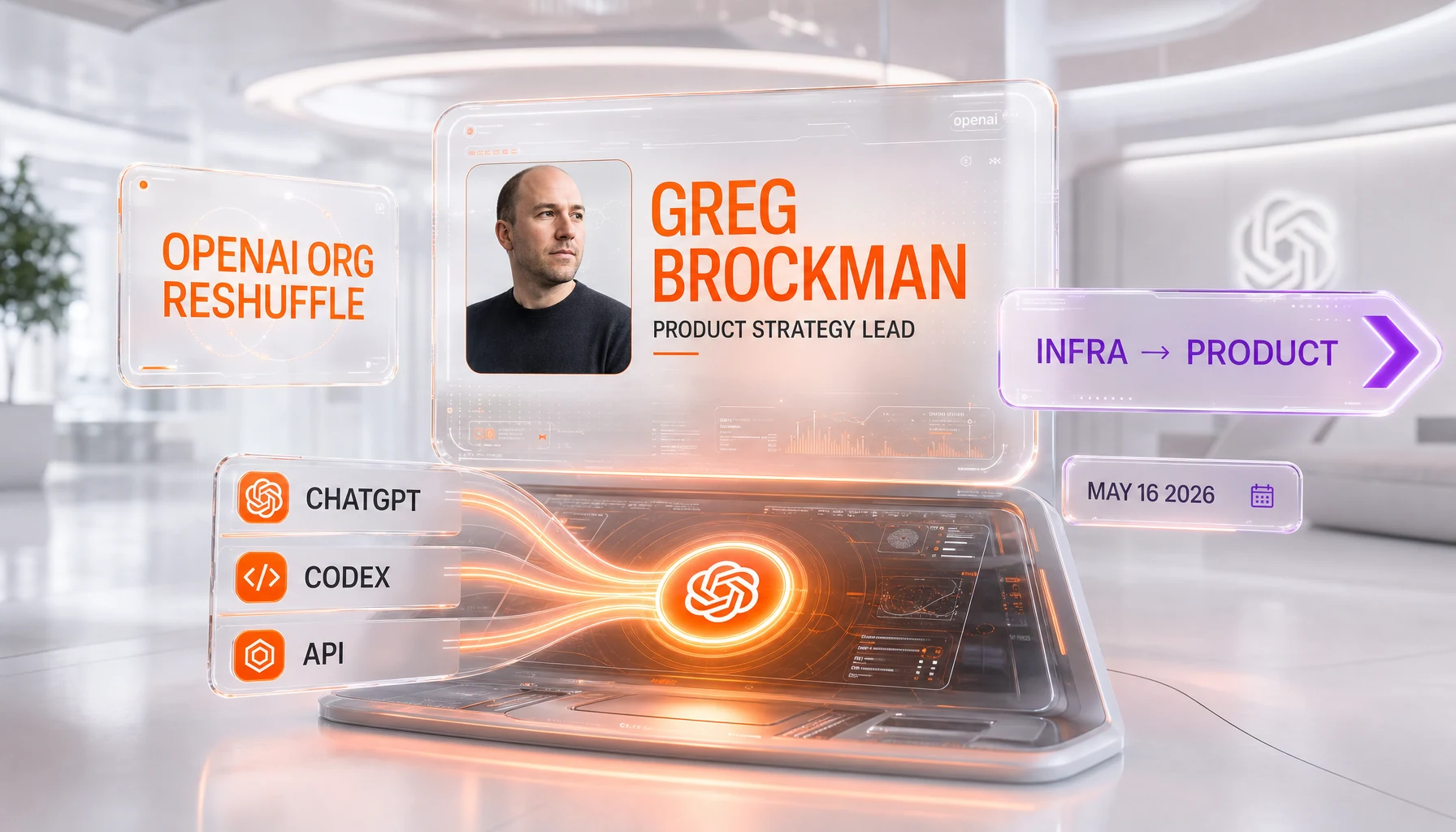
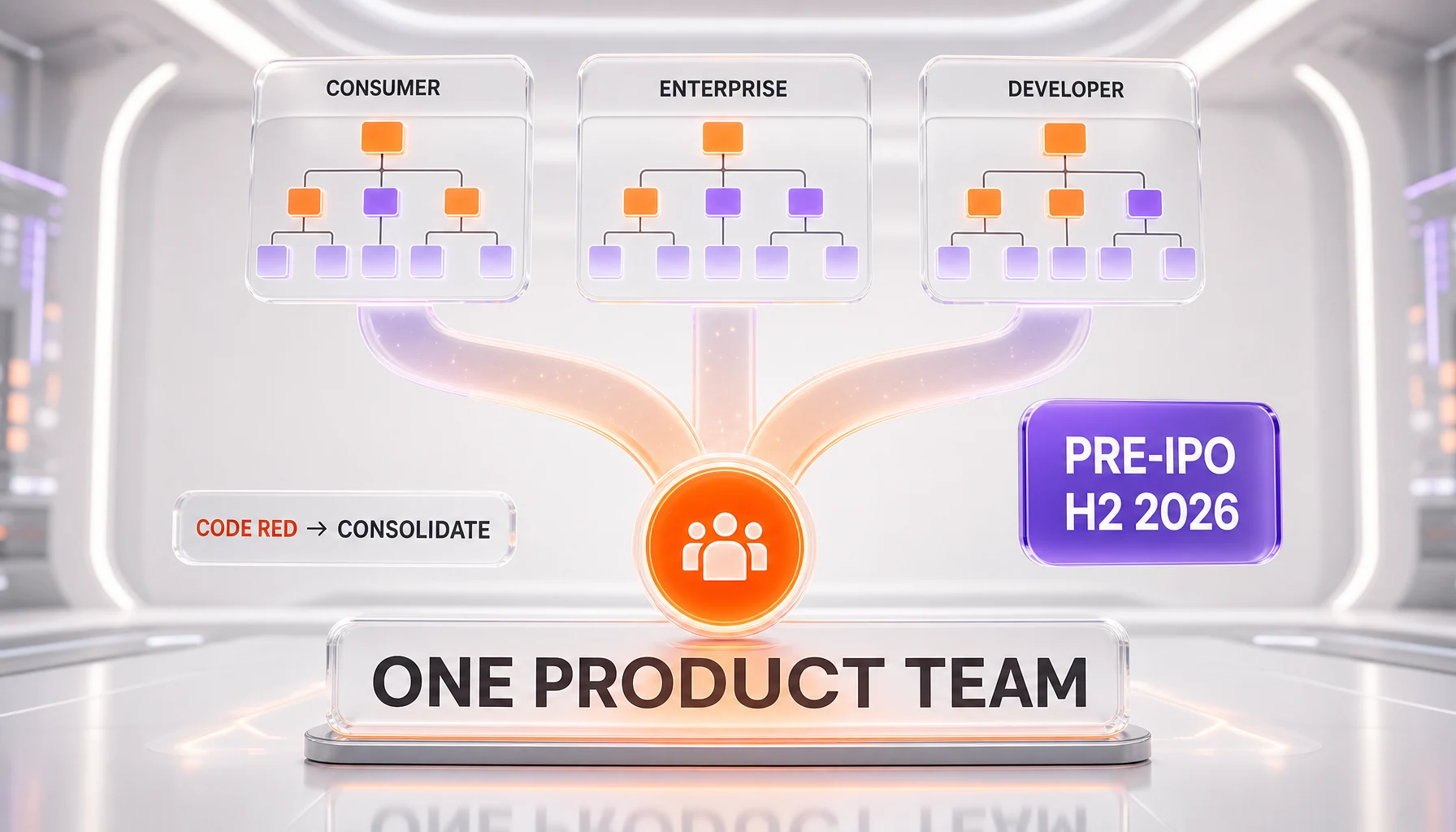
On May 16, 2026, OpenAI co-founder and president Greg Brockman reportedly took permanent charge of the company's product strategy, consolidating ChatGPT, Codex, and the developer API into a single product team. Brockman had been overseeing products on an interim basis while Fidji Simo, CEO of AGI deployment, remained on medical leave. The move, first reported by Wired and confirmed via an OpenAI staff memo, lands while analysts expect a potential OpenAI IPO before the end of 2026 and while the Musk v. Altman trial keeps OpenAI's governance under public scrutiny.
The Big Picture: A Co-Founder Repositioned at the Decisive Moment
OpenAI does not reshuffle its founding leadership casually. When the company moves a co-founder from an infrastructure and research mandate to direct ownership of product strategy, the org chart is telling you what the company intends to prioritize. According to TechCrunch, citing Wired's reporting and an internal memo, Greg Brockman is now the permanent owner of product strategy across consumer, enterprise, and developer surfaces.
We read this less as a personnel story and more as an org-design signal. The timing is the message: a potential public offering reportedly expected before the end of the year, a pivot away from side projects that began with a December "code red," and a governance narrative dominated by the ongoing Musk v. Altman trial. Each of those threads runs through the same question — what is OpenAI optimizing for in 2026, and who owns the answer?
The honest scoping matters here. The reporting is framed as "reportedly" and built on Wired's sourcing plus an OpenAI confirmatory comment. We treat the consolidation and Brockman's mandate as confirmed by the staff memo, and we treat the IPO timing as a market expectation, not a company commitment.
What Is Confirmed Versus What Is Expected
Confirmed via the staff memo: Brockman permanently leads product strategy; ChatGPT, Codex, and the developer API merge into one product team; Thibault Sottiaux (previously head of Codex) leads core product across consumer, enterprise, and developer; Nick Turley moves to an enterprise product revamp role; Fidji Simo remains on medical leave and worked with Brockman on the changes. Expected, not confirmed: a public offering before the end of 2026, characterized by analysts as a possibility rather than a scheduled event.
Why an Org Chart Is a Strategy Document
Reporting lines encode priorities more reliably than press releases. When a founder-president takes a product mandate and a coding-agent leader is handed core product across every surface, the company is declaring that shipping integrated product — not research prestige or experimental side bets — is the axis it will be measured on next. That is the strategic read, and it holds regardless of whether the IPO date slips.
Reading the Reshuffle Through Decision Rights
The cleanest way to interpret an org change is to ask where decision rights moved, not what titles changed. Before the reshuffle, product prioritization across ChatGPT, Codex, and the API was distributed across leaders with different mandates and, implicitly, different definitions of success. After it, those prioritization calls reportedly converge on one owner. Strategically, that collapses internal negotiation cost and removes the ambiguity about who arbitrates when consumer, enterprise, and developer roadmaps compete for the same engineering capacity. Concentrated decision rights trade resilience for speed — and a company preparing for public-market scrutiny generally values demonstrable speed and a single accountable narrative over distributed redundancy.
From Infra and Research to Product Owner: The Brockman Role Shift
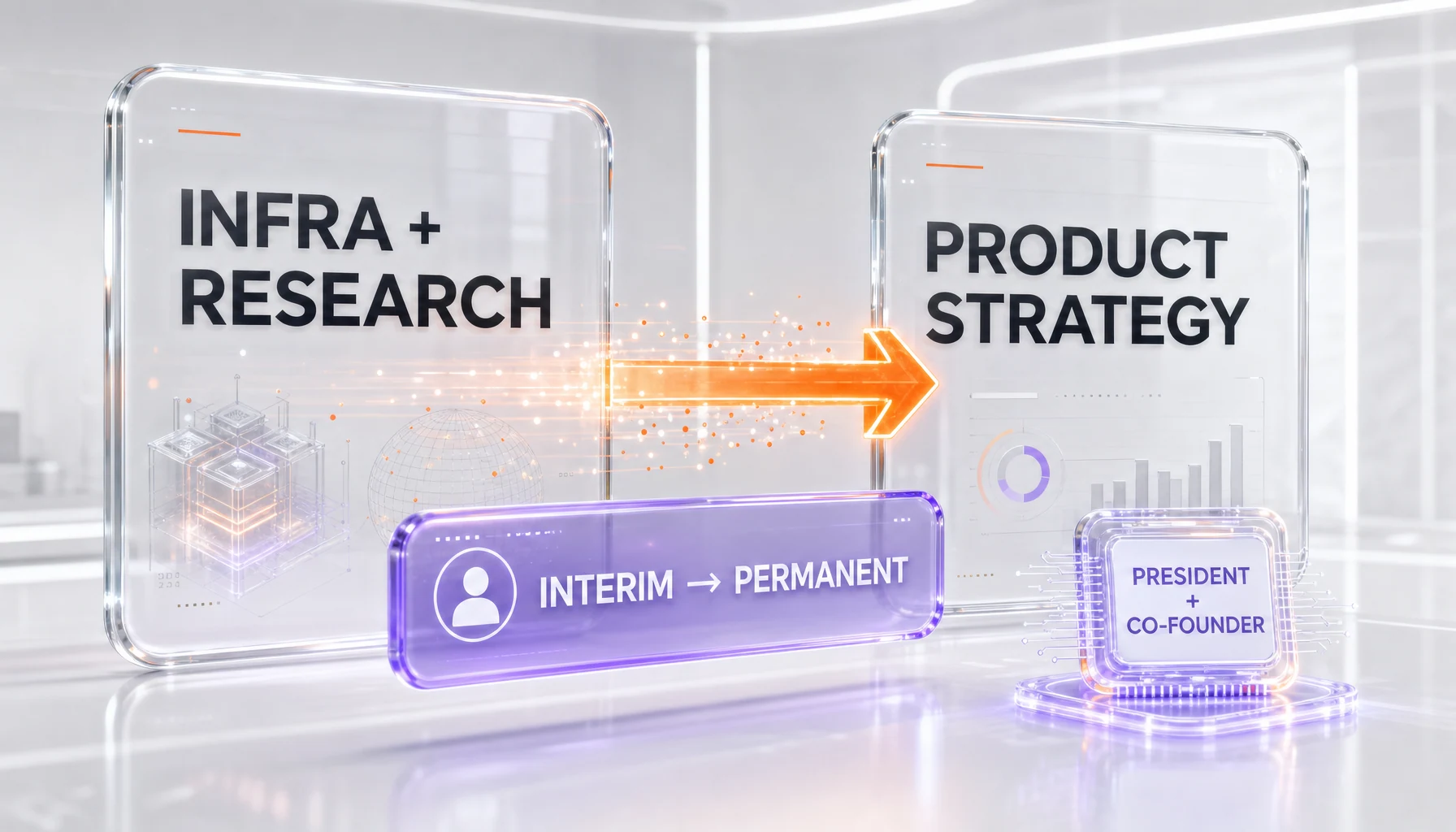
Greg Brockman's earlier center of gravity at OpenAI sat closer to infrastructure scaling and research execution than to consumer product roadmaps. The reported change moves him to the seat where product priorities are arbitrated. That is a meaningful relocation of decision rights, not a title cosmetic — his formal title of president and co-founder reportedly does not change, but the mandate underneath it does.
Interim to Permanent: How the Transition Happened
Brockman had been covering product oversight on an interim basis during Fidji Simo's medical leave. The reported decision converts that interim arrangement into a permanent mandate. Strategically, moving from caretaker to owner changes the time horizon of the decisions a leader is willing to make — interim leaders stabilize, permanent owners restructure. The consolidation of three product surfaces is precisely the kind of restructuring an interim caretaker would defer and a permanent owner would push.
What "Owning Product Strategy" Actually Means Here
The memo, as reported, frames the mandate as consolidating product efforts "to execute with maximum focus toward the agentic future, to win across both consumer and enterprise." Read strategically, the operative words are "consolidating" and "maximum focus." This is a narrowing move — fewer parallel bets, tighter coupling between the consumer app and the developer surface, and a single accountable owner for the integrated roadmap.
The Lieutenants: Sottiaux and Turley
Thibault Sottiaux, previously head of Codex, reportedly takes core product across consumer, enterprise, and developer. Nick Turley reportedly moves to lead an enterprise product revamp. Elevating the Codex leader to own core product across every surface is the clearest tell in the reshuffle: the coding-agent discipline — async execution, tool use, long-horizon tasks — is being positioned as the template for the whole product line, not a developer niche.
Why the Codex Discipline Becomes the Template
Elevating the former Codex leader to own core product across every surface is the single most strategically loaded move in the reshuffle, and it deserves its own reading. Codex's discipline — agents that plan, use tools, run asynchronously, and complete long-horizon tasks with minimal supervision — is being positioned as the organizing pattern for the consumer assistant and the enterprise product, not a developer-only capability. The strategic bet is that the future of the assistant is agentic execution rather than conversational turn-taking, and that the team most fluent in that pattern should set the standard for all surfaces. If that bet is correct, the org chart just made the most agentic part of the company the center of gravity. If it is wrong, the consumer surface inherits a developer-shaped roadmap.
The Org-Design Signal Ahead of a Potential IPO
Public-market readiness is, among other things, an org-design exercise. Investors underwriting a potential offering want a legible product strategy, a single accountable owner, and a story about durable revenue surfaces. A consolidated product org under a founder-president reads cleaner on a roadshow than a constellation of semi-independent product bets reporting through different leaders.
Why Consolidation Is a Pre-IPO Pattern
The pattern is familiar from prior late-stage technology companies: as a public offering approaches, sprawling product portfolios get pruned and reorganized into fewer, clearer revenue lines with named owners. We have covered the same dynamic on the financing side in our analysis of the OpenAI and Microsoft partnership amendment, which restructured cloud and revenue terms in a way that also reads as balance-sheet preparation. The product-org consolidation is the operating-side counterpart to that financial-side cleanup.
The "Code Red" Throughline
The reported context traces the consolidation back to a December "code red" in which Sam Altman told staff to refocus on the core ChatGPT experience. The reshuffle is the org-chart endpoint of that directive: side projects were halted (Sora, OpenAI for Science), and now the surviving surfaces are being collapsed into one team under one owner. We documented the staffing turbulence inside that retreat in our coverage of the OpenAI executive departures and Sora shutdown.
What Investors Read in a Founder-Led Product Org
A founder-president owning product strategy is a double-edged signal for public-market investors. It concentrates accountability and signals that the founding team still drives the roadmap — generally read as positive for execution coherence. It also concentrates key-person risk, which underwriters scrutinize. The strategic interpretation: OpenAI is choosing execution coherence over distributed resilience at the exact moment a potential offering would make that trade legible to the market.
The Legibility Premium in Late-Stage Tech
There is a recurring pattern in late-stage technology companies approaching public markets: the portfolio that looked like healthy experimentation in the growth phase starts to read as strategic incoherence to public-market underwriters. The remedy is almost always the same — consolidate into fewer revenue lines, name single owners, and tell a story investors can underwrite in one slide. OpenAI's product consolidation under a founder-president fits that pattern precisely. We are not claiming the IPO is the stated cause; we are observing that the org move produces exactly the legibility a potential offering rewards, which is why the timing reads as deliberate rather than incidental.
The Lieutenant Layer: Why the Sottiaux and Turley Moves Matter
The reshuffle is not only about Brockman. The lieutenant layer beneath him carries equal strategic weight, because it determines how the consolidated mandate translates into daily product decisions. Elevating Thibault Sottiaux from head of Codex to owner of core product across consumer, enterprise, and developer is a deliberate choice to let the coding-agent discipline set the standard for everything OpenAI ships.
Sottiaux: The Agentic Standard-Setter
Putting the Codex leader in charge of all core product is the clearest evidence that OpenAI views the agentic pattern — planning, tool use, asynchronous long-horizon execution — as the organizing principle for the assistant, not a developer-only feature. Strategically, this is the company betting that the future of consumer AI looks more like a supervised agent than a chat thread, and choosing the team most fluent in that pattern to define it.
Turley: Enterprise as a Defended Revenue Line
Nick Turley's reported move to lead an enterprise product revamp signals that, even inside a consolidated org, OpenAI treats enterprise as a revenue line worth a dedicated leader. The strategic tension here is real: a unified product team optimizes for coherence, but enterprise buyers want stability, governance, and predictability. Assigning a senior leader specifically to enterprise is OpenAI hedging the consolidation's biggest internal risk — that the enterprise surface gets out-prioritized by consumer velocity.
The Musk v. Altman Trial as Governance Backdrop
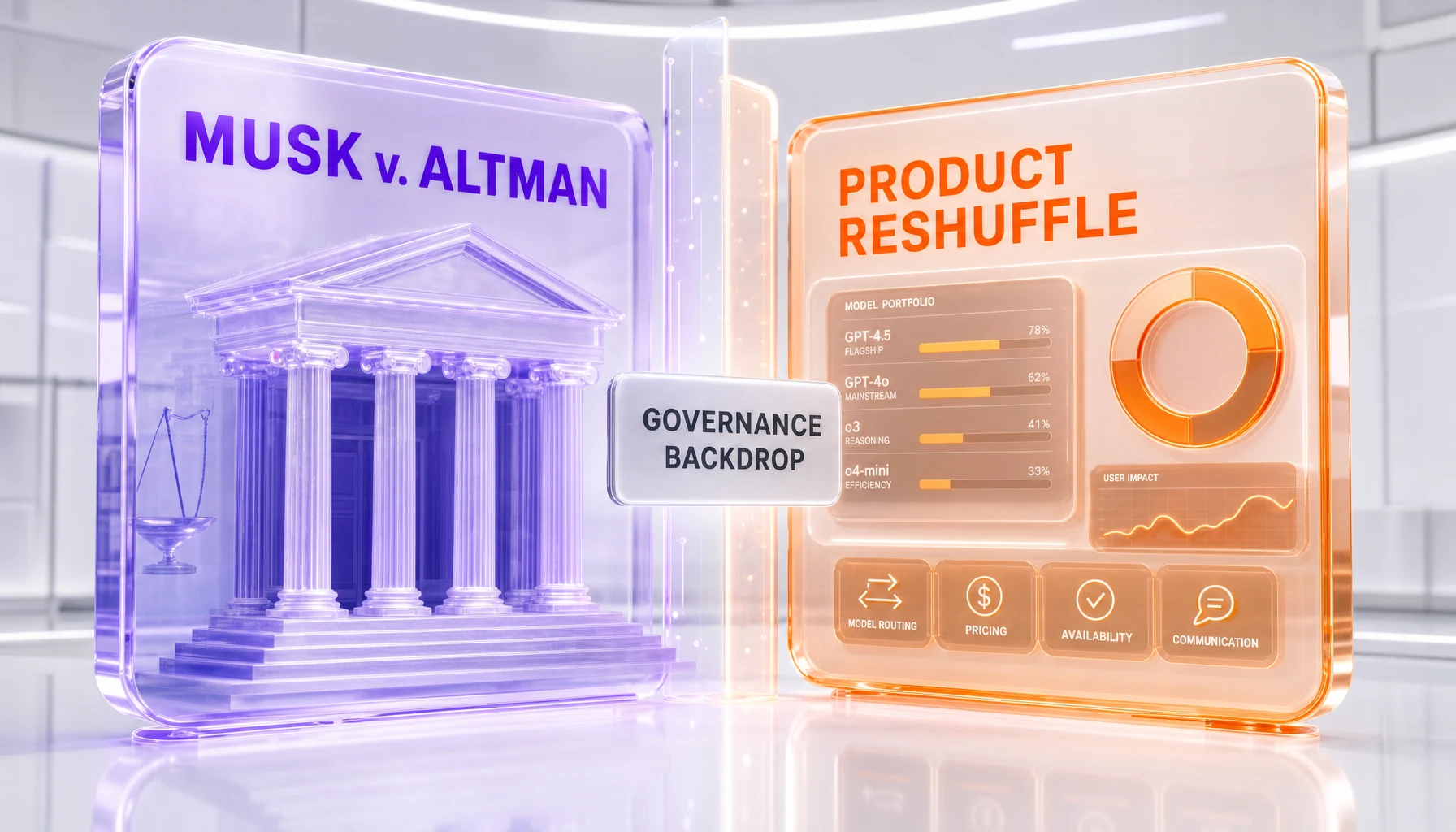
This reshuffle does not happen in a legal vacuum. The Musk v. Altman trial — which we covered in depth in our analysis of the imminent verdict — has kept OpenAI's governance, founding intent, and corporate structure under sustained public examination. Greg Brockman is a named figure in that litigation history as a co-founder.
Honest Scoping: What the Source Does and Does Not Say
We want to be precise here. The TechCrunch report on Brockman's product mandate does not itself tie the reshuffle to the Musk litigation; the lawsuit is adjacent context, not a stated cause. We are connecting the two narratives analytically — both bear on the same question of who controls OpenAI's direction — but we are not asserting the source claims a causal link. That distinction matters for anyone using this piece as a reference.
Why Governance Optics and Product Optics Converge Pre-IPO
Strategically, a company facing both a high-profile governance trial and a potential public offering has every incentive to present a single, coherent locus of product accountability. A clean org chart with a founder-president owning product is a narrative asset in two arenas at once: it reassures public-market investors and it presents a tidy picture of internal control while governance is litigated in public.
The Co-Founder Symbolism
There is symbolic weight in handing product strategy to a co-founder specifically, rather than an external hire, at a moment when OpenAI's founding intent is itself the subject of a trial. Re-centering a founder on the most consequential operating mandate is a positioning choice — it reasserts founder continuity as the company's organizing principle precisely when that continuity is being contested in court. We read this as deliberate narrative discipline, not coincidence.
Founder Continuity as a Defensive Narrative
Strategically, founder continuity is not only an execution signal — it is a defensive narrative in a governance dispute. When a company's founding intent and corporate structure are being litigated, demonstrating that the original founding team still controls the most consequential operating decisions is itself a position. It says, in effect, that the company's direction remains in the hands of the people who started it. We read the choice to hand product strategy to a co-founder, rather than an external operator, as consistent with that defensive posture — without asserting the source frames it that way. It is the analytically obvious interpretation, and we flag it as our interpretation rather than reported fact.
Product Versus Research: What OpenAI Is Optimizing For
The deepest strategic question this reshuffle answers is the long-running tension between research prestige and product execution. For years, OpenAI's identity straddled both: a frontier research lab and a consumer product company. The consolidation under Brockman, paired with the halting of OpenAI for Science and Sora, reads as the company resolving that tension decisively toward shipped, integrated product.

The Agentic Throughline
The memo's stated goal — "maximum focus toward the agentic future" — is consistent with OpenAI's broader 2026 product narrative. We traced the same agentic ambition in our analysis of the GPT-5.5 launch and super-app strategy. Putting the former Codex leader in charge of core product across all surfaces operationalizes that narrative: agentic patterns built for developers become the spine of the consumer and enterprise product, not a separate track.
What the ChatGPT and Codex Merge Implies
Merging ChatGPT, Codex, and the developer API into one team is a strategic statement about surface area. OpenAI is betting that the consumer assistant, the coding agent, and the API are converging into one agentic platform rather than three products. A unified team under one owner reduces internal coordination cost and forces a single roadmap — at the price of fewer independent product experiments. The companion model line, GPT-5.5, is the engine that makes a unified agentic surface plausible.
The Trade-Off OpenAI Is Accepting
Every consolidation buys focus by spending optionality. The strategic cost of merging surfaces and halting side projects is reduced surface area for serendipitous breakthroughs and fewer independent shots on goal. The strategic benefit is a legible, fast-executing product org with one accountable owner. OpenAI is reportedly making that trade deliberately, and the org chart is the receipt.
How This Compares to Competitor Posture
Strategically, OpenAI's consolidation contrasts with the more research-forward public posture some competitors maintain. We have tracked the competitive dynamics in our coverage of the OpenAI deployment company and consulting partnerships. The pattern is consistent: OpenAI is increasingly organizing around deployment, distribution, and integrated product surfaces — an enterprise-and-consumer execution machine — rather than around research-lab prestige.
The Two-Quarter Test
The strategic claim embedded in this reshuffle is convergence: that ChatGPT, Codex, and the API are becoming one agentic platform rather than three products. That claim is testable on a short horizon. Within roughly two quarters, the market should be able to observe whether agentic capabilities — long-horizon task execution, tool use, asynchronous workflows — flow across the consumer and developer surfaces as a unified capability set, or whether the merge produced an org chart change without a corresponding product change. We are explicitly not predicting the outcome; we are identifying the single observable that will tell builders whether the strategic narrative was real or cosmetic.
The Pattern Across Late-Stage AI Labs
Step back and the Brockman reshuffle fits a broader 2026 pattern across frontier AI labs: as valuations and public-market expectations climb, the organizational story shifts from research breadth to product legibility. The labs that looked like research collectives a few years ago increasingly read like product companies with research arms, and the org charts are being redrawn to match.
Consolidation as the Sector Default
The strategic observation is that consolidation is becoming the sector default rather than an OpenAI idiosyncrasy. When the financing environment rewards legible revenue lines and single-owner accountability, every late-stage lab faces the same incentive to prune side projects and concentrate product decision rights. OpenAI is an early and visible instance of the pattern, not an outlier.
What This Means for the Competitive Map
If consolidation is the sector pattern, the competitive differentiation shifts from who has the most research bets to who can execute the most coherent integrated product the fastest. That reframes the entire competitive question for builders evaluating which platform to standardize on: the relevant signal is no longer breadth of capability but durability and coherence of the product roadmap under a single accountable owner.
Why It Matters for Builders and Enterprises
For developers and enterprises building on OpenAI, a consolidated product org is a double-edged signal. A single roadmap owner can mean faster, more coherent product evolution and tighter integration between the assistant, the coding agent, and the API. It can also mean less surface for niche, experimental capabilities that previously lived in semi-independent teams.
What to Watch in the Roadmap
The concrete thing to watch is whether the ChatGPT and Codex merge produces genuine capability convergence — agentic features flowing across consumer and developer surfaces — or merely an org-chart unification without product change. The strategic claim is convergence; the proof will be in shipped, cross-surface capability over the next two quarters.
Enterprise Implications
Nick Turley's reported move to an enterprise product revamp signals OpenAI takes the enterprise surface seriously as a distinct revenue line, even within a consolidated org. Enterprises evaluating OpenAI should read the reshuffle as a commitment to enterprise product investment, tempered by the reality that enterprise priorities now compete for attention inside a single unified product team rather than owning a dedicated one.
The Risk the Consolidation Introduces
A balanced strategic read has to name the cost as clearly as the benefit. Collapsing three surfaces into one team under one owner concentrates not just decision rights but failure modes. A single roadmap means a single point of strategic error: if the unified bet on agentic convergence is mis-timed or mis-scoped, there is no longer an independent product line hedging it. The growth-phase portfolio approach spread that risk across teams; the consolidated approach concentrates it. OpenAI is reportedly accepting that concentration in exchange for focus and legibility. Whether that is the right trade depends entirely on whether the agentic convergence thesis is correct — and that is precisely what the next two quarters will reveal.
The Indicators That Will Confirm or Refute the Thesis
A disciplined strategic read names its own falsification conditions. This reshuffle rests on a thesis — that consolidation under Brockman produces faster, more coherent agentic product — and that thesis is observable, not just assertable.
The Convergence Indicator
The first indicator is cross-surface capability flow. If, within roughly two quarters, agentic capabilities demonstrably move across the consumer and developer surfaces as one capability set, the consolidation thesis holds. If the surfaces remain functionally separate despite the org merge, the reshuffle changed the chart more than the product.
The Enterprise Stability Indicator
The second indicator is enterprise stability. If enterprise customers see continuity and predictable roadmaps despite the consolidation, the Turley-led revamp worked as a hedge. If enterprise priorities visibly lose ground to consumer velocity, the consolidation's central risk materialized.
The Founder-Continuity Indicator
The third indicator is governance optics. If the founder-led product org coincides with a calmer governance narrative as the Musk v. Altman matter resolves, the defensive-narrative interpretation gains support. We flag this as the softest of the three indicators, because attribution here is inherently ambiguous and we will not over-claim a causal link the source does not assert.
Our Verdict: An Org Chart Built for the Roadshow
Our strategic read is straightforward. This reshuffle is best understood as OpenAI making its product strategy legible and accountable at the precise moment two external pressures — a potential public offering and a governance trial — reward exactly that legibility. Putting a co-founder-president on product, elevating the Codex leader to own core product everywhere, and collapsing three surfaces into one team is a coherent, deliberate narrowing.
We are deliberately not making qualitative judgments about execution quality — it is too early, and the reporting is appropriately scoped as "reportedly." What we can say with confidence is the strategic posture: OpenAI is choosing focus over optionality, founder continuity over distributed leadership, and integrated agentic product over research-lab breadth. Whether the IPO timing holds is secondary; the org chart already tells you what the company has decided to be.
The single most important thing to watch is whether the ChatGPT and Codex merge delivers real cross-surface capability convergence by the end of 2026. If it does, this reshuffle will look like the foundational org move of OpenAI's public-company era. If it does not, it will look like a roadshow-friendly reorganization that changed the chart more than the product.
Frequently Asked Questions
What is Greg Brockman's new role at OpenAI?
As reported on May 16, 2026, OpenAI co-founder and president Greg Brockman took permanent charge of the company's product strategy, owning core product across consumer, enterprise, and developer surfaces. His formal title of president and co-founder reportedly does not change, but the underlying mandate shifts from an infrastructure and research focus to product ownership.
Why did OpenAI move Greg Brockman to product strategy now?
Brockman had been overseeing products on an interim basis while Fidji Simo, CEO of AGI deployment, remained on medical leave. The reported decision makes that arrangement permanent and consolidates product efforts. Strategically, the timing aligns with a potential OpenAI IPO that analysts expect before the end of 2026 and a December "code red" that refocused the company on its core ChatGPT experience.
What is the ChatGPT and Codex merger?
According to the reported staff memo, OpenAI is merging ChatGPT, the Codex coding agent, and the developer API into a single product team. Thibault Sottiaux, previously head of Codex, reportedly leads core product across consumer, enterprise, and developer, signaling that agentic patterns built for developers become the spine of the whole product line.
Is OpenAI planning an IPO in 2026?
Analysts reportedly expect a potential OpenAI public offering before the end of 2026, but this is characterized as a market expectation, not a company commitment or a scheduled event. The product-org consolidation reads as pre-IPO legibility work, but OpenAI has not confirmed IPO timing in the reporting we reviewed.
How is the Musk v. Altman trial connected to this reshuffle?
The connection is analytical, not stated by the source. The Musk v. Altman trial has kept OpenAI's governance and founding intent under public scrutiny, and Greg Brockman is a named co-founder in that litigation history. The TechCrunch report on Brockman's product mandate does not tie the reshuffle to the lawsuit; we connect them because both bear on who controls OpenAI's direction.
Who reports to Greg Brockman after the reshuffle?
Per the reported memo, Thibault Sottiaux (previously head of Codex) leads core product across consumer, enterprise, and developer surfaces, and Nick Turley moves to lead an enterprise product revamp. Fidji Simo remains on medical leave and reportedly worked with Brockman on the changes; she is expected to return, though no timeline was disclosed.
What does this signal about OpenAI's product versus research priority?
The consolidation under Brockman, paired with the earlier halting of OpenAI for Science and Sora, reads as OpenAI resolving the long-running tension between research prestige and product execution decisively toward shipped, integrated agentic product. The strategic cost is reduced optionality; the benefit is a legible, fast-executing product org with one accountable owner.
What is the "code red" mentioned in the OpenAI reporting?
The "code red" refers to a December directive in which CEO Sam Altman reportedly told staff to refocus on the core ChatGPT experience. The May 2026 product-org consolidation is the org-chart endpoint of that directive: side projects were halted and the surviving surfaces were collapsed into one team under one owner.
How does this affect developers building on OpenAI?
A consolidated product org under a single roadmap owner can mean faster, more coherent product evolution and tighter integration between ChatGPT, Codex, and the API. The trade-off is potentially less surface for niche or experimental capabilities that previously lived in semi-independent teams. The concrete thing to watch is whether the merge produces real cross-surface capability convergence by the end of 2026.
Is Fidji Simo leaving OpenAI?
No. Based on the reporting, Fidji Simo, CEO of AGI deployment, remains on medical leave and worked with Brockman on the changes. She is expected to return, though no timeline was disclosed in the reporting we reviewed. Brockman's interim product oversight during her leave was converted into a permanent mandate.
What should enterprises take from the OpenAI reshuffle?
Nick Turley's reported move to an enterprise product revamp signals OpenAI treats the enterprise surface as a distinct revenue line even within a consolidated org. Enterprises should read the reshuffle as continued commitment to enterprise product investment, tempered by the reality that enterprise priorities now compete for attention inside a single unified product team.