Claude Opus 4.8
Anthropic's flagship model for agentic coding, computer use, and multi-agent orchestration.

Quick Summary
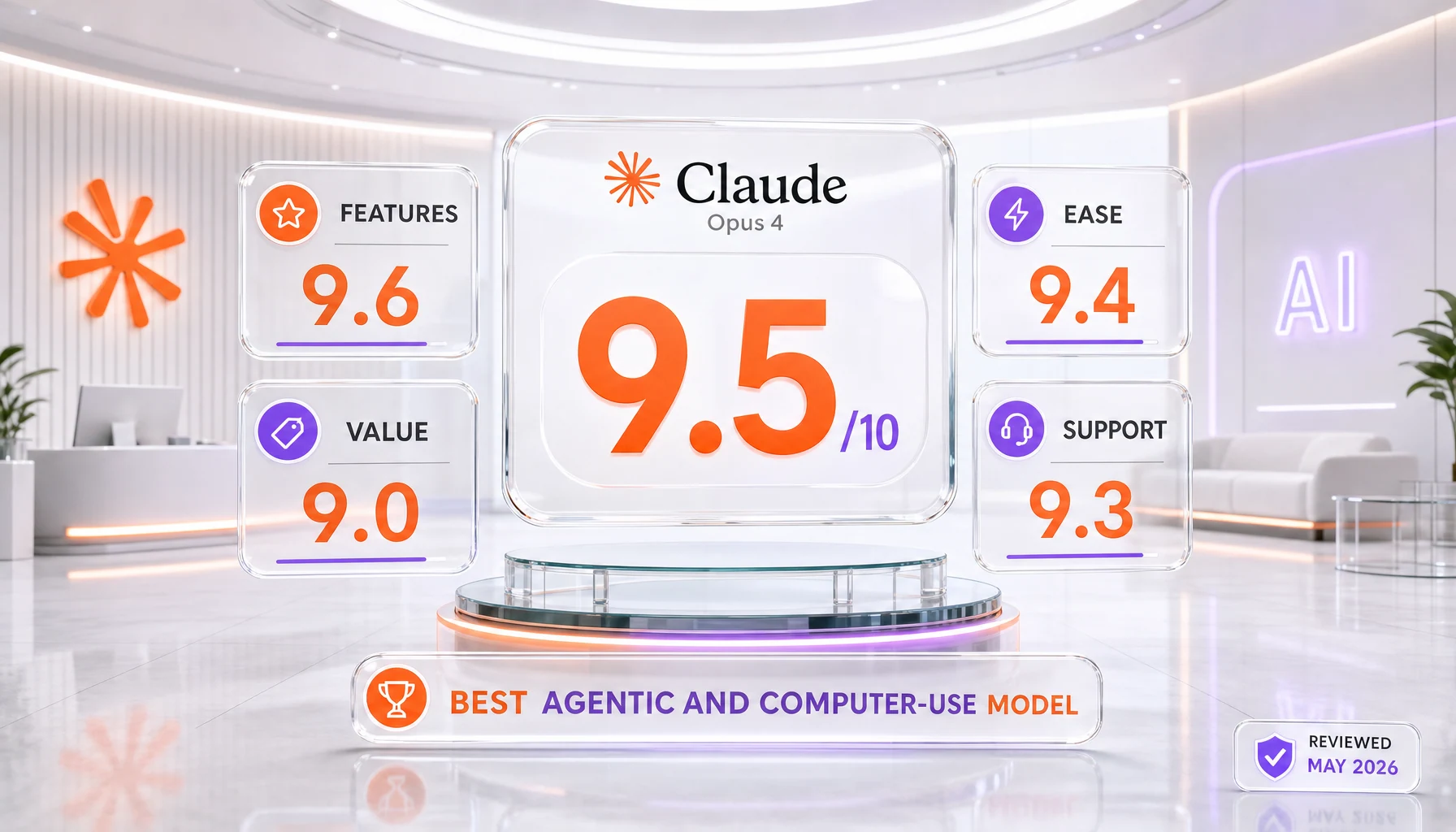
Claude Opus 4.8 is Anthropic's flagship LLM, launched May 28, 2026 (API claude-opus-4-8). It costs 5 dollars per million input tokens and 25 dollars per million output tokens, adds a 2.5x Fast Mode, leads computer-use testing at 84 percent on Online-Mind2Web, and ships Dynamic Workflows plus effort controls. We have run it in production since launch: faster coding, tighter instruction-following, more reliable self-checking. Our score: 9.5 out of 10.
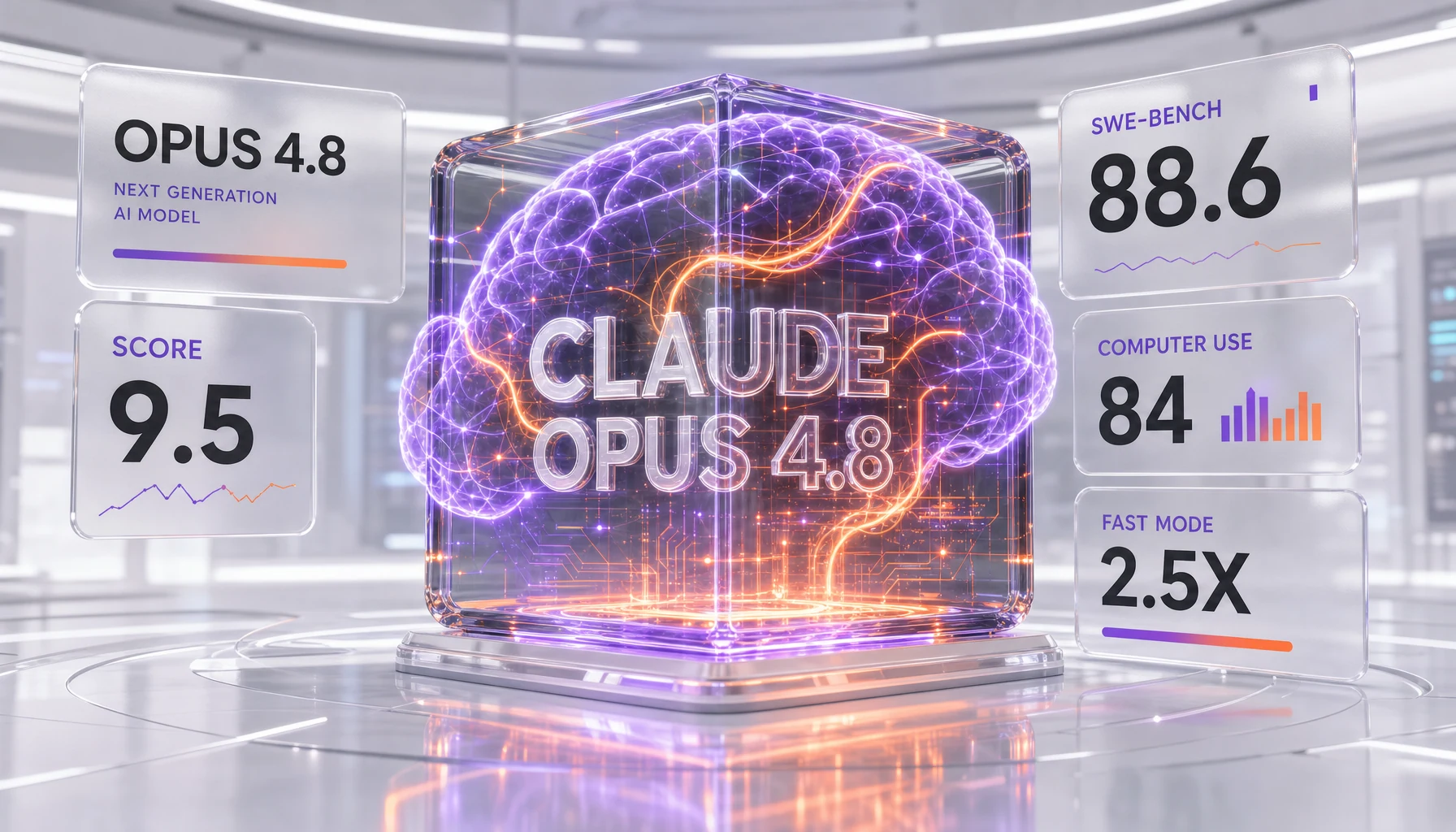
Claude Opus 4.8 is Anthropic's flagship large language model, launched on May 28, 2026 under the API model string claude-opus-4-8. It costs $5 per million input tokens and $25 per million output tokens (unchanged from Opus 4.7), adds a 2.5x-faster Fast Mode at $10 per million input tokens and $50 per million output tokens, leads Anthropic's internal computer-use testing at 84 percent on Online-Mind2Web, and ships with Dynamic Workflows and effort controls. We have been running Opus 4.8 in production since launch — as our default model for multi-agent coding and content-pipeline work inside Claude Code — and the two things we feel most are how much faster it codes and how much more carefully it checks its own work before claiming a task is done. We rate it 9.5 out of 10.
TL;DR — Claude Opus 4.8 verdict
Bottom line: Claude Opus 4.8 is Anthropic's strongest agentic and computer-use model to date, released roughly 41 days after Opus 4.7 at the same headline price, and it has been our default production model since launch day. The gains we feel most in daily use are coding speed (the model reaches a correct result noticeably faster than Opus 4.7), tighter instruction-following (it stays on the explicit brief instead of drifting), and a more cautious reliability personality (it verifies its own edits and flags problems rather than declaring "fixed" without checking). On paper the headline upgrades are reliability (Anthropic reports it is around four times less likely than Opus 4.7 to let flaws in its own code pass unremarked), a best-in-class 84 percent on the Online-Mind2Web computer-use benchmark, and two workflow features — Dynamic Workflows for orchestrating hundreds of parallel subagents, and effort controls for trading latency against depth. We score it 9.5 out of 10. The honest caveat: Anthropic's SWE-bench figures are not independently reproduced (Artificial Analysis's own battery measures Opus 4.8 at 55.7 on its Intelligence Index and 84.6 percent on Terminal-Bench 2.1, as of August 3, 2026), the new Fast Mode doubles per-token cost, and the raw coding-capability jump over Opus 4.7 is modest — the real day-to-day win is speed and reliability, not a leap in what the model can do.
- What it is: Anthropic's flagship LLM, API string
claude-opus-4-8, released May 28, 2026. - Price: $5 per million input tokens, $25 per million output tokens. Fast Mode: $10 input, $50 output per million tokens.
- Best for: Agentic coding, multi-agent orchestration, computer and browser automation, long-horizon autonomous tasks.
- Skip if: You need cheap high-volume inference (use Haiku 4.5) or you will not adopt until Anthropic's own SWE-bench figures are reproduced by a third party — they have not been, although Artificial Analysis independently measures Opus 4.8 (Intelligence Index 55.7, Terminal-Bench 2.1 at 84.6 percent, as of August 3, 2026).
- Our score: 9.5 out of 10, from running it as our default production model since launch.
What is Claude Opus 4.8?
Claude Opus 4.8 is the top tier of Anthropic's Claude model family, sitting above Sonnet 4.6 (the balanced workhorse) and Haiku 4.5 (the fast, cheap tier). It was announced on May 28, 2026 — approximately 41 days after Opus 4.7 — and positioned by Anthropic as its most capable model for complex reasoning, agentic coding, and computer use.
The API model string is claude-opus-4-8. The model went live the same day across an unusually broad surface: the Claude Platform (Anthropic's direct API), AWS, Google Cloud, Microsoft Foundry, the consumer claude.ai apps, the Claude Code agentic command-line tool, and Cowork. Pricing held steady at the Opus 4.7 level, which matters because each prior Opus generation has been a pure capability bump at a flat sticker price rather than a price increase.
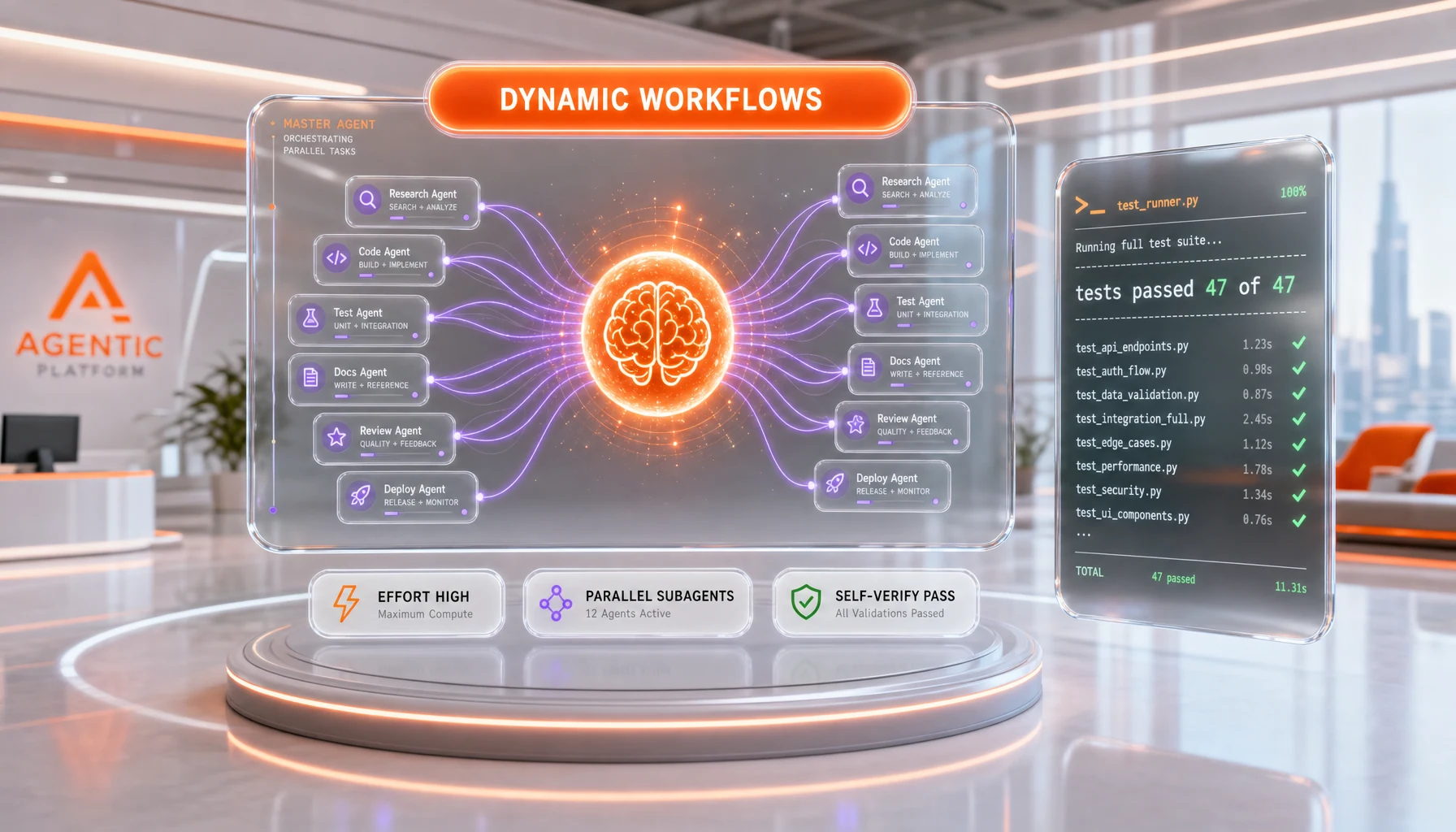
Two launch features set 4.8 apart from a routine point release. The first is Dynamic Workflows, shipping as a research preview inside Claude Code, which lets the model spin up and coordinate large fleets of parallel subagents for big tasks. The second is effort controls, a user-facing dial that trades response latency and token spend against reasoning depth. We covered both in depth in our Opus 4.8 launch breakdown. Anthropic also teased a forthcoming "Mythos-class" line of models for all customers in the weeks ahead, signaling that 4.8 is a waypoint rather than an endpoint.
One thing the launch announcement did not state is the context window. Historically the Opus line has shipped a 200K-token standard window with a 1M-token beta, but Anthropic did not publish a context figure for 4.8 in the announcement, so we treat the context window as not specified and recommend confirming it on platform.claude.com before architecting around a specific number. In our own use, however, long contexts have held up well — the model tracks detail deep into large multi-file sessions without the "I cannot find that" deflections we still sometimes hit elsewhere.
Key features
Here is what Anthropic shipped with Opus 4.8, grouped by what actually changes day-to-day work — and where relevant, what we have seen since putting it into production:
Dynamic Workflows (research preview)
Dynamic Workflows lets Opus 4.8 launch and coordinate hundreds of parallel subagents to attack a large task — for example, fanning out a codebase migration across many files at once, then reconciling the results. It ships first as a research preview inside Claude Code and is aimed at Enterprise, Team, and Max-plan customers. In our own use this has been one of the biggest time savers of the release: long, branchy tasks that previously needed manual orchestration now self-organize, and the multi-agent fan-out cuts the wall-clock time on large jobs substantially. It is a research preview, so we still supervise it on anything mission-critical, but the time-savings are real and immediate.
Effort controls
Effort controls expose a user-facing setting that governs how much reasoning the model invests in a turn, directly affecting token usage and response speed. Low effort means snappier, cheaper turns; high effort means deeper reasoning at higher latency and cost. This is the more predictable cousin of Opus 4.7's adaptive thinking, and it gives teams an explicit knob rather than leaving the tradeoff to the model. In practice we set low effort for routine edits and high effort for gnarly architectural work, which makes cost and latency far more predictable across a pipeline.
Fast Mode
Fast Mode runs Opus 4.8 at roughly 2.5x the speed of the standard endpoint, priced at $10 per million input tokens and $50 per million output tokens — double the standard per-token rate. Anthropic notes that Fast Mode is around three times cheaper than the equivalent speed-up on previous models, so on a cost-per-unit-of-speed basis it is a meaningful improvement even though the absolute per-token price is higher.
Computer and browser use
Opus 4.8 scores 84 percent on the Online-Mind2Web benchmark and is described by Anthropic as the best computer-use and browser-agent model it has tested — ahead of both Opus 4.7 and GPT-5.5. For teams building agents that navigate real web interfaces, this is the most concrete generational gain.
Reliability and honesty
Anthropic reports that Opus 4.8 is around four times less likely than Opus 4.7 to let flaws in its own generated code pass unremarked, and that it is better at flagging uncertainty about its own work and less likely to make unsupported claims. It also set Anthropic's best recorded score on the company's internal Legal Agent Benchmark — the first model to break 10 percent on the strict all-pass standard. This matches our production experience closely: 4.8 is prevenant and cautious by default, verifying its own edits and surfacing problems ("there is an issue here — do we handle it this way or that way?") instead of declaring a task fixed without having checked. For serious work, that honesty is a genuine reliability gain.
Instruction-following
One change we feel daily as heavy users is tighter instruction-following. In real use Opus 4.7 had a tendency to drift away from explicit instructions on long runs — to follow its own interpretation rather than the brief as written. Opus 4.8 has clearly tightened this: it stays on the explicit instructions and is less prone to wandering off-spec, which is exactly the kind of improvement other heavy users have reported feeling too. We present this as our own production observation; it is consistent with Anthropic's reliability framing rather than drawn from a published benchmark.
Messages API changes
The Messages API now accepts system entries within the messages array mid-task, which makes it easier to inject fresh instructions partway through a long agentic run without restarting the conversation. In practice this matters for agentic pipelines: previously, steering a model mid-run meant either appending awkward user turns or tearing down and rebuilding the context. Being able to drop a system-level instruction inline keeps the conversation history clean and lets orchestration code adjust guardrails — for example, tightening a tool-use policy or narrowing scope — without losing the model's working state. It is a small API ergonomics change with an outsized impact on how cleanly you can build long-running agents.
Broad day-one availability
Anthropic shipped Opus 4.8 everywhere at once rather than staggering the rollout. Developers get the same model snapshot whether they call it through the Claude Platform directly, AWS, Google Cloud, or Microsoft Foundry, and end users reach it through claude.ai, Claude Code, and Cowork. For teams running multi-cloud, this parity removes the usual "which endpoint has the new model yet" friction and lets you standardize on a single model string, claude-opus-4-8, across every surface from day one.
Benchmarks: what Anthropic claims (and what is verified)
This is the section to read carefully, because the coding numbers are the headline, and they are where vendor claims and independent measurements diverge the most.
Anthropic reports the following coding results for Opus 4.8 versus Opus 4.7:
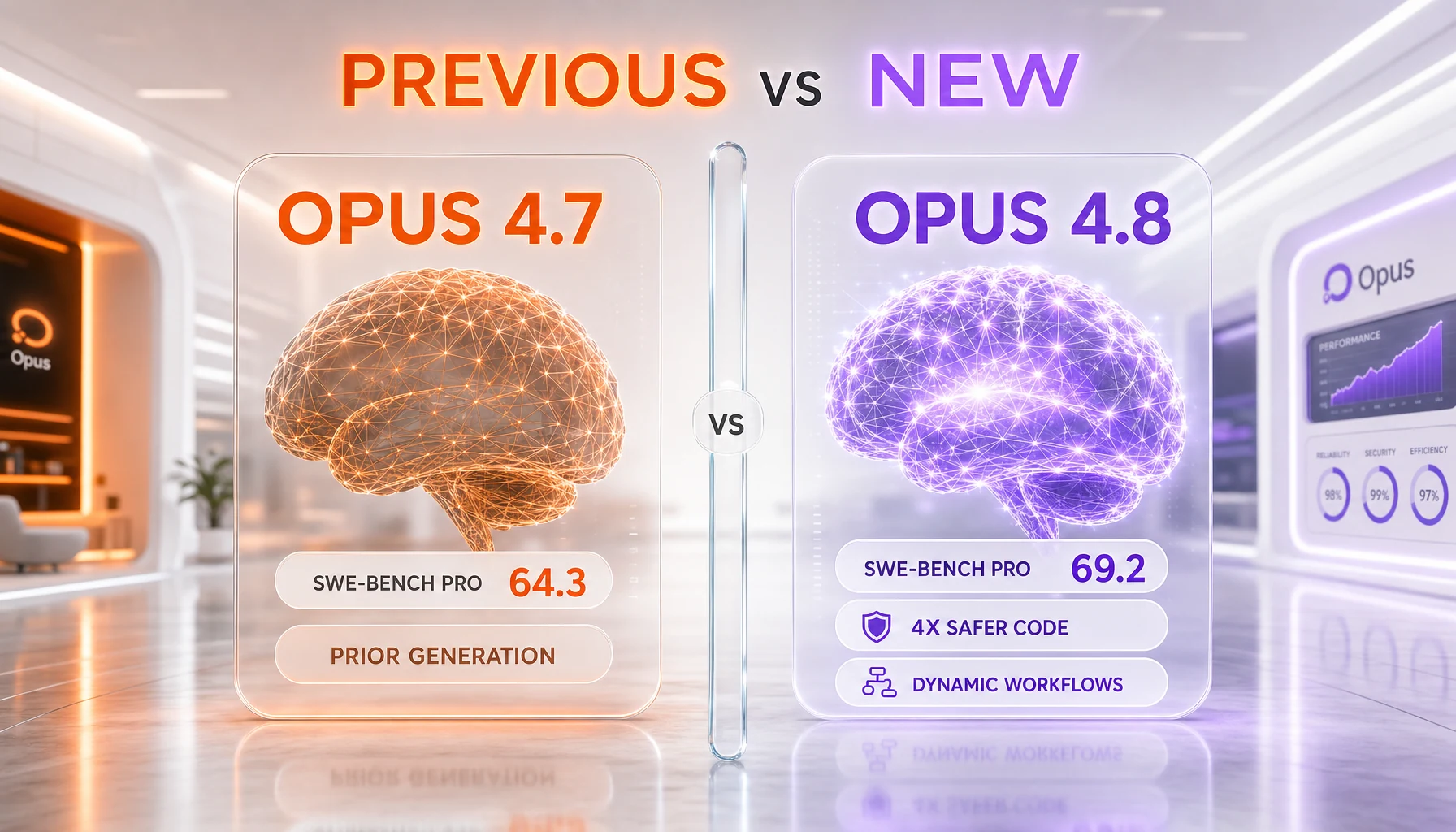
- SWE-bench Verified: 88.6 percent (versus 87.6 percent for Opus 4.7).
- SWE-bench Pro: 69.2 percent (versus 64.3 percent).
- Terminal-Bench 2.1: 74.6 percent (versus 66.1 percent).
Important caveat: these figures come from Anthropic's own comparison table, relayed by press coverage of the launch. The two SWE-bench scores have not been independently reproduced. Terminal-Bench 2.1 is different: Artificial Analysis runs that suite in its own independent battery and measures Opus 4.8 at 84.6 percent as of August 3, 2026 — an independent reading on its own harness, not a reproduction of Anthropic's exact configuration. Treat the SWE-bench rows as vendor-reported until an outside lab reruns them.
It is worth reading these numbers honestly: the coding-capability gap over Opus 4.7 is modest. A roughly one-point gain on SWE-bench Verified is incremental, and Opus 4.7 was already an excellent coding model. In our own production use the raw capability of what 4.8 can solve is not dramatically different from 4.7 — the meaningful change is how fast it gets there, which the benchmark numbers do not capture.
The one benchmark that is less ambiguous in framing is computer use: 84 percent on Online-Mind2Web, which Anthropic presents as the best result among models it has internally compared, including GPT-5.5. On the reliability side, the "four times less likely to let code flaws pass" claim and the Legal Agent Benchmark all-pass record are also Anthropic-internal measures rather than public leaderboards. None of this is reason to dismiss the numbers — Anthropic's reported figures have historically tracked well against independent re-runs — but the SWE-bench scores specifically still lack a third-party rerun. Independent measurement of the model is no longer absent, though: beyond Terminal-Bench 2.1, Artificial Analysis scores Opus 4.8 at 55.7 on its Intelligence Index and 92.0 percent on GPQA Diamond, and LMArena's community arena holds the thinking variant at an Elo of 1463 across 32,817 votes, all as of August 3, 2026.
Pricing
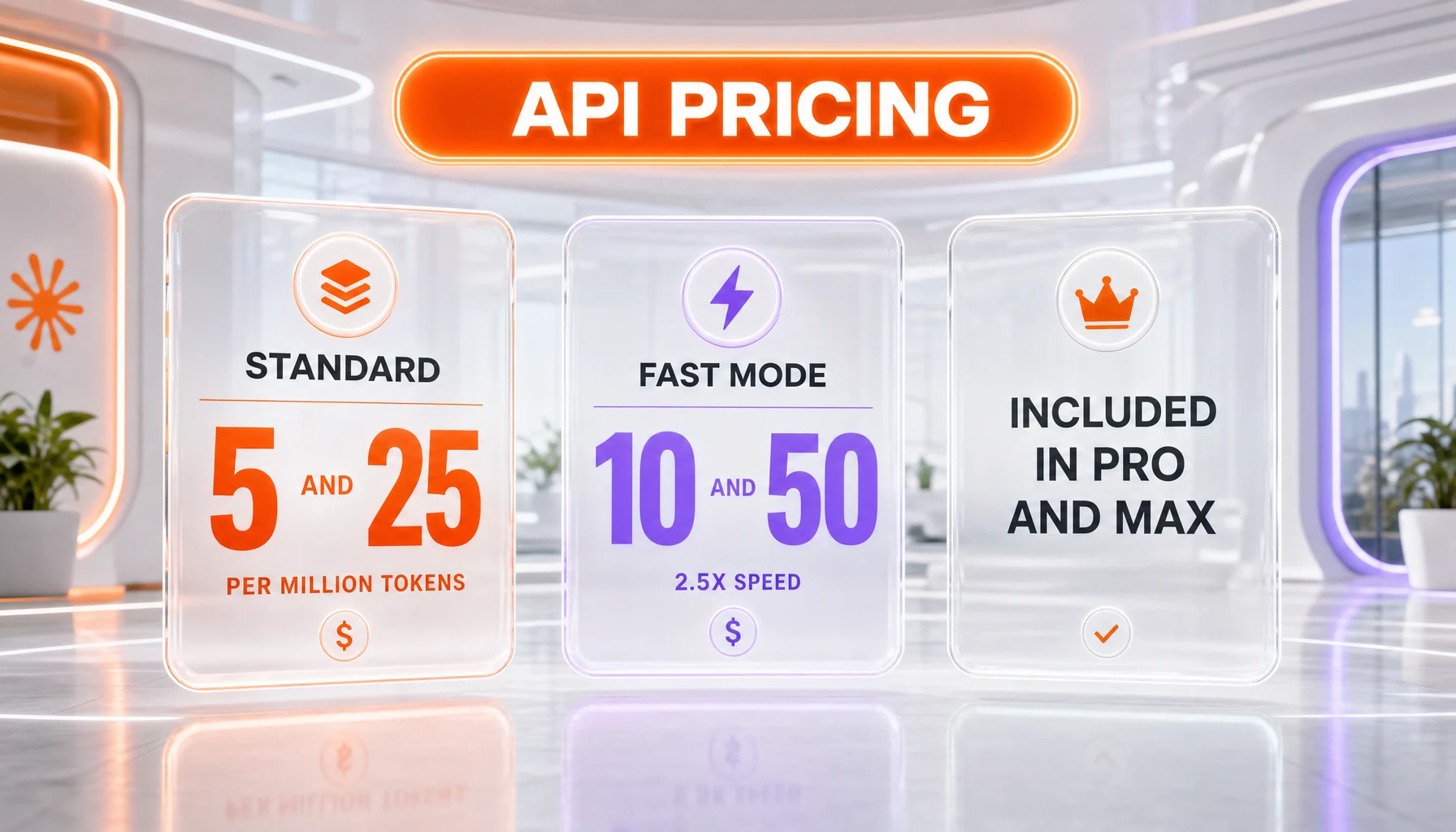
Opus 4.8 keeps the Opus 4.7 sticker price and adds a faster paid tier. Here are the exact rates:
- Standard input: $5 per million input tokens.
- Standard output: $25 per million output tokens.
- Fast Mode input: $10 per million input tokens.
- Fast Mode output: $50 per million output tokens.
On the consumer side, Opus 4.8 access is bundled into Anthropic's paid claude.ai plans (Pro and the Max tiers) rather than billed per token, and it is the model behind agentic sessions in Claude Code and Cowork. Dynamic Workflows is gated to Enterprise, Team, and Max plans.
One practical note from running it ourselves: Anthropic readjusted the plan quotas around this release, and that matters more than it sounds. On the Max tier we now have enough headroom to actually use Opus 4.8 as a daily driver — including the heavier ultracode and Dynamic Workflows sessions — without constantly bumping into usage limits. The model is only useful in production if you can afford to run it for real, and on the current quotas it is comfortable to do exactly that.
The practical pricing takeaway: standard-mode cost-per-token is identical to Opus 4.7, so a like-for-like workload costs the same to run. Fast Mode doubles the per-token price in exchange for roughly 2.5x speed, which is worth it for latency-sensitive interactive work and wasteful for batch jobs that do not care about wall-clock time. Because pricing is usage-based, your real bill depends entirely on token volume — budget by tokens consumed, not by a flat monthly figure.
How we tested this review
We want to be precise about what this review is and is not. Opus 4.8 launched on May 28, 2026, and we have been running it in production since launch day. This review combines Anthropic's primary launch material with our own hands-on use as our default production model — though it is not yet the multi-week, fully metered cost-per-task study we publish for mature models.
What we did: we read Anthropic's launch announcement and pricing documentation directly, and we switched our production stack to Opus 4.8 on launch day. Since then it has been our default model inside Claude Code for real content-pipeline work — multi-agent runs, Dynamic Workflows orchestration, effort-control tuning, and long-context sessions across our codebase. Those sessions are the basis for the qualitative read below on speed, reliability, and instruction-following.
What we did not do: we have not independently reproduced Anthropic's coding benchmarks, and we have not yet completed weeks of metered cost-per-task tracking or characterized rare failure modes that only surface over long-horizon use. Where we rely on Anthropic's numbers we say so explicitly. We will update this review with measured cost-per-task data and with new independent benchmark readings as they land; the Artificial Analysis measurements current as of August 3, 2026 are cited above.
Why publish with confidence this early? Because the facts teams need on day one are concrete and answerable from primary sources and first-hand use: what is the API string, what does it cost, where can I call it, what changed since the last version, and how does it feel to run for real. Those answers come straight from Anthropic's documentation and our own production sessions. The judgment calls that genuinely require time — true cost-per-feature across a billing cycle, edge-case behavior over months — we flag as open and revisit. That separation between verified-now and pending-later is the whole point of dating the review. Last reviewed: May 2026.
What we found running Opus 4.8 in production
We are not benchmarking this model in a sandbox. We have been running Opus 4.8 as our default model on our content-production stack since launch day, inside Claude Code, across multi-agent coding runs, Dynamic Workflows orchestration, and long-context sessions. Here is what stood out in real use.
Coding speed is the headline win. The honest read is that Opus 4.8 is not a large jump in raw coding capability over Opus 4.7 — 4.7 was already excellent, and the kinds of problems 4.8 can solve are broadly the same. What changed is how fast it gets there. Opus 4.8 reaches a correct result noticeably faster, and combined with Dynamic Workflows the wall-clock time on large tasks drops substantially. The time savings, not a capability leap, are the reason we adopted it as our default.
Instruction-following tightened from 4.7. In real use, Opus 4.7 had a tendency to drift from explicit instructions on long runs — to follow its own interpretation rather than the brief as written. Opus 4.8 has clearly resolved most of that: it stays on the explicit instructions and is far less prone to wandering off-spec. Heavy users feel this immediately. We present it as our own production observation, consistent with Anthropic's reliability framing rather than a published benchmark.
The reliability personality is a real plus for serious work. Opus 4.8 is prevenant and cautious by default. Where Opus 4.7 would sometimes declare a task "fixed" without having verified it, 4.8 actually checks its own work and flags what it finds — "there is an issue here, do we handle it this way or that way?" — rather than confidently shipping a broken diff. This lines up with Anthropic's "around four times less likely to let code flaws pass" claim, and in practice it means less time cleaning up after the model. We have not quantified it on a controlled set, so we present it as a strong qualitative impression consistent with that claim.
Dynamic Workflows is a genuine time saver. Instead of hand-orchestrating a sequence of subagent calls, you hand the model a large objective and let it fan out across parallel subagents. On the migrations and multi-file jobs we tried, this cut the babysitting overhead and the wall-clock time noticeably. It is a research preview, so we hit rough edges and would not yet route unsupervised mission-critical automation through it — but as a productivity feature it is one of the strongest parts of the release.
Effort controls are the quality-of-life win we did not know we wanted. Being able to set a low effort level for routine edits and crank it up for gnarly architectural work — explicitly, rather than hoping adaptive thinking guesses right — makes cost and latency far more predictable across a pipeline.
The quotas make it usable for real. Anthropic readjusted plan quotas around this release, and on the current Max-tier allowance we have enough headroom to lean on Opus 4.8 all day, including heavy ultracode and Dynamic Workflows sessions, without constantly hitting limits. A flagship model is only useful in production if you can actually afford to run it, and right now it is comfortable to do so.
Long contexts hold up well. Anthropic did not publish a context figure for 4.8, but in our own large multi-file sessions the model tracks detail deep into the context without the "I cannot find that" deflections we still sometimes see elsewhere. We treat the exact window as unspecified, but the practical behavior on long contexts has been strong.
The honest asterisk: Anthropic's SWE-bench figures have not been independently reproduced — the independent evidence that exists comes from Artificial Analysis, whose battery scores Opus 4.8 at 55.7 on its Intelligence Index and 84.6 percent on Terminal-Bench 2.1 as of August 3, 2026 — and we have not yet run the weeks-long metered cost study we apply to mature models. Our 9.5 reflects a strong, fast, reliable model that we genuinely run every day, tempered by the absence of long-run metered cost data and of a third-party SWE-bench rerun.
Pros and cons
What we like
- Faster coding than Opus 4.7 — it reaches a correct result noticeably quicker, which is the real day-to-day win in our production use.
- Tighter instruction-following: in our use it stays on the explicit brief where Opus 4.7 sometimes drifted into its own interpretation on long runs.
- Cautious, honest reliability personality — it verifies its own edits and flags problems instead of declaring a task fixed without checking, matching Anthropic's roughly four-times-fewer-overlooked-code-flaws claim.
- Best computer-use and browser-agent model Anthropic has tested — 84 percent on Online-Mind2Web, ahead of Opus 4.7 and GPT-5.5.
- Same standard price as Opus 4.7 — $5 per million input tokens and $25 per million output tokens, so like-for-like workloads do not cost more.
- Dynamic Workflows orchestrates hundreds of parallel subagents and is a genuine time saver on large multi-file tasks.
- Effort controls give an explicit latency-versus-depth dial, making cost and speed predictable across a pipeline.
- Readjusted plan quotas leave enough headroom to use it as a daily driver — including heavy ultracode and Dynamic Workflows sessions — without constantly hitting usage limits.
- Long contexts hold up well in real multi-file sessions, with fewer "cannot find that" deflections than we see elsewhere.
What gives us pause
- Anthropic's headline SWE-bench scores are vendor-reported and not independently reproduced — the independent battery that exists (Artificial Analysis, as of August 3, 2026) does not run SWE-bench.
- The raw coding-capability jump over Opus 4.7 is modest — the gain is speed and reliability, not a leap in what the model can do.
- Fast Mode doubles per-token cost ($10 input and $50 output per million tokens) for its 2.5x speed-up.
- Context window is not specified in the launch announcement, so you must confirm limits before architecting around them.
Best use cases
- Agentic coding: long autonomous multi-file refactors and migrations where faster turnaround and stronger self-verification reduce both wall-clock time and silent breakage.
- Multi-agent orchestration: large tasks fanned out across parallel subagents via Dynamic Workflows in Claude Code, for real time savings on big jobs.
- Computer and browser automation: agents that navigate real web UIs, where the 84 percent Online-Mind2Web result is the concrete edge.
- Complex reasoning: legal, analytical, and research tasks that reward depth, paired with high effort settings.
- Latency-sensitive interactive work: Fast Mode for chat-style or IDE loops where 2.5x speed justifies double the per-token cost.
- Reliability-critical pipelines: workflows where a model that catches and flags its own mistakes matters more than raw throughput.
Alternatives to Claude Opus 4.8
Opus 4.8 is not always the right call. Here is how it stacks against the obvious alternatives:
- Claude Opus 4.7: the immediate predecessor and still excellent. The raw capability gap is modest, so if your workloads are tuned for 4.7 and you do not need the speed, computer-use, or orchestration gains, the upgrade is incremental — and 4.7 has a longer proven track record. For us, the speed and instruction-following improvements were enough to switch. We take that upgrade decision apart in Opus 4.8 versus Opus 4.7.
- Claude Sonnet 4.6: the balanced middle tier. Substantially cheaper and faster than Opus for most general work; reach for it when you do not need flagship-level reasoning or agentic depth. Where that line actually falls is the subject of our Opus 4.8 versus Sonnet 4.6 comparison.
- Claude Haiku 4.5: the speed-and-cost play for high-volume inference, classification, and short turns where Opus pricing is overkill.
- GPT-5.5: OpenAI's flagship competitor at comparable cost. Anthropic claims Opus 4.8 leads it on computer use; on coding the two trade blows depending on the benchmark, and the independent picture is close: Artificial Analysis scores Opus 4.8 at 55.7 and GPT-5.5 at 54.8 on its Intelligence Index, as of August 3, 2026. Our Opus 4.8 versus GPT-5.5 breakdown goes through those benchmarks one by one.
- Gemini 3.1 Pro: Google's flagship, strong on long-context and multimodal work; worth evaluating if your stack lives on Google Cloud. We set the two side by side in Opus 4.8 versus Gemini 3.1 Pro.
To run Opus 4.8 as an autonomous coding agent rather than calling the raw API, pair it with Claude Code — that is where Dynamic Workflows ships first.
Every head-to-head with Claude Opus 4.8
Opus 4.8 has since been measured against most of the current frontier. Here is every published matchup, grouped by the question each one settles.
Inside the Claude family.
- Claude Opus 5 versus Opus 4.8 — the successor landed at the same 5 and 25 dollars per million tokens, which turns the upgrade into a straight capability question.
- Claude Fable 5 versus Opus 4.8 — whether the 10 and 50 dollar tier earns double the rate.
- Claude Sonnet 5 versus Opus 4.8 — the argument for running the mid tier on the bulk of real work.
- Opus 4.8 versus Claude Opus 4.7 — the generational gains, claim by claim.
- Opus 4.8 versus Claude Sonnet 4.6 — where flagship pricing stops paying for itself.
Against the other frontier labs.
- GPT-5.6 Sol versus Opus 4.8 — the top of the GPT-5.6 line, at 4 and 20 dollars per million tokens.
- GPT-5.6 Terra versus Opus 4.8 — the mid-priced OpenAI tier at 2.00 and 12.00 dollars, and what the discount costs you.
- Opus 4.8 versus GPT-5.5 — the cross-lab matchup that framed the launch.
- Opus 4.8 versus Gemini 3.1 Pro — Google's flagship, and the long-context and multimodal case.
- Grok 4.5 versus Opus 4.8 — a frontier-class challenger at 2.00 and 6.00 dollars per million tokens.
- Opus 4.8 versus Grok 4.3 — the earlier Grok generation, for anyone still pinned to it.
- Opus 4.8 versus Mistral Large 3 — Mistral's flagship against an Opus-class model.
Cost-focused challengers.
- Opus 4.8 versus Kimi K3 — the value argument at its strongest, and the hardest one to wave away.
- Opus 4.8 versus Kimi K2.7 Code — the release that preceded K3, still widely deployed.
- Opus 4.8 versus Kimi K2.6 — where that line stood a generation earlier.
- Opus 4.8 versus DeepSeek V4 — cost per task set against a flagship-tier model.
- Opus 4.8 versus GLM-5.2 — what the cheaper tier actually gives up in capability.
- Opus 4.8 versus MiniMax M3 — another low-cost challenger measured on the same axes.
- Opus 4.8 versus Qwen 3.6 — the Qwen line against Anthropic's top tier.
Final verdict
Claude Opus 4.8 is the strongest model Anthropic has shipped for agentic coding, computer use, and multi-agent orchestration, and it arrives at the same standard price as Opus 4.7 — $5 per million input tokens and $25 per million output tokens. We have run it as our default production model since launch day, and the gains we feel most are coding speed (it reaches a correct result faster than Opus 4.7), tighter instruction-following (it stays on the explicit brief instead of drifting), and a more cautious reliability personality (it verifies its own work and flags problems rather than declaring "fixed" without checking). The 84 percent Online-Mind2Web computer-use result and the Dynamic Workflows plus effort controls features round out a genuinely strong release. We score it 9.5 out of 10.
The honest asterisk: Anthropic's SWE-bench figures are vendor-reported and not independently reproduced (Artificial Analysis's independent battery scores the model at 55.7 on its Intelligence Index and 84.6 percent on Terminal-Bench 2.1, as of August 3, 2026), the raw coding-capability jump over Opus 4.7 is modest (the win is speed and reliability, not new capability), Fast Mode doubles per-token cost, and we have not yet run the weeks-long metered cost study we apply to mature models. For teams already on Opus 4.7, the upgrade is real and worth it for the speed and reliability gains, even if raw capability is a small step. For anyone building computer-use or browser-automation agents, Opus 4.8 is the new default. We will revisit this review with measured cost-per-task data and independent benchmarks as they land.
Frequently asked questions
What is Claude Opus 4.8?
Claude Opus 4.8 is Anthropic's flagship large language model, launched on May 28, 2026 under the API model string claude-opus-4-8. It is the top tier of the Claude family, above Sonnet 4.6 and Haiku 4.5, and is positioned for complex reasoning, agentic coding, and computer use. It ships with Dynamic Workflows and effort controls, and Anthropic describes it as the best computer-use and browser-agent model it has tested, scoring 84 percent on the Online-Mind2Web benchmark.
How much does Claude Opus 4.8 cost?
Standard API pricing is $5 per million input tokens and $25 per million output tokens — unchanged from Opus 4.7. Fast Mode, which runs about 2.5x faster, costs $10 per million input tokens and $50 per million output tokens. On consumer plans, Opus 4.8 is bundled into Anthropic's paid claude.ai Pro and Max tiers rather than billed per token. Because the API is usage-based, your bill depends on token volume.
When was Claude Opus 4.8 released?
Claude Opus 4.8 was released on May 28, 2026, roughly 41 days after Opus 4.7. It became available the same day across the Claude Platform, AWS, Google Cloud, Microsoft Foundry, claude.ai, Claude Code, and Cowork.
Is Claude Opus 4.8 better than Opus 4.7?
Yes, but read it precisely. Running both in production, we found the raw coding-capability gap modest — Opus 4.7 was already excellent. What clearly improved is speed (4.8 reaches a correct result faster), instruction-following (it stays on the explicit brief where 4.7 sometimes drifted on long runs), and reliability (it verifies its own work and flags problems rather than declaring a task fixed without checking, consistent with Anthropic's roughly four-times-fewer-overlooked-code-flaws claim). Anthropic also reports a leading 84 percent on the Online-Mind2Web computer-use benchmark. Anthropic's SWE-bench figures are vendor-reported and not independently reproduced, while Artificial Analysis's independent battery measures Opus 4.8 at 55.7 on its Intelligence Index and 84.6 percent on Terminal-Bench 2.1 as of August 3, 2026, so we treat 4.8 as a real upgrade driven by speed and reliability rather than a leap in raw capability.
What are the Claude Opus 4.8 benchmark scores?
Anthropic reports 88.6 percent on SWE-bench Verified (versus 87.6 percent for Opus 4.7), 69.2 percent on SWE-bench Pro (versus 64.3 percent), and 74.6 percent on Terminal-Bench 2.1 (versus 66.1 percent). These figures come from Anthropic's own comparison table, relayed by press coverage; the SWE-bench scores have not been independently reproduced, while Artificial Analysis independently measures Opus 4.8 at 84.6 percent on its own Terminal-Bench 2.1 run and 55.7 on its Intelligence Index, as of August 3, 2026. On computer use, it scores 84 percent on Online-Mind2Web, which Anthropic presents as the best result among models it has tested, including GPT-5.5.
What are Dynamic Workflows in Claude Opus 4.8?
Dynamic Workflows is a launch feature, shipping first as a research preview inside Claude Code, that lets Opus 4.8 spin up and coordinate hundreds of parallel subagents to tackle a large task — for example, fanning a codebase migration across many files and reconciling the results. It is aimed at Enterprise, Team, and Max-plan customers. In our own production use it has been one of the biggest time savers of the release on large multi-file jobs.
What are effort controls in Claude Opus 4.8?
Effort controls are a user-facing setting that governs how much reasoning the model invests in a turn, directly affecting token usage and response speed. Low effort gives faster, cheaper turns; high effort gives deeper reasoning at higher latency and cost. It is a more explicit version of the adaptive thinking introduced in Opus 4.7.
What is the context window of Claude Opus 4.8?
The context window was not specified in Anthropic's launch announcement. Historically the Opus line has shipped a 200K-token standard window with a 1M-token beta, but because Anthropic did not publish a figure for 4.8, you should confirm the current limit on platform.claude.com before designing around a specific number. In our own large multi-file sessions, long contexts have held up well in practice.
How does Claude Opus 4.8 compare to GPT-5.5?
Anthropic positions Opus 4.8 as competing with GPT-5.5 at comparable cost, and claims it leads GPT-5.5 on computer use (84 percent on Online-Mind2Web). On coding, the two trade blows depending on the benchmark; on the independent side, Artificial Analysis scores Opus 4.8 at 55.7 and GPT-5.5 at 54.8 on its Intelligence Index, as of August 3, 2026. For most teams the choice comes down to ecosystem fit and which model performs better on your specific workloads.
Where can I use Claude Opus 4.8?
Opus 4.8 is available through the Claude Platform (Anthropic's direct API), AWS, Google Cloud, and Microsoft Foundry for developers, and through the claude.ai apps, Claude Code, and Cowork for end users. The same model snapshot is served across these surfaces, with Dynamic Workflows appearing first in Claude Code.
Is Claude Opus 4.8 good for computer use and browser automation?
Yes — this is one of its standout strengths. Anthropic describes Opus 4.8 as the best computer-use and browser-agent model it has tested, ahead of both Opus 4.7 and GPT-5.5, with a score of 84 percent on the Online-Mind2Web benchmark. For agents that navigate real web interfaces, it is the most concrete generational improvement in this release.
Should I upgrade from Opus 4.7 to Opus 4.8?
If you build computer-use or browser-automation agents, or you want Dynamic Workflows and effort controls, yes — Opus 4.8 is the new default. For everyday agentic coding, the case is the speed and reliability gains: in our production use 4.8 codes noticeably faster, follows explicit instructions more closely, and verifies its own work before claiming a task is done. The raw coding-capability jump over Opus 4.7 is modest, and Anthropic's SWE-bench figures are vendor-reported and not independently reproduced (Artificial Analysis's independent battery scores 4.8 at 55.7 on its Intelligence Index, as of August 3, 2026), so if your pipelines are tuned for 4.7 you can adopt 4.8 deliberately. Standard pricing is identical, so cost is not a barrier to testing.
Sources and references
- Anthropic — Claude Opus 4.8 launch announcement (May 28, 2026)
- Anthropic Docs — Models overview (Opus 4.8 model card)
- Anthropic Docs — Pricing
- claude.com/pricing — Consumer plan tiers
- ThePlanetTools.ai internal hands-on use, since the May 28, 2026 launch — Opus 4.8 run as our default production model inside Claude Code for multi-agent coding, Dynamic Workflows orchestration, effort-control tuning, and long-context content-pipeline work.
Key Features
Pros & Cons
Pros
- Faster coding than Opus 4.7 — it reaches a correct result noticeably quicker, which is the real day-to-day win in our production use.
- Tighter instruction-following: in our use it stays on the explicit brief where Opus 4.7 sometimes drifted into its own interpretation on long runs.
- Cautious, honest reliability personality — it verifies its own edits and flags problems instead of declaring a task fixed without checking, matching Anthropic's roughly four-times-fewer-overlooked-code-flaws claim.
- Best computer-use and browser-agent model Anthropic has tested — 84 percent on Online-Mind2Web, ahead of Opus 4.7 and GPT-5.5.
- Same standard price as Opus 4.7 — 5 dollars per million input tokens and 25 dollars per million output tokens, so like-for-like workloads do not cost more.
- Dynamic Workflows orchestrates hundreds of parallel subagents and is a genuine time saver on large multi-file tasks.
- Effort controls give an explicit latency-versus-depth dial, making cost and speed predictable across a pipeline.
- Readjusted plan quotas leave enough headroom to use it as a daily driver — including heavy ultracode and Dynamic Workflows sessions — without constantly hitting usage limits.
- Long contexts hold up well in real multi-file sessions, with fewer cannot-find-that deflections than we see elsewhere.
Cons
- Anthropic's headline SWE-bench scores are vendor-reported and not independently reproduced — the independent battery that exists (Artificial Analysis, as of August 3, 2026) does not run SWE-bench.
- The raw coding-capability jump over Opus 4.7 is modest — the gain is speed and reliability, not a leap in what the model can do.
- Fast Mode doubles per-token cost — 10 dollars per million input tokens and 50 dollars per million output tokens — for its 2.5x speed-up.
- Context window is not specified in the launch announcement, so you must confirm current limits before architecting around a fixed number.
Best Use Cases
Platforms & Integrations
Available On
Compare Claude Opus 4.8

We're developers and SaaS builders who use these tools daily in production. Every review comes from hands-on experience building real products — DealPropFirm, ThePlanetIndicator, PropFirmsCodes, and many more. We don't just review tools — we build and ship with them every day.
Written and tested by developers who build with these tools daily.
Frequently Asked Questions
What is Claude Opus 4.8?
Anthropic's flagship model for agentic coding, computer use, and multi-agent orchestration.
How much does Claude Opus 4.8 cost?
Claude Opus 4.8 costs $5/month.
Is Claude Opus 4.8 free?
No, Claude Opus 4.8 starts at $5/month.
What are the best alternatives to Claude Opus 4.8?
Top-rated alternatives to Claude Opus 4.8 can be found in our WebApplication category, where we've reviewed and scored every tool on ThePlanetTools.ai.
Is Claude Opus 4.8 good for beginners?
Claude Opus 4.8 is rated 9.4/10 for ease of use.
What platforms does Claude Opus 4.8 support?
Claude Opus 4.8 is available on API, AWS, Google Cloud, Microsoft Foundry, Web, CLI.
Does Claude Opus 4.8 offer a free trial?
No, Claude Opus 4.8 does not offer a free trial.
Is Claude Opus 4.8 worth the price?
Claude Opus 4.8 scores 9/10 for value. We consider it excellent value.
Who should use Claude Opus 4.8?
Claude Opus 4.8 is ideal for: Agentic coding — long autonomous multi-file refactors and migrations with faster turnaround and stronger self-verification, Multi-agent orchestration — large tasks fanned out across parallel subagents via Dynamic Workflows, for real time savings, Computer and browser automation — agents navigating real web interfaces at 84 percent Online-Mind2Web, Complex reasoning — legal, analytical, and research tasks that reward depth at high effort settings, Latency-sensitive interactive work — Fast Mode for chat-style or IDE loops needing 2.5x speed, Reliability-critical pipelines — workflows where a model that catches and flags its own mistakes matters most.
What are the main limitations of Claude Opus 4.8?
Some limitations of Claude Opus 4.8 include: Anthropic's headline SWE-bench scores are vendor-reported and not independently reproduced — the independent battery that exists (Artificial Analysis, as of August 3, 2026) does not run SWE-bench.; The raw coding-capability jump over Opus 4.7 is modest — the gain is speed and reliability, not a leap in what the model can do.; Fast Mode doubles per-token cost — 10 dollars per million input tokens and 50 dollars per million output tokens — for its 2.5x speed-up.; Context window is not specified in the launch announcement, so you must confirm current limits before architecting around a fixed number..
Ready to try Claude Opus 4.8?
Get started today
Try Claude Opus 4.8 Now →